
Mark Hailwood
I needed to try something to get me writing again. Blessed with a period of research leave to resume work on my book – Everyday Life in the Seventeenth Century English Village – I found staring at a blank Word document wasn’t doing the trick. So, I decided to go for a walk.
I don’t need much of an excuse to go walking. I often do so to get my thoughts in order and my creativity sparked. But going for a turn around the block just wasn’t cutting it this time. Thankfully the answer was right in front of me: I had been transcribing a case from the 1620s that I planned to use for the book, which detailed the ‘beating of the bounds’ of the Somerset parish of Portishead, my hometown. I’d had the idea of writing up an imaginative recreation of this walk around the parish boundaries to introduce the landscape of a typical seventeenth century English village to my readers. What better way to get this chapter moving than to set about actually retracing the walk myself? This would not be any old walk; it would be a ‘research walk’. And a good excuse to have a pub lunch on a workday.
One walk turned into four, and throughout the dreary days of December and January, I used them to kick start periods of intense writing. I took photos on the way around, and compiled threads on Bluesky as a way of creating notes on what I had seen and thought. You can find them, and relive the walks yourself, via the links below:
Walk One: The Moors
Walk Two: The Church and the Mill
Walk Three: Up the Down
Walk Four: Around the Headland
If you are primarily interested in the history of Portishead, or just fancy a circuit of a seventeenth century village, then I would suggest heading to these threads now – the rest of this post is about to take a methodological turn that is only likely to be of interest to historians and other academics. If that is your bag though, read on.
I thoroughly enjoyed this process, and it did help to get me writing, so I have no regrets. But was it legitimate to call these ‘research walks’? On Bluesky, Julie Hardwick kindly commented: ‘Oh I love this methodology so much!’ But was it really a methodology?[1] Or just an elaborate procrastination technique? I would happily take a day of stomping around over one in the archive, but I had to ask myself: can going for a walk really count as historical research?
I know plenty of people think so and would even argue that it is essential to visit and familiarise yourself with a place you are working on. But why? Claims that it helps us to ‘get a feel’ for somewhere we are writing about, or allows us to walk in the shoes of our subjects, tend to make me a bit uneasy. Does being in a landscape automatically imbue us with a greater understanding of it? Sounds a bit like saying if you immerse yourself in historical documents, they ‘speak for themselves’. No, we always bring something of ourselves to our interpretation, and we need to approach any source of evidence critically. The problem seems especially acute if we seek a historical understanding of a place: we cannot recreate what a specific village would have looked like, or felt like, to someone walking around it 400 years ago. Not least because a Sainsbury’s now sits on land that was once in the sea. The landscape has changed, but so too have the ways we relate to our surroundings. Face it, the seventeenth century has gone, and we cannot go there in person, or leave our twenty-first century eyes behind us when we try.
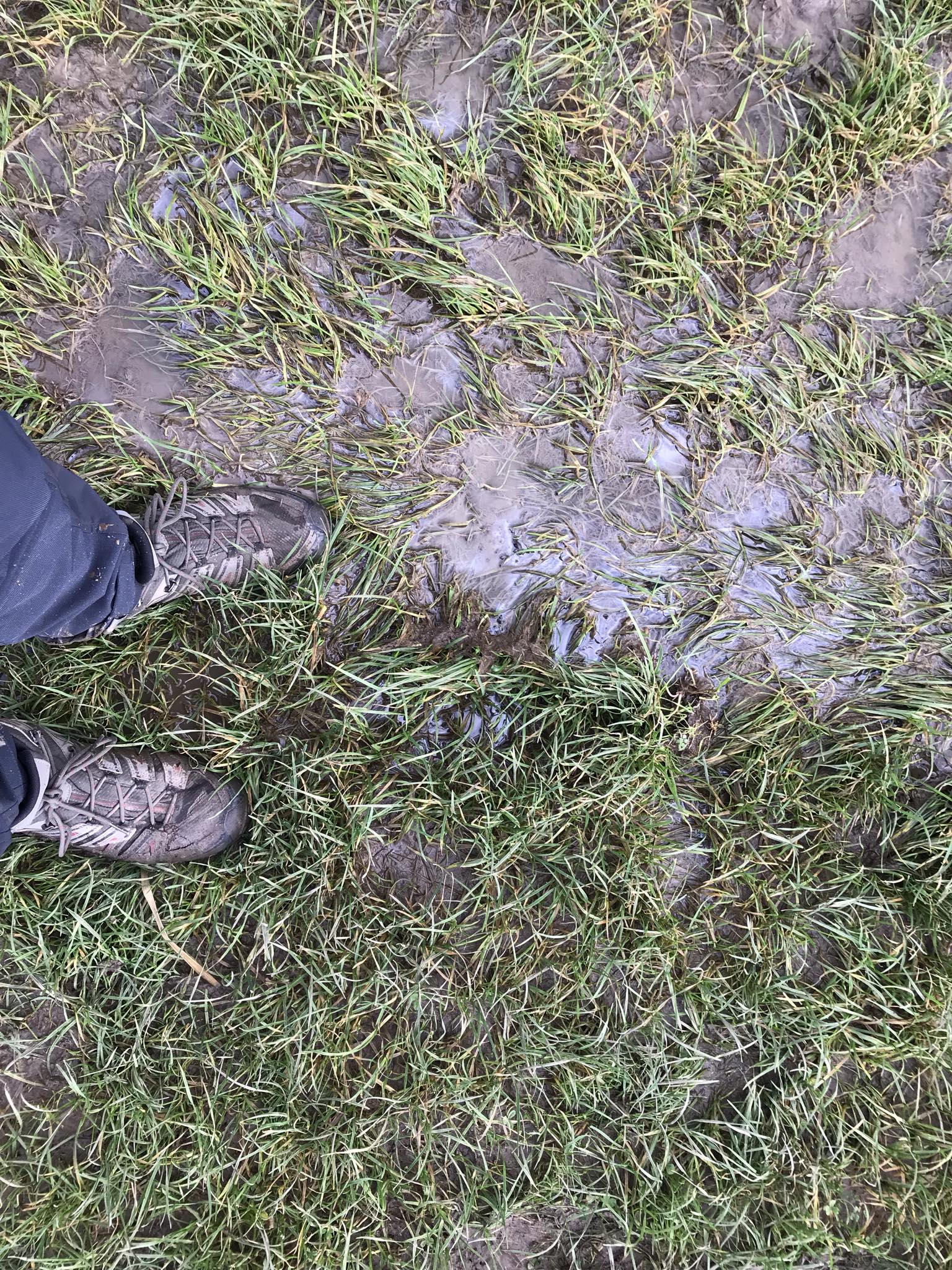
That said, I have engaged in numerous attempts to recreate aspects of seventeenth century life before, and found them useful (such as what drinking songs sounded like, and how work activities were performed). There are times when we inevitably have to use our imagination to fill in the details that are missing from our sources; to set the scene in our mind’s eye for events we read about. And having walked around a place, even in the twenty-first century, might provide better information for doing this than relying on depictions of rural villages in film, TV, or even art. I am not against trying to get ‘a feel’ for the places and periods we study, but I am wary of doing so in an under-theorised way.
All of this crossed my mind before I set out on my first walk, and perhaps the obvious response would have been to do some theorising. There is a growing and interdisciplinary literature on walking as research that is far more sophisticated than anything I am saying here. I could have read some of that. But I worried that this whole idea was already an act of procrastination, and spending time developing a robust methodological framework for taking a walk felt like a rabbit-hole I should avoid. And besides, I was as wary of overtheorising as undertheorising. If I set out with too clear an idea of what to look for, and what to expect, from my experience of walking, I worried it would be like walking with blinkers on. Whilst I wasn’t expecting to see the landscape through seventeenth-century eyes exactly, I was fairly sure that adopting a strict academic methodology would take me even further away from the early modern parishioner’s experience of this walk.
Having already overthought the extent to which I wanted to overthink these walks, I decided to just go. If I had a methodology at all, it was something akin to what Andy Wood called:
‘a sort of theorised serendipity. Partly, it involves stumbling on material. That great empiricist Sherlock Holmes would have called it the scientific use of the imagination. More simply, this might mean following one’s nose through an archive, albeit with recurrent (yet ever-changing) questions, combined with some sense of those things for which one might be looking… The important thing is to let the archive surprise you, to let it make you think differently…’[2]
I would set off, with some sense of what I might be looking for, and see what I stumbled across. I had been struck, but not necessarily convinced, by this passage of Andy’s when I first read it. But it suddenly came back to me; perhaps this was precisely the way to approach a ‘research walk’.
What did I think about all this by the time I had finished the walks? What had I gained from them as a researcher? First and foremost, enjoyment. The combination of fresh air, exercise, and brainwork was energising. And it worked as a way of getting me writing – creating the Bluesky threads helped me organise some thoughts and got me back into the groove of story-telling. They were a helpful bridge back to writing proper. And they were well received; others liked them, and they raised the profile of my project. If public engagement is part and parcel of research, these walks had certainly met that criteria.
They had value as part of my broader research process. We might see sitting in the archive or reading sources as research ‘proper’, but without effective mechanisms for motivating us to get that work written up and disseminated it will not have much value on its own. But just because they were invigorating and useful does not necessarily make them a ‘methodology’. A case can be made here too though. There were things I saw that spoke to that set of ‘recurrent questions’ I have been carrying around, questions about the nature of everyday life in the seventeenth century. Just how connected were rural villages to the wider world? The roads I crossed, the ships I saw in the Channel, the landing stages on the headland; all of these were sights that seventeenth century villagers would have noted too. An argument that was nascent from my archival work began to crystallise as I saw physical manifestations of it.
And the ‘material’ surprised me, too. My first walk took me across the moors at the bottom of the valley in which Portishead sits. I had never walked them before. To my mind they were marshes, inhospitable ones, lingering on the margins of the village. I knew that seventeenth century villagers would have pastured livestock here, but I had subconsciously assumed that they saw them as marginal lands too. I didn’t expect to give them more than a passing mention in my book.
But to walk them shook me out of that assumption. Modern sluices that now help to manage the drainage of this land caught my eye. But weren’t those rhynes and channels already there on my early modern maps? Didn’t one of my cases mention a ‘water jury’ that raised taxes to pay for the maintenance of similar sluice gates in the seventeenth century? When I got back to my books and documents, reading up quickly revised my opinions of these wetlands: rather than being neglected, unprofitable swamps, they had been carefully drained and managed since the Middle Ages, and prized as a resource by parishioners. I was now aware that I needed to tell a very different story about the relationship between seventeenth century villagers and their active management of their environment.
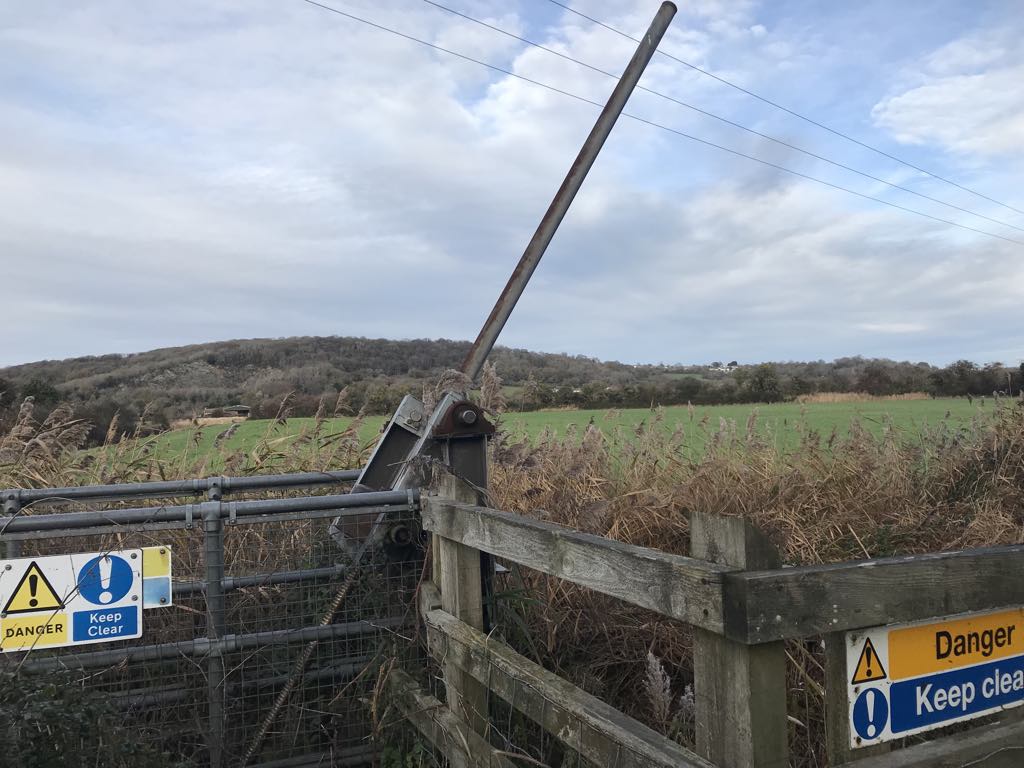
Maybe I would have got there anyway through the traditional methods of reading and source analysis, from the comfort of my desk. But if going for a walk was no better than these approaches, perhaps the fact that it was not so very different was the really telling thing. Tracing the parish boundaries on foot forced me to ask questions of what I saw, to check my assumptions, to ponder things in more depth than I had before, to seek answers to new questions that arose. These were all the things I usually do when I work through my archival materials.
Getting my boots on the ground did not take me closer to the ‘reality’ of living in a seventeenth century village, or imbue me with some sort of organic and authentic ‘feel’ for the place I am studying. How could it, when anyone doing the same walk would likely have noticed and come away with different things, whether they took it in the 17th century or today? As G.M. Trevelyan once wrote, ‘there is no orthodoxy in walking. It is a land of many paths and no-paths, where everyone goes his own way and is right’.[3] Could he have been talking about primary source research too? The more I thought about it, the more similarities there seemed to be between walking and research. We all find our own way, and notice different things as we go. I am not sure I had discovered a particularly novel way of researching the past by going walking. The walks had, above all, helped me to flex my usual methodological and analytical muscles, as well as my calves, in a fresh context, and in the fresh air. And that has much to recommend it.
[1] Julie later responded to say ‘I should have written “methodology”!’
[2] Andy Wood, Faith, Hope and Charity: English Neighbourhoods, 1500-1640 (2020), pp.xiv-xv.
[3] Trevelyan’s essay on walking can be found here. Catherine Fletcher’s blog post on ‘Not Walking’ alerted me to it.
 the many-headed monster
You may like a couple of recent posts on The National Archives’ Research blog by Dr Giorgia Tolfo, the first is here https://www.nationalarchives.gov.uk/professional-guidance-and-services/our-research-and-academic-collaboration/our-research-projects/research-projects/archive-rambler-from-hartland-to-clovelly/ and links to the next at the end