Teaching early modern History with Images

This is the fourth guest post in the mini-series Visual Culture in Early Modern England (read the introduction and find links to other posts here). Adam Morton shares his experience of using images to get students talking in seminars, exploring their ability to get students thinking about things like opinion, polemic and ambivalence in primary material.

Adam Morton is Reader in Early Modern British History at Newcastle University. He researches the long-Reformation in England, with a particular focus on anti-popery and visual culture. His publications include Civil Religion in the early modern Anglophone World (Boydell & Brewer, 2024) (with Rachel Hammersley), The Power of Laughter & Satire in Early Modern Britain: Political and Religious Culture, 1500-1820 (Boydell & Brewer, 2017) (with Mark Knights), Queens Consort, Cultural Transfer and European Politics, c.1500-1800 (Routledge, 2016) (with Helen Watanabe-O’Kelly), and Getting Along? Religious Identities and Confessional Relations in Early Modern England – Essays in Honour of Professor W.J. Sheils (Routledge, 2012). His current project considers the visual culture of intolerance in early modern England.

Adam Morton

I’ve always found that images get History students talking. They see things I don’t see and ask questions I’ve not thought to ask. The chattiest students are often the ones I least expect, the ones who have been quiet in previous weeks, the ones you worry are struggling with or not enjoying the course. Approaching a seminar topic through images can bring those students out of themselves.

I remember one instance, long ago on a second year Reformation course timetabled in the drabness and drizzle of the autumn term’s Friday afternoon slot, with fondness. A woodcut from John Foxe’s Acts and Monuments showing Edmund Bonner, the Bishop of London, stripped to his underwear and thrashing a Protestant’s buttocks, left one usually quiet student tripping over her tongue with things to say [Fig. 1].[1] She prodded the seminar to life with thoughts about humour, about cruelty and humiliation, about images as acts of revenge, and about the control involved in having the power to portray someone. Long dead Reformers suddenly seemed very human to her. “Is the image sexual?”, she asked the room. The discussion took off. Now I was the silent one: the teaching was going well.
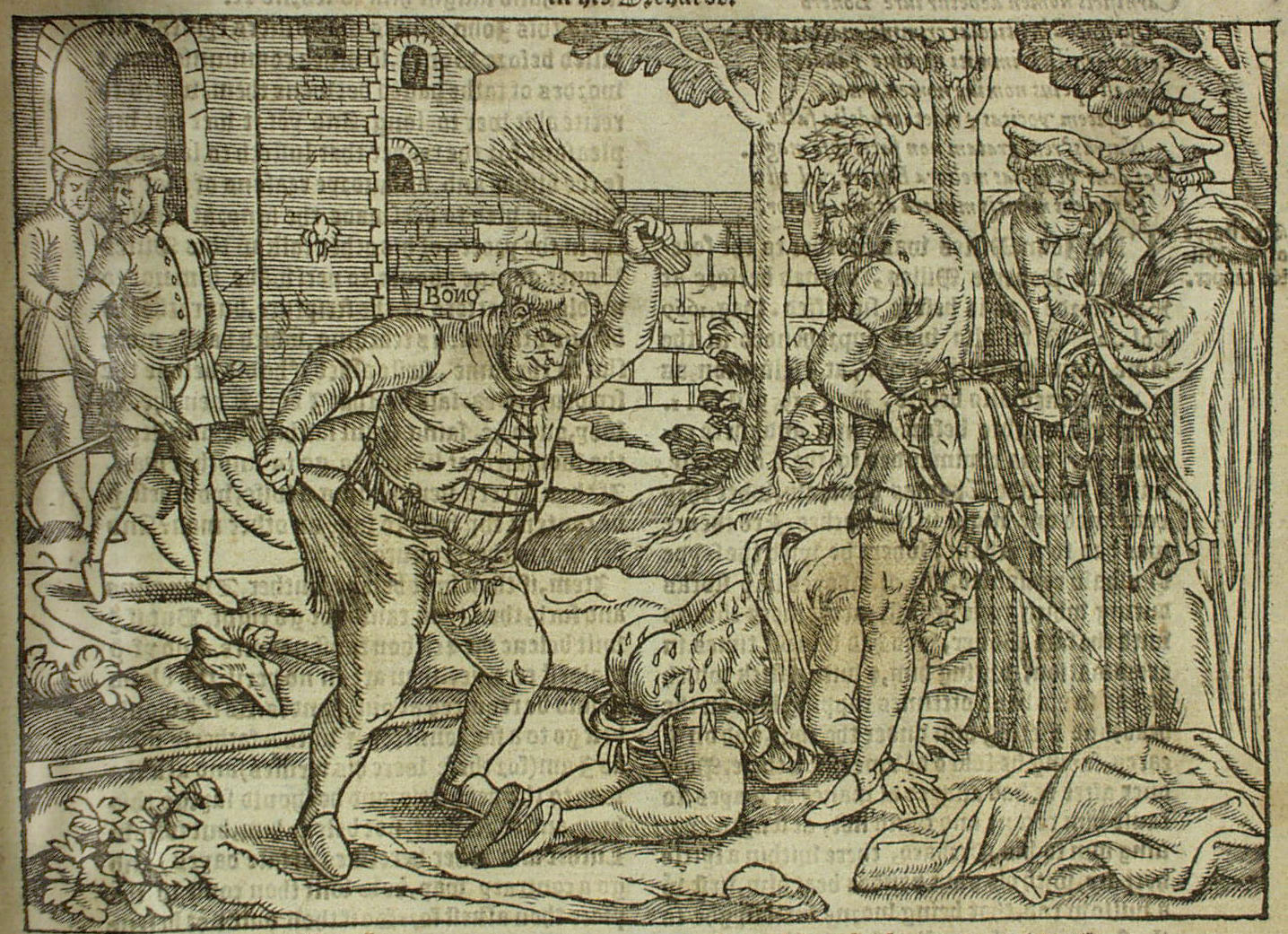
Figure 1. TITLE from John Foxe, Acts and Monuments (1570).

Foxe’s woodcuts are an obvious candidate for primary sources in undergraduate seminars, of course. Although they are no longer as rooted in public life as firmly as they were two generations ago, ‘The Book of Martyrs’’ images still provide a way into the big problems of Reformation history in the seminar room because they offer us dramatic vignettes that pare abstractions – martyrdom, heresy, theology, and memory – down to something tangible. But images can be much more than ice breakers. They can be the bedrock of seminar discussion, too. Continue reading
Cut, copy, paste: what people did with early modern Printed Images

This is the third guest post in the mini-series Visual Culture in Early Modern England (read the introduction and find links to other posts here). As in our previous post by Helen Pierce, Malcolm Jones considers how people consumed prints – in this case by adapting them in various ways. Please click on images for enlargements.

Malcolm Jones

In my youth I worked in museums and as a lexicographer, and subsequently until my retirement in 2010, as a lecturer in the English Department of Sheffield University, the year in which my book, The Print in Early Modern England – An Historical Oversight, was published. Since then I have published various articles on early modern prints, and am currently working on a book showcasing the wealth of imagery to be found in early modern alba amicorum (‘friendship books’). These days I do most of my art history informally in maintaining my 100+ Pinterest boards, and exercise my lifelong interest in language in reading the inscriptions on late medieval metal-detectorists’ finds for the British Museum’s Portable Antiquities Scheme.

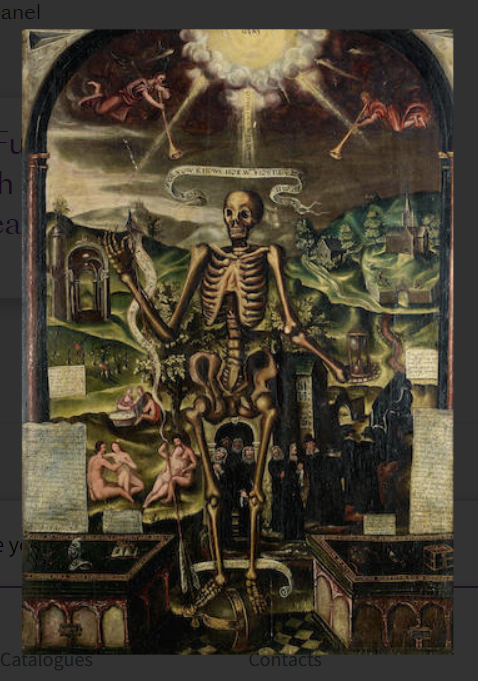
Although unknown to me at the time, just as my book The Print in Early Modern England: an Historical Oversight (London/New Haven, 2010) was going through the press in late 2009, the auctioneers, Bonhams, were selling The Chelsea Collection of Severin Wunderman. I later discovered that Lot 202 was minimally catalogued as a painting on panel, 112 x 77.5 cms., editorially entitled “An Allegory of Death”, described as “English School, circa 1600”, and as “inscribed with various verses from the Bible”. [Figure .1][1]

Figure 1: An Allegory of Death, c.1600.

It was immediately apparent to me that the painting reproduced the entire print known as Death his Anatomy, with the memory of the Righteous, and oblivion of the wicked, in sentences of Scripture,[2] when issued by John Overton in 1669, but that is now only known in the form of four fragments preserved in the British Library, bearing both Peter Stent’s and John Overton’s imprints [Figure. 2].[3] Continue reading

Building Your Own Book: Printed Images, producers and buyers in early modern London

This is the second guest post in the mini-series Visual Culture in Early Modern England (read the introduction and find links to other posts here). In this post, Helen Pierce explores the lively world of London print makers and buyers and introduces us to an innovative sales technique.

Helen Pierce is Senior Lecturer in Art History at the University of Aberdeen. She specialises in the visual and material culture of early modern Britain, with a particular focus on printed images as vehicles for political engagement.

Helen Pierce

The early decades of the seventeenth century saw the rise of commercial printmaking in England. Previously, both single-sheet prints and book illustrations had been primarily available through trade and exchange, arriving in London from centres of print publishing in the Low Countries, or they were the work of visiting artists, but broader social developments were now informing their production at home.[1]

During the later sixteenth century, London had become a refuge for significant numbers of Dutch, Flemish and French Protestants, seeking freedom of worship following episodes of persecution in northern Europe. Many of these ‘strangers’ brought with them notable skills in creative industries such as painting, goldsmithing, weaving and printmaking, and once permanently settled, children commonly followed their parents into the same sectors. English print sellers were now able to engage directly with professional engravers in London, rather than relying on trade with imported material.

In 1603, John Sudbury and his nephew George Humble established their print selling business at Pope’s Head Alley, just steps away from the commerce hub of the Royal Exchange. John had initially specialised in map publication, and while this continued under his partnership with Humble, they also expanded to printed pictures, both imported and published in London. Sudbury and Humble became well-known for their specialist stock; in 1622 the schoolmaster and author Henry Peacham, who considered himself to have some expertise as a print connoisseur, advised that works by the prolific Dutch engraver Hendrick Goltzius were ‘to be had in Popes head alley.’[2] Here, the customer could also purchase a range of portrait prints engraved by London-based artists including the prolific Renold Elstrack, and from the mid-1610s, Francis Delaram and Simon de Passe. These were primarily half- and full-length representations of monarchs past and present, and other significant figures associated with the Jacobean court and church.

Figure 1: Renold Elstrack, Baziliologia, a Booke of Kings, published by Compton Holland, 1618. Copyright of the Trustees of the British Museum.

Sudbury and Humble’s dominance of this new market for printed images was maintained until 1616, when a further family-based print selling business was set up within walking distance of their Pope’s Head Alley premises. At the sign of the Globe in Cornhill ‘over against the Exchange’, publisher and print seller Compton Holland collaborated with his brother Henry, a printer and member of the Stationers’ Company, on a novel and commercially clever project: the Baziliologia. Taking advantage of the broader cultural interest in portraits of monarchs established by Sudbury and Humble, the Hollands also tapped into King James’s own longstanding interest in his personal genealogy; its perceived longevity back to the ancient King of the Britons, Brutus, enhanced his legitimacy as both a Scottish and English ruler. Continue reading