The Past is a Foreign Country: History and Analogy, Part II

Laura Sangha

sword

A visual analogy of analogy.

In my previous post on History and Analogy I explored why we use the technique and the ways in analogy can be a two-edged sword (if you will). Here I want to give some examples that I have come across recently when preparing for my module on Tudor England. I didn’t have to look far for these, evidence of the ubiquity of these types of comparison. Many are taken from G.W. Bernard’s The Late Medieval English Church, the book that inspired the original post. If you have any examples of your own, please do add them in the comments below.

The short and pithy:

G.W. Bernard is unable to resist analogies, whether historical or not. How about:

Did people collect indulgences in the spirit that we collect tokens or Air Miles?[1]

Or a W.G. Hoskins comparison passed on by Brodie that is short, pithy, and controversial to say the least:

Henry VIII was ‘England’s Stalin’.[2]

The elaborate and multi-layered:

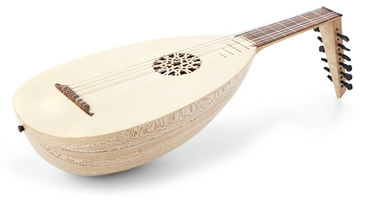
Grappling with the problem of how to perceive of early modern culture in Music and Society in Early Modern England, Christopher Marsh invites us to envisage culture as a lute, with each of it’s six strings representing:

Early modern culture made flesh.

Early modern culture made flesh.

…one of the basic socio-cultural polarities that helped individuals to understand their world and to locate themselves with it: gentle/ common, male/ female, old/ young, clerical/ lay, urban/ rural, native/ foreign. The extremes are permanently connected, and in tension, the strings form a musical staircase that allows for traffic in both directions, the sounds produced can be in harmony or might result in ugly clashes, anyone can pluck and strum as they see fit…[3]
The familiar:

If an analogy is a comparison between the familiar and unfamiliar, there is also a tendency for writers to use a concept that they know particularly well and which they would assume might therefore particularly resonate with their audience. Bernard’s comparisons of modern academic and late medieval religious institutions are a case in point, the author connects with his reader by drawing on what they have in common. In some instances, this can allow him to load his prose with a double meaning, as here:

How far were religious vocations – like those of modern academics – stultified by the piling up of administrative tasks, by the burdens of detailed administration of buildings and estates? Was there a loss, or a lack, of spiritual impetus and creative energy?[4]

The peculiarly appropriate:

In other instances, the analogy is pleasing because it is fitting, as with Alexandra Walsham’s allusion in her book on landscape:

Before we can begin to investigate the Reformation of the landscape, it is necessary to evacuate the sedimentary layers of religious association that had been deposited upon it over the course of the preceding two millennia.[5]

Religious cultures are actually slightly more complicated than these sediments.

Religious cultures are actually slightly more complicated and layered than these sediments.

The unintended:

Technically this is not an analogy, but given Bernard’s love of comparison it was hard not to read the following as a metaphor for the life of an early career academic:

…there was no necessary connection between ordination – a relatively straightforward matter – and the security of a benefice – a relatively difficult matter, since all turned on finding a suitable post. A priest might wait years before obtaining a benefice. Meanwhile he would seek employment as an assistant, as a deputy, as a chantry priest or as a chaplain in a domestic household… for which there were many opportunities… In practice they did play a considerable part in the religious life of a parish, despite lacking any formal pastoral responsibilities.[6]

Even if Bernard had not encouraged his reader to draw such parallels, current debate about the rectitude and extent of zero-hour contracts in academia reverberates through the passage.

The mundane:

Sometimes the comparison is straightforward and passes without much notice:

Of course, monasteries were organic entities, all that grows decays, and, just as in a garden, weeding and pruning deadwood were perennial tasks.[7]

The humorous:

At other times humour provides some light relief:

The tone of many Elizabethan congregations seems to have been that of a tiresome class of schoolboys.[8]

Any modern British university historian who has lived through countless administrative reorganisations, and seen the consequences of, say, the restructuring of local governments, will hesitate before pronouncing too confidently on the shortcomings of the monasteries in late medieval England.[9]

As with historical analogy, nitroglycerine should be handled with care.

As with historical analogy, nitroglycerine should be handled with care.

[On the real presence of Christ in the Eucharist:] the strength of conservative feeling at home, and the sensitivity of Protestant divisions abroad, made the issue the theological equivalent of nitro-glycerine: it had to be handled with care.[10]

And Patrick Collinson…

Patrick Collinson was renowned for his epigrammatic, witty and entertaining writing style, and the well-turned comparison was an important component of this. Jonathan reminded me of his special talent by passing on this wonderful bit of analysis:

When Picasso came to Sheffield to attend a peace rally, he sat on the platform making sketches and dropping them on the floor. Nobody picked them up. These preliminary sketches – Swallowfield and Terrington – can lie where they have fallen. Our subject is neither local government nor village republics, but the political culture of England at its centre and summit, in the age of Elizabeth I.

Here is a further selection, all drawn from the same chapter on the culture of Puritanism:

Traditionally, puritanism and culture have been seen as polar opposites, so that an essay on puritan culture might seem to merit no more space than the topic of snakes in that book on Iceland, which, according to Samuel Johnson, contained a chapter consisting of a single sentence: ‘There are no snakes to be found anywhere in the island’.

Shortly followed by:

But if man shall not live by bread alone, he must have bread, and perhaps some butter and even jam to spread on it; and it is not likely that puritans found all their needs supplied by ‘every word that proceedeth out of the mouth of God’.

Furthermore:

‘it was those local teacup storms which gave substance, a cultural or counter-cultural substance, to the very concept of ‘Puritanism’.

Now, whenever you see an okapi, you will immediately think 'Puritanism'.

Now, whenever you see an okapi, you will immediately think ‘Puritanism’.

And my favourite:

That is not to say that the thing identified as ‘puritanism’ had no real or prior existence, any more than the large quadraped which Sir Harry Johnston ‘discovered’ in the Ituri rainforests in 1900 had no existence until Johnston gave it a name, ‘okapi’.[11]

And we are still only on the third page of the chapter. It seems very fitting therefore that in his obituary, John Morrill used an analogy to sum up Collinson’s lifelong interest in Puritanism:

The obsession at its heart is the role of principled disobedience within powerful institutions, a study of those committed to reform from within. And that is how Pat saw himself… He became an establishment figure who struggled to square his radical conscience with membership of establishments.


[1] G. W. Bernard, The Late Medieval English Church: Vitality and Vulnerability before the Break with Rome (London, 2012), p. 143.

[2] W.G. Hoskins, The Age of Plunder (1976), p. 232.

[3] C. Marsh, Music and Society in Early Modern England (Cambridge, 2010), pp. 15-22.

[4] Bernard, The Late Medieval English Church, p. 197.

[5] A. Walsham, The Reformation of the Landscape: Religion, Identity and Memory in Early Modern Britain and Ireland (Oxford, 2011), p. 18.

[6] Bernard, The Late Medieval English Church, p. 79.

[7] Bernard, The Late Medieval English Church, p. 190-1.

[8] K. Thomas, Religion and the Decline of Magic: Studies in Popular Beliefs in sixteenth- and seventeenth-century England  (London, 1971), pp. 191-2.

[9] Bernard, The Late Medieval English Church, p. 196.

[10] P. Marshall, Reformation England 1480-1642 (London, 2003), p. 65.

[11] P. Collinson, ‘Elizabethan and Jacobean Puritanism as Forms of Popular Religious Culture’ in C. Durston & J. Eales (eds), The Culture of English Puritanism 1560-1700 (Basingstoke, 1996), pp. 32-4.
The Past is a Foreign Country: History and Analogy, Part I

Laura Sangha

I’ve just finished G.W. Bernard’s The Late Medieval English Church, which is an excellent and well informed survey, in case you are wondering. One of the things that made it a particularly enjoyable read were the analogies that peppered the text, which were thought-provoking and on occasions mischievous. For example:

The attitude of medieval townsmen to their local cathedral was, it has been suggested, rather like that of their successors to modern universities: an ambiguous mixture of slight suspicion and considerable incomprehension was alleviated by a natural pleasure that this corporate giant might contribute to their own prestige and economic welfare.

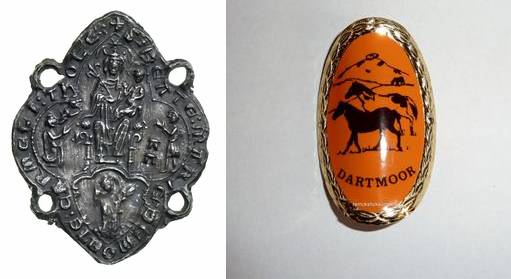
Should pilgrim badges… be seen as sacred objects, almost ‘secondary relics’, for those who acquired them, or more like the souvenirs that day trippers buy today? … Medieval pilgrimage has been compared to modern museums, full of half-comprehending tourists, of young people having a day out, yet with serious and scholarly purposes at their core. Are the experiences of those who go church-crawling, or visit the blockbuster exhibitions in art galleries, or go to concerts at all comparable? Does the ritual of pilgrimage meet a perennial human need?… How many pilgrims took part in pilgrimages in much the same part-materialistic, part-sentimental way that many nowadays treat Christmas? [1]

The early modern pilgrim badge and its modern walking stick equivalent?

The early modern pilgrim badge and its modern walking stick equivalent?

Along with Brodie Waddell’s recent post on jargon and Mark Hailwood’s comparison of early modern alehouse ballad singing with modern football chants, it got me thinking about language, and more specifically about the way that we use analogy in writing and teaching. For historians, the carefully picked parallel is a potent weapon, it provides an inference or argument from one (familiar) particular to another, in the process attaching meaning to the unfamiliar particular. Analogy enables us to grasp the new and to process the different. For the early modernist, this is especially useful, because a parallel can help us to negotiate the strangeness of our subject and to close the gap between the mysterious and murky past and the bright shiny present. This is exceptionally useful when it comes to teaching: when I challenge my students to try to understand the early modern mentality I often begin by inviting them to self-reflect on their own experience, before exploring the early modern equivalent. So you might ask students to list what they think are the main elements of ‘identity’ in the present day, before discussing how early modern people thought about the same, the comparison drawing attention to those areas of similarity and difference which then invite explanation.

Similarity as well as difference is of course key here. Historical analogies are neat, effective and pleasing, but also fraught with peril because it is unlikely that the two particulars in the analogy are exactly the same. Bernard acknowledges as much:

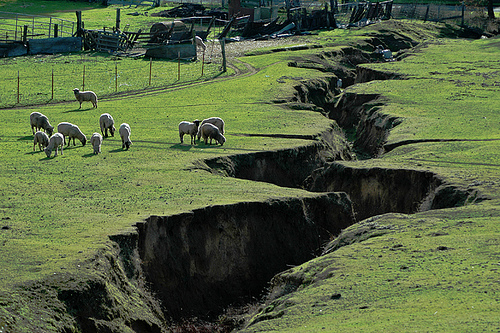
Another scholar has offered the metaphor of ‘faultlines in the landscape’ but, while that is suggestive, it nonetheless rests upon the underlying inevitability of the coming earthquake.[2]

faultline

Just imagine the Late Medieval Church criss-crossed with lots of these.

In similar vein, Versailles might have ‘sowed the seeds of the second world war’, but this suggests a dangerous teleology that might distort our understanding of the interwar years. Thus a facile or lazy comparison can obscure rather than illuminate. Politicians and journalists in particular play a dangerous game  when they use analogy in association with events that are still unfolding, or to justify actions or simplify complexity. Recently, the labeling of the wave of demonstrations and regime changes in North Africa and the Middle East as the ‘Arab Spring’ (an allusion to the Revolutions of 1848 and the Prague Spring) has fitted rather awkwardly with subsequent developments that bear no relation to the promise of rebirth, liberation and growth usually associated with the pre-summer season and the historical precedents. One commentator notes that:

It appears that the right analogy is a different central European event — the Thirty Years’ War in the 17th century — an awful mix of religious and political conflict, which eventually produced a new state order.

Analogies surely work best only when the dissimilarities of the two things are considered alongside the parallels – the analogy can in fact help you to identify both. Ruling out unsuitable analogies is also a useful strategy, as Peter Marshall does when describing the processes of the English Reformation:

The modern analogy is less with the overthrow of ancien regimes in 1789 and 1917 than with the ‘cultural revolution’ of 1960s China, in which central government worked in alliance with cadres of true believers to undermine reliable elements in positions of authority, and radically reconstruct the outlook of people as a whole.[3]

More in common than you might think?

More in common than you might think?

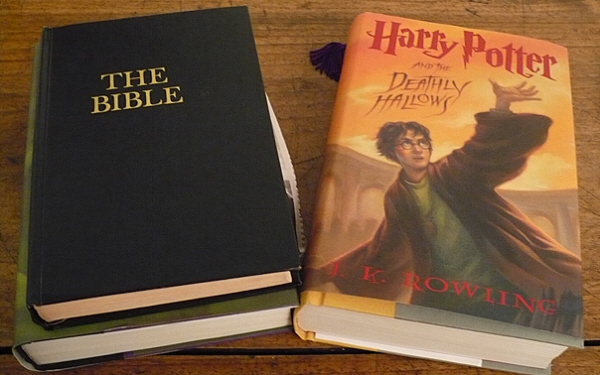
It is always a delight when students come up with their own analogies, because it reveals their learning: their coming to terms with information and expressing their own understanding of it. When discussing oral culture, and the astonishing feats of memorisation that early moderns were capable of, one student declared that it wasn’t that surprising that people knew the Bible off-by-heart, as she felt sure that if someone named a chapter from any Harry Potter novel she would be able to recall the important events from memory. Other memorable comparisons were Henry VIII’s visitation officers as ‘Ofsted Inspectors’, Elizabeth I’s beauty ‘trending’ at court, and Charles I’s relationship with the Duke of Buckingham as a classic ‘bromance’. These are not simply throwaway comments, they reveal students grasping and reframing the past in a way that resonates with their own existing knowledge.

**I followed this up with another post with examples of different types of analogies, incorporating those suggested to me by readers.**


[1] G. W. Bernard, The Late Medieval English Church: Vitality and Vulnerability before the Break with Rome (London, 2012), pp. 159-60; 143.

[2] Bernard, The Late Medieval English Church, p. 236.

[3] P. Marshall, Reformation England 1480-1642 (London, 2003), p. 58.

Claire Langhamer, ‘Everyday love and emotions in the 20th century’

[This is the eighteenth piece in ‘The Future of History from Below’ online symposium (#historyfrombelow). Claire Langhamer is Senior Lecturer in History at the University of Sussex. Her research and publications focus on aspects of everyday life in the 20th century, and in particular on the history of love. Here she asks whether the Mass-Observation Archive can help us to write the history of emotion ‘from below’.]

What I want to talk around in this post are the intersections between History from Below and the History of Emotion. What might a history of emotion ‘from below’ look like, how do we get at it and how might it re-frame our understanding of the period I am particularly interested in – the mid-twentieth century? I’m approaching the 1940s and 1950s as decades when the meaning and status of feeling seems to be particularly contested. Tensions between a need for self-discipline and desire for self-expression, anxieties about the impact of war and secularisation on moral standards, and concern about the future of the family, coalesced into a post-war discourse of emotional instability. Within this context the correct management of emotion was a political as well as a personal matter and became a marker of effective citizenship in a rapidly changing world. And yet, I want to argue, emotion itself could drive social and political change, acting as a vehicle for the operation of agency within everyday life. It was also increasingly seen as a legitimate basis upon which to assert knowledge claims about the world and carve out a place within civil society. Continue reading

Julie-Marie Strange, ‘Historicising the comfort of “things” in late-Victorian and Edwardian working-class culture’

[This is the seventeenth piece in ‘The Future of History from Below’ online symposium (#historyfrombelow). Julie-Marie Strange is Senior Lecturer in Victorian Studies at the University of Manchester. Her research and publications focus on inter-personal dynamics in working-class and poor families in late Victorian and Edwardian Britain. Here she contributes to our conversation about the relationship between material culture and ‘history from below’ by asking how the study of  ‘things’  can bring new or alternative perspectives on overlooked aspects of working-class lives.]

In The Comfort of Things (2008), the anthropologist Daniel Miller presented a series of ‘portraits’, stories of individuals and the things in their home that mattered to them, to challenge a narrative of consumption as corruption. Miller’s vignettes illuminate how objects embody people’s aspirations for sure, but, he also explores how the stories people tell about their things are intrinsic to their struggle to make their lives meaningful. For Miller, we appropriate objects to give meaning to social processes and relationships.[1] This post – a brief presentation of two case studies from late-Victorian and Edwardian working-class culture – makes a foray into how working people’s ‘stuff’ can be interrogated to explore the inter-personal dynamics of family life.

There is, of course, a rapidly growing literature on material culture and the ways in which historians might make use of it to understand the past, particularly ‘hidden’ aspects of history. What I’m going to focus on here is how things in working-class homes suggest insights into family relationships, particularly between children and their fathers. I’m focusing on fathers because they have typically been perceived by historians and contemporaries as on the periphery of family life in accounts that have privileged children’s relationships with mothers. Continue reading

Chris Briggs, ‘Household possessions of the 14th and 15th century peasantry’

[This is the sixteenth piece in ‘The Future of History from Below’ online symposium (#historyfrombelow). Chris Briggs is Lecturer in Medieval British Social and Economic History at the University of Cambridge. His research and publications focus on various aspects of society, economy, and the law in England and Europe during the later middle ages (1200-1500). This post – along with the next post by Julie-Marie Strange, and Ruth Mather’s earlier in the summer – turns the conversation to a particular theme that was prominent at both of our ‘history from below’ events: the relationship between material culture and ‘history from below’. Here, Chris examines how this relationship might be developed in the medieval context.]

This post discusses an ongoing research project on the possessions of the medieval English peasantry, and considers how far and in what ways it should be considered an exercise in ‘History from below’. The paper begins by outlining what I see as the characteristics of ‘History from below’, both in general and with respect to the English middle ages in particular. I also ask whether history from below, a movement that was at its most confident roughly 50 years ago, can still be traced in the more recent and current work of English medievalists. Next I briefly describe my project on peasant goods and chattels, which is still at the stage of identifying questions, methods and sources. The final part looks at ways at which this work might and might not advance the history from below agenda. Continue reading

Selina Todd, ‘History from below: modern British scholarship’

[This is the fifteenth piece in ‘The Future of History from Below’ online symposium (#historyfrombelow). Selina Todd is a Lecturer in Modern British History and Fellow of St Hilda’s College, University of Oxford. Her research and publications focus on working-class and women’s history in modern Britain. Here she brings our conversation about ‘history from below’ through to the twentieth century, providing a survey of the recent historiography on modern Britain, and identifying some of the major challenges and future directions for ‘history from below’ in that field.]

Fifty years on from E.P. Thompson’s call to rescue working people from ‘the enormous condescension of posterity’, and myriad ‘turns’ later, history from below is flourishing in modern British scholarship. An emphasis on ‘ordinary people’ has replaced an earlier stress on the working class, and studies of collective protest are less numerous than those on everyday life. [1] But there is no sign that scholars consider Thompson’s original project ‘cliched’ or ‘tired’.

This post reflects on how history ‘from below’ has developed, the state it is in, and suggests some possible future directions. As the first section will show, we have reasons to be hopeful. But in the second section I argue that we need to historicise the material circumstances in which our scholarship is produced in order to fight for our future. In the final section I propose that we could use more studies of class, which might help us to restate the centrality of history ‘from below’ to understandings of modern Britain. Continue reading

Emma Griffin, ‘Working class autobiography in the industrial revolution’

[This is the fourteenth piece in ‘The Future of History from Below’ online symposium (#historyfrombelow). Emma Griffin is Professor of History at the University of East Anglia. Her research and publications focus on the impact of the industrial revolution on the lives of the working poor. Here, she brings our conversation about ‘history from below’ forward into the eighteenth and nineteenth centuries, and considers the light working class autobiography can shed on workers’ experiences of the British industrial revolution and argues that approaching this landmark historical development ‘from below’ can radically alter our perspective on it.]

The industrial revolution was possibly the single most significant event in our history.  But when we think about the men, women and children, who with their strong backs and nimble fingers did the most to power the industrial revolution, we tend to feel that there is little to celebrate.  The introduction of new working patterns which compelled men to work at the relentless pace of the machines.  Children forced into factories and down mines at ever younger ages.  Families squeezed into dark, disease-ridden cities.  And nothing but the workhouse for those who slipped through the net.  All the great Victorian commentators – Engels, Dickens, Blake – painted their industrial times in a very dark hue. And their dismal litany echoed throughout the twentieth century, as a succession of pioneering social historians – the Hammonds, Eric Hobsbawm, and of course E. P. Thompson – turned their attention to the devastating impact of the industrial revolution on the working poor.

Yet despite the frequency with which various versions of the bleak account of the industrial revolution have been retold, the claim that this period was worse than anything that has gone before has not received the kind of scrutiny it deserves.  In particular, it is remarkable that so little effort has been made to listen to what working people themselves had to say about their life and times.  Of course, it is usually countered that such an effort would be futile as working people did not leave behind much in the way of written sources.  But whilst it is certainly true that they wrote far less than their social superiors, it is not the case that they wrote nothing at all.  Less well known, but no less important, is a remarkable collection of autobiographies written by working people themselves.  And if we listen to these, we hear a story that is very different to the one that we are used to.

Continue reading

Andy Wood, ‘History from below and early modern social history’

[This is the thirteenth piece in ‘The Future of History from Below’ online symposium (#historyfrombelow). Andy Wood is Professor of Social History at Durham University. His research and publications focus on popular protest, customary rights and social memory in early modern England. Here he takes us through the relationship between ‘history from below’ and early modern social history, and outlines a number of key principles and approaches that might inform that relationship going forward.]

History-from-below poses a question. Like Bertoldt Brecht’s Questions from a worker who reads and Virginia Woolf’s A room of one’s own, history-from-below asks us to describe the lives, ideas and experiences of those who lay ‘below’ dominant historical narratives. Like Subaltern Studies (developing at the same time, from the early 1970s) history-from-below focused on a disparate range of groups, spanning time and distance: workers, peasants, slaves, women, the marginalized, oppressed ethnic, religious and sexual minorities.

The history-from-below tradition grew out of the English Marxism of the CPHG (Communist Party Historians’ Group). It was the badly-behaved adolescent offspring of the CPHG, loosely grouped around History Workshop Journal and its attendant movement rather than around the journal Past and Present, which by the 1970s had lost its explicit political focus. Like the CPHG, history-from-below valorized resistance and largely ignored questions of subordination, social integration and hegemony. But unlike the CPHG generation, it was explicitly open to histories of women, gender, race and sexuality. It represented the historiographical expression of a broader shift at work within the British Left in the 1970s and 1980s, the urge – in the face of deindustrialization and the late-recognized halt in the forward march of labour – to create new alliances beyond the traditional labour movement. That political project achieved its clearest expression in Livingstone’s GLC (Greater London Council), in a resurgent CND (Campaign for Nuclear Disarmament) with its connection (via Greenham) to second-wave feminism and in the diverse range of groups attracted to the Miners’ Support Groups during the 1984-5 strike. Although this ‘rainbow alliance’ (the term originated with Jesse Jackson and was anglicised by the International Marxist Group as an ‘alliance of the oppressed’) was to be defeated, its historiographical expression in the fuzzy History Workshop tradition had its successes – as this symposium shows, nowadays it is hard to write social and cultural history without reference to some of the concerns of History Workshop, most of all the legacy of feminism and the lesbian and gay liberation movement. Histories of class, marginalized by the cultural turn of the last 20 years, are starting to reassert themselves too. I’ll come back to this resurgence towards the end.

Continue reading

John Arnold, ‘History from below – some medievalist perspectives’

[This is the twelfth piece in ‘The Future of History from Below’ online symposium (#historyfrombelow). John Arnold is Professor of Medieval History at Birkbeck. His research and publications focus in particular on medieval ‘belief’. Here he takes us through some of the ways ‘history from below’ approaches have played an important role in medieval scholarship on both England and France.]

“And so our interpretation of history will be both materialist with Marx and mystical with Michelet. It was economic life that was the basis and the mechanism of human history, but across the succession of social forms man, a thinking force, aspired to the full life of thought, the ardent community of the unquiet intelligence, avid for unity and the mysterious universe.”

[Jean Jaurès, Histoire Socialiste de la Révolution Française, Paris, 1911. Introduction. See http://www.marxists.org/archive/jaures/1901/history/introduction.htm]

‘History from below’ has tended predominantly to be an early modernists’ term; [1] and it is a very baggy term. Is it simply the same as ‘social history’; is it related to Alltagsgeschichte; does it make a particular claim about collective historical agency from ‘below’; or is it more concerned with the experience of ordinary people at the sharp end of historical change? The term’s capacious vagueness is perhaps the main point – and an indication of its anglophone origin, freed from the strictures of theoretical precision. But when one starts to think about its connotations for different period specialisms, issues of purpose and project become naggingly apparent. Medievalists and early modernists tend to share some sense that making ordinary (/subaltern/plebeian/lower sort/peuple menu/popolani …. etc etc, pick one’s own inevitably problematic term) people visible and audible is in itself an historiographical success worth pursuing, because the weight of the evidence – so we tend to say, though this bears further discussion in itself – submerges the majority of humanity in favour of the visible, powerful elite. That shared project immediately requires some further nuance however.

Continue reading

The Future of ‘History from Below’ Online Symposium – Part II

Mark Hailwood

It’s been great to see so much interest and enthusiasm generated around the subject of ‘history from below’ this summer. The online symposium on it’s future that we have been running here on the many-headed monster – which grew out of a physical version held between a group of early career historians at Birkbeck in April – has been a real success. So we thought we would bring you more.

In July we held a second event, in Cambridge, on ‘History from Below in the 21st Century’. This grew out of conversations I’d been having with Jon Lawrence, a historian of modern Britain, who helped to organise the workshop – and who used his pull to secure the participation of some of the leading historians in this field. In particular, we were keen to get a group together who worked on diverse time periods, to get a sense of the different ways medieval, early modern, and modern historians viewed the current state of ‘history from below’. Needless to say, the resulting conversations were fascinating, for although Brodie has rightly pointed out that ‘many of the most interesting discussions about history aren’t happening in wood-panelled seminars rooms’, some do.

But, in the spirit of democratising history that has been a key theme in the online symposium so far, we thought we would bring the discussions we had that day out of the seminar room and into this wider conversation taking place here on the blog. So each day this week we will be posting a paper from the Cambridge workshop. Here is the programme:

These posts will differ a little from those we have seen so far in the online symposium: they are full versions of the papers that were presented at the workshop, rather than custom-made blog-posts, so they are a bit longer, more heavily footnoted, and were composed for an audience of academic historians. They are, of course, packed with really interesting insights, and are well worth taking that bit of extra time to read.

Feel free, as ever, to leave your comments – we will encourage the authors to respond to direct questions, but we can’t make any promises that they will. Either way, that shouldn’t stop your own conversations developing in the comments section, so keep posting your thoughts, and let’s keep the discussion going…