
This post in our After Iconophobia Online Symposium comes from Jan Tasker, an AHRC M3C-funded PhD student based at the University of Birmingham’s Shakespeare Institute. Jan is working with Martin Wiggins and Jonathan Willis on representations of the supernatural in early modern English drama. Here she reflects upon the changing ways in which God was represented on the Elizabethan stage.
In 1606 the Parliament of King James I of England passed an act banning players from ‘jestingly or prophanely […] speak[ing] or [using] the holy Name of God or of Christ Jesus or of the Holy Ghoste or of the Trinity’, or risk a £10 fine.[1] Following the Reformation God was not to be taken lightly, and such usage was considered blasphemous or, potentially, idolatrous. However as Patrick Collinson noted in his seminal lecture ‘From Iconoclasm to Iconophobia’ God had apparently left the English stage more than twenty years earlier – or had he?[2]
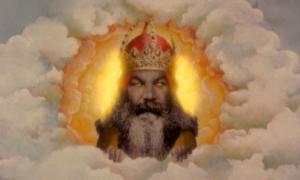
My current research explores how dramatists across a variety of genres continued actively to explore the theological issues concerning supernatural beings, including God, during the period 1533 – 1642. In this early stage I have been identifying dramatic works that contain explicit supernatural elements of a potentially religious nature. This blog will share these early findings in respect of the disappearance, or otherwise, of the Christian God. The data discussed comes from an electronic trawl of Dr Martin Wiggins’ work for his ongoing British Drama: A Catalogue, including all known dramatic works (not just plays) written in the period 1533 – 1642.[3]

 I began my undergraduate career convinced that I wanted to be a historian, but entirely unsure which bit of the past I should dedicate my life to unlocking. Patrick Collinson’s Birthpangs of Protestant England (1988) – of which a revised version of his Stenton Lecture From Iconoclasm to Iconophobia (1986) formed a part – was one of four books (the others being John Bossy’s Christianity in the West (1985), Robert Scribner’s For the Sake of Simple Folk (1981) and Alexandra Walsham’s Providence in Early Modern England (1999)) which convinced me that the Reformation was the thing for me. In each case I became so absorbed in reading them that all sense of time lapsed. I emerged from their pages to discover that day had become night and in one instance a grumpy porter had to inform me rather briskly that the library was now closing. Such was their power that over a decade later I can still remember exactly where in the Morrell Library at the University of York I was sitting when I first encountered each author: remarkable experiences in an otherwise unremarkable building.
 In 1985, Patrick Collinson delivered Reading University’s Stenton lecture on the topic ‘From Iconoclasm to Iconophobia: the Cultural Impact of the Second English Reformation.’ More than thiry years on, this essay (published in pamphlet form in 1986 and in revised form as Chapter 4 of The Birthpangs of Protestant England) has gone on to shape a generation of scholarly enquiry into the impact of religion on culture, and of culture on religion, in post-reformation England. Scholars have accepted, rejected, and modified Collinson’s arguments, but one way or another they continue to exert a powerful influence over reformation studies today.
 the many-headed monster