Printed Images, Laughter and early modern History

This is the first guest post in the new monster mini-series Visual Culture in Early Modern England (read the introduction here). To begin, Adam Morton considers what historians should do with the alien and often cruel humour of past ages and in particular the subversive content of satirical prints.

Adam Morton is Reader in Early Modern British History at Newcastle University. He researches the long-Reformation in England, with a particular focus on anti-popery and visual culture. His publications include Civil Religion in the early modern Anglophone World (Boydell & Brewer, 2024) (with Rachel Hammersley), The Power of Laughter & Satire in Early Modern Britain: Political and Religious Culture, 1500-1820 (Boydell & Brewer, 2017) (with Mark Knights), Queens Consort, Cultural Transfer and European Politics, c.1500-1800 (Routledge, 2016) (with Helen Watanabe-O’Kelly), and Getting Along? Religious Identities and Confessional Relations in Early Modern England – Essays in Honour of Professor W.J. Sheils (Routledge, 2012). His current project considers the visual culture of intolerance in early modern England.

Adam Morton

Old jokes unsettle me. Not only because I don’t always get them, but because the ones I do get are often brazenly cruel. They mock, scoff, and jeer at the butt of the joke in a laughter of scorn and humiliation. This cruelty unsettles me because humour is intimate, it speaks to the most human aspects of a culture, the intimate ties, social bonds, and moral norms that glue people into a society. We laugh when something disrupts or breaks those conventions, and laughter therefore takes us close to what made people in the past tick, their assumptions about the world, their emotions, and their view of what was proper.[1]

Laughter, in short, is intuitive, something that Clive James captured succinctly. “Common sense and a sense of humour are the same thing moving at different speeds. A sense of humour is common sense, dancing”. Early modern people? Their ‘common sense’ led them to laugh at rape victims, at the disabled, at those who experienced devastating misfortune, and at domestic violence, among other cruelties.[2] Studying humour takes us closer to early modern people. I am unsettled because I don’t always like what I see.
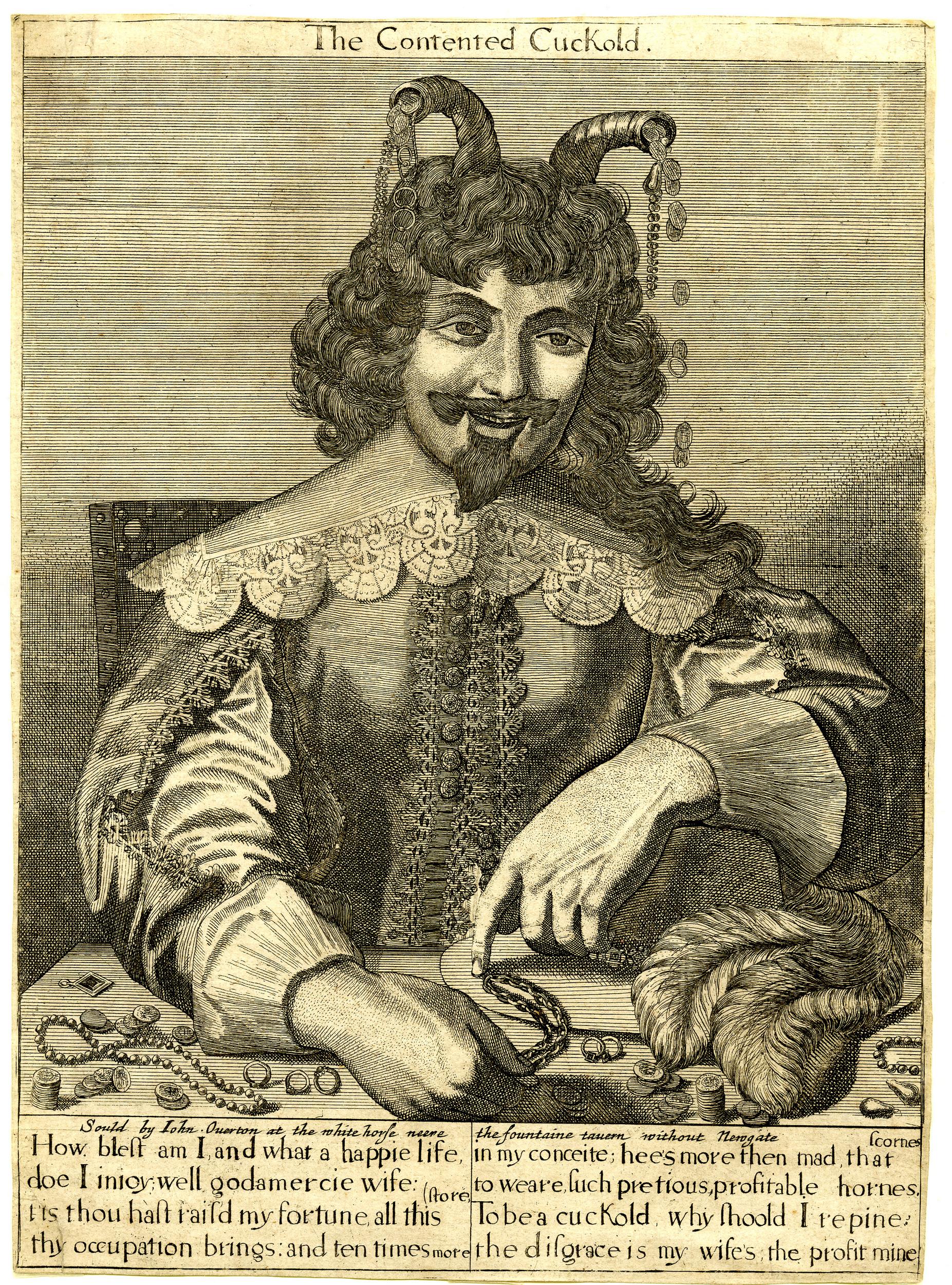
The Contented Cuckold (1673) Copyright of the Trustees of the British Museum. BM 1996,0608.1.

Continue reading

A new life for ‘British Printed Images to 1700’

Laura Sangha

This post introduces our new mini-series Visual Culture in early modern England. Guest posts in the mini-series will be published over the course of the next month – we will add links to this page as the post are published. The series celebrates the re-launch of the vital online primary source collection ‘British Printed Images to 1700’. It hopes to encourage use of the BPI archive and to promote conversation about the deployment of visual sources in the study of the past more broadly.

Adam Morton, Printed Images, Laughter and Early Modern History

Helen Pierce, Building Your Own Book: Printed Images, Producers and Buyers in early modern London

Malcolm Jones, Cut, copy, paste: What People Did with Early Modern Images

Adam Morton, Teaching with Early Modern Sources

Something to remember, or more likely forget

In the distant past, time out of memory of man, when I was writing an essay as part of my Postgraduate Certificate in Academic Practice (teaching training), I spent a week reading lots of articles about teaching and learning History. I remember very little about that immersion in the scholarship, but strangely the one article that stuck around in my mind was a study examining what students remembered about a lecture after they had heard it. The article described an experiment where students were asked to complete a questionnaire about the content of a lecture immediately after they walked out of it, and then they were asked to complete the same questionnaire again, after two weeks had passed.

The exact details of the results escape me, but the headlines were relatively pessimistic – students remembered little content, however basic, immediately after a lecture, and this diminished to almost nothing two weeks later. The one exception was that many of them could remember some of the images they had seen in the lecture, and in some cases, why they were shown – i.e. the idea that the lecturer was communicating by showing the image. Ergo: image memory is often superior to word memory.

Theories of cognition come to similar conclusions. According to Allan Paivio’s Dual Code Theory, images elicit words (verbal labels) so that they are stored in the memory twice. By contrast words do not automatically elicit images, a relatively impoverished memory representation that may make the retrieval of words less probable. Though more recent scholarship has nuanced these findings and would allow more scope for varying results according to different learning styles, on average many people retain more from images than they do from texts.

Continue reading