Unknown's avatar

About drsang

Laura Sangha is Associate Professor in Early Modern History at the University of Exeter. You can follow her on Bluesky @lsangha.bsky.social.

Memorial and history, Part 3: in which Mary Beard sits on a bench

Laura Sangha

This is the third in a series of posts relating to Exeter’s martyr memorial. The first post, contains the details of the martyrs themselves, the second, is on John Foxe’s Actes and Monuments.

What I really wanted to know about Exeter’s martyr monument, was who paid for and created it – when was it erected, how and why? A third plaque on the memorial yielded some information:

To the glory of God & in honour of his faithful witnesses who near this spot yielded their bodies to be burned for love to Christ and in vindication of the principles of the Protestant Reformation this monument was erected by public subscription AD 1909. They being dead yet speak.

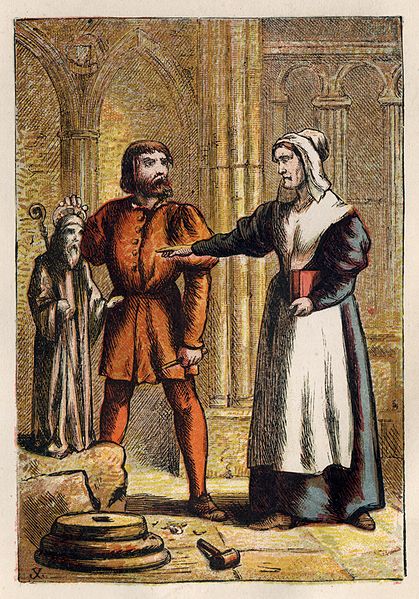
Thus the obelisk dates from the twentieth-century, which makes sense – the English Reformation was profoundly iconoclastic and it is hard to imagine money being spent on erecting monuments in an age when destruction of imagery was a mark of Protestant identity. In fact the image of Agnes Prest from the 1887 edition of Foxe that I mentioned prest and stonemasonin my previous post supports just this point. It depicts a visit that Prest paid to Exeter Cathedral, where she met a ‘cunning’ Dutch craftsmen who was apparently repairing the  images and sculptures that had been disfigured during the previous, iconoclastic reign of Edward VI. Prest supposedly said to the Dutchman ‘what a mad man art thou… to make them new noses, which within a few dayes shall all lose their heades’. In response to this rather prophetic prediction of further reform, the stonemason replied with a well thought out theological argument: ‘Thou art a whore!’. Quick as a flash, Prest replied ‘Nay, thy Images are whores, and thou art a whore hunter: for doth not God say you goe a whoring after straunge Gods, figures of your owne making?’ Continue reading

Memorial and history, Part 2: in which John Foxe reveals his sources

Laura Sangha

This is the second of a series of posts on issues relating to Exeter’s martyr memorial. The first post discusses the details of the martyrs themselves.

A monumental achievement

Foxe’s [?] monumental [?] achievement.

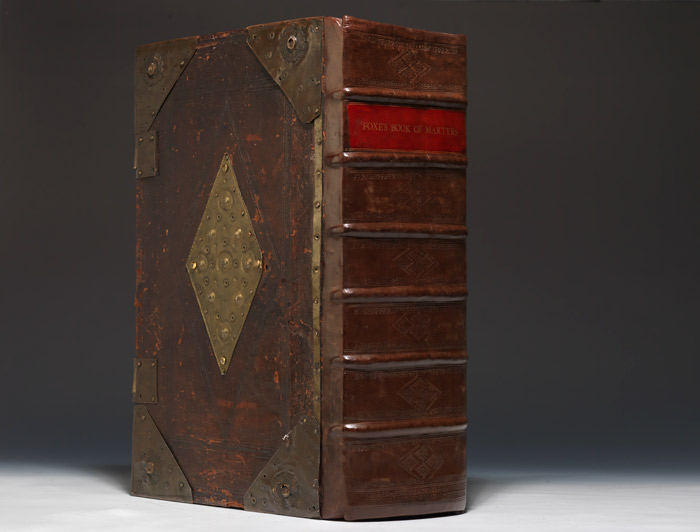
The information about Exeter’s martyrs that I related in yesterday’s post was taken from John Foxe’s Actes and Monuments, popularly known as the ‘Book of Martyrs’. Actes was first published in 1563, five years into the reign of Elizabeth I. It is a work of Protestant history and martyrology, mainly consisting of a polemical account of the sufferings of evangelicals under the Catholic Church.

I’ve previously discussed images of martyrdom on the monster, in this post I am more concerned with the text as a history of the ‘true’ Church. Continue reading

Memorial and history, Part I: in which two people meet a terrible end

Laura Sangha

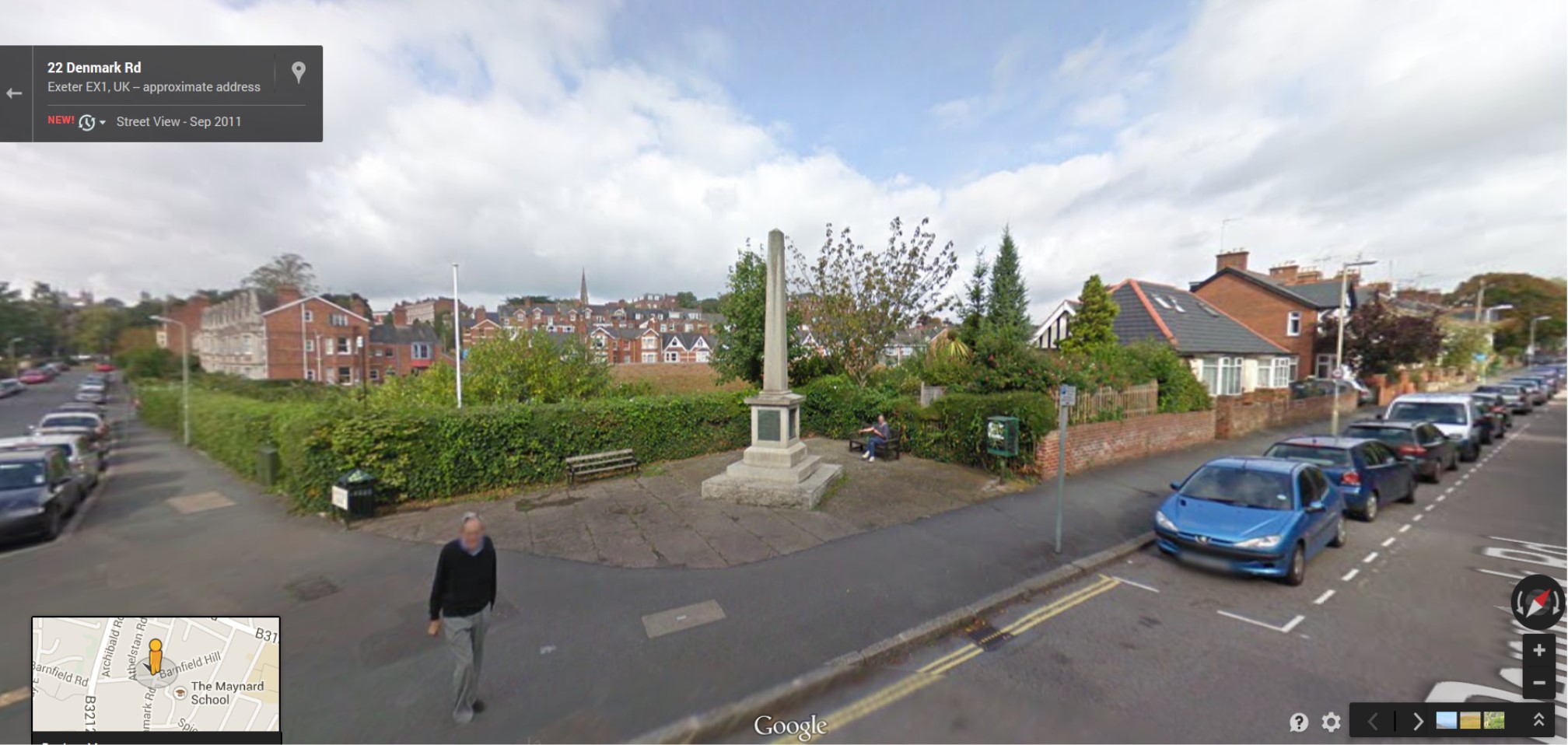
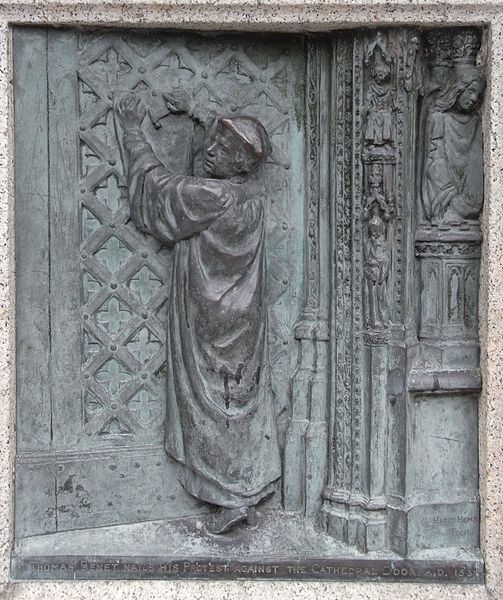
googlemapsA recent trip to the pub took me into a new part of Exeter, and on my way there I stumbled across a fascinating snapshot of its history. At the corner of Barnfield and Denmark roads I came to a memorial in the form of an obelisk of Dartmoor granite, with four bronze panels around its base. I assumed it was a twentieth-century war memorial, and went to have a closer look at the bronze reliefs – hey, I’m a historian, my profession compels me to! On examination, I was surprised to discover not a weary line thomas benet bronzeof soldiers in metal helmets, but instead what appeared to be a monk fixing a notice to a wooden door, and I didn’t need the inscription to tell me the door belonged to Exeter Cathedral – an angel from the first tier of sculptures on the West front is clearly depicted on the right hand side. What’s more, a second bronze showed a women chained to a post, clearly suffering a fiery death at the hands of the authorities. Reading the inscriptions, I realised that I had chanced upon a memorial to two sixteenth-century Protestant martyrs who had met their deaths in Exeter.

Firing up the computer on my return home, I soon disappeared down the rabbit hole of the city’s history and our memories, stories about and uses of our past. My initial idea for a brief post mutated into a series of linked musings on the tangled threads of the regional and national history, in all its venerable and unsavoury glory. I’ll be publishing one each day this week. Today I start with the story of the two martyrs commemorated on the memorial, Thomas Benet and Agnes Prest. Continue reading

Grave-robbing and heritage: the problem of conserving the past – Part 2

Laura Sangha

In the first post of this heritage double-header, I discussed my recent visit to Sir John Soane’s Museum – a trip that raised a number of questions about the best way to preserve the past, and the difficulties of doing so. Here I continue the theme by drawing out some key areas and offering some possible solutions:

Open access to the past – no doubt we would like all archives and historical artefacts to be freely available to the public, but that is hardly practicable. In reality open access damages the relics of the past and shortens their life span.

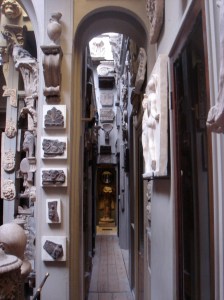
Do the Soane’s museum’s limited walkways validate limited access?

Limited access to the past – do some people have more right to see collections than others? Do those who help fund preservation, or whose interest goes beyond mere curiosity (the benefactor, the architecture student, the historian) have a better claim? How can that be squared with public funding of heritage or with sites with particular national, international or global importance?

Resources – conservation is an expensive business, and rightly is not at the top of a government’s budgetary plans. One way to raise funds is to attract visitors who will spend money in the gift shop, on the guide book, or on a tour. Some collections wouldn’t survive without this income, but attracting large visitor numbers brings further preservation problems.

Meaning of preservation – surely the crux of the heritage questions lies here – why do we want to keep this stuff anyway? The past can help us to understand ourselves as a society or nation, but only if people actually encounter it. Perhaps we should limit access to a few chosen experts, whose remit is to tell other people about it? But isn’t that unfair? And who gets to choose who the experts are and polices their outputs?

Process of preservation – How do we decide what is worth protecting, especially given that historical tastes shift so dramatically over time? Something that one generation values might be seen as rubbish by the next. During the dissolution of the monasteries, manuscripts that we would consider to be priceless were used to wipe boots and wrap food in, highlighting the tendency for ritual and deliberate destruction of the past for political or propaganda purposes. What universal priorities might there be to identify what is important and to provide rules for preservation?

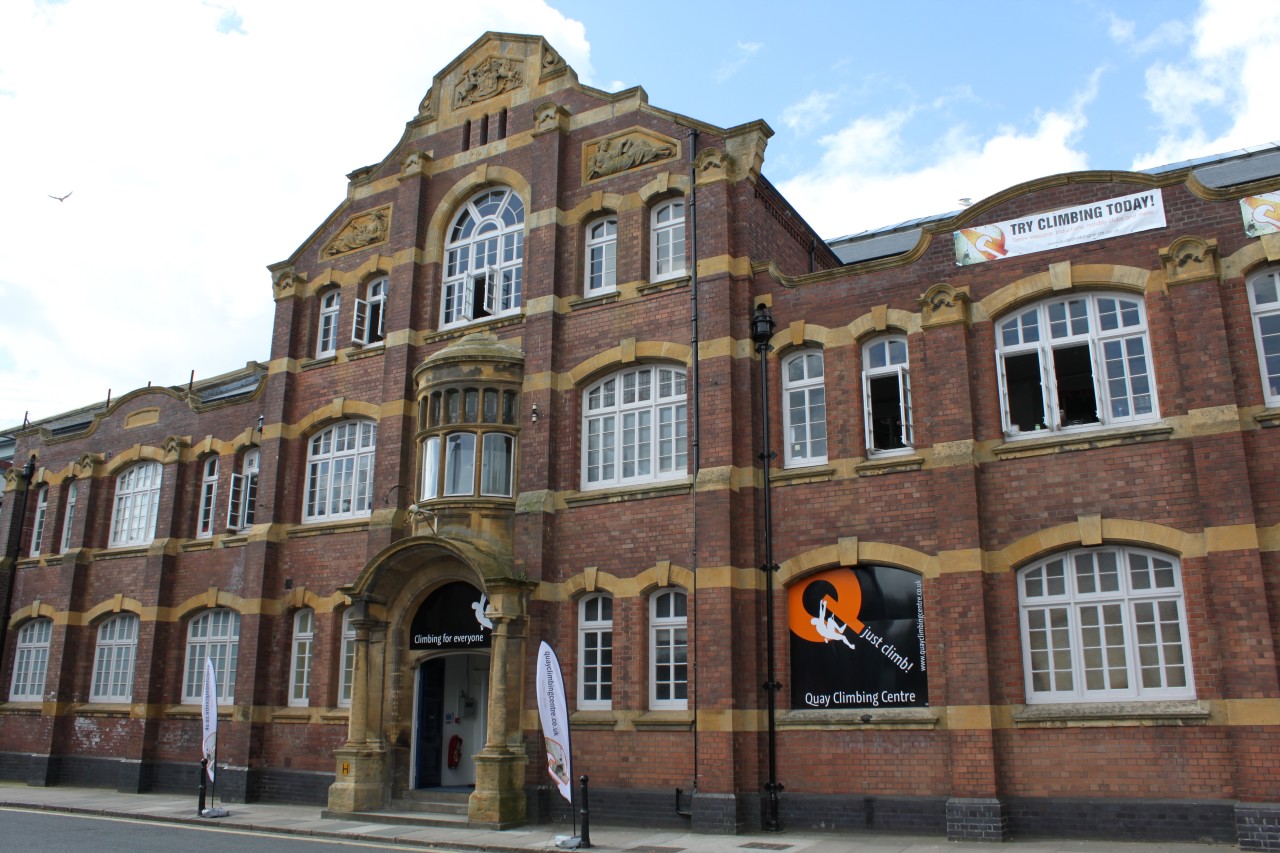
Means of preservation – a recent trend is for historically important buildings to be adapted in order to preserve them. Old meeting houses and chapels that have fallen into disuse are renovated to create characterful homes or blocks of apartments. Abandoned warehouses become nightclubs, archaic power stations art galleries. On my street in Exeter, the old electricity building has become a climbing centre – inside photographs show the interior as it used to be, and original features such as the floor to ceiling tiling can now be seen by anyone that wanders in (you don’t have to pay or climb!). Across the river the splendid seventeenth-century Custom House is now a shop, complete with original plasterwork, wood paneled walls and a sweeping staircase – again, when the shop is open then the public can explore to their heart’s content.

Exeter's Quay Climbing Centre breaths new life into the Old Electricity Works.

Exeter’s Quay Climbing Centre breaths new life into the Old Electricity Works.

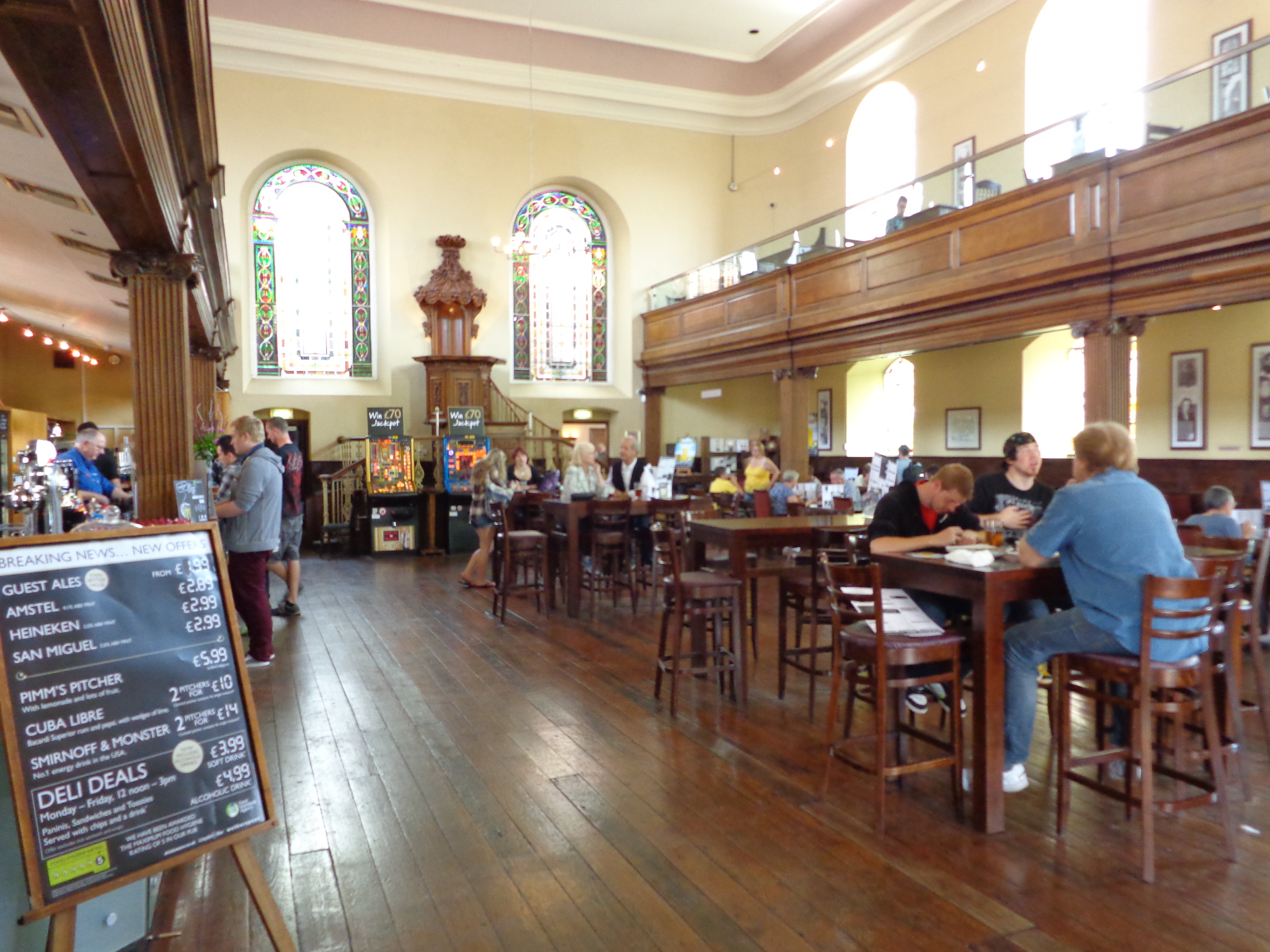
Making the past benefit the present – changing the purpose of a building is of course a compromise – it will alter the contours and function of the original, and in the case of a conversion to private dwellings, only preserves the exterior for the benefit of the public. But I have to admit to being rather sympathetic to this. Evidently we do not have the means to secure every historical monument that we would like to, and a change of purpose does give buildings a more secure future, albeit an altered one. But this is not simply pragmatic – I also think that if the social function of a building has become redundant, then it is a virtue to open the space up to a new constituency by making it useful and appealing to them. The ‘Wetherspoons’ pub chain has a strong track record here. In Exeter it has two pubs in historic repurposed buildings: George’s Meeting House with its cavernous, airy interior, splendid stained glass, twin galleries and pews, is a particular delight (even with the gaming machines that now obscure the magnificent pulpit).

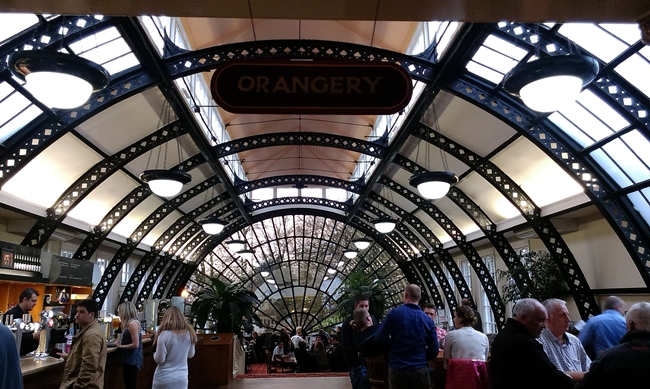
Meanwhile the ‘Imperial’ has gone through many transformations recently: originally a nineteenth-century grand private dwelling, it became a hotel in the 1920s before being bought by the chain in the 1980s. None of this has reduced the visual impact of the magnificent orangery.

exeter imperial_orangeryAnd ultimately I am left wondering – what is the purpose of preserving something for as long as humanly possible, to the exclusion of everything else? Surely the stuff of the past is only useful if we actually benefit from it? Intrinsically it is all just bits of stone, wood and paper, lumpish and meaningless until a human actively engages with and imparts meaning to it. Isn’t it preferable that millions of people get to see Pompeii before the inevitable happens and it dissolves back into the dust, rather than pointlessly extending its life whilst nobody is allowed near it?

Thus perhaps sensitive compromise is the order of the day. To return to the Sir John Soane’s Museum, given the chance, there were things that I would have liked to discuss further with my volunteer. Currently the museum does limit the number of people allowed into the museum at any one time, but other measures might alleviate overcrowding. Could a one-way system be introduced to allow visitors to navigate the house? Maybe this could be co-ordinated with the times of guided (paid) tours to prevent blockages in the narrow walkways. For smaller heritage sites (often those most in need of cash) perhaps we should reconsider the principle that all museums are free – currently collections that are funded directly by the central government are all free to view. Yet charging admittance to some places could raise revenue and redirect the more casual tourist away to larger, better equipped, free attractions. My first post provoked lots of response from archivists and historians on twitter and this issue was raised by several people. Probably better than paid entrance is Manya Zuba’s suggestion that free viewings should be by appointment, with slots available throughout the day (short term exhibitions at various museums and galleries, including the British Museum, already use a booking system like this). As Sjoerd Levelt pointed out, this would add a threshold, ‘but one that can be ameliorated by some proper thinking about well-aimed inclusive policies’. Access would therefore be open to all, if they were sufficiently interested to plan ahead and spend the time making an appointment.

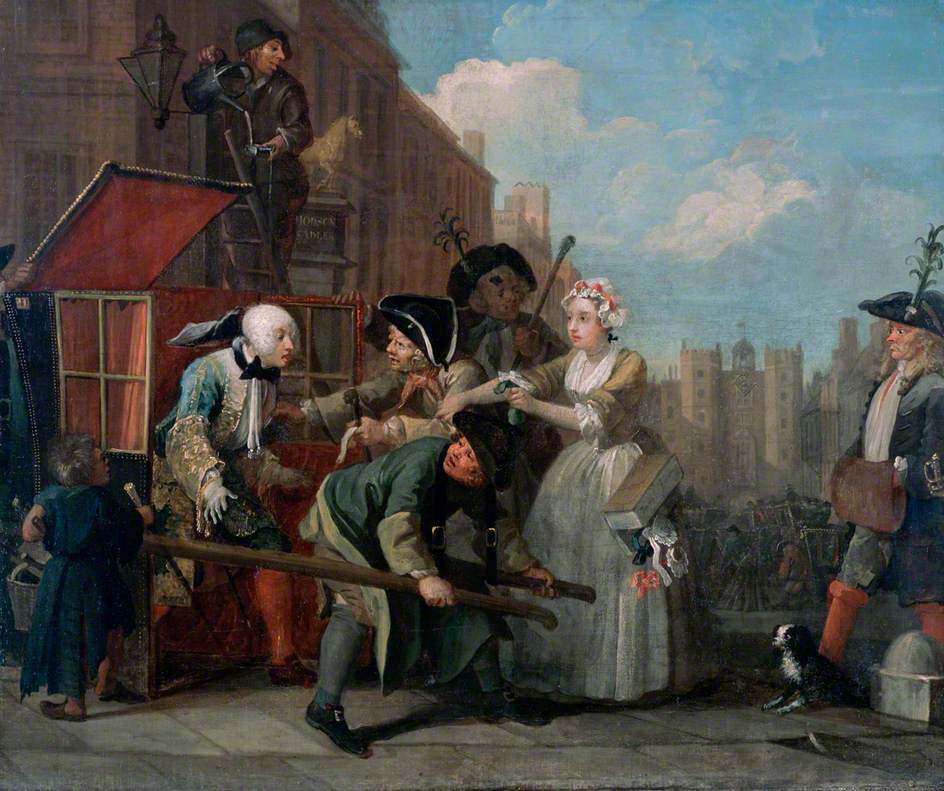
Finally, Soane’s museum also currently houses the original series of paintings for William Hogarth’s ‘A Rake’s Progress’, although you can only view them briefly if the attendant is on hand to open up panels to reveal them. My guess would be that the paintings are important in drawing visitors to the museum – perhaps they might be better placed somewhere where greater numbers of people could see them to better advantage. Maybe more, and more friendly information should be given to visitors to explain the current arrangements and to encourage visitors to be especially careful when navigating around the museum.

(c) Sir John Soanes Museum; Supplied by The Public Catalogue Foundation

Detail from painting four of The Rake’s Progress – ‘A Rake Arrested, going to court’. The incredible detail in William Hogarth’s paintings richly rewards sustained examination, but there is little opportunity for this currently.

But these are just the musings of an amateur who knows very little about this complex issue. There aren’t any simple answers as to how we should conserve our national heritage, and at every stage the interests of different groups must be carefully balanced and weighed. And of course I wouldn’t really steal a finger out of a grave, however long-dead and important it’s owner was.

Grave-robbing and heritage: the problem of conserving the past – Part 1

Laura Sangha

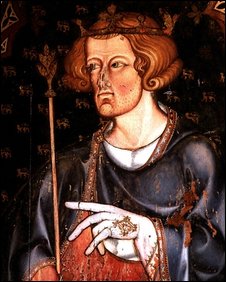
When the tomb of Edward I was opened in Westminster Abbey in 1771, the renowned antiquarian Richard Gough allegedly reached into the gaping coffin and snagged himself a little royal memento. The incident was recorded by William Cole, and it is recounted by Rosemary Sweet in her Antiquaries: The Discovery of the Past in Eighteenth-Century Britain (p. 278):

Mr G was observed to put his Hand into the Coffin and immediately apply it to his Pocket: but not so dexterously that the Dean of Westminster saw it: he remonstrated against the Proprietary of it, and Mr G denying the Fact, the Dean insisted on the Pocket being searched: when they found that he had taken a Finger; which was replaced.

Who wouldn’t want to nab one of those lovely digits for posterity?

In Gough’s defence, I should add the proviso that Cole was not sure whether to believe the story or not. But let’s assume the story is true and that Gough had attempted to make off with a macabre souvenir of this momentous occasion. At first it seems shocking that a well-respected antiquarian, someone dedicated to uncovering and preserving the nation’s past, might act in such a selfish and self-centred way. But the more you think about it, the less surprising it is. Put yourself in Gough’s shoes – wouldn’t you be tempted to take a piece of the nation’s glorious history for your own? Or would your sense of ‘proprietary’ and your respect for the dead stay your hand? What harm would it do to lift one of those smaller bones, wouldn’t there still be plenty left? You would look after it and treasure that little finger, and get great pleasure from possessing it, wouldn’t you?

Beyond this particular dilemma the reality is that conserving the documents and objects of the past is a cultural, technical, economic, intellectual and moral minefield. Wherever you turn conservation is fraught with ideals in tension and competing interests, and each contributor to the argument has perfectly reasonable logic to support their point of view. Tricky questions abound: who owns the relics of the past, and who should be given access to them? How to you balance preservation with exhibition? What’s the point of conserving anything, and how do you decide which bits should be kept? Preservation or restoration? Open access or aggressive protectionism?

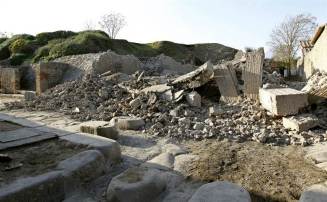
Pompeii crumbles awayWe have all heard stories of archivists who are so intent on protecting their collection that they become more a hindrance than a help in attempting to access the stuff of the past. Yet at the same time we can sympathise with the impulse to protect and extend the life of the fragile documents that are so crucial to being able to understand our history – it’s just that, if no one gets to see them, how can those histories be written? It’s not only paper that needs to be protected either. For many years now, worrying stories about the disintegration of the ancient Roman city of Pompeii, a UNESCO world heritage site, have littered the news, with the site becoming a symbol for what some see as decades of mismanagement of Italy’s cultural sites. Pompeii is fundamental to our understanding of everyday life in ancient Rome, and it receives about 2.5 million visitors each year. It isn’t hard to make a case for its international significance and value, but it does seem that it is very hard to effectively conserve it.

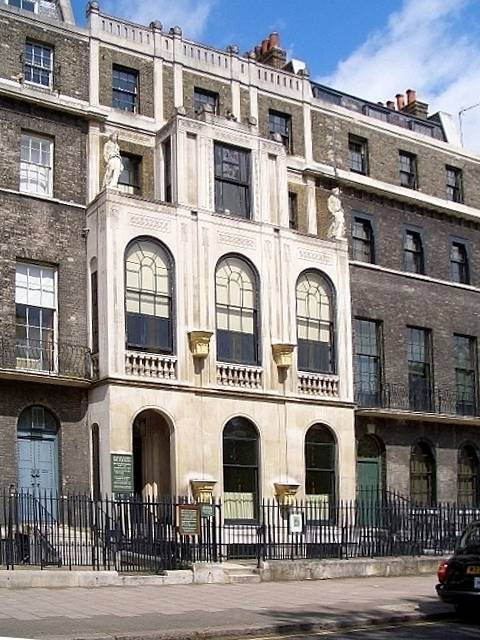
For me, it was a recent visit to Sir John Soane’s museum in London’s Lincoln’s Inn Fields that brought the issues into sharp focus. It’s a fascinating place – Soane was a Professor of Architecture at the Royal Academy and a great collector, with a houseful of books, casts and models. In 1833 he negotiated an Act of Parliament to settle and preserve the house and collection for the benefit of ‘amateurs and students’ in architecture, painting and sculpture, on the condition that the interiors be kept as they were at the time of his death. In the nineteenth century some alterations were made to the house however, and a five-year restoration programme to restore the museum is just reaching its final stages.

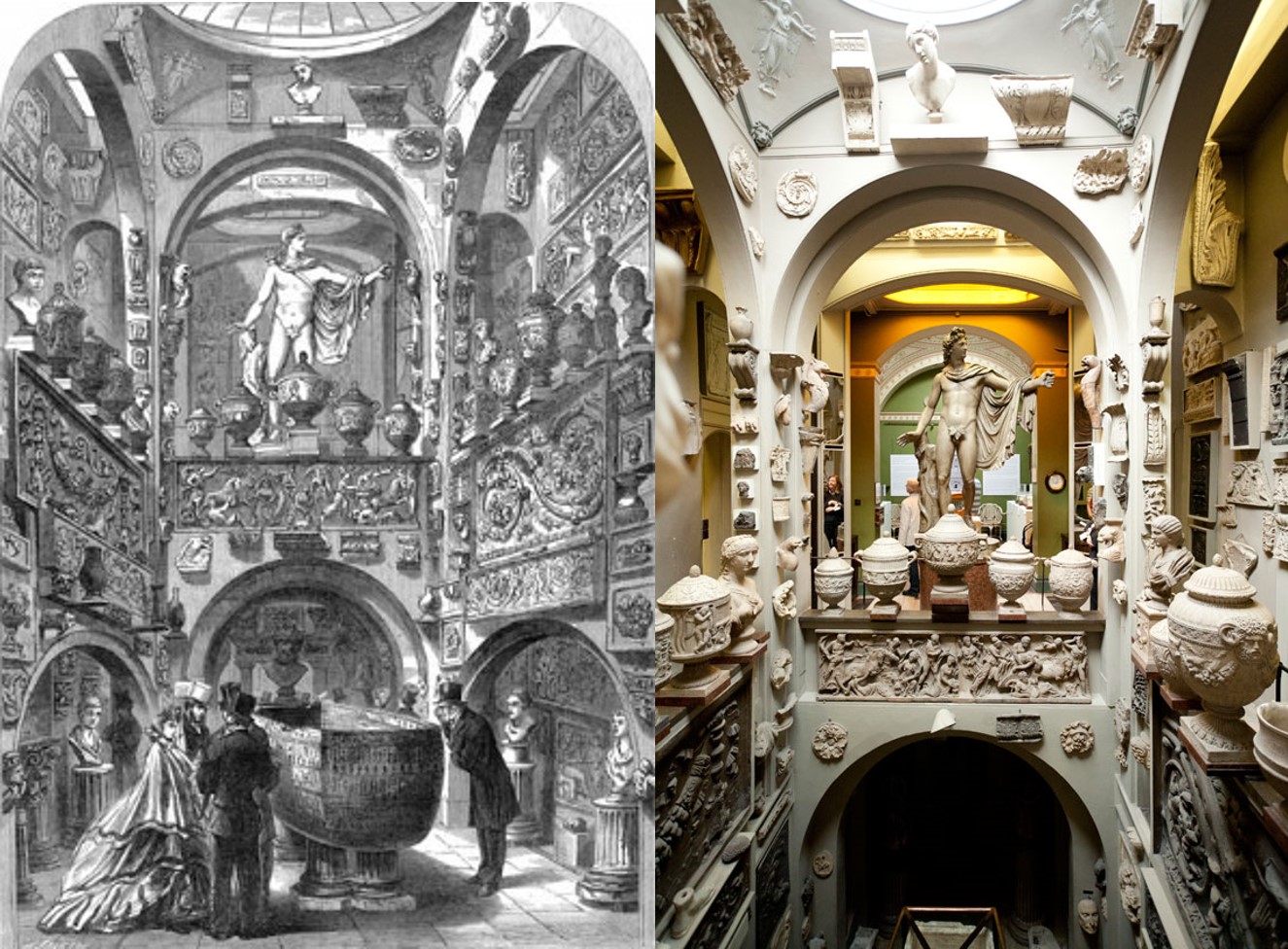
Soane's Museum interior 1864 and 2014.

Sir John Soane’s Museum, interior in 1864 and 2014.

Today this little museum is enormously popular. It is on the tourist trail and appears on the Lonely Planet’s list of best museums and galleries in London.  Indeed, it is a wonderful place, and was of particular interest to me, given that my current research is on Ralph Thoresby, another chap whose house also doubled up as a museum. However, Soane’s museum was very busy and overcrowded, and it wasn’t easy to negotiate around the narrow walkways and tight corners whilst also keeping well away from the innumerable artefacts that clogged every available surface. Whilst waiting to go into one room, we had an illuminating discussion with the volunteer who was guarding the door. Having started with a pleasantry that it was rather busy, the volunteer curtly told us that the popularity of the museum was a disaster. We wondered why that was – surely high visitor numbers helped to secure the museums future? Not so – it is free to enter the museum, so large numbers of visitors bought more trouble and damage than they were worth. The volunteer went on to state that it was ridiculous that the site had become a tourist attraction, and that he believed the museum should be returned to its original function – as a library and resource for architectural students only.

museum exteriorThis brief exchange left me with lots of questions. Instinctively, as a professional historian, I felt that I was a more worthy visitor that the gaggling mass of rather uncomprehending tourists who zoomed round the museum before consulting their guidebooks to check out the next stop on the museum trail. But according to the volunteer, I had as little right to view the museum as them, and admittedly it is true that seeing the museum was hardly vital to my research. I do pay taxes in the UK though, and given that a large part of the museum’s funding comes from the Department for Culture, Media and Sport, surely I was a stakeholder in the museum? And what about the trustees’ responsibility to ensure that the collection is accessible to the general public? Soane’s museum is therefore an excellent window into the heritage problem, which I will be exploring further in my second post on this topic next week.

Samuel Clarke’s Martyrology: images of religious violence

Laura Sangha

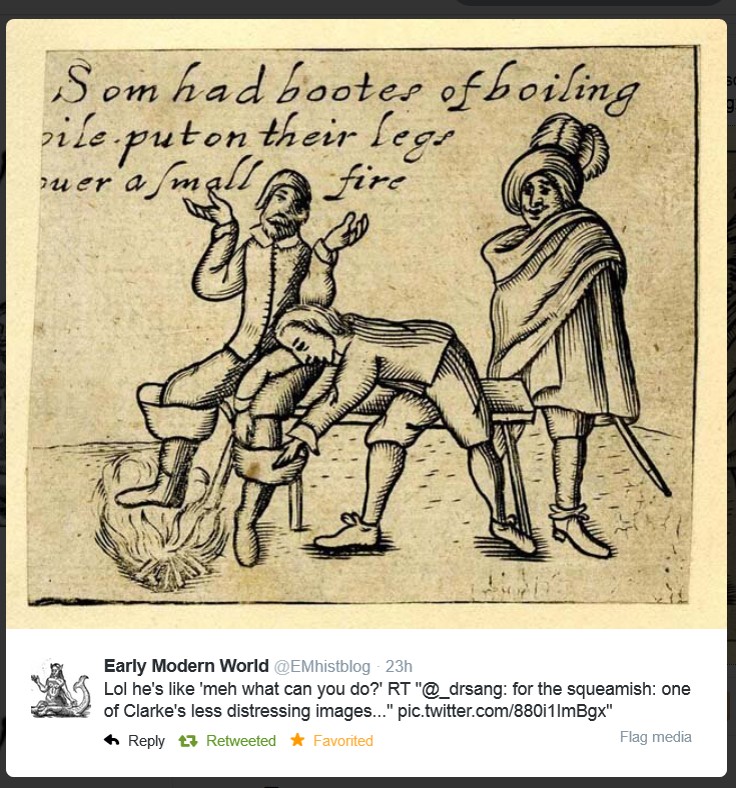
On Friday, one of my fellow tweeters, Early Modern World @EMhistblog, retweeted an image from a 1651 martyrology that I had originally posted last year. Here’s the tweet:
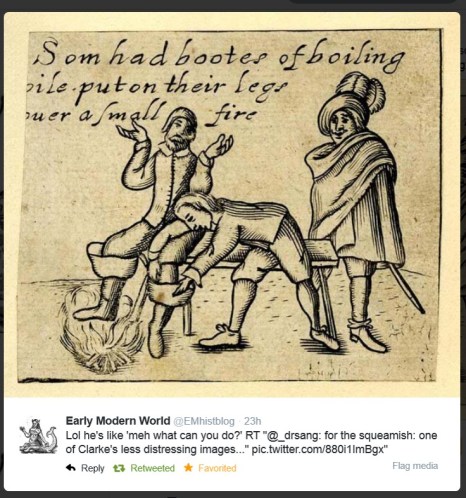
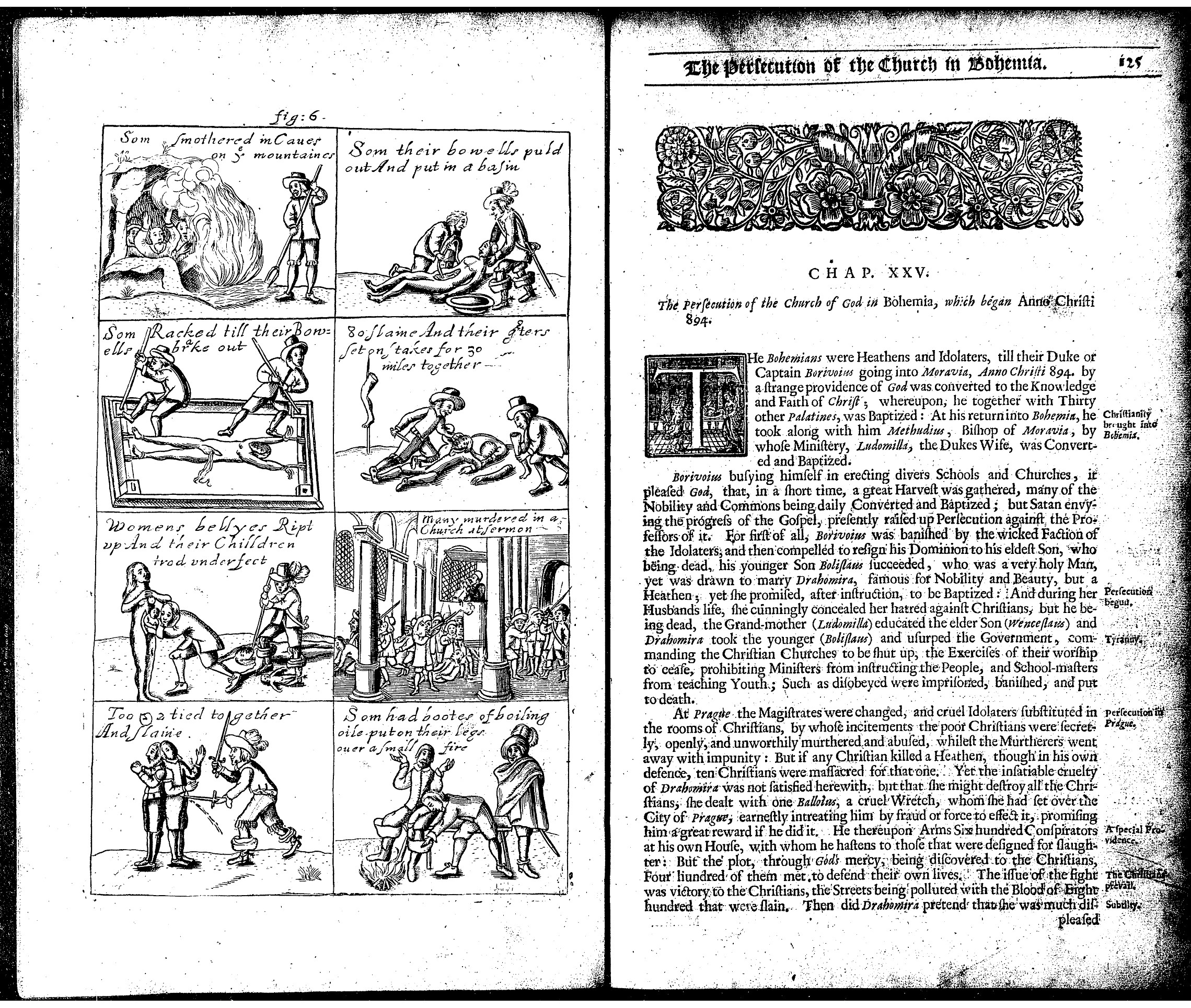
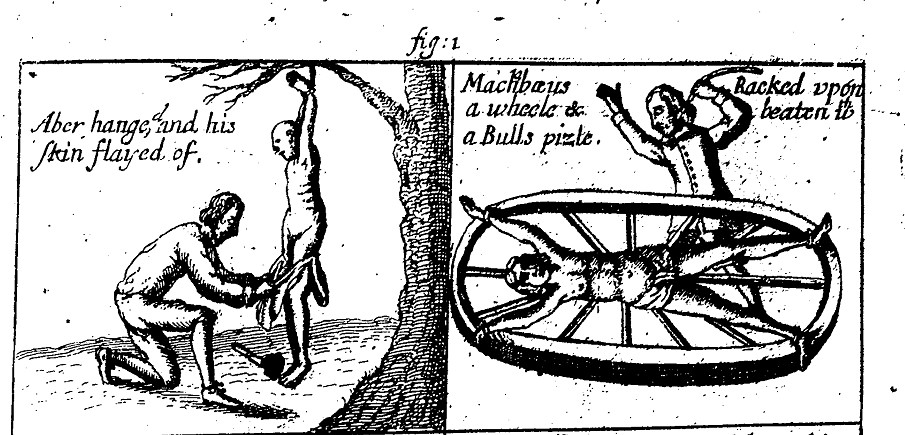
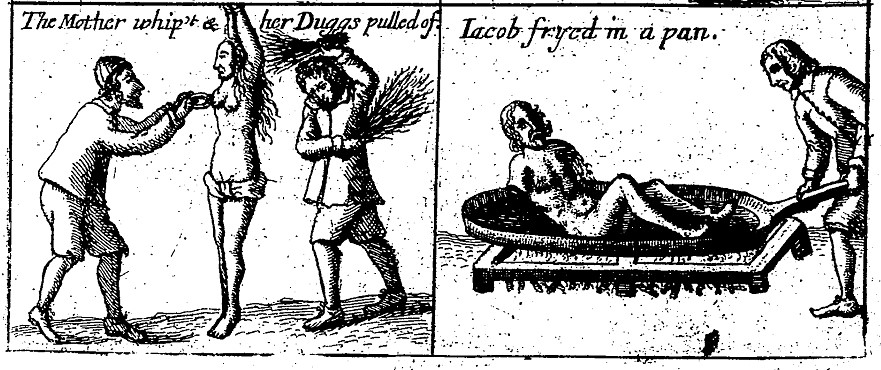
Original tweetIt proved popular, so I wanted to post the full details of the original work and author here (though I make no claim to be an expert on early modern martyrologies). Click on images for enlargements.

Clarke’s Martyrology

The image is one of many graphic illustrations in Samuel Clarke, A generall martyrologie containing a collection of all the greatest persecutions which have befallen the church of Christ from the creation to our present times (London, 1651), Wing / C4513. Clarke’s compilation was first published in 1651. A second edition in 1660, and a third in 1677 suggests that the work was popular. The Martyrology is almost entirely derived from John Foxe’s Actes and Monuments (1563). Indeed, in the preface to the third edition, Clarke defended himself against the claim that his work was a superfluous repetition of Foxe’s monumental work – Clark argued that Foxe’s was a general history of the church, not just a martyrology, and he also claimed that he had ‘turned over many other Authors’ to supply what was wanting in ‘Master Fox’ – although a cursory perusal of the work suggests this claim is false. Probably closer to the truth was Clarke’s assertion that:

in these times many want money to buy, and leasure to read larger Volumes, who yet may find both money, and time to purchase, and to peruse so small a Volume as this is. (Preface, A2r).

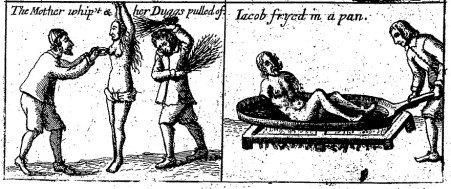
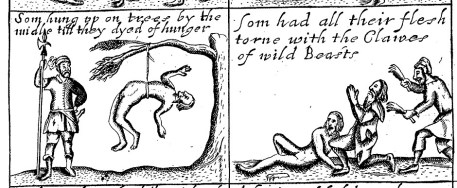
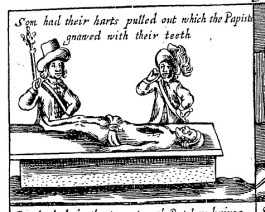
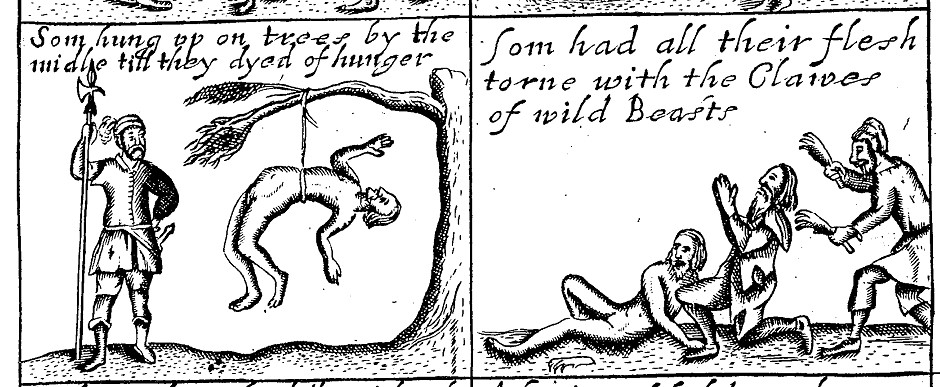
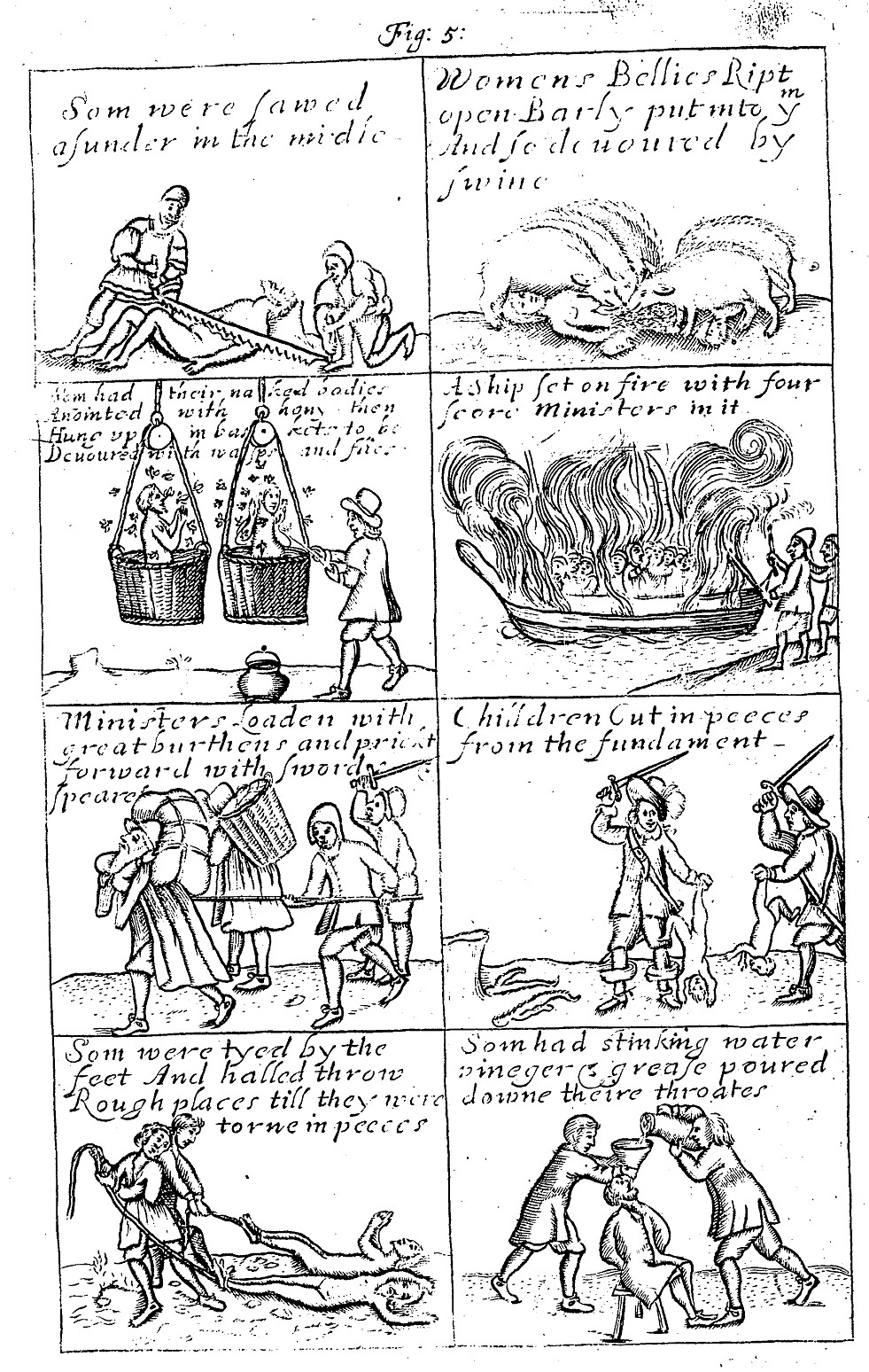
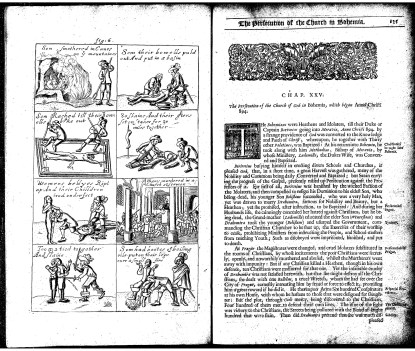
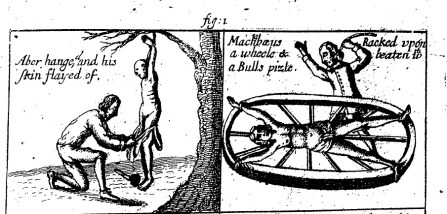
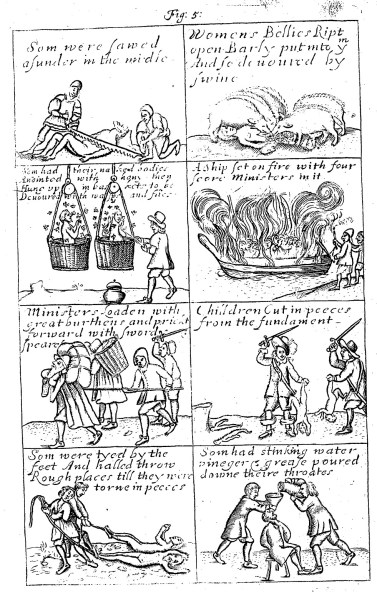
Though even this should be taken with a pinch of salt, because later editions of Clarke would have been reasonably expensive – the third edition was more than 700 pages long; and it contained many illustrations, making it an object of prestige as well as a marker of preferred churchmanship. That said, the images are certainly cruder and less sophisticated than in the large, expensive editions of Foxe. The original image that I tweeted can be seen in context here, bottom right (p. 125, 1677 edn.)Original pic in contextThere were twelve of these plates in the book, each depicting the sufferings of the martyrs in extremely graphic detail. The reader can gaze upon the brutality of religious persecution and be struck by the ingenious capacity of humans to inflict ever more horrible suffering upon their fellows. The enormous variety of types of torture, and the inventiveness of punishments is constantly surprising. Page 18Page 18bpage 52 hung and animal clawsFor the modern viewer, the crude images probably provoke a variety of conflicting emotions. Organised in (what looks to us) a comic book style, the presentation, and the poses and expressions of the victims and torturers often seem terribly mismatched against the outrageous violence that the images depict. The result is both shocking, but at the same time it can also be humorous – as with the nonchalant chap in the ‘boiling oil’ boots. We are used to a extraordinary level of realism in modern media: high definition reproductions of crime scenes, the aftermath of terrorist attacks, the devastating effects of modern warfare. Early modern efforts can seem basic, stiff and even silly, by comparison.
page 74 full page

ATROCITY PROPAGANDApage 242 papist hearts


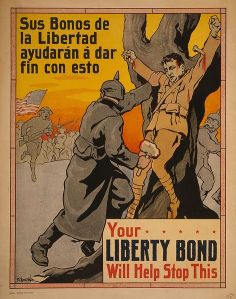
The images also provoke a sense of disbelief – we would prefer to think that this is religious polemic, on a par with the atrocity propaganda of the First World War. Surely no Catholics actually ate a Protestant heart, and the Hun didn’t really crucify a Canadian soldier in Belgium? Though we accept terrible violence happens, the presumption is often that these acts have been exaggerated for greater effect – though countless atrocities throughout history offer plenty of evidence to the contrary.

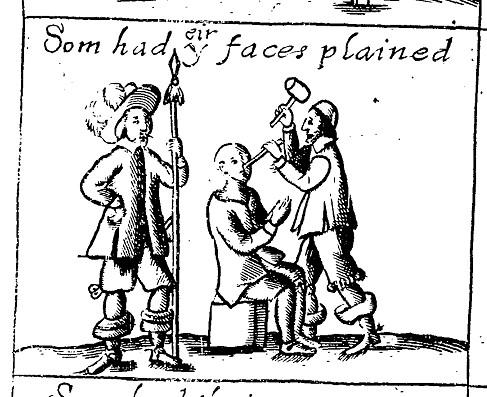
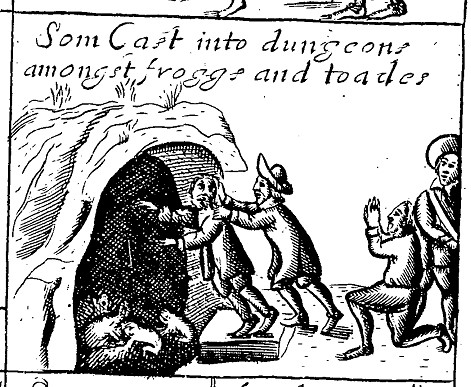
At other times, the violence is so absurd or extreme that humour is almost a logical response:
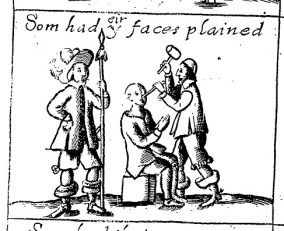
page 220 face plainedIt’s not really possible to ‘plain’ someone’s face off is it?
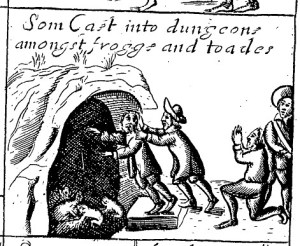
page 220 frogs and toadsBeing thrown in a cave with some toads and frogs hardly seems comparable to some of these other tortures, does it?
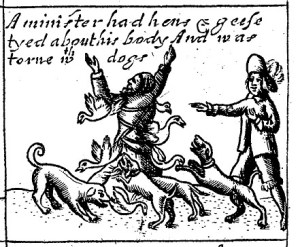
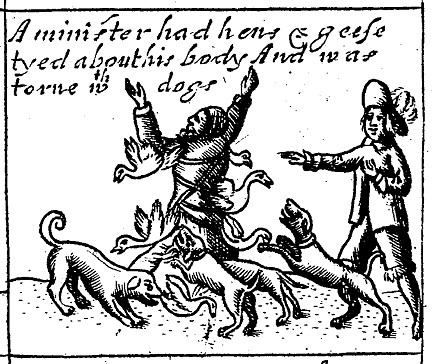
page 180 geeseHow long did it take them to tie those geese and hens on?

Undoubtedly martyrologies are a form of religious polemic and we shouldn’t assume that the atrocities they depict happened. As with all source material we must recognise the cultural dynamics that have shaped the content and presentation of the material. But of course we mustn’t assume that the viewing experience was the same for the early modern person. Early modernists were used to sub-standard or less accomplished woodcuts, and these visuals would presumably have represented the events they depicted to their imagination as effectively as a photograph does to us today. Early modern readings of these images would also have been informed by their own visceral experiences of religious violence – in the mid-seventeenth century, England had suffered about a 3.7 percent loss of population during the Civil Wars (more than during World War I, around 2 percent) and religious violence was part of everyday existence. Thus in their historical context, these images would perhaps have been just as affecting as Azadeh Akhlaghi recreations of Iran’s most notorious murders are to us today, though in the future they may also be seen as amateurish and slightly absurd.

The Author[1]

Samuel Clarke (1599-1682) was born in Sam Clarke headshotWarwickshire, the son of a vicar, and he grew up in a notably Puritan parish. He was well educated – first at Coventry school, and then Emmanuel College, Cambridge. In February 1626 he married Katherine Overton, with whom he had six children.
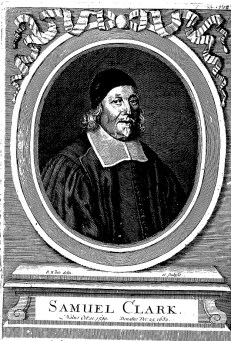
Following his education Clarke had a successful career as a clergyman. He was constantly in trouble for his nonconformity (his refusal to wear the surplice and omitting some of the ceremonies in the Book of Common Prayer), although he was pleased with the reformation that he achieved at Alcester in the 1630s – according to Clarke, as a result of his ministry the town ‘which before was called drunken Alcester, was now exemplary and eminent for religion’.[2]

Clarke campaigned against Laudian innovations in Church government and theology, and witnessed the suffering that the Civil War bought to the Midlands in the 1640s. In 1643 he moved to London, becoming minister at St Benet Fink and getting involved in London Presbyterian circles. In the 1650s he was a more moderate voice, prepared to work with the Cromwellian regime, and he initially welcomed the restoration of the monarchy in 1660. However, the religious settlement of 1662 was too conformist for Clarke’s tastes, and he was ejected from his position in the Church, along with two of his sons.

Excluded from the Church, Clarke then dedicated his time to writing and publishing works that would promote his religious beliefs, including A Generall martyrologie. Clarke specialised in compiling biographies, gathering his material from already published works and the manuscript writings of other godly ministers. His other works included: The Lives of Thirty-Two English Divines, appended to the third edition of A Generall Martyrology (1677) and Lives of Sundry Eminent Persons in this Later Age (1683).

[1] The information about Samuel Clarke is from: Ann Hughes, ‘S. Clarke (1599-1682)’, Oxford Dictionary of National Biography (OUP, 2004); online edn. May 2007 [http://0-www.oxforddnb.com.lib.exeter.ac.uk/view/article/5528, accessed 12 April 2014].

[2] S. Clark [S. Clarke], The lives of sundry eminent persons in this later age (1683), quoted in Hughes, ‘S. Clark (1599-1682)’.

I consulted all three editions of Clarke on Early English Books Online.

The many stages of writing: a personal take

Laura Sangha

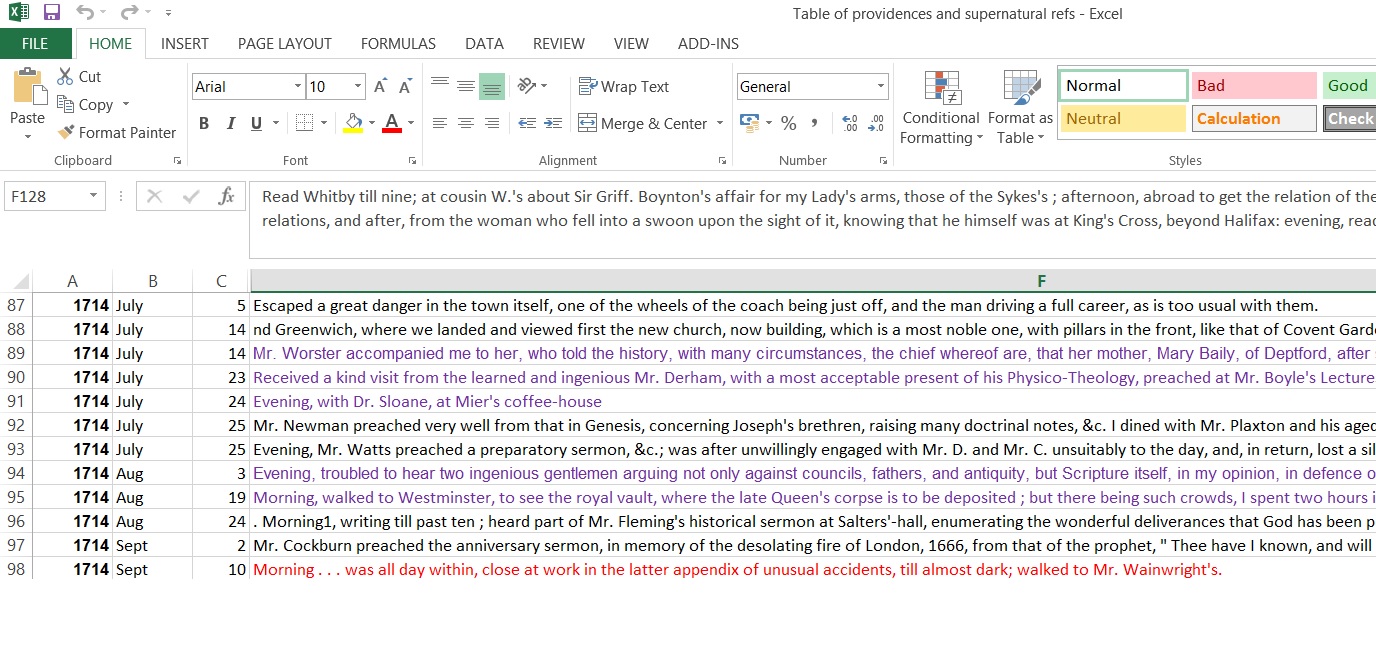
For the past few years, I have been asked to contribute to a postgraduate training session on ‘Preparing to write’ which I deliver jointly with a professor in the English department. It is something that I really enjoy doing, because it is a chance to compare my own experiences and practice with other researchers. And each year I am struck anew by the similarities in the way that we approach our research, as well the fact that there are always new techniques and ways of working out there that I haven’t considered. Whilst the English professor has a complicated system of index cards and quotations, I tend towards colour-coded excel spreadsheets, both of which methods have something in common with Keith Thomas’ labour (and envelop) intensive working practices. The informal and inclusive nature of the discussion of the training sessions are a great way to encourage reflection on our working practice, many of which seem to organically emerge and ossify throughout our training and early career.

Excel is currently my favourite note taking tool.

Excel is currently my favourite note taking tool.

Alongside thinking about preparing for writing, I have just bashed out my first paper on my new research into Ralph Thoresby, and found this blog post on what we might mean by ‘pace’ in writing incredibly useful for thinking about the processes involved. Recently Matt Houlbrook’s lyrical photo essay/ biography of a book chapter had also set me wondering just how similar our experiences are when it comes to writing. Does everyone feel the same deep unease [terror] when you open the new document and begin to formulate that first sentence? Or derive the same small comfort from putting the title at the top of the page, formatting it nicely, and saving the (as yet still blank) document to file? Why is it that I can only write 1,000 words a day, whether I have finished them by 11am, or 9pm, and does everyone have a ‘natural’ daily word limit? Is there an optimum number of jokey asides to include in a paper? And how do you turn off autocorrect in the latest version of Word?

With all that in mind, I thought I would be therapeutic to briefly summarise the main stages that I pass through when I am writing.

The dreaded introduction.

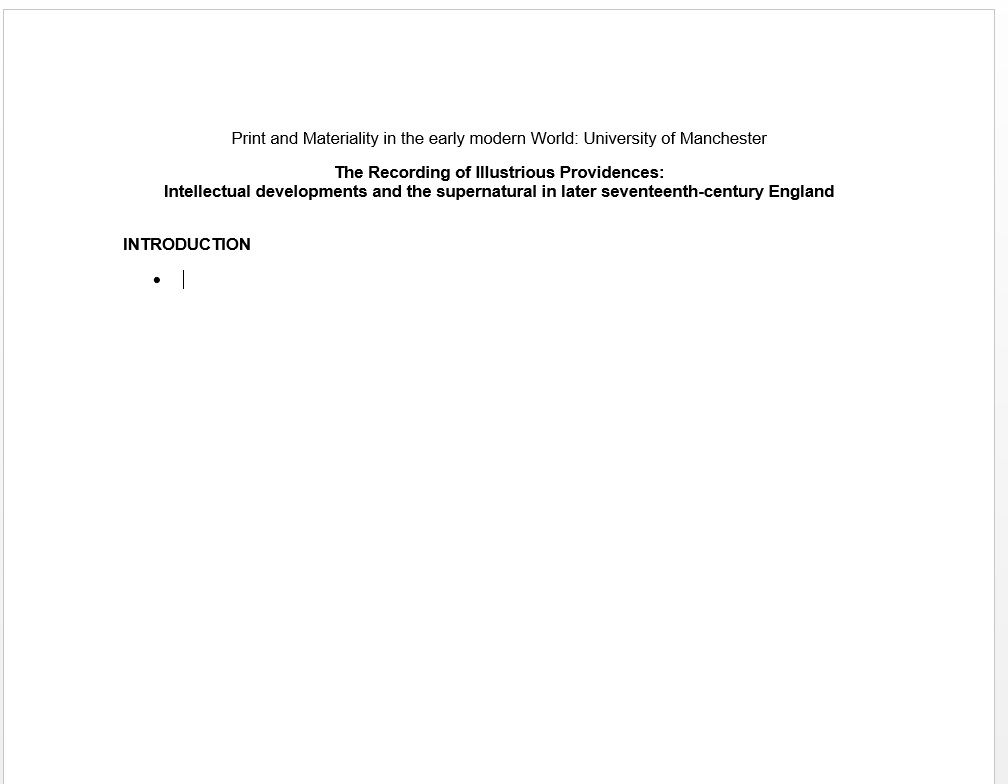
Undoubtedly my least blank docfavourite part of writing. The uncertainty, the weight of expectation, the fear that you have forgotten how to do it. The enormously intimidating existing scholarship and the huge pile of primary material. The plan that made sense when you wrote it but which is now an undecipherable mass of crossed out paragraphs, arrows pointing to nowhere, and an obscene number of question marks. NB. This entire post could have been written just about this point.

The false start.

Continuing the theme, the false start. You finally start getting something down, you pick your way through a particularly difficult bit of historiography, and you are feeling quite pleased with yourself. You stop for a cup of tea, and when you return, realise that you have 2,000 words of a 4,000 word paper, but you haven’t even mentioned the topic in the title yet. None of your 2,000 words are essential and most will need to be cut so you can actually address some of the important things. But the great news is: a false start is infinitely better than no start, and you can just deal with the editing later. NB. Save the original file because you might be able to use it somewhere else.

The comforting middle bit.

Before this post descends into paralysing misery, I usually find that once I get going, I tend to get into a groove and progress reasonably steadily. I generally target either a certain number of words each day (c. 1,000) or completion of a particular section from my plan. Attacking longer pieces of writing in bite sized chunks is essential and helps to make me feel accomplished every day, not just at the last. That said, there will inevitably be…

Possibly blasphemously, I also fondly think of the darkest day as the Slough of Despond [William Blake, Frick Collection New York].

Possibly blasphemously, I also fondly think of the darkest day as the Slough of Despond [William Blake, Frick Collection New York].

The darkest day.

There are lots of reasons for the darkest day, that day when your muse deserts you, and writing simply does not happen, or progress is so slow that an outsider wouldn’t notice it. For me it is usually when I am tackling a bit that is tricky conceptually, or if I am trying to synthesise and reduce something rather complicated into a manageable and not too distracting size. After hours of furrowing my brows, picking up and putting down books, groaning, re-reading articles, chewing my fingernails, cutting, pasting, and standing up to look out of the window, I usually have something useable. That’s the moment I save those precious 300 words, put my whip down, and leave that dead horse alone.

The race for the finish.

Finally, your steed has miraculously revived, the wind is in your hair, and you are heading into the final straight! Everything is great. You have crossed out the majority of your plan, you have discarded all the boring and inessential parts, you have mastered that horrible bit about predestination. You are so excited about finishing you write two sections in one day. Your conclusion is so close you can smell it. Your examples are fitter, your jokey asides are funnier, your analogies more similar, and your argument more persuad-ier. It turns out that dreaded introduction was worth it after all. Now – to the pub*!

*It is important to celebrate your accomplishments, but please drink responsibly.

Fantastic Thoresby – Part III: historic storms, floods and corpses washed out of graves

Laura Sangha

This post is part of an occasional series on antiquarian, topographer and dissenter Ralph Thoresby (1658-1725).

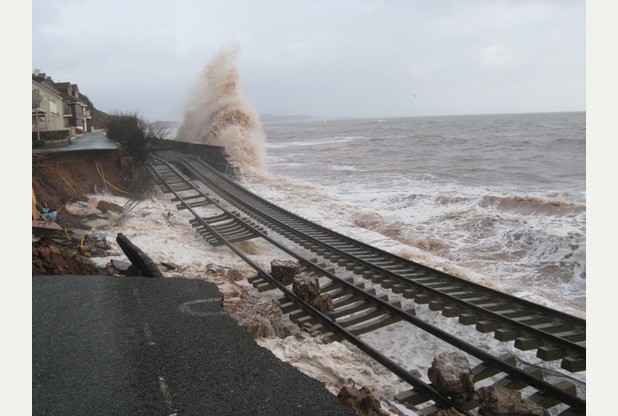
dawlish railwayIt’s been a little wet in the south of England this winter, as some of you may have noticed. Storm has followed storm, houses have been flooded, villages cut off, and here in the south west the railway at Dawlish washed away. This has precipitated a deluge of news stories dragging out all sorts of beloved clichés as the media bandwagon has careered on its merry way. Predictably a political row about the causes of flooding has erupted where Conservatives have blamed Labour for previous policy mistakes and Labour have accused the government of ignoring climate change. But the storms have proven to be a delightfully flexible concept, allowing for commentary on all sorts of social issues, including: the storm blitz spirit, the storms and austerity, the storms and the royal family, the storms and the proposed high speed rail link, the storms and the under-equipped army, and my personal favourite, the storms and the mysterious case of the python that was battered to death in the night-time.

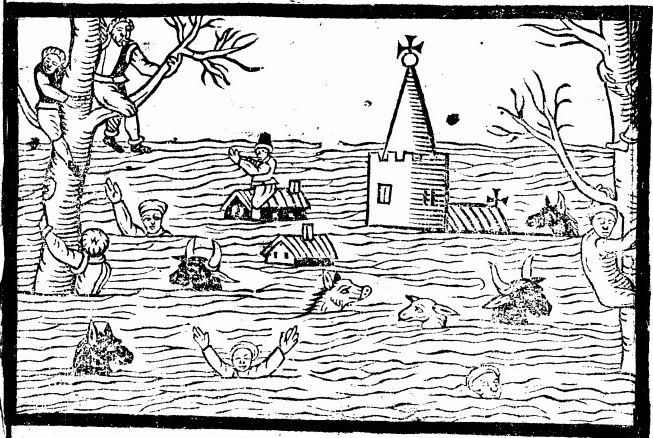
1607 FloodPerhaps more interestingly, the storms have also prompted some writing on historic bad weather and its consequences – I am sure I am not the only early modern historian who was delighted to see a seventeenth century woodcut on the front page of the Guardian’s website on February 12. We were also offered some timely musings on Daniel Defoe’s The Storm, his memorial to the hurricane that pummelled northern Europe in 1703, and this blog on eighteenth-century ‘climate change advocates’ provided some interesting historical context. Continue reading

The Tudor South West at Exeter’s Royal Albert Memorial Museum: Part 5 – Parting thoughts

Laura Sangha

This is the fifth post in a week long series about an exhibition at Exeter’s museum.

In this final post I offer some brief parting thoughts on the success of the exhibition as an exploration of a complicated and dynamic society.

A skilled society

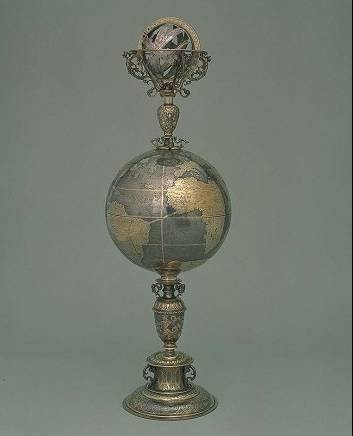
It was clear that this was a highly creative drakes cup editsociety, with many accomplished practitioners of the arts and crafts. Perhaps this is overemphasised by the very nature of museum exhibitions that are likely to contain a preponderance of manufactured objects and paintings, but that does not detract from the quality of the items on display. There are more prestigious objects such as the Drake Cup (c. 1595). By tradition it was given to Drake by Elizabeth I after he circumnavigated the globe, its silver gilt engraved with a map of the world, complete with names of continents, islands and seas in Latin, plus sailing ships, whales and dolphins. Its hard to imagine anyone actually drinking out of this (it’s enormous and unwieldy for a start), but the same is certainly not true of more everyday objects such as the glazed stoneware drinking vessels and delicate silver spoons also in the collection – whilst important indicators of status and often treasured family possessions, these items were made to be used, not rest on a shelf.

An intellectual society

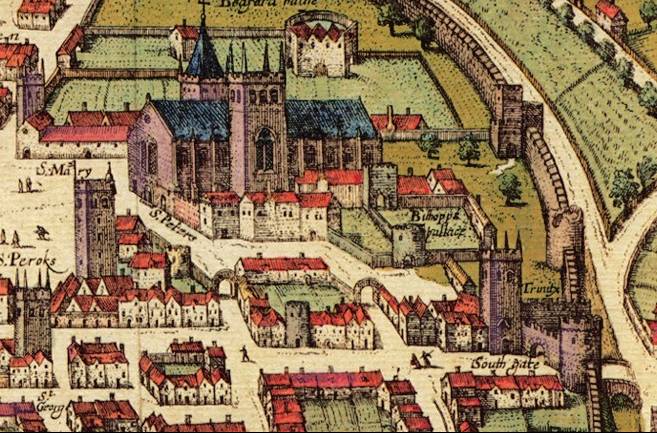
As ever, I am left to marvel at the intellectual sophistication of people in the distant past, in an era that most people now would think of as the technological dark ages. In terms of intellectual activity the pre-modern period was not backwards or uncivilised, this was a society that exhibited civic pride (for more see day 1: a map of Exeter), where renaissance style and learning was spreading, and where important topographers (such as mapmaker John Norden) and antiquarians (such as Richard Carew) were beginning to make their mark. Another nugget that I learned at the exhibition – Sir Thomas Bodley, the founder of Oxford’s Bodleian library, was born in Exeter.

A Protestant society

As a religious historian I am particularly sensitive to the Protestantism that underpins late Tudor society, but I think few historians would disagree that the Reformation’s repercussions were also to be cathedralfelt in every sphere of daily life. From the goldsmiths who prospered when reshaping church plate for a new liturgy (for more see day 3: a Devon communion cup), to the soldiers engaged in an epic struggle against the antichrist and international Catholicism (for more see day 4: the Spanish Armadas), to those for whom scripture became deeply embedded in their ways of expressing themselves and in guiding their everyday activities (for more see day 2: domestic decoration), Protestantism was key. We can’t even begin to understand this society without considering it.

An ambitious society

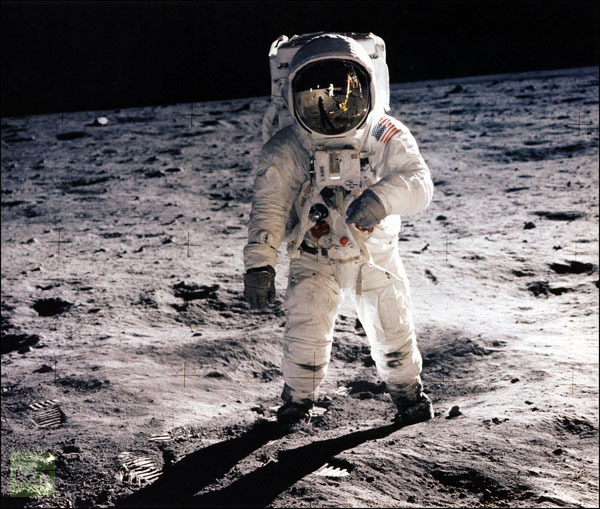
On his talking tour, exhibition curator and Exeter Professor Sam Smiles described Francis Drake as the Neil Armstrong of his age, and the analogy struck a chord with me that kept reverberating. Partly because it immediately suggested the celebrity of the man – how many contemporaries knew Drake’s name? Current scholarship has a tendency to be picture-astronaut-walking-legsceptical about the importance of exploration for sixteenth century societies, with claims that few people were aware of new discoveries which made little impact on ordinary people’s lives. But the Armstrong analogy is intriguing because of what it suggests about the mentality of the Elizabethans. Clearly some were ambitious, self-confident, cocky even, heading into the unknown on the uncertain hope of economic rewards and a boost for their honour and all important reputation. This was a society where political success and innovation or entrepreneurship were occasionally linked. And it is undoubtedly true that whilst precedent, custom and tradition were revered this was not to the exclusion of novelty.

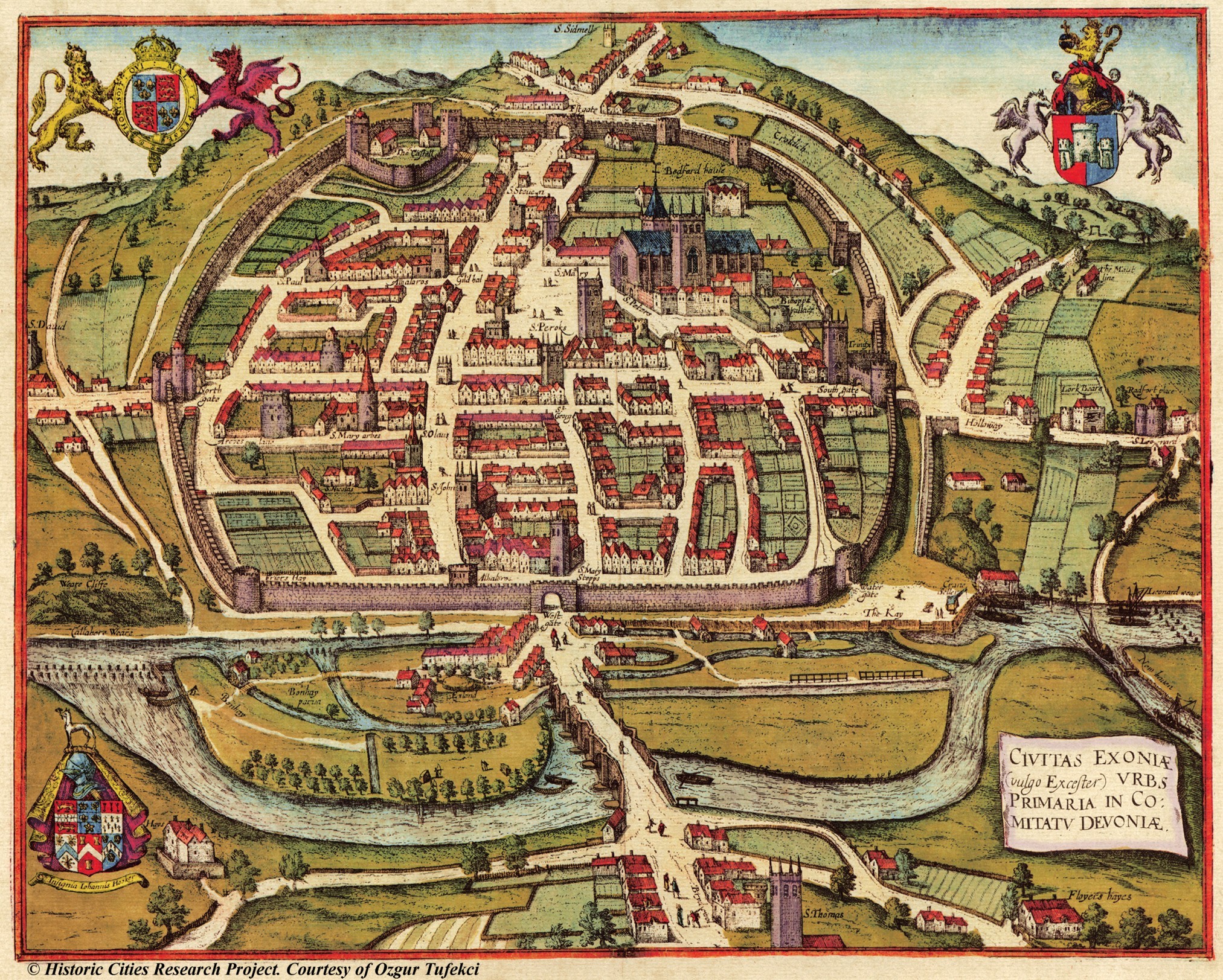
Two maps in the exhibition really capture this duality. The first is the map of Exeter that I discussed in my first post.

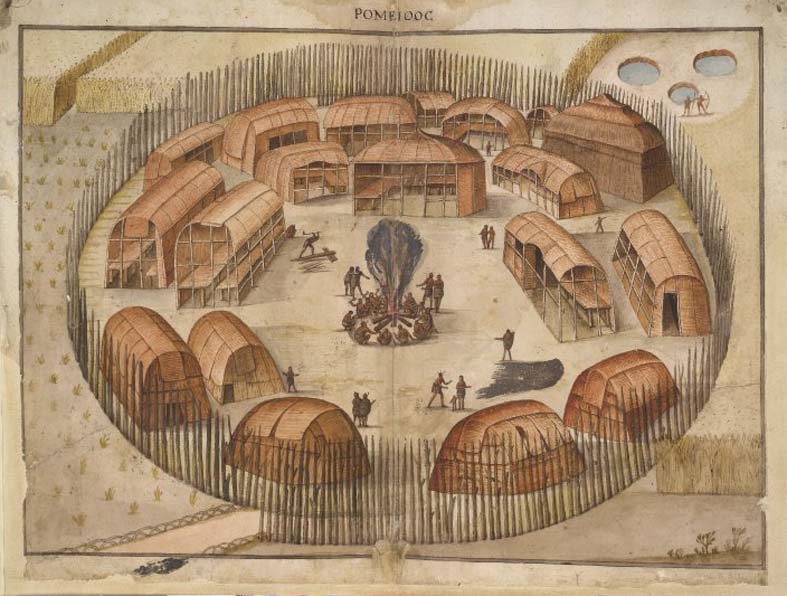
braun_hogenberg_VIThe second is a map of the North America village of Pomeiooc, on Roanoke Island (1585-93).

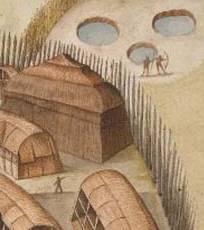
the-village-of-pomeiooc1Placed next to each other, the similarities between early modern Exeter and Pomeiooc are striking. Pomeiooc is presented as a well ordered settlement, encased in a wooden palisade for defence, it’s inhabitants are hunters, fishers and farmers. Sophisticated visual techniques are again on display – some of the houses are ‘cut away’ to reveal their inner organisation, and there is even a chap practising his archery by the fishing pools in the top right corner, just like in the map of Exeter. As before, this might tell us just as much about the European who painted the map as it does the native Americans that it depicts. It might reveal the tendency of archerEuropeans to impose their own understandings and framework on the new cultures and societies that they encountered in far away places. It might be propaganda, designed to support overseas settlement by enticing potential settlers to the New World – like Exeter, Pomeiooc looks like a productive and fertile community (though I do wonder, what is that wooden fence keeping out…?). It certainly suggests that not all Europeans dismissed these people as barbaric savages, and that they could identify similarities between their own society and non-European counterparts.

An impressive society, an excellent exhibition

All in all, I was deeply impressed by both the achievements and complexity of the Tudor south west, as well as the exhibition’s capacity to capture and explore it. The Golden Age is here in all it’s glory – crafts, art, architecture, entrepreneurs, discovery, military triumph, intellectual development.

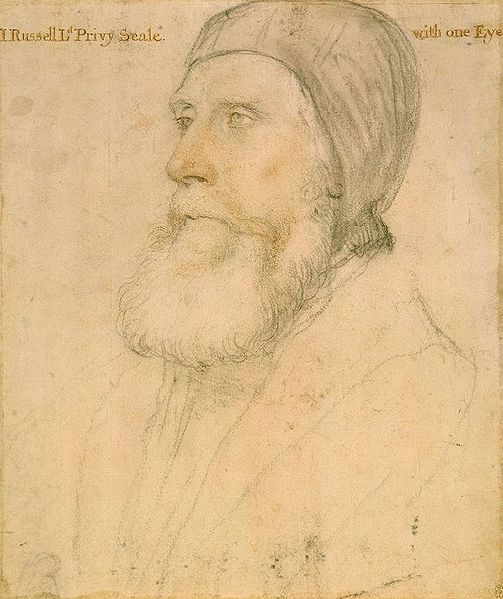
My only remaining niggle is that the difficulties, the struggles and the violence of the age are largely absent. Here we see the middling and upper sections of Elizabethan society, but these objects are largely silent about the lower sorts, the people suffering in the hardships of the 1590s, the people resisting religious change and suffering due to economic trends. We do come face to face with Lord John Russell, 1st earl of Bedford,John_Russell_Earl_of_Bedford_Hans_Holbein_the_Younger in a sketch by Holbein the younger. Russell was in charge of the forces that brutally suppressed the West Country or Prayer Book Rebellion in 1549, slaughtering hundreds in a number of bloody encounters around Exeter. But here his image must serve as the only reference to the scars left on the south west by that tragic rebellion. Of course, it would be strange to linger on these more troubling aspects of the period in an exhibition that is intended as a pointer to the south west’s ‘manifold contribution to the Tudor age’, and these comments are not intended as a (horribly unfair) criticism of the exhibition. They are included here as representative of my worry that perhaps there is too little space for the lower sorts in our museums and a reminder that we should fight hard to make sure they can find a place.

In summary, this is undoubtedly an excellent exhibition that certainly fulfils its remit of revealing the intellectual, artistic and economic importance of south west in the Tudor Age. The sophistication of this society is perhaps the most striking impression that one is left with: despite being a geographically-peripheral region, this was by no means a provincial backwater. Head to the RAMM to see for yourself.

‘West Country to World’s End: the South West in the Tudor Age’ runs until 2 March 2014 at Exeter’s Royal Albert Memorial Museum. You can find all the details about the museum, it’s opening times, it’s wonderful café and more here

The Tudor South West at Exeter’s Royal Albert Memorial Museum: Part 4 – The Spanish Armadas

Laura Sangha

This is the fourth post in a week long series about an exhibition at Exeter’s museum. Click on pictures for enlargements.

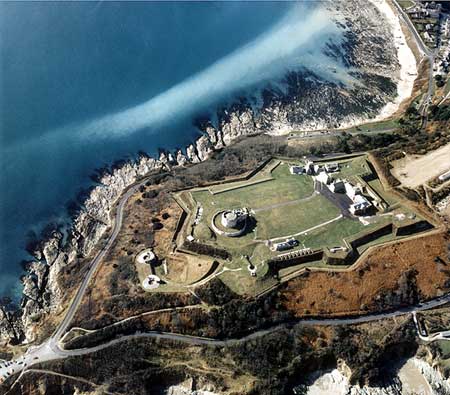
Pendennis Castle, Cornwall.

Pendennis Castle, Cornwall.

Politically, the south west was of crucial importance during Elizabeth’s reign when hostilities with Spain put Devon and Cornwall in the front line. This drew the region into events of national importance, but these events were also experienced on a local level and were of particular significance for the region. The 1588 Spanish Armada is probably the best known event of Elizabeth’s realm, and is certainly the most iconic, but for the south west things didn’t end there: two more invasion fleets sailed for Britain in 1596 and 1597. From the exhibition catalogue I learned that the region had in fact had been repeatedly strengthened militarily during the Tudor era – forts were constructed at western harbours in the reign of Henry VIIII, including the impressive examples at St Mawes (1543) and Pendennis (1546). In Elizabeth’s reign, Plymouth’s St Nicholas Island was heavily fortified in 1583-85 and Sir Richard Grenville was given command of the defence of Devon and Cornwall in March 1587, when he readied the equipment and defences of the peninsula. Anxieties remained high throughout the 1590s, Plymouth received more fortifications, and a small force landed at Mousehole, Newlyn and Penryn in 1595, doing extensive damage when they set them afire.

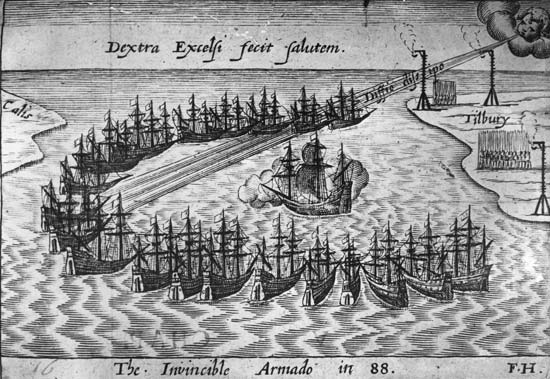
But it was the 1588 Spanish Armada that really became embedded in national consciousness and whose memory has endured. This is surely because the failed invasion was accorded with such importance at the time. Special forms of prayer were issued by the government giving thanks for the nation’s deliverance, and celebrations wind-blowing-on-armadamarking the defeat became a regular fixture in a rapidly developing new national ‘Protestant’ calendar, as David Cressy has documented. In the epic struggle between Catholicism and Protestantism, God appeared to have revealed his hand, assisting the numerically inferior and poorer Protestant forces to miraculously defeat the mighty fleet of a Catholic superpower. This was not a mere fluke convergence of bad weather and inspired naval leadership, this was a providential deliverance. The ‘Protestant wind’ that sent the Spanish ships into disarray was proof of God’s special care and protection of his chosen people, those Protestants who professed the ‘true’ faith.

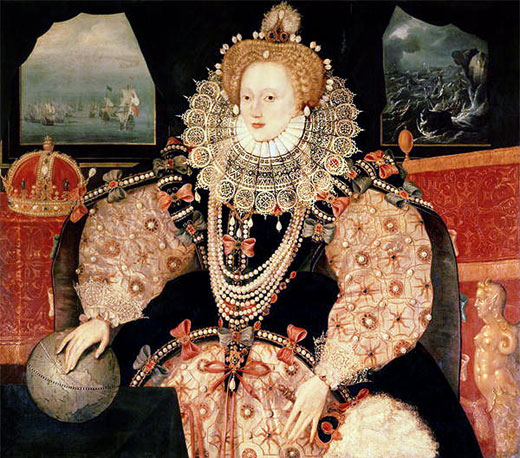
ELIZ portraitEven at the time the iconography of the Armada was well developed (again giving lie to the ‘iconophobia’ discussed in a previous post). If you see a crescent of tall masted ships you are probably looking at a representation of the Armada of 1588, and there a few examples of these crescents in the RAMM’s exhibition. Most obviously, there is the ‘Armada Portrait’ of Elizabeth I, so called because the queen is framed by two images of the naval action. Above the queen’s left shoulder the English ships are shown bravely sailing towards a confrontation with the Spanish fleet in its distinctive crescent formation; over her right shoulder a wreckage strewn seascape represents the remains of the once proud Spanish fleet.

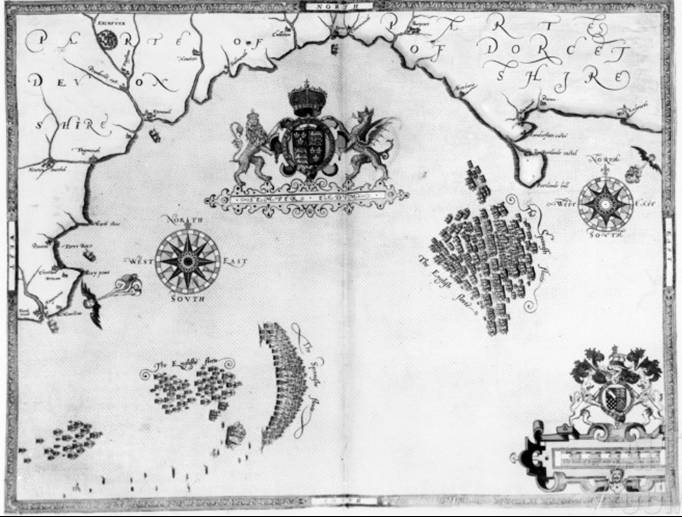
Augustine Ryther engraving, note Exeter top right.

Augustine Ryther engraving, note Exeter top left.

The exhibition also houses a wonderful series of exquisite hand coloured engravings, telling the story of the engagements off the Devon and Cornish coasts. The engravings were produced by Augustine Ryther from charts which recorded the route of the Armada around the coast. They really do provide the story of the events – this black and white copy shows the recognisable crescent shape of the fleet, and collapses the timing of the events so that two parts of the action are shown simultaneously, creating an easily understood narrative. This is a technique that I often encounter when examining early printed material with my students, particularly those ballads and broadsheets that seem to be aimed at the least literate members of society.

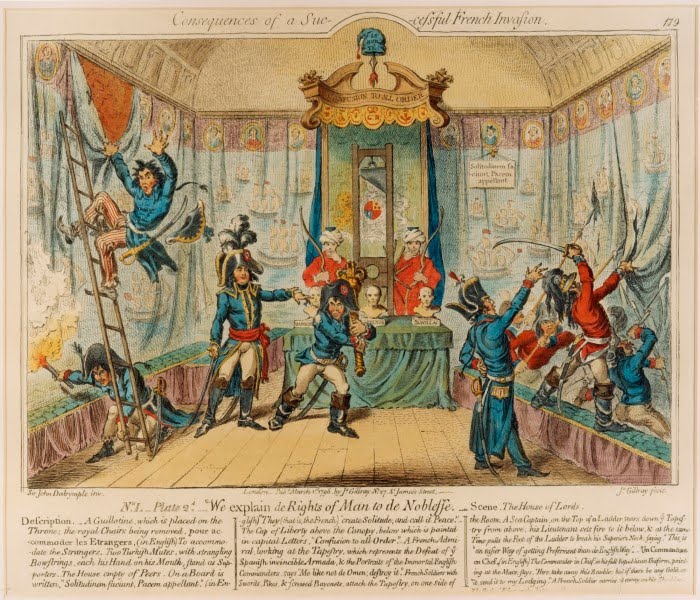
cartoon with tapestriesThe prints are similar to the tapestries that were hung in Parliament in 1650. Commissioned in 1592, the ten tapestries were enormously expensive, costing £1,582 (the equivalent of 87 years wages for a labourer in 1590); and enormous in size: we think they measured 14 feet in height and between 17 and 28 feet in width. In 1650 they found their way into the Houses of Parliament, where they were mentioned in debate on several occasions. As if further evidence were needed of the longevity and significance of the Spanish Armada, in 1798 when there were concerns about a possible French invasion, the artist James Gillray was commissioned to produce images that would rouse patriotic fervour in the English people – the series of satirical prints he produced included one (above) depicting a French Admiral ordering his men to destroy the Armada tapestries.

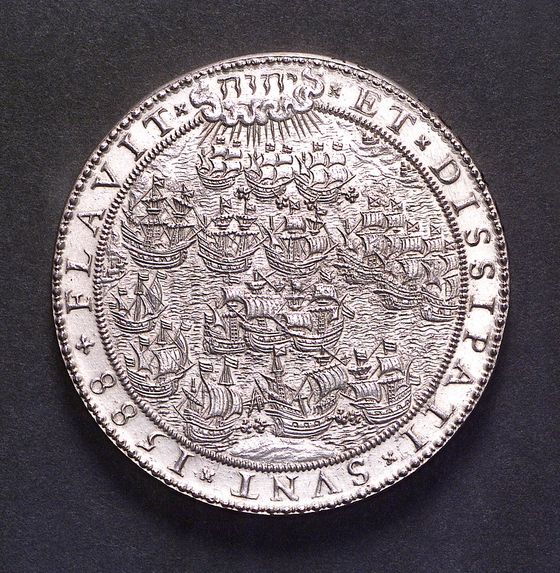
medalFinally, amongst other Armada memorabilia in the collection there is also a commemorative medal similar to the one in the picture. These were not only produced in England but also in other Protestant nations, indicating the way that the defeat of Catholic Spain reverberated throughout Europe, an important symbolic victory for international Protestantism. The medal in the RAMM collection is from the Netherlands. In the 1580s the Dutch United Provinces were in revolt against Catholic Spain, and Spanish hostilities against the English were in part an attempt to stop the English aiding their European Protestant allies.

The museum medal depicts the Armada in its familiar crescent shape. It bears the famous inscription ‘Flavit Jehovah et Dissipati Sunt’ (with ‘Jehovah’ in Hebrew letters, the Tetragrammaton יהוה): ‘Jehovah blew with His wind and they were scattered’. It is a reference to Job 4: 8-11:

Even as I have seen, they that plow iniquity, and sow wickedness, reap the same.

By the blast of God they perish, and by the breath of his nostrils are they consumed.

 The roaring of the lion, and the voice of the fierce lion, and the teeth of the young lions, are broken.

The old lion perisheth for lack of prey, and the stout lion’s whelps are scattered abroad. [King James Version]

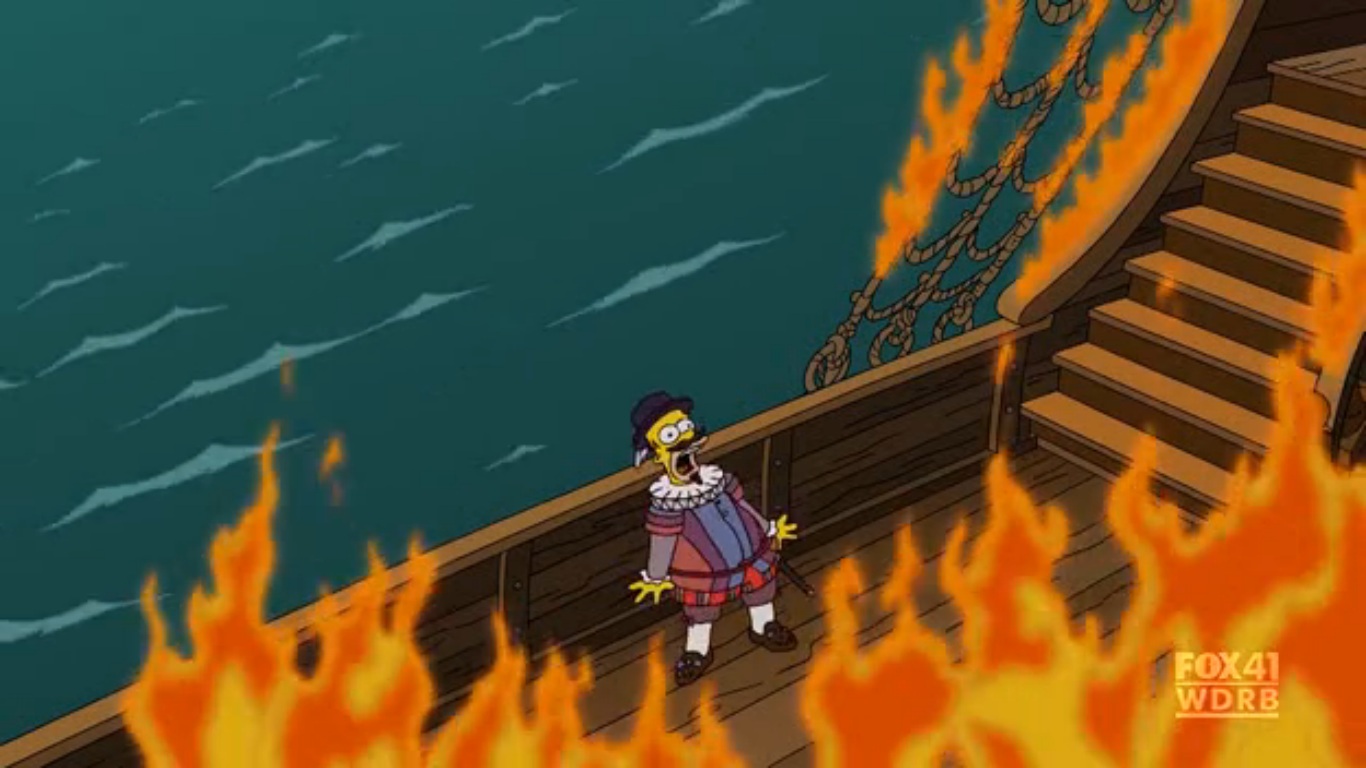
Spanish Armada - so famous it made it into the Simpsons.

Spanish Armada – so famous it made it into the Simpsons.

References like this are deeply suggestive of one of the ways that Protestantism was changing English society. Scriptural allusions were commonplace, and from the way that they are used (casually, briefly) it strongly suggests that people were expected to recognise them and the deeper religious truths that they stood for. Job has of course already cropped up in this series of posts (see day two, domestic decoration), here the brief quotation serves a similar purpose as an image: a reminder, a prompt to reflection, a stepping stone to a more profound appreciation of one’s own faith.

In the final post tomorrow: a round up of the prominent themes.

‘West Country to World’s End: the South West in the Tudor Age’ runs until 2 March 2014 at Exeter’s Royal Albert Memorial Museum. You can find all the details about the museum, it’s opening times, it’s wonderful café and more here

Further reading:

Sam Smiles (ed.), West Country to World’s End: The South West in the Tudor Age [essays to accompany the RAMM exhibition].

David Cressy, ‘The Spanish Armada: Celebration, Myth and Memory’, in J. Doyle and B. Moore (eds), England and the Spanish Armada (Canberra, 1990) or Bonfires and Bells: National Memory and the Protestant Calendar in Elizabethan and Stuart England (London, 1989).