Unknown's avatar

About manyheadedhailwood

Mark Hailwood is a Senior Lecturer in Early Modern History at the University of Bristol

‘More acute and witty in his drink than at other times’…

Mark Hailwood

When Thomas Feilder was hauled before the Reading authorities in 1624, on a charge of beating up a town constable, he offered a straightforward explanation for his actions: ‘drink was the cause’, ‘he was not himself’, and ‘he knew not what he did’. But what did early modern English courts make of such claims? Was drunkenness understood to mitigate responsibility for the offence, or did such reckless inebriation compound the transgression into a double misdemeanour of assault and drunkenness?

Drinking Woodcut

This is just one of the questions I address in my latest article (that’s right, that opening vignette was just a snare to trap you into a self-promotional post). In the essay I ask – and attempt to answer, of course – a number of questions about seventeenth-century understandings of the effects of alcohol on mind and body. Did they share our concern about alcohol’s harmful impact on health, or was it considered ‘far better than any doctor in town’ for treating ailments? Was it used as an anaesthetic to numb the senses against the hardships of daily life, or did contemporaries guzzle booze because it was thought to ‘enrich all the faculties’ and act as a stimulant to mental activity? I’m dropping some clues here (let’s just say I’m not making those quotes up) but if you want to find out the full story then you should check out my ‘”It puts good reason into brains”: Popular Understandings of the Effects of Alcohol in Seventeenth-Century England’.

Cover thumbnailIt appears in a special edition of the journal Brewery History, edited by myself and Leicester lecturer Debbie Toner, under the banner of our Warwick Drinking Studies Network. It showcases the work of a number of early career scholars, and all the essays focus on aspects of early modern drinking culture, including the revolutionary introduction of hops to the brewing process (considered by some to mark the very origins of commercial capitalism. Well,WDSN Logo by me anyway); the important role played by the alewife in serving up the country’s favourite tipples; and the symbolic significance of being allowed to use the best silver at a guild feast. You can download the introduction for free here, and from here you can order a copy of the edition for the very reasonable price of £4.50.[1]


[1] An earlier draft of my article can be found on my academia.edu page, but please don’t cite from it.

Workers’ Representation Part Three: Mining and Modernity

Mark Hailwood

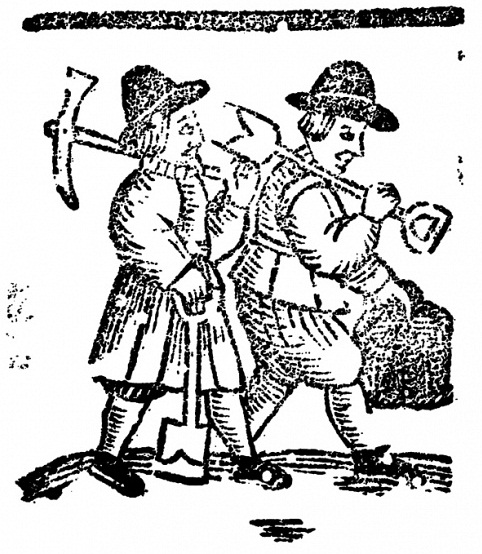
So, I thought it was about time to introduce another image of woodcut workers from my trawls through the English Broadside Ballad Archive, and what could be more appropriate than an image from a special new year’s ballad: A New-Years-Gift for Covetous Colliers, published sometime in the 1680s or 1690s. The ballad itself praises Parliament for acting against price-hiking colliers – those involved mainly in the distribution and sale of coal – but includes an image of the primary workers in the coal trade, miners:

miners

The image isn’t particularly remarkable. There is no evidence in this depiction of the hostile stereotype that miners were a ‘race apart’ from other workers; no coal-blackened faces to help symbolise this cultural otherness; no visual indicators that miners were, as Daniel Defoe put it, ‘subterranean wretches…a rude, boorish kind of people’.[1] Continue reading

Workers’ Representation Part Two: Making Hay

Mark Hailwood

Herein lies the second installment of my blog series on woodcut images of workers

As I sit here in fenland fog, my mind drifts back to sun-baked Californian afternoons at the Huntington Library. Often I would avail myself of a short break from such wonders as the Ashby-de-la-Zouch manor court records, and pop upstairs to the office of the Director of Research, Steve Hindle (who also happens to have been my PhD supervisor) to either pick his brains or raid his bookshelves.

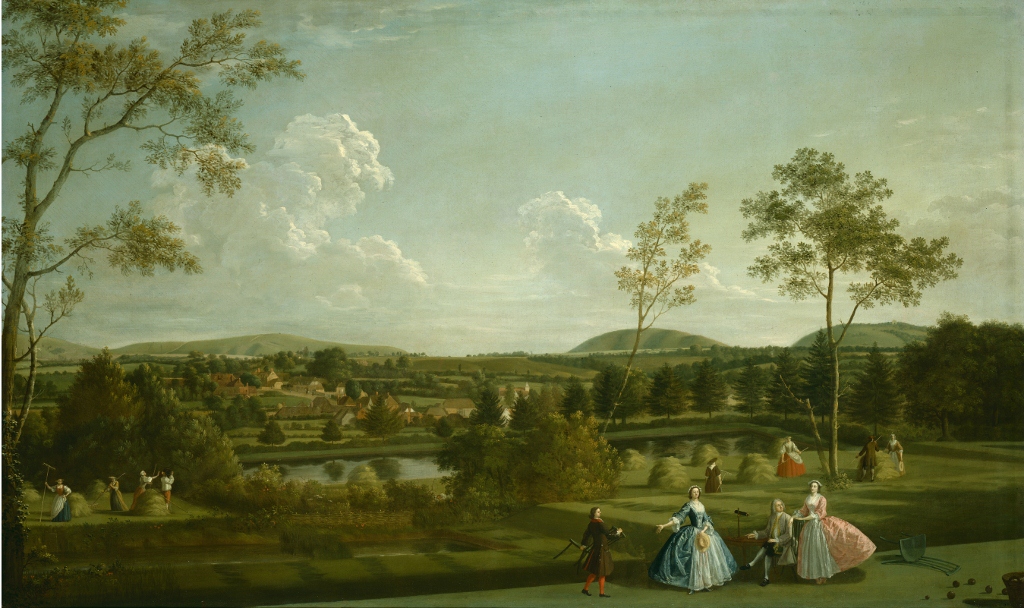
On one such afternoon we fell to discussing the following painting that hangs upon his office wall, a depiction of the Montagu family at their Sandleford Priory estate in Berkshire, by Edward Haytley, commissioned in 1743:

The Montagus at Sandleford Priory
Source: hayinart

At first I was a bit worried – what was this flag bearer of ‘history from below’ doing with an aggrandising portrait of the rural gentry in pride of place on his wall? Continue reading

Biographies of Drink: A Conference Call

Mark Hailwood

An August evening in 1609, in the Cheshire parish of Knutsford. A weary tinker,  with ‘pannes upon his Backe, & a Trumpett in his hande’, pushes open the door to a humble alehouse, to be greeted by a crowd of merry ‘pot-companions’. Their ring leader is quick to enlist the tinker in the revelry, and before long he is sounding his horn to call together ‘all the drunkards’ to this epicentre of drinking and ‘good fellowship’.

Beasts

I too would like to sound a trumpet call – not so much to ‘all the drunkards’, but instead to all those interested in the history of drinking. On a February weekend in 2013, in the Maths Building of the University of Warwick, a crowd of leading scholars in the field of drinking studies will gather to consider the role that alcohol consumption plays: in the lives of individuals; in the fortunes of families; in the creation and maintenance of communal identity; and in the concerns of governments and states. There may also be some revelry.

It is not an early modern conference, nor even just a history conference, and the papers range across time and discipline, from the material culture of Roman Britain to contemporary projects to use social media to influence alcohol consumption. If you think you might be interested you can take a look at the programme (and if that goes well, find a booking form) over at the website of the Warwick Drinking Studies Network:

go.warwick.ac.uk/wdsn

The deadline for booking is 14 December.

Buried Heads

If you are wondering why it’s gone a bit quiet here at the many-headed monster there is a simple explanation: with the arrival of freshers on campuses across the land all heads are currently buried in start of term business. Rest assured though that there are some interesting new posts in the pipeline – lazy labourers, more music, and the adventures of a Yorkshire antiquarian, will all feature soon.

In the meantime, I wanted to share a couple of interesting items I’ve come across: readers of my Huntington Library Treasures post should check out the Huntington’s own blog, ‘Verso,’ especially this post by Bert Rinderle on the incredible efforts that go in to managing their awesome manuscript collections.

Early modern historians based in the glorious South West of England might also check out ‘A Cuppe of Newes‘, which is a great resource for information about upcoming events and ongoing projects, including the regular Centre for Early Modern Studies seminar series at Exeter.

Workers’ Representation Part One: Spinning a Yarn

Mark Hailwood

As Christopher Thompson rightly notes over at Early Modern History, one of the great things about working at The Huntington is the people you get to meet over coffee. Last week I had the pleasure of meeting for the first time Patricia Fumerton, from the University of California Santa Barbara. Paddy is the pioneer of the online ballad database, EBBA, a digital resource that has been indispensable to my own research, and has been linked to on this blog numerous times already.

This gave me the chance to tell Paddy how great I think the site is, and in particular to praise its latest function that I have been playing around with: the ability to search, by category, the woodcut illustrations that adorn most seventeenth-century broadside ballads. I’ve been working on an article on representations of workers in these ballads – in particular artisan tradesmen – but my focus has been on how they were represented in the text of these ballads: how they were described and characterised. I hadn’t been paying too much attention to looking at the pictures – but might these too be a useful source for the kind of cultural history of work and workers that I am interested in? I entered a search for woodcuts that had been categorised as depicting ‘occupation / trade’, and spent some time perusing the 122 results that came up.

I’m not sure I have the skills or training to confidently deploy this kind of visual evidence in a formal historical paper or article, but I do find it fascinating, and thought I would offer up some of my thoughts in a series of blogposts entitled ‘Workers’ Representation’.

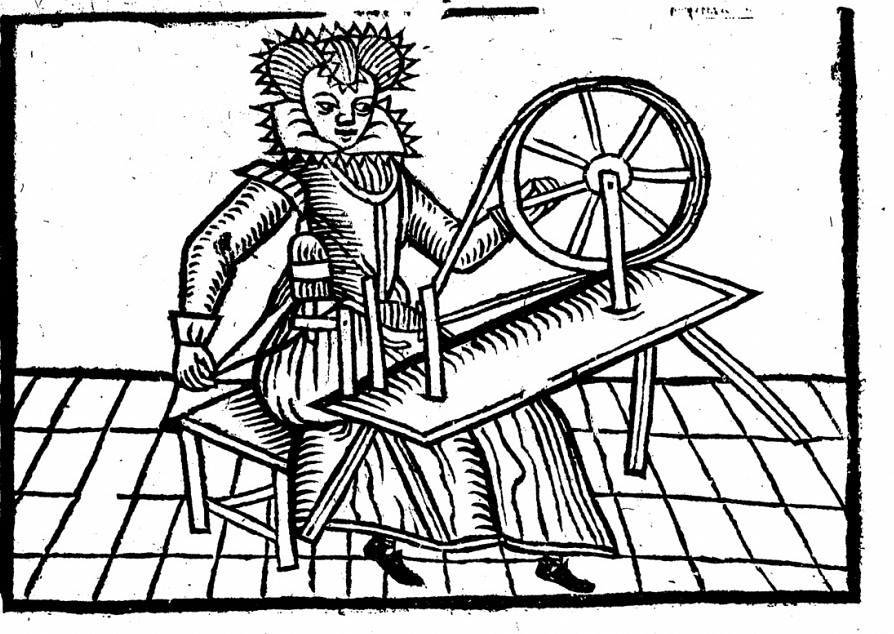
One of the first things that caught my eye was the common depiction of a key category of women’s work: spinning.

A woodcut taken from the ballad ‘Whipping Cheare’, from the Pepys collection, vol. I, no.208-109, c.1625. Source: EBBA

Continue reading

Huntington Library Treasures

Mark Hailwood

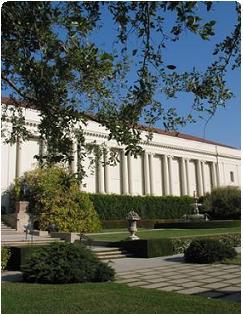
Days before I boarded a plane to Los Angeles to spend my summer as a research fellow here at the Huntington Library, I came across this article in the Times Higher Education supplement. Needless to say, the following quote only added to my sense of anticipation: ‘One of my friends said that if she died and went to Heaven, she would expect St Peter to ask for her Huntington reader’s card at the pearly gates.’ Six weeks later, and I can see where she was coming from.

But there was something else from that article that I carried with me across the Atlantic – a question mark about the relative merits of (cheap, easy and efficient) access to digitised primary sources on one hand, and to (often expensive, labour intensive and time-consuming) hands-on access to original materials on the other. The article echoed a sentiment I have often heard expressed at an academic conference or seminar series: historical research may be a lot easier today due to advances in digital technology, but as a result something valuable has undoubtedly been lost. But what?

Too often, the arguments deployed here reach for an intangible, almost mystical quality to doing good old-fashioned grubbing in dusty archives. That handling original sources is somehow more righteous; it allows us to ‘get a better feel’ for our sources; in some way by touching centuries old parchment we can almost touch the past itself. I often find myself thinking in these ways after a day in the archives, but as a historian who is trained to judge arguments in a detached and ‘rational’ manner, I have to admit that they don’t add up to a very concrete or convincing case. As a historian that has done a reasonable amount of work on both digitised print material, and on fusty manuscript legal records, I can’t honestly put my finger on a tangible difference in the quality of research I produce from each. Even if exploring one does contain a greater sense of adventure than the other.

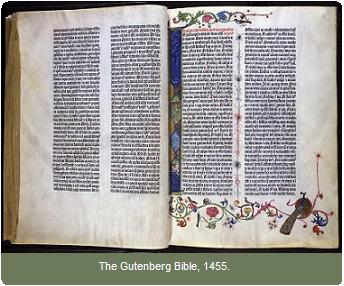
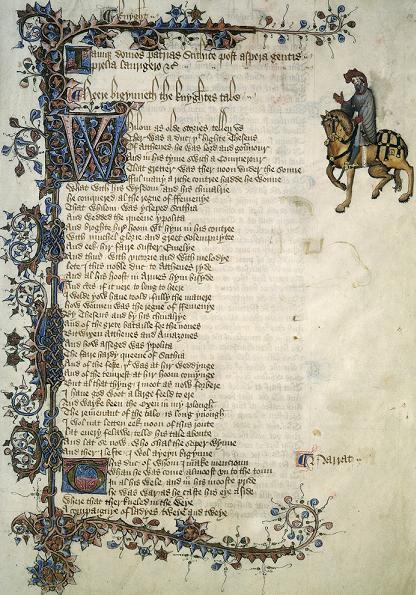
It was with this jumble of thoughts on my mind that I bunked off from the library for a few hours to take a look at a new exhibition of ‘Huntington Treasures’. It’s hard to imagine a more star-studded collection of early modern books together in one place: an original Gutenberg Bible, which was the first major book produced on a printing press anywhere in the world; the Ellesmere Chaucer, one of the earliest collections of the Canterbury Tales produced around the turn of the 15th century; a first folio edition of Shakespeare’s collected plays from 1623; first editions of works by Hobbes, Locke, Ben Jonson… I could go on. I was, of course, appropriately impressed
There was something exhilarating about seeing original editions of these landmark texts, but I wasn’t prepared to let that steamroller my lingering uncertainty about the innate superiority of consulting originals over reproductions. What as a historian had I really gained from seeing these texts up close and personal? I wasn’t convinced that it brought me any closer to how contemporaries would have connected with these works: venerated in an exhibition hall, in a glass case, as a ‘treasure’ rather than as reading material. There were aspects of the ‘materiality’ of these books that could provide more tangible insights for the historian to take away: the sheer size of a Gutenberg or King James bible meant that reading it would have required some supporting apparatus, whereas a single sheet broadside ballad could be read on the move or in any position (think hefty hard-back versus kindle, perhaps). The act of reading one or the other would have been very physically different, and would have therefore been experienced, approached and understood as a distinct type of reading activity. Sure, but I didn’t really need to travel 5000 miles to see the originals to figure that out.

I am, admittedly, trying to be provocative here. I wouldn’t disagree that there is value in consulting original materials rather than relying exclusively on digital reproductions. That said, I do think that historians should be asking themselves to come up with far more rigorous explanations as to why that’s true.