Unknown's avatar

About manyheadedmonster

The many-headed monster is a collaborative blog focusing on English society and culture in the early modern period, very broadly conceived.

Teaching early modern History with Images

This is the fourth guest post in the mini-series Visual Culture in Early Modern England (read the introduction and find links to other posts here). Adam Morton shares his experience of using images to get students talking in seminars, exploring their ability to get students thinking about things like opinion, polemic and ambivalence in primary material.

Adam Morton is Reader in Early Modern British History at Newcastle University. He researches the long-Reformation in England, with a particular focus on anti-popery and visual culture. His publications include Civil Religion in the early modern Anglophone World (Boydell & Brewer, 2024) (with Rachel Hammersley), The Power of Laughter & Satire in Early Modern Britain: Political and Religious Culture, 1500-1820 (Boydell & Brewer, 2017) (with Mark Knights), Queens Consort, Cultural Transfer and European Politics, c.1500-1800 (Routledge, 2016) (with Helen Watanabe-O’Kelly), and Getting Along? Religious Identities and Confessional Relations in Early Modern England – Essays in Honour of Professor W.J. Sheils (Routledge, 2012). His current project considers the visual culture of intolerance in early modern England.

Adam Morton

I’ve always found that images get History students talking. They see things I don’t see and ask questions I’ve not thought to ask. The chattiest students are often the ones I least expect, the ones who have been quiet in previous weeks, the ones you worry are struggling with or not enjoying the course. Approaching a seminar topic through images can bring those students out of themselves.

I remember one instance, long ago on a second year Reformation course timetabled in the drabness and drizzle of the autumn term’s Friday afternoon slot, with fondness. A woodcut from John Foxe’s Acts and Monuments showing Edmund Bonner, the Bishop of London, stripped to his underwear and thrashing a Protestant’s buttocks, left one usually quiet student tripping over her tongue with things to say [Fig. 1].[1] She prodded the seminar to life with thoughts about humour, about cruelty and humiliation, about images as acts of revenge, and about the control involved in having the power to portray someone. Long dead Reformers suddenly seemed very human to her. “Is the image sexual?”, she asked the room. The discussion took off. Now I was the silent one: the teaching was going well.
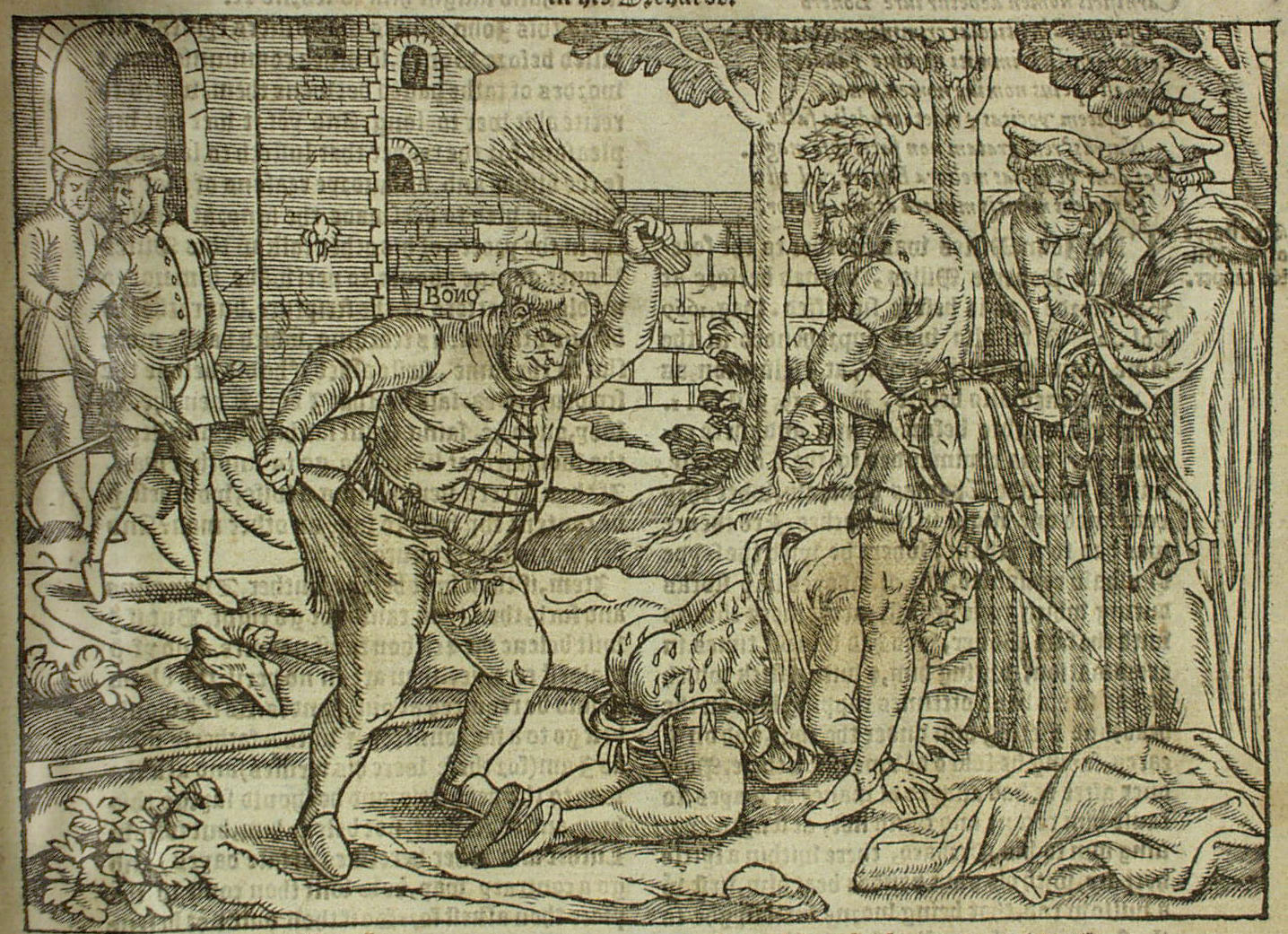
Figure 1. TITLE from John Foxe, Acts and Monuments (1570).

Foxe’s woodcuts are an obvious candidate for primary sources in undergraduate seminars, of course. Although they are no longer as rooted in public life as firmly as they were two generations ago, ‘The Book of Martyrs’’ images still provide a way into the big problems of Reformation history in the seminar room because they offer us dramatic vignettes that pare abstractions – martyrdom, heresy, theology, and memory – down to something tangible. But images can be much more than ice breakers. They can be the bedrock of seminar discussion, too. Continue reading
Cut, copy, paste: what people did with early modern Printed Images

This is the third guest post in the mini-series Visual Culture in Early Modern England (read the introduction and find links to other posts here). As in our previous post by Helen Pierce, Malcolm Jones considers how people consumed prints – in this case by adapting them in various ways. Please click on images for enlargements.

Malcolm Jones

In my youth I worked in museums and as a lexicographer, and subsequently until my retirement in 2010, as a lecturer in the English Department of Sheffield University, the year in which my book, The Print in Early Modern England – An Historical Oversight, was published. Since then I have published various articles on early modern prints, and am currently working on a book showcasing the wealth of imagery to be found in early modern alba amicorum (‘friendship books’). These days I do most of my art history informally in maintaining my 100+ Pinterest boards, and exercise my lifelong interest in language in reading the inscriptions on late medieval metal-detectorists’ finds for the British Museum’s Portable Antiquities Scheme.

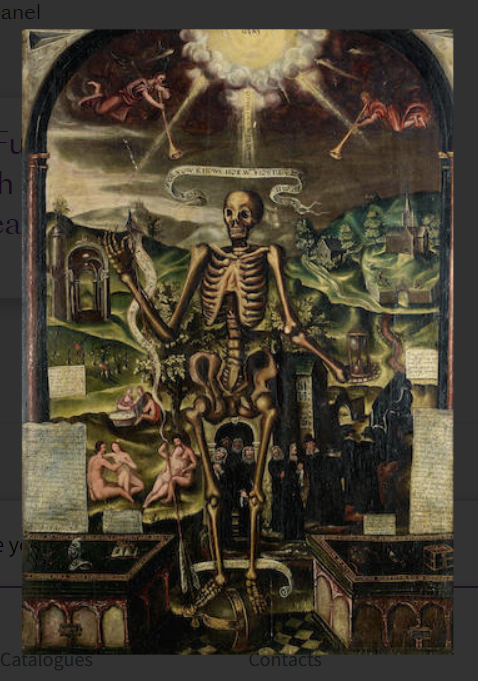
Although unknown to me at the time, just as my book The Print in Early Modern England: an Historical Oversight (London/New Haven, 2010) was going through the press in late 2009, the auctioneers, Bonhams, were selling The Chelsea Collection of Severin Wunderman. I later discovered that Lot 202 was minimally catalogued as a painting on panel, 112 x 77.5 cms., editorially entitled “An Allegory of Death”, described as “English School, circa 1600”, and as “inscribed with various verses from the Bible”. [Figure .1][1]

Figure 1: An Allegory of Death, c.1600.

It was immediately apparent to me that the painting reproduced the entire print known as Death his Anatomy, with the memory of the Righteous, and oblivion of the wicked, in sentences of Scripture,[2] when issued by John Overton in 1669, but that is now only known in the form of four fragments preserved in the British Library, bearing both Peter Stent’s and John Overton’s imprints [Figure. 2].[3] Continue reading

Building Your Own Book: Printed Images, producers and buyers in early modern London

This is the second guest post in the mini-series Visual Culture in Early Modern England (read the introduction and find links to other posts here). In this post, Helen Pierce explores the lively world of London print makers and buyers and introduces us to an innovative sales technique.

Helen Pierce is Senior Lecturer in Art History at the University of Aberdeen. She specialises in the visual and material culture of early modern Britain, with a particular focus on printed images as vehicles for political engagement.

Helen Pierce

The early decades of the seventeenth century saw the rise of commercial printmaking in England. Previously, both single-sheet prints and book illustrations had been primarily available through trade and exchange, arriving in London from centres of print publishing in the Low Countries, or they were the work of visiting artists, but broader social developments were now informing their production at home.[1]

During the later sixteenth century, London had become a refuge for significant numbers of Dutch, Flemish and French Protestants, seeking freedom of worship following episodes of persecution in northern Europe. Many of these ‘strangers’ brought with them notable skills in creative industries such as painting, goldsmithing, weaving and printmaking, and once permanently settled, children commonly followed their parents into the same sectors. English print sellers were now able to engage directly with professional engravers in London, rather than relying on trade with imported material.

In 1603, John Sudbury and his nephew George Humble established their print selling business at Pope’s Head Alley, just steps away from the commerce hub of the Royal Exchange. John had initially specialised in map publication, and while this continued under his partnership with Humble, they also expanded to printed pictures, both imported and published in London. Sudbury and Humble became well-known for their specialist stock; in 1622 the schoolmaster and author Henry Peacham, who considered himself to have some expertise as a print connoisseur, advised that works by the prolific Dutch engraver Hendrick Goltzius were ‘to be had in Popes head alley.’[2] Here, the customer could also purchase a range of portrait prints engraved by London-based artists including the prolific Renold Elstrack, and from the mid-1610s, Francis Delaram and Simon de Passe. These were primarily half- and full-length representations of monarchs past and present, and other significant figures associated with the Jacobean court and church.

Figure 1: Renold Elstrack, Baziliologia, a Booke of Kings, published by Compton Holland, 1618. Copyright of the Trustees of the British Museum.

Sudbury and Humble’s dominance of this new market for printed images was maintained until 1616, when a further family-based print selling business was set up within walking distance of their Pope’s Head Alley premises. At the sign of the Globe in Cornhill ‘over against the Exchange’, publisher and print seller Compton Holland collaborated with his brother Henry, a printer and member of the Stationers’ Company, on a novel and commercially clever project: the Baziliologia. Taking advantage of the broader cultural interest in portraits of monarchs established by Sudbury and Humble, the Hollands also tapped into King James’s own longstanding interest in his personal genealogy; its perceived longevity back to the ancient King of the Britons, Brutus, enhanced his legitimacy as both a Scottish and English ruler. Continue reading

Printed Images, Laughter and early modern History

This is the first guest post in the new monster mini-series Visual Culture in Early Modern England (read the introduction here). To begin, Adam Morton considers what historians should do with the alien and often cruel humour of past ages and in particular the subversive content of satirical prints.

Adam Morton is Reader in Early Modern British History at Newcastle University. He researches the long-Reformation in England, with a particular focus on anti-popery and visual culture. His publications include Civil Religion in the early modern Anglophone World (Boydell & Brewer, 2024) (with Rachel Hammersley), The Power of Laughter & Satire in Early Modern Britain: Political and Religious Culture, 1500-1820 (Boydell & Brewer, 2017) (with Mark Knights), Queens Consort, Cultural Transfer and European Politics, c.1500-1800 (Routledge, 2016) (with Helen Watanabe-O’Kelly), and Getting Along? Religious Identities and Confessional Relations in Early Modern England – Essays in Honour of Professor W.J. Sheils (Routledge, 2012). His current project considers the visual culture of intolerance in early modern England.

Adam Morton

Old jokes unsettle me. Not only because I don’t always get them, but because the ones I do get are often brazenly cruel. They mock, scoff, and jeer at the butt of the joke in a laughter of scorn and humiliation. This cruelty unsettles me because humour is intimate, it speaks to the most human aspects of a culture, the intimate ties, social bonds, and moral norms that glue people into a society. We laugh when something disrupts or breaks those conventions, and laughter therefore takes us close to what made people in the past tick, their assumptions about the world, their emotions, and their view of what was proper.[1]

Laughter, in short, is intuitive, something that Clive James captured succinctly. “Common sense and a sense of humour are the same thing moving at different speeds. A sense of humour is common sense, dancing”. Early modern people? Their ‘common sense’ led them to laugh at rape victims, at the disabled, at those who experienced devastating misfortune, and at domestic violence, among other cruelties.[2] Studying humour takes us closer to early modern people. I am unsettled because I don’t always like what I see.

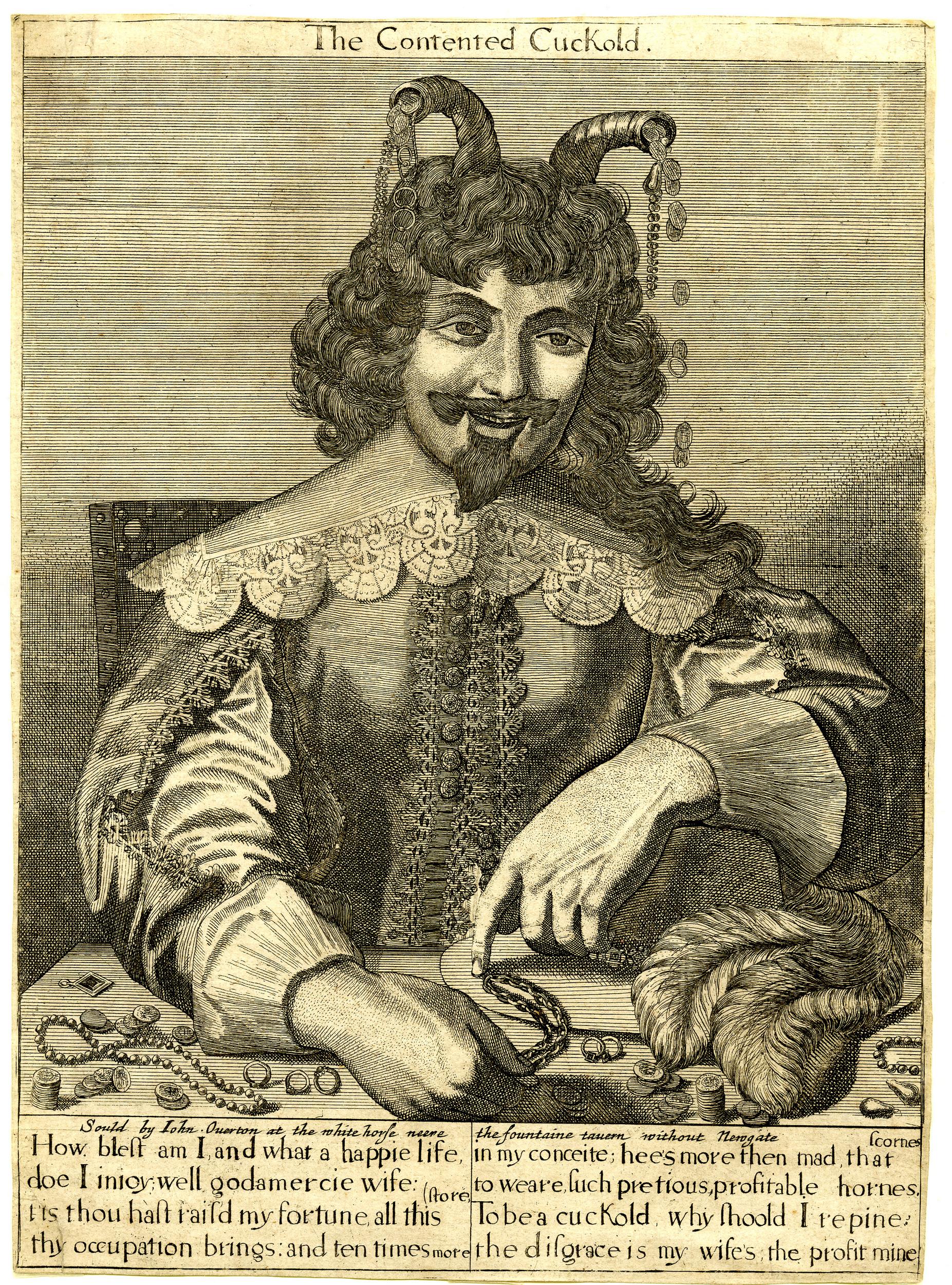
The Contented Cuckold (1673) Copyright of the Trustees of the British Museum. BM 1996,0608.1.

Continue reading

Locating Jews in Eighteenth-Century Wales: Case Studies from the Welsh Court of Sessions

This post is part of our ‘The People and the Law‘ Online Symposium, a series exploring early modern English – and now Welsh – legal sources. Angela Muir is Lecturer in Social and Cultural History and Director of the Centre for Regional and Local History at the University of Leicester. Her research focuses on gender, sex, crime, deviance and the body in Wales and England in the long eighteenth century. You can find her on X @DrAngelaMuir and Bluesky @drangelamuir.bsky.social.

Angela Muir

When we think about religious diversity in Georgian Wales, what typically comes to mind is the growth of Protestant Nonconformity. What we don’t typically think about is Judaism. However, Wales was home to a small but important Jewish community from the middle of the eighteenth-century, which was based primarily in the South Wales port of Swansea.

We know much about the Jewish community in Wales in the nineteenth century due to a richer and more varied range of records available, and to the work of historians like Harold Pollins, Ursula R. Q. Henriques and Cai Parry-Jones.[1] Little research has focused on the lives and experiences of the individuals who made up the earlier community. However, through my research using the records of the Court of Great Sessions in Wales, I have serendipitously come across additional evidence which helps add more depth and detail to our understanding of the lives and experiences of some Jews in Georgian Wales.

The Great Sessions were the highest court in Wales between the 1540s and 1830 when they were abolished and replaced with the Assize system. Overseeing both civil and serious criminal cases, the Great Sessions administered English law in Wales. Surviving records from the Great Sessions, which are held at the National Library of Wales in Aberystwyth, provide uniquely detailed evidence not only about crime and deviance, but also about Welsh society and culture that historians can uncover by reading these records ‘against the grain’. It is in these records that we find evidence about Wales’s early Jewish community.

Tradition has it that Jews began to settle in Swansea in the early eighteenth century. The earliest individuals who we definitively know about include David Michael, who became a leader of the local Jewish community. Michael is believed to have arrived in Swansea along with a handful of other Jewish men in 1740s, likely as refugees from Germany

Continue reading

‘Controlling’ Behaviour: Mothers, Community and Petitions in Early Modern England

This post is part of our ‘The People and the Law‘ Online Symposium, a series exploring early modern English legal sources. Emily Rhodes is a fourth-year PhD student at Christ’s College, Cambridge. Her work uses petitions to study family, community and poverty in early modern Britain. You can find her on Twitter/X @elrhodes96.

Emily Rhodes

In 1691, Isabel Scales was the talk of the parish of Coulton in Lancashire. Isabel was an unmarried mother, an uncertain and potentially shameful position which affronted the social order of the period and could lead to punishment. Despite her situation, her neighbours in the community of Coulton rallied around her. The inhabitants of Coulton went above and beyond for Isabel. On top of paying her a mandated 12d a week towards her and her child’s maintenance, they had also found the mother and child a house which ‘doth acrue a great Charge vpon the parish’, and had even taken it upon themselves to provide the child with clothes. According to the parishioners, however, Isabel did not return the goodwill.

In a petition submitted by the inhabitants of Coulton to the Justices of the Peace (JPs) of the local Quarter Sessions court, Isabel was labelled ‘a loud incorigible woman’. They stated that in 1689, Isabel was sent to the local House of Correction for reasons that were not documented. While there, she had become pregnant with another bastard child. After this second illegitimate pregnancy, Isabel neglected to go to great lengths to improve her reputation. Instead, when faced with the prospect of returning to the House of Correction as a result of her continued objectionable behaviour, Isabel issued a threat to her fellow parishioners. According to their petition, she declared that ‘ if she be sent to the House of Corection Againe she will ly [lie] out all her indevors to be begotten with another Bastard Child’. After this final upset, the inhabitants of Coulton asked the JPs to relieve them of their responsibility towards Isabel Scales and her two children. By cutting off their support, they hoped to control her behaviour.[1]

That Isabel Scales faced judgement and patriarchal oppression for acting against the societal norms of her community would not surprise historians. Susan Amussen has stressed the relationship between the family, community and control in early modern England, maintaining that, in the period, ‘the social control of family life came primarily from within the village’.[2] Societal standards were established and regulated by local communities and familial business was both publicised and controlled. Family life was shaped by the concept of the ‘little commonwealth’, which maintained that the nation’s patriarchal governance should be reflected in the structure of the household. For a community to function properly, patriarchal rule had to prevail and any breakdown in the operation of this ‘little commonwealth’ would force members of the community to intervene to restore patriarchal order.  

Continue reading

Everyday Travel in Early Modern England

This post is part of our ‘The People and the Law‘ Online Symposium, a series exploring early modern English legal sources. Charmian Mansell is a British Academy Postdoctoral Research Fellow at the University of Cambridge. She works on early modern gender and work, and mobility and migration, and has articles in Continuity and Change, Gender & History and The Historical Journal. She is the author of Female Servants in Early Modern England (Oxford University Press, 2024). You can follow her on Twitter/X at @charmianmansell.

Charmian Mansell

In 1609, Norfolk-born Thomas Hanwood was questioned by officials over his trade as a petty chapman. His work took him across the country and most recently, had brought him into Somerset. Perhaps on the highway as he peddled his wares, he passed the servants of Joanna King. Five times a week they rode six miles to Bristol, returning to the Somerset village of Compton Dando upon horses laden with wheat to be ground at their mistress’s mill.[1]

Tracking everyday movements of much of today’s society has become pervasive. Google Maps tells me the places I’ve visited over the years and reminds me how often I walk to my favourite café. Uber collects data on all the times it’s been too late (or I’ve been too lazy) to walk home from the train station. Alongside digital tracking, transport-use surveys and interviews of migrant people provide yet more data for the systematic and detailed study of contemporary mobility.[2]

But it’s rare to unearth detailed records of the daily movements of a sixteenth- or seventeenth-century person or community. Letters, journals, travelogues, and diaries document the travels of literate people, allowing us to trace the journeys and geographically expansive networks made by elites and middling sorts. Tracing the dynamic footsteps of urban dwellers as they criss-crossed cityscapes has become possible through records of civic government. We know, then, that dispersed personal networks created economies and communities. But what about the mobile lives of non-elites and rural dwellers? After all, they made up the majority of people in pre-modern societies.[3] To shadow their movements, we have to look elsewhere.

Over the last decade and more, legal records have become the bread-and-butter of my academic work. Searching for experiences of service in court depositions for my PhD (and later, book) was needle-in-a-haystack work: weeks (or maybe months?) of combing through church court witness statements uncovered around 30,000 witnesses, only around 500 of whom were female servants (less than 2 per cent). But this time round as I bury myself in the same documents for a new project ‘Everyday Mobility in Early Modern England’, I find people on the move everywhere.

Continue reading

A Laboratory of Immigration: Elizabethan Norwich

This post is part of our ‘The People and the Law‘ Online Symposium, a series exploring early modern English legal sources. Lucy Kaufman is Assistant Professor of Early Modern British History at the University of Alabama. You can follow Lucy on X/Twitter @drlucykaufman.

Lucy Kaufman

Thomas Kendall was despondent. “I am richer in years and in diseases than in any other riches,” he wrote to Thomas Windebank in 1574, in a thinly-veiled plea for patronage and employment. “I have in boarding and teaching gentlemen’s children and others been mine own decay, and now at midsummer I give it all over…I remain yet in the house of one John Paston whom I think you know, but no longer than midsummer next. I paid my rent truly for the year £5, but what moved him to warn me out, I know not. Our City is sore peopled with strangers but we almost know not where to place us.”[1]

It was a last-minute scribble at the bottom of the letter: strategic, a little self-pitying, and tinged with a nativist anxiety that sounds not terribly dissimilar to that you hear in political debates today. But it also reflected a particular view of a new reality: the soaring number of immigrants from the Low Countries—known as ‘Strangers’—in Norwich in the 1560s and 70s. In 1565, the city welcomed in 300 immigrants. By 1571, there were over 4,000 such immigrants in Norwich, men, women, and over 1600 children.[2] To put this in perspective, in 1565, Strangers accounted for no more than one percent of the population of Norwich, England’s second-largest city, next only to London in both size and wealth. Less than a decade later, one in three inhabitants was an immigrant.

They were driven to England by religious war. After the violent wave of Calvinist iconoclasm known as the Beeldenstorm destroyed images in the Low Countries, Spain set up a tribunal to prosecute heresy—one that would see nearly 10,000 put on trial. In response, Protestants began to flee from the Low Countries; some historians estimate more than 60,000 emigrating between 1567 and 1568 alone. Many of those, particularly from the areas of Zeeland and Flanders, followed the old woolen trade routes to England.[3] There, they settled in London, Canterbury, Sandwich, Colchester—and in Norwich.

My work on this is part of a project I’m just beginning, examining what I think is the first wave of what we, in modern words, might call ideological immigration into England. It was a movement sparked by geopolitical conflicts that sprung from the fractures of the Reformation, where populations were being imprisoned, attacked, and executed for their religious beliefs. What resulted in England, however, was something far different than expectations: new experiments in managing populations, new definitions of belonging, new capacities of state power.

Continue reading

Commonplace Legal Knowledge in Fifteenth- and Sixteenth-Century England

This post is part of our ‘The People and the Law’ Online Symposium, a series exploring early modern English legal sources. Laura Flannigan is a Junior Research Fellow at St John’s College, Oxford University. She works on litigation, society, and politics in late medieval and early modern England. You can follow her on Twitter/X at @LFlannigan17.

Laura Flannigan

Historians often take for granted that the high usage of England’s early modern law courts denotes a widespread ‘law-mindedness’ in that period. Certainly by c.1600 English society was litigious on a scale unprecedented at the time and unrivalled since. But litigating was a complex business. It required an ample personal archive of evidence on which to base a case, and the know-how to appeal to the appropriate court with the correct documentation at the right time. Where few today would automatically know how to go about commencing a lawsuit, our pre-modern forebears were more likely to be legally literate. What did they know about law and its procedures in the midst of the early modern ‘legal revolution’, and how did they know it?

I’ve recently spent time tracing the circulation of legal knowledge through one type of source material: manuscript ‘commonplace’ books. By this I mean not the systematised collections of reading notes curated by learned gentlemen or the alphabetically ordered definitions accumulated by law students, both following humanist traditions of commonplacing. Rather, my focus has been the scrappier, personal notebooks of estate administrators, rural gentry, and urban merchants. These contain everything from astrological diagrams, popular literature, and religious treatises to more personal financial reckonings, instructions for hawking and hunting, medical remedies, and household recipes. At the time of writing this piece I’ve studied twenty such books from the period c.1400 to c.1600, originating from all corners of England – from Hampshire to Northumberland, Norfolk to Somerset.[1]

Their contents validate Christopher Brooks’s sentiment that law ‘provided one of the principal discourses through which early-modern English people conceptualised the world in which they lived’.[2] Several of these manuscripts include among their lists of aphorisms certain pithy observations on judicial processes, like ‘better is a friend in court than a penny in the purse’. Four notebooks from the early sixteenth century contain the same doggerel verse providing advice for those ‘who so will be wise in purchasing’ lands: recommending that they check the ‘seller be of age’ and ‘make thy charter of warrantise to thyn heires & assigneys’. Elsewhere in their notebooks these compilers – themselves often landowners and administrators – copied their own deeds and wrote memoranda about their own lawsuits. Legal information was as useful to have to hand as the financial accounts and domestic recipes recorded on other pages of the same books.

Continue reading

Truth and Trust: Remembering Perjury in the Early Modern Community

This post is part of our ‘The People and the Law‘ Online Symposium, a series exploring early modern English legal sources. Zoë Jackson (Twitter: @ZoeMJackson1, Bluesky: @zoejackson.bsky.social) is a PhD student at Gonville and Caius College, University of Cambridge, researching the relationship between memory and perjury in later seventeenth-century England.

Zoë Jackson

From personal experience ‘perjury’ (intentionally lying under oath in a legal setting) is not a widely understood term amongst most people today. Whenever I explain my research, I usually have to define what perjury is (and sometimes must clarify that I’m not specifically concerned with other, similar sounding terms – ‘purgatory’, anyone?) Calling someone a ‘perjurer’ today would probably get you, at most, a quizzical look.

But in early modern England, as Mary Basnett was made fully aware, calling someone a ‘perjurer’ was grounds for a defamation suit. In November 1673, the Consistory Court of Chester ordered Mary Basnett to perform penance in the parish church of Frodsham, by reciting before the congregation the following words: ‘Whereas I Mary Basnett have wronged Alice Gee in rashly saying, If shee hath taken such an oath shee is forsworne, I am heartily sorry for the same, for I know no such crime of her, and I desyre her to forgive mee’. In the court case that preceded this judgment, multiple witnesses testified to hearing Mary Basnett accusing Alice Gee of taking a false oath in a previous trial.[1]

The courtroom of the Chester Consistory Court is one of few surviving courtrooms of its kind. Photo taken by author.

Legal disputes like this one between Mary Basnett and Alice Gee are of interest to me for what they reveal about local understandings of perjury (as opposed to the formal definitions you find in legal treatises and dictionaries). Perjury was a crime in early modern England, but it was also a sin, breaching both the Third Commandment (against taking God’s name in vain) and the Ninth Commandment (against bearing false witness). In church court defamation cases, witnesses described whether or not accusations of perjury were made, and what damage this did to the alleged perjurer’s reputation. As historians such as Natalie Zemon Davis and others have established, although these records do not represent the direct words of the people, they can still be useful in illuminating contemporary attitudes and practices, such as in this case around the functioning of community.

Continue reading