Unknown's avatar

About manyheadedmonster

The many-headed monster is a collaborative blog focusing on English society and culture in the early modern period, very broadly conceived.

Reading the Embattled Text: Muslim Sipahis of the Indian Army and Sheikh Ahmad’s Dream, 1915-1918

Our next post in ‘The Voices of the People’ symposium (full programme here) is by Gajendra Singh, Lecturer in South Asian History at the University of Exeter. Gajendra explores another potential source of the ‘voices’ of subordinates – the letters of Indian Muslim soldiers written during the First World War – and again reveals the complex vectors of power that operated around a medium of communication that was on the one hand designed as a means of monitoring the speech of subordinates, but on the other provided a space for communication that frustrated and eluded such designs.

Gajendra Singh*

I ought to start with an apology. I feel conscious of writing to an audience that will contain many English/British social historians. For South Asianists, English social history (particularly the work of EP Thompson) provided first the model of how one could listen to and write (re-write) the ‘voices of the people’[1] and then, following a closer synthesis between postcoloniality and poststructuralism, the precise model that exposed the impossibility and hubris of such an endeavour. Further, the substance of this post is a distillation of some of the ideas that emerged from my previous work rather than an articulation of my current research. This previous work of mine focused on the war testimonies of Indian soldiers – of the 1.7 million Indian sipahis (or ‘sepoys’) that were enlisted by the Imperial Government of India to fight in the First World War. Traces of this Indian presence can be found in the Imperial propaganda and in the Imperial ephemera of the day.

This post will not, however, offer a further analysis of these Indian ‘presences’ in wartime imagery. I will instead discuss those spaces and moments when soldiers were not fighting, and in which they could write and share their war experiences in their letters. This post will relate the production and circulation of colonial Indian soldiers’ testimonies to the porous and impermanent nature of their identities. It will talk in particular about Indian Muslim soldiers’ identities and of their appraisal and re-appraisal of Islam in the trenches. And, it will end by explaining why, and what I mean, when I choose to read such texts as embattled.
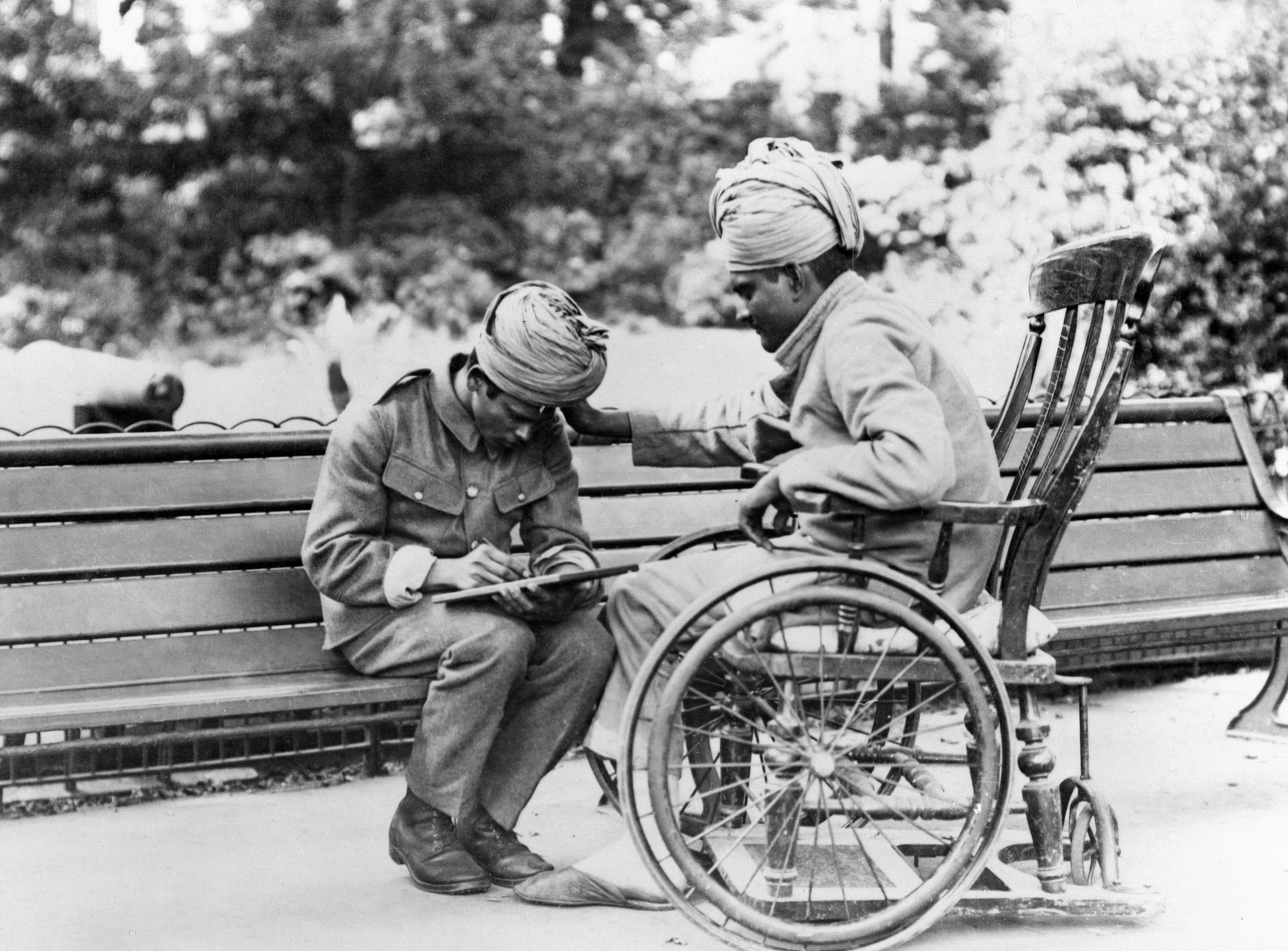
Q_053887

Indian Wounded at Brighton, 1915. Q53887. Photograph Courtesy of the Imperial War Museum

On the 11th July 1916, Captain G. Tweedy, the Chief Censor of Indian military correspondence in France, alerted his superiors to a slip of paper he had found hidden in an otherwise anodyne letter by a Punjabi Muslim sipahi. It was the nature of the concealed missive, as much as the fact that it was hidden, that alarmed Tweedy. It took the form of a message that had been relayed from the Prophet Mohamed, and the injunctions contained therein directed the Muslim soldiery of British India to put their loyalty to their faith before any loyalty to their Sahibs: Continue reading
Gossiping into the Archive: Authority and Speech in the Colonial Archive

Our next post in ‘The Voices of the People’ symposium (full programme here) is by Emily J. Manktelow, Lecturer in British Imperial History at the University of Kent. Emily moves our discussion into a consideration of the particular difficulties of retrieving ‘voices’ from the colonial archive, and examines ‘gossip’ as a category of speaking that can provide the historian with considerable insights into the operation of power, authority and speech. 

Emily J. Manktelow

Catching the voices of those marginalised by the authority of the archive is an important and sometimes difficult project – as this online symposium has been pointing out. These problems can become even more daunting when the marginality of the object of our investigations is multiplied by differences not only of class, but of race, ethnicity, and subjugation as well. The colonial archive is a space fraught with complex methodological problems, which students of colonialism and postcolonialism have been grappling with for a long time. “Can the Subaltern Speak?” was the title of Gayatri Chakravorty Spivak’s famous 1988 chapter, which questioned whether we can ever recover the voices of the oppressed from a source-base compiled and created not only by the powerful, but as a means to power. Knowledge creation and collection were part of the colonial regime not only as an exercise in record-keeping and bureaucracy, but as a means to create understandings of selfhood and otherness that justified and consolidated the colonial project. The archive itself, then, is an exercise in oppression and marginalisation – what does that mean for those of us who use it? Are we simply replicating the regimes of power and authority encoded through the past?

You won’t be surprised to learn that historians of empires and colonialism have not fully ascribed to this view. After all, it would mean the euthanasia of our field. Rather, proponents of what is increasingly being called “critical colonial history” are constantly alive to new ways of thinking with and against the grain of the colonial archive – of recovering lost or marginalised voices, and of reading and understanding the “common senses” of the colonial past. This requires sensitivity and thoughtfulness (something which some of those engaged in more traditional imperial history seem sadly to lack), but can enrich our understanding of the complex colonial history that unites Britain (among others) with so many parts of the globe in diverse, and sometimes unsettling, ways. The archive is not something to be avoided in colonial history, but something to be interrogated, problematized, and questioned – not least because recent revelations have shown that the UK government has taken direct steps to obscure its availability and content, and hide documents (as many as 1.2 million files) from historians, victims, and the general public. The colonial archive is a place of authority and memory-making: not just in the past, but in the present too. Continue reading

Can the Sodomite Speak? Voicing Sodomy in Early Modern England

Our next post in ‘The Voices of the People’ symposium (full programme here) is by Nicholas F. Radel, Professor in the English Department at Furman University. In the first of a batch of posts focused in particular on the power dynamics of voice and voicelessness, Nick examines seventeenth-century anxieties about allowing male same-sex activity a voice – and in the process picks up on the theme of Will Pooley’s post about the importance of attending to silences as much as voices when studying marginalised groups and individuals.     

Nicholas F. Radel

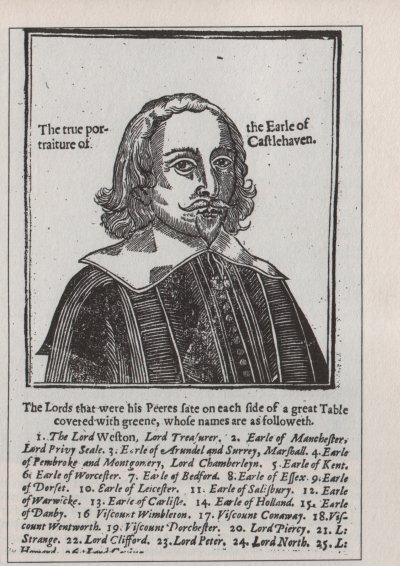
A few years back I published an essay on the 1631 trial of the Earl of Castlehaven whose title, like that of the present post, tropes Gayatri Spivak’s famous question about the subaltern in postcolonial society. In the essay I thought about the ways one particular servant in Castlehaven’s household, Laurence (or Florence) Fitzpatrick, was made to speak as a type of voluntary agent of sodomy when he presumably had little power to stage the monstrous inversions of social, civic, or moral order for which that particular sexual crime has been said to stand symbolically in early modern England. As the title of Cynthia Herrup’s superb work, A House in Gross Disorder, suggests, accusations of sodomy against the Earl did not arise primarily in response to his sexual habits with men but his mismanagement of house and patrimony. So what did it mean that Fitzpatrick, who had little control of either, was convicted of and executed for sodomy as well?

2ndEarlOfCastlehavenIn the proceedings of the trial Fitzpatrick was labeled a “voluntary prostitute” (Cobbett, State Trials, vol. 3, col. 420). His confession of sexual acts with the Earl were assumed to imply his agency and consent to a crime that was, so the story goes, usually identified as an offense observable in others but rarely imagined as a subjective position from which one might act or speak. As regards his sexual actions, Fitzpatrick surely was not a subject but rather a young man subjected to the Earl and the social system that privileged his betters. Fitzpatrick himself seemed to understand as much, for in his forlorn speech from the scaffold he says that “he was not only sorry for [his sins], but also resolved never to come into my lord’s house again; but it was through frailty, and because he was not furnished of another place” (State Trials, col. 422). Nevertheless, because the justices depended on Fitzpatrick’s testimony to corroborate the charges of sodomy against Castlehaven, they seemed to privilege his confession (which was probably unfairly obtained) with an agency the otherwise disenfranchised underling wouldn’t have had. Of course, this agency was imposed on Fitzpatrick, but in my reading the Castlehaven case provided evidence that sodomy, by which I mean for the purpose of this post illicit male same-sex activity, could be imagined and represented as speaking on its own behalf, in its own voice. Continue reading

Silences of the People

Our next post in The Voices of the People symposium (full programme here) is by William Pooley, currently a Past and Present Fellow at the IHR and soon to take up a Lectureship at the University of Bristol. In another example of the kind of thoughtful reflection on the practice of writing ‘history from below’ that Tim Hitchcock called for in our opening post, Will asks whether ‘silences’ might have as much to tell as us ‘voices’, and addresses some of the methodological issues involved in pursuing and interpreting them.

Will Pooley

Are voices really what we should be looking for?

There is a cultural critique to be made here. In her post, Julia Laite warned against the danger of ‘rescuing’ historical voices who might not want to have been rescued. Many of the participants in this symposium will discuss humble individuals compelled to speak by external authorities. These people did not want ‘voices’, they wanted bread, security, or just to be left alone.

My post adds a more theoretical critique to this cultural one.

‘Voice’, after all, is a slippery concept, run through by an inescapable tension between tangibility and evanescence. It is somehow real, physical, and bodily, yet also unseizable and temporary. No historian working on the period before sound recordings can do anything other than read the writing of the people, or the writing about them. We study the pictures of the people, their material culture, perhaps their remains, or their genetics. And even when recordings or living people are available as sources, there is no way to fix their orality in satisfying and absolute permanence.[1]

Might it be fairer to say that many historians of popular culture (or whatever we would like to call what we do) study the silences of the people more often than their voices?

Two  rural workers bow their heads in silence as the church bells ring in this painting by Jean-François Millet. But what does their silence mean? Are they praying for the potato harvest, or, as Salvador Dali maintained, praying over the grave of their dead child?

Two rural workers bow their heads in silence as the church bells ring in this painting by Jean-François Millet. But what does their silence mean? Are they praying for the potato harvest, or, as Salvador Dali maintained, praying over the grave of their dead child?

Continue reading

The Marginal and the Monstrous: The ‘Voices’ of Prostitutes and Traffickers in Modern History

Our second post in The Voices of the People symposium (full programme here) is by Julia Laite, Lecturer in British History at Birkbeck, University of London. Reflecting on her own work on prostitutes and traffickers in the early twentieth century, Julia addresses a number of themes that will recur frequently throughout this symposium: the value of the microhistorical approach and the capacity of digital technology to support the work of close contextualisation; the importance of self-reflecting on ‘history from below’ writing as a genre and methodology; and the ethics of recovering the ‘voices of the people’.      

Julia Laite

When Lydia Rhoda Harvey steamed away from the shores of New Zealand, enroute to Buenoes Aires where she would, according to her traffickers, ‘see gentlemen’, what did she think? What did she say? What did her traffickers, Antonio Adolfo Carvelli and Veronique White, say to her? To each other? Is it possible to guess, and if so, do I want to and should I?

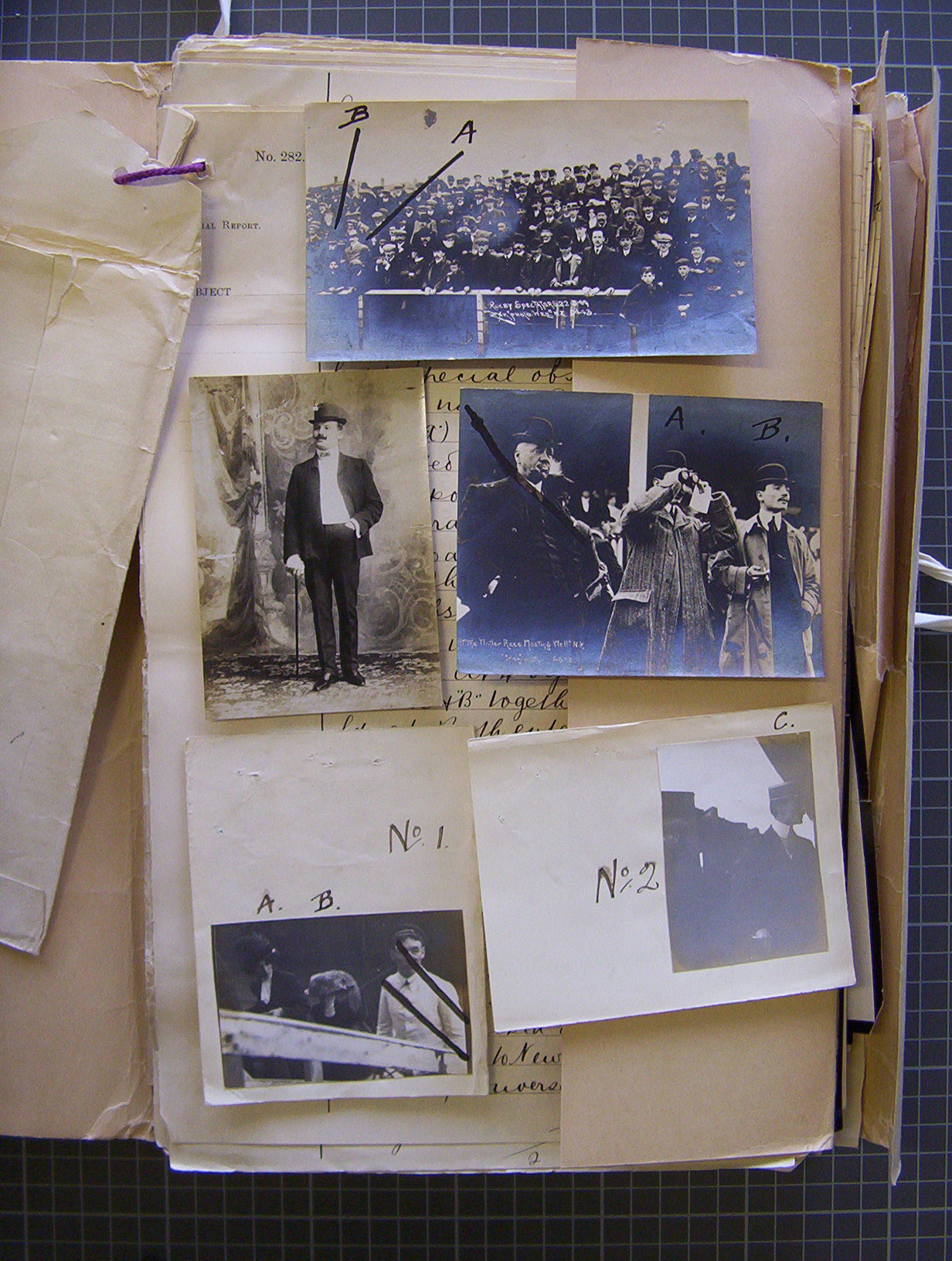
'A collection of voiceless photographs from the Carvelli/Harvey trafficking case, London, The National Archives, MEPO 3/197

A collection of voiceless photographs from the Carvelli/Harvey trafficking case, London, The National Archives, MEPO 3/197

My new book project examines the story of Carvelli, White, Harvey and the other women who were trafficked alongside of her, as well as some of the police officers, campaigners, and social workers who were directly or indirectly involved in the case. The project didn’t start out as a global microhistory, but as I got further into my research on the subject of trafficking, I became increasingly convinced that examining it in this way would allow me to capture, more effectively than any other way, the complexity of trafficking as a historical subject. Debates rage in the historiography over whether trafficking is most meaningfully described as a form of migrant labour or as exploitation; scholars examine it either from a national or an international perspective; they examine either state action or philanthropic campaigning; they examine the formation of law or the way law looks in practice (though this is actually not very well covered). Histories of trafficking are methodologically transnational (by their very nature), but scholars are coming to realise that they are also very locally contingent. Trafficking also tells us a great deal about power: state power, patriarchal power, economic power; but it also reveals complex voices of people caught up in, facilitating, or fighting ‘the traffic in women’.

A microhistory is an excellent lens with which to capture this complexity; but while also focusing on these individual voices. And so I have spent some time thinking—at times agonizing—about what it means to capture the voices of ‘ordinary’ people in such an extraordinary case; people who were thought of as marginal and monstrous in equal measure: as abject victims, as despicable ruffians. I’ll share some of this thinking here, in the form of four interrelated questions that have been troubling and captivating me as I have gotten deeper into the project, and into my historical actor’s lives. The first is,

How can I listen? Continue reading

Sources, Empathy and Politics in History from Below

Our opening post in The Voices of the People symposium (full programme here) comes from Tim Hitchcock, Professor of Digital History at the University of Sussex. Tim addresses the recent high profile debates about the role academic history writing has to play in our society, arguing that ‘history from below’ has a particularly important contribution to make – and outlines an agenda for how it can do so.

Tim Hitchcock

The purpose and form of history writing has been much debated in recent months; with micro-history, and by extension history from below, being roundly condemned by historians Jo Guldi and David Armitage as the self-serving product of a self-obsessed profession. For Guldi and Armitage the route to power lies in the writing of grand narrative, designed to inform the debates of modern-day policy makers – big history from above.   Their call to arms – The History Manifestohas met with a mixed reception. Their use of evidence has been demonstrated to fall short of the highest academic standards, and their attempts to revise that evidence sotto voce has been castigated for its lack of transparency.[1]

Regardless of the errors made along the way, of more concern to practitioners of ‘history from below’ is Guldi and Armitage’s assumption that in order to influence contemporary debate and policy formation we should abandon beautifully crafted small stories in favour of large narratives that draw the reader through centuries of clashing forces to some ineluctable conclusion about the present. I have no real argument with the kind of history they advocate – and the success of recent works such as Thomas Piketty’s Capital, suggest that it can both do justice to the evidence, and contribute to modern policy debate. And I am sure with a couple of decades’ hard work (there were 19 years between the publication of the Communist Manifesto, and Das Kapital), Guldi and Armitage will produce a book that lives up to the hype.

But, they fundamentally misrepresent the politics of history writing, and of micro-historical analysis in particular. And what they seem to miss is a simple appreciation of the shock of the old. The lessons of history are very seldom about ‘how we got here’ with all its teleological assumptions, but more frequently about how we can think clearly about the present, when we cannot escape from it. Continue reading

The many-headed monster devours its 100,000th victim

The monster heads

We are delighted to report that we recently received our 100,000th view on the many-headed monster! We would like to thank everyone who reads the blog, as well as all those who share posts with others, or who take the time to comment. It is safe to say we wouldn’t be here without you.

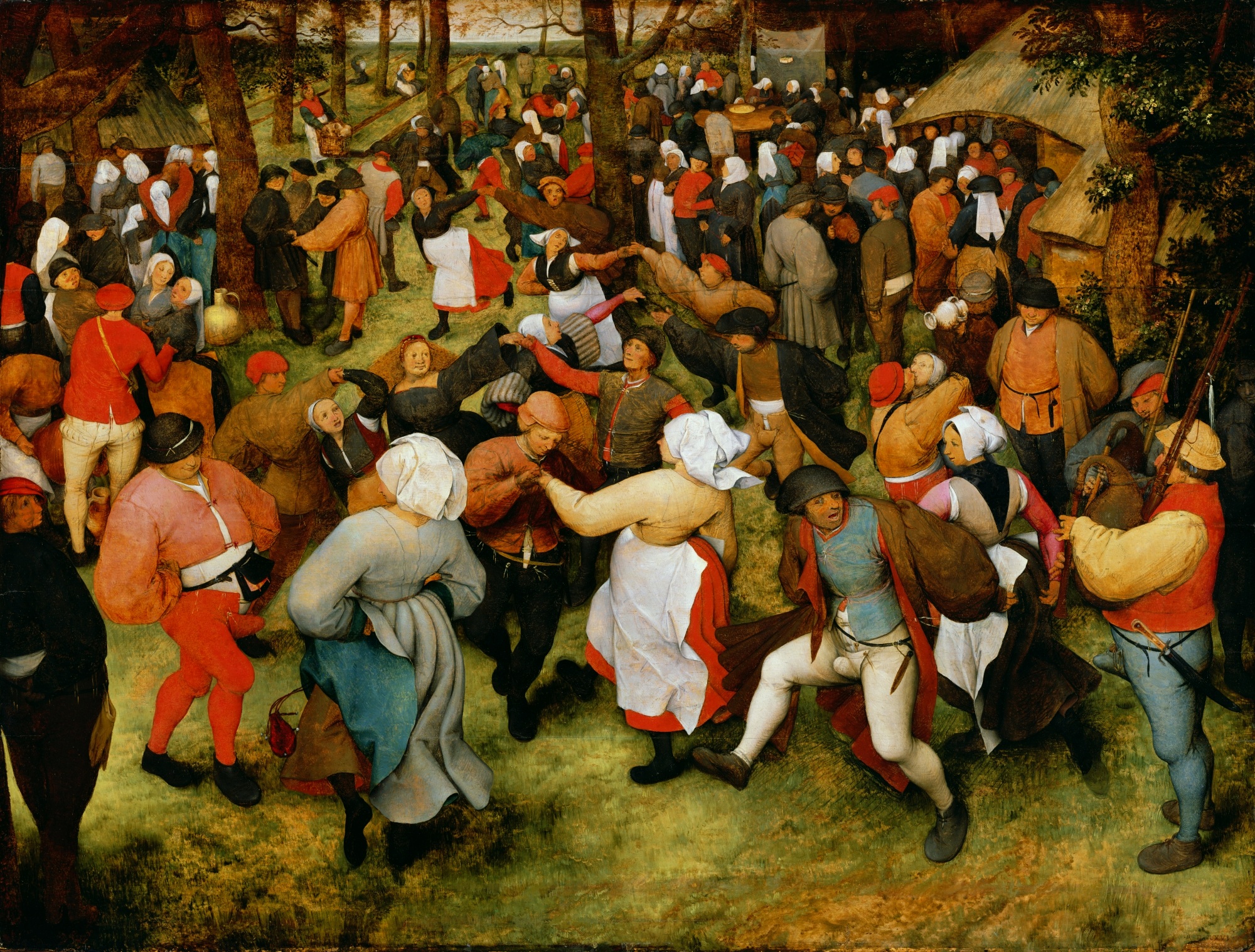
The monster celebrates like it is 1566.

The monster celebrates like it is 1566.

We usually mark milestones with some reflection, so here goes:

The monster’s first post appeared 18 July 2012 (so we will soon be 3 years old as well). Mark Hailwood and Brodie Waddell were the founding members, soon joined by Laura Sangha and Jonathan Willis. Since then we’ve:

  • Posted 167 blogs
  • Had 48,500 visitors
  • Featured 11 mini-series
  • Received 766 comments

Our most successful post is now Brodie’s ‘A missing child and a suspicious meat pie in 1645’, relating the strange case of human flesh allegedly being sold as food. After being featured on the suspiciously named Hacker News, this post received an astonishing 4,857 views (4,246 visitors) on 2 June 2015. Continue reading

Happy Blogiversary! The Monster is Two

Apparently a ‘blogiversary’ is a thing. It is, no doubt, another one of those neologisms that will make many of you cringe. But its also an excuse for a bit of fun, so we are going to take the chance to celebrate the fact that the many-headed monster is now two-years old! And what better way to celebrate than with a virtual cake and some statistics?!

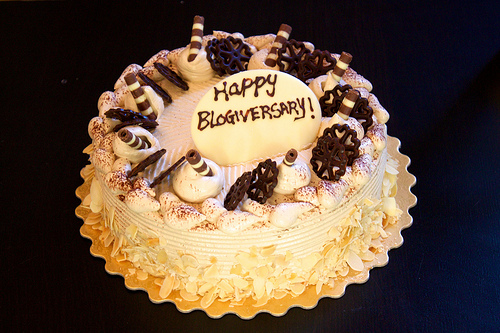
Let them eat cake!

Let them eat cake!

It all started back on 18th July 2012, with Brodie’s first post in his ‘Norwich Entertainments‘ series, about the providential messages inherent in the parading of a hairy child and a boneless girl around the city. Over the first two weeks we averaged a modest but respectable 10 hits a day.

Since then we have received over 53,500 hits on the blog, spread across 122 posts, complete with 685 comments, at closer to an average of 100 hits per day. These hits have come, somewhat unbelievably, from 140 countries! Less surprisingly most of our readers come from the UK, the US, Canada and Australia – though Germany and France are also well represented in our viewing statistics. India also makes the top ten.

More low-calorie virtual cake, anyone?

More low-calorie virtual cake, anyone?

Our top five most popular posts are all from our ‘History from Below’ online symposium held last summer. Laura’s post on John Dee’s Conversations with Angels is the most popular outside of that event. We summarised some of the other most popular posts in our 100th post recently if you want to know more.

One of the more curious things about our blog statistics are some of the unusual search terms that have led readers to the site. ‘Okapi’ has introduced no less than 11 unsuspecting stripy-animal enthusiasts into the world of early modern history (courtesy of Laura’s posts on the use of analogy in history writing). A search for ‘dirty mind of young sally’ has sent 9 browsers into our midst – and I think we would rather not know how or why.

Much more innocently the search ‘be nice to archivists’ has produced 8 visitors: certainly a sentiment we are happy to be logarithmically associated with. ‘Male hunk zodiac signs’ rather less so. Although, if this search produced a link to the John Dee post we’d like to think he would have been flattered…

So there you go: two-years of the ‘unruly sort of clowns’ and other early modern peculiarities. Some people out there seem to think the age of the blog is coming to an end. Others that they are an increasingly important component of being a historian in the 21st century. Whichever way the wind may be blowing we’re hoping to have many more blogiversaries if you, our beloved readers, keep coming back. Thanks for all the views, comments and tweets: we hope you’re enjoying the blog half as much as we are.

The Many-Headed Monster