The many-headed monster devours its 100,000th victim

The monster heads

We are delighted to report that we recently received our 100,000th view on the many-headed monster! We would like to thank everyone who reads the blog, as well as all those who share posts with others, or who take the time to comment. It is safe to say we wouldn’t be here without you.

The monster celebrates like it is 1566.

The monster celebrates like it is 1566.

We usually mark milestones with some reflection, so here goes:

The monster’s first post appeared 18 July 2012 (so we will soon be 3 years old as well). Mark Hailwood and Brodie Waddell were the founding members, soon joined by Laura Sangha and Jonathan Willis. Since then we’ve:

  • Posted 167 blogs
  • Had 48,500 visitors
  • Featured 11 mini-series
  • Received 766 comments

Our most successful post is now Brodie’s ‘A missing child and a suspicious meat pie in 1645’, relating the strange case of human flesh allegedly being sold as food. After being featured on the suspiciously named Hacker News, this post received an astonishing 4,857 views (4,246 visitors) on 2 June 2015. Continue reading

Women’s Work in Rural England, 1500-1700

Mark Hailwood

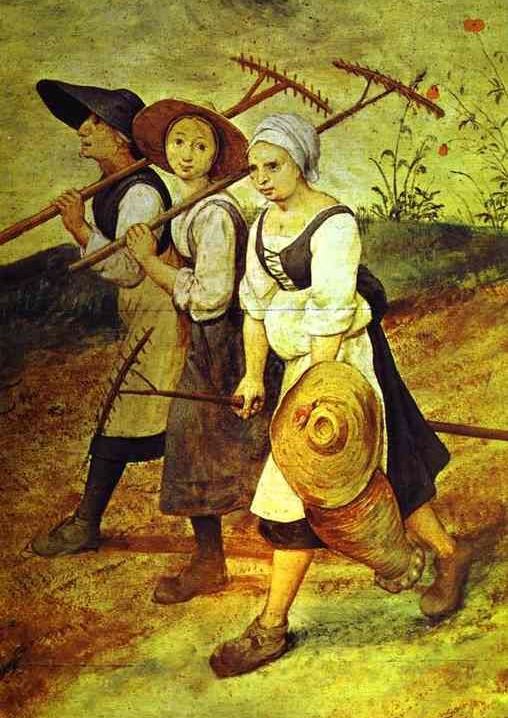
bruegel hay makersMany ‘monster readers will have already deduced that I recently started a new job. So I thought it would be a nice idea to write a very short post introducing the project that I’m now working on. It is based at the University of Exeter, funded by the Leverhulme Trust, and will run until the summer of 2018. The leader of the project is Professor Jane Whittle and I will be the main researcher. Our aim is to gather an unprecedented level of information about the everyday working lives of early modern English women by extracting incidental information about work activities from witness statements given in court cases (and a few other types of record too). We hope that this innovative methodology will help us to capture aspects of women’s work – for instance domestic and other types of unpaid work – that more conventional history of work sources – such as wage data – do not.

If you want to know more about the aims, methods and sources we will be using I have set up a website for the project here, that contains a lot more detail about what we will be doing. I’ll also be blogging over there about our progress from time to time, so if you are interested please do follow the project.

In fact, we already have a couple of blog posts up:

  • ‘What is Work?’ – project leader Jane Whittle challenges some of the more conventional definitions of work that historians use, and offers a more suitable alternative that we will be adopting for the project.
  • ‘Did Women Work in Agriculture?’ – in this post I examine some of our first archival gleanings, and use them to raise some questions about the gendered division of agricultural work in rural England.

Finally, I should mention that we are looking for a third person to complete our project team, and as such are offering a fully-funded PhD studentship at Exeter. So, if you like the sound of the project or know of someone who you think might like to apply, then all the relevant details can be found here. The deadline for applications is 1st June.

A large part of my job will be working through thousands of witness testimonies from quarter sessions and church courts, with their rich and fascinating vignettes of everyday life. In addition to the information I am after for the project this will turn up plenty of stories about the lives of ordinary men and women in early modern England for me to regale ‘monster readers with, so keep watching this space!

Happy Blogiversary! The Monster is Two

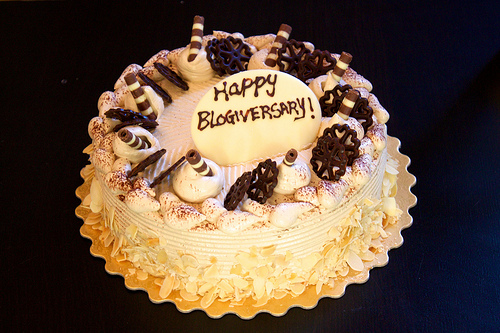
Apparently a ‘blogiversary’ is a thing. It is, no doubt, another one of those neologisms that will make many of you cringe. But its also an excuse for a bit of fun, so we are going to take the chance to celebrate the fact that the many-headed monster is now two-years old! And what better way to celebrate than with a virtual cake and some statistics?!

Let them eat cake!

Let them eat cake!

It all started back on 18th July 2012, with Brodie’s first post in his ‘Norwich Entertainments‘ series, about the providential messages inherent in the parading of a hairy child and a boneless girl around the city. Over the first two weeks we averaged a modest but respectable 10 hits a day.

Since then we have received over 53,500 hits on the blog, spread across 122 posts, complete with 685 comments, at closer to an average of 100 hits per day. These hits have come, somewhat unbelievably, from 140 countries! Less surprisingly most of our readers come from the UK, the US, Canada and Australia – though Germany and France are also well represented in our viewing statistics. India also makes the top ten.

More low-calorie virtual cake, anyone?

More low-calorie virtual cake, anyone?

Our top five most popular posts are all from our ‘History from Below’ online symposium held last summer. Laura’s post on John Dee’s Conversations with Angels is the most popular outside of that event. We summarised some of the other most popular posts in our 100th post recently if you want to know more.

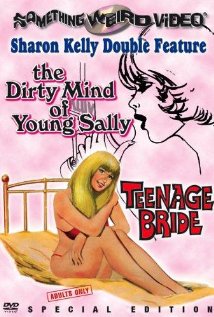
One of the more curious things about our blog statistics are some of the unusual search terms that have led readers to the site. ‘Okapi’ has introduced no less than 11 unsuspecting stripy-animal enthusiasts into the world of early modern history (courtesy of Laura’s posts on the use of analogy in history writing). A search for ‘dirty mind of young sally’ has sent 9 browsers into our midst – and I think we would rather not know how or why.

Much more innocently the search ‘be nice to archivists’ has produced 8 visitors: certainly a sentiment we are happy to be logarithmically associated with. ‘Male hunk zodiac signs’ rather less so. Although, if this search produced a link to the John Dee post we’d like to think he would have been flattered…

So there you go: two-years of the ‘unruly sort of clowns’ and other early modern peculiarities. Some people out there seem to think the age of the blog is coming to an end. Others that they are an increasingly important component of being a historian in the 21st century. Whichever way the wind may be blowing we’re hoping to have many more blogiversaries if you, our beloved readers, keep coming back. Thanks for all the views, comments and tweets: we hope you’re enjoying the blog half as much as we are.

The Many-Headed Monster

Monster Mini-Series

The ‘monster now has a number of long running ‘mini-series’ – collections of posts that are grouped around a particular theme, topic, or source collection. For your delectation we now bring you a list of the said mini-series, with a brief description of the contents of each. For future reference the link is just up there, on the right end of the menu bar. Happy browsing!

Monstrous readers

Brodie Waddell

In the wee hours of this morning, the Monster was viewed for the 10,000th time. Not a bad achievement for a blog dedicated to historical obscurities that only launched nine months ago. So, thanks to all of you for checking us out and thanks even more to our commenters who make posting so worthwhile!

Rather than fireworks, I thought it might be appropriate to celebrate by pulling back the curtain to reveal a few facts and statistics, following the example of Nick at Mercurius Politicus.

Since July 18th, 2012, we’ve had:

  • 53 posts
  • 205 comments
  • 10,004 views, around 40 per day
  • 74 different countries from which vistors have arrived
  • 260 views on a single day (September 2nd, thanks to a link to ‘A royal mistress’ from Two Nerdy History Girls)

We’ve received most of our readers via links from:

Perhaps most interesting are the search terms that have been used to find us. The most Young Sallypopular is, of course, ‘many-headed monster’. Interestingly, ‘archivist’ is in second place, perhaps thanks to the archival miscellany. Other unsurprising results include ‘what shall we do with a drunken sailor’, ‘civil war comic strip’ and ‘microhistory’. More unexpectedly, we also have a few readers who’ve found us by searching for ‘animated fireworks’, ‘hairy child’, ‘devil church’ and, most confusing of all, the nine clicks from ‘dirty mind of young sally’. I pity the poor saps who were looking for a local Satanist congregation or a 1973 ‘adult comedy’ only to find over-thought analysis of some early modern oddity.

Oh well, the more the merrier … Satanists and skin-flick fans, we welcome you!

Calling all bloggers and blog readers…

Every six weeks or so the historical blogosphere hosts a ‘carnival’ where a single blog publishes a ‘Carnivalesque’ miscellany of links to recent posts from around the web. This particular carnival focuses on ancient, medieval and early modern blogging. Previous editions have been hosted by Sharon Howard of Early Modern Notes and Thony C. of The Renaissance Mathematicus.

The many-headed monster will be hosting the next edition on April 27th and we’re looking for nominations. We’ve already had a few come through, but would welcome many more. The Carnivalesque nominations procedure is as follows:

We welcome perspectives from a variety of fields, especially (but not only) history, literary studies, archaeology, art history, or philosophy. You can nominate your own writing and/or that of other bloggers, but please try not to nominate more than 1-2 posts by any author for any single edition of the carnival.

Nominated blogging may be ‘academic’ or ‘popular’, so long as it is based on facts and evidence. Writing that engages with the past to discuss present issues should include significant historical content and analysis, not merely polemic. All nominations are vetted by the host of the edition, whose decision is final.

Nominated posts should have been published within the last 2-3 months. The normal channel is to send an email to the host using the nomination form at this site. Individual hosts may provide additional options. Please ensure you include the full URL of the post you are nominating, and ideally the post title and blog name.

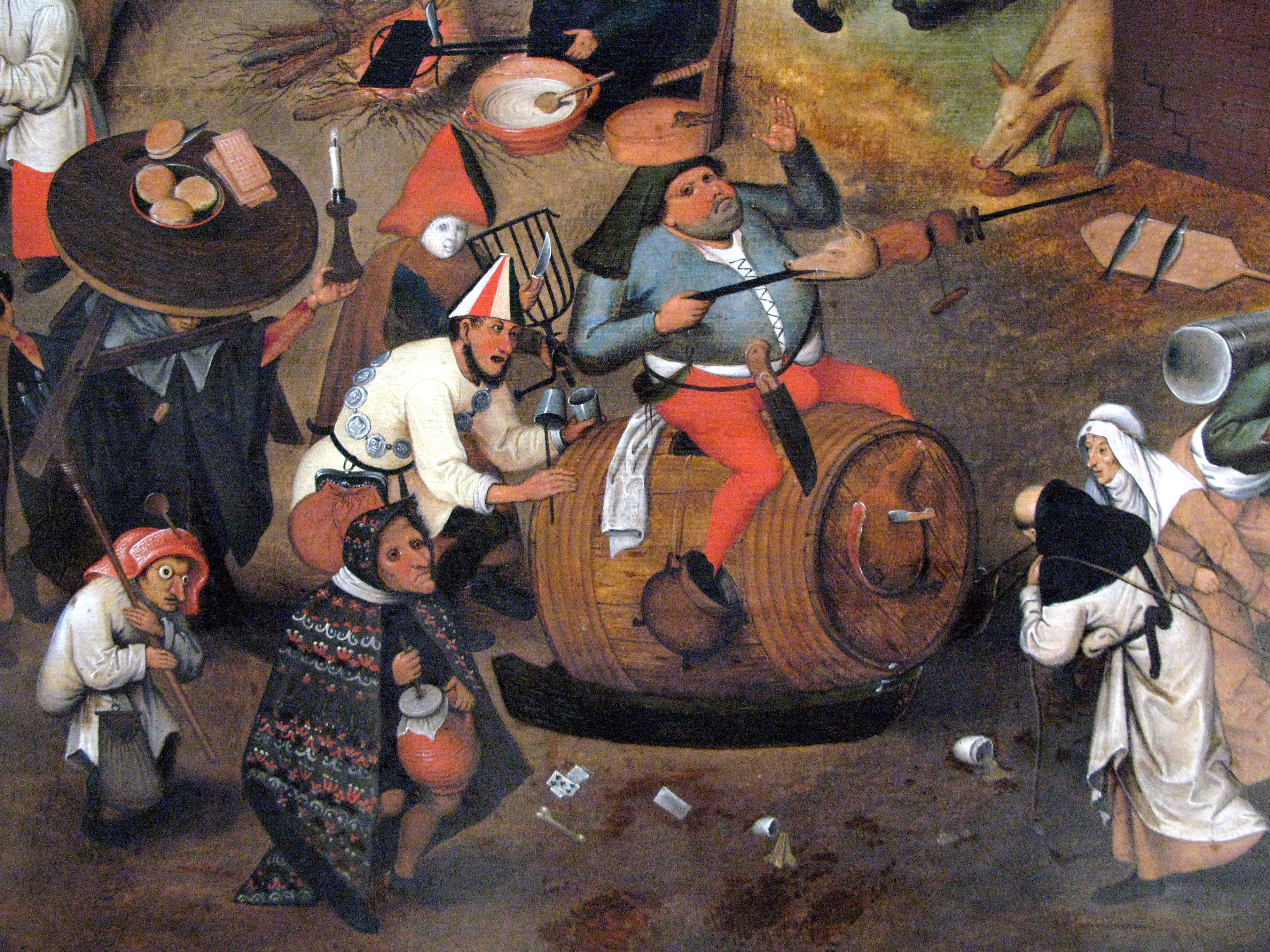
pieter_bruegel_ii-combat_de_carnaval_et_careme_img_1463

A ‘Pancake Day’ blogroll update

Shrove Tuesday has arrived again. It’s time to fry up some pancakes (preferably slathered with Nutella), join the London apprentices in smashing up some bawdy houses, and then pull up a chair in front of your computer to gorge yourself on early modern history blogging.

To that end, we’ve just updated our blogroll. The mother of all historical blogrolls is Sharon Howard’s Early Modern Commons, but for those seeking a more selective list, our newly expanded set of links may be just the thing. In addition, we are also updating our even more selective sidebar of ‘Friends of the Monster’ to focus on those with whom we seem to interact most often in terms of links or comments.

Enjoy!

Call for Papers: Sin and Salvation in Reformation England

Jonathan Willis

As the tightly-sprung chaos of another academic term starts to unwind, and thoughts turn to the endless possibilities of a month of peaceful and unbroken research time (oh yes, and Christmas), my gift to you, Monster reader, is a call for papers.  But this isn’t just any call for papers!  Firstly, the vital statistics: Sin and Salvation in Reformation England is a major three-day conference taking place 26-28 June 2013 at the Shakespeare Institute, Stratford-upon-Avon.  I am organising the conference under the auspices of CREMS, the University of Birmingham’s Centre for Reformation and Early Modern Studies, with generous support from the Leverhulme Trust.  Contributions are invited from established scholars and postgraduate students alike, and it is my hope that the conference will give rise to an edited volume of essays. Themes for papers may include (but are not limited to): visual, literary, political, theological, historical, material, musical, polemical or any other treatments of the topics of sin and salvation in the context of reformation-era England. Please send abstracts of 250 words for 20-minute papers to me by 31 March 2013, and visit the CREMS website for more information.

Secondly, keynotes.  Every conference needs at least one keynote, and I’m delighted to say that we have managed to arrange an exceptional lineup of three of the most interesting and engaging scholars in the field.  Dr Arnold Hunt, has written on communion and extensively on preaching, and is currently involved with editing the parochial sermons of John Donne.  Professor Alec Ryrie has written extensively on the English reformation: his long-awaited monograph on Being Protestant in Reformation Britain is due out early next year, and he has already embarked on a new global history of Protestantism.  Professor Alexandra Walsham has written a series of ground-breaking books on the English reformation, on topics ranging from church papistry to providence and intolerance.  Her most recent work is a breathtaking account of the Reformation of the Landscape, and she is currently working on the impact of ageing and generational change on the English Reformation.

Thirdly, the conference blurb: Sin and Salvation were the two central religious preoccupations of men and women in sixteenth century England, and yet the reformation fundamentally reconfigured the theological, intellectual, social and cultural landscape in which these two conceptual landmarks were sited. The abolition of purgatory, the ending of intercessory prayer, the rejection of works of supererogation and the collapse of the medieval economy of salvation meant that it was impossible for attitudes, hopes, fears and expectations about sin and salvation to survive the reformation unchanged. This conference will explore some of the transformations and permutations which the concepts of sin and salvation underwent over the course of the reformation in England, as well as the practical consequences of these changes as lived.

Fourthly, every call for papers needs a picture, so here is mine: part of the frontispiece from Lewis Bayly, The Practise of Pietie (1613).
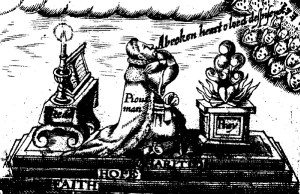
Bayly[A pious man, kneeling upon a foundation of faith, hope and charity, turns from his study of the scriptures to pray: ‘A broken heart o Lord despise not’!]

Fifthly, finally, and as this is a blog entry rather than a traditional call for papers, I wanted to take a little more time to explain why I want to put this conference on, and what I hope to achieve.  I’m currently enjoying the third year of a Leverhulme Early Career Fellowship, working on ‘The Ten Commandments and the English Reformation’, and it was always my plan to host a conference during the final year of research.  Initially this was going to be a conference on the Ten Commandments, then it became one on the concept of God’s law, then on the use of the Old Testament during the reformation more broadly, then more generally on the bible.  Each successive iteration felt like I was getting closer, but I am not a biblical scholar, and so I kept putting it off and off as it didn’t quite feel right.  Finally it clicked: in a nutshell, the commandments were all about listing the things that you mustn’t do (i.e. sin), and enumerating the sort of deeds performance of which could be taken as a sign that an individual had been predestined to election (i.e. salvation).  One of many roles of the commandments in reformation England, therefore, was to help shape these fundamental concepts of sin and salvation as they slowly came to be understood by the great majority of people, through continual exposure through preaching, catechesis, the liturgy, and visual, musical, and other media.  Hopefully then, ‘Sin and Salvation in Reformation England’ will open up for exploration not only those vital concepts themselves, but also how they came to shape religious belief, practice and identity amongst the laity, and how they themselves were moulded by the experience.  A worthwhile enterprise, I’m sure you’ll agree: so, please take some time out from the sherry and mince pies, send those abstracts through to me now, and keep your eyes peeled for information about registration in the spring!

Biographies of Drink: A Conference Call

Mark Hailwood

An August evening in 1609, in the Cheshire parish of Knutsford. A weary tinker,  with ‘pannes upon his Backe, & a Trumpett in his hande’, pushes open the door to a humble alehouse, to be greeted by a crowd of merry ‘pot-companions’. Their ring leader is quick to enlist the tinker in the revelry, and before long he is sounding his horn to call together ‘all the drunkards’ to this epicentre of drinking and ‘good fellowship’.

Beasts

I too would like to sound a trumpet call – not so much to ‘all the drunkards’, but instead to all those interested in the history of drinking. On a February weekend in 2013, in the Maths Building of the University of Warwick, a crowd of leading scholars in the field of drinking studies will gather to consider the role that alcohol consumption plays: in the lives of individuals; in the fortunes of families; in the creation and maintenance of communal identity; and in the concerns of governments and states. There may also be some revelry.

It is not an early modern conference, nor even just a history conference, and the papers range across time and discipline, from the material culture of Roman Britain to contemporary projects to use social media to influence alcohol consumption. If you think you might be interested you can take a look at the programme (and if that goes well, find a booking form) over at the website of the Warwick Drinking Studies Network:

go.warwick.ac.uk/wdsn

The deadline for booking is 14 December.

Twelve reasons to buy my book, or, The ancient art of self-promotion

Brodie Waddell

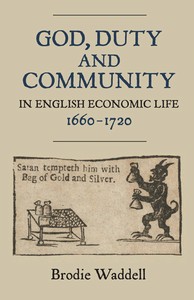
Brodie Waddell, God, Duty and Community in English Economic Life, 1660-1720

1. It was only officially released today, so if you buy it now, you’ll probably be the first kid on your block to have one!

2. It has seven pictures inside, a very respectable ratio of 1 for every 34 pages.

3. It has the word ‘God’ in the title, making it slightly more likely to be accidently recommended by your local Christian reading group.

4. It has a picture of Satan on the cover, making it slightly more likely to be accidently black-listed by your local Christian reading group.

5. Barack Obama called it ‘…the best book I’ve ever read on later Stuart economic culture…’ and Nelson Mandela said it was ‘… longer than I expected …’ (NB: Not actual quotes. Please don’t sue me!)

6. It has footnotes, not those horrible endnotes.

7. It cites a hell of a lot of broadside ballads.

8. I can’t think of a number eight.

9. It uses paper that apparently derives from ‘natural, recyclable products made from wood grown in sustainable forests’. You’re practically saving polar bears just by reading it.

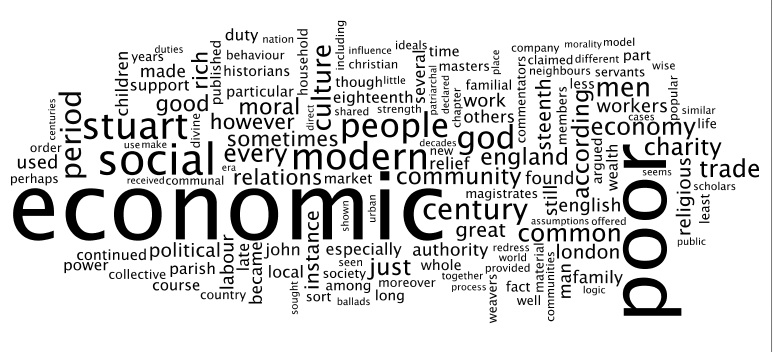
10. When you put the text through Wordle, you get this…God, Duty and Community via Wordle

11. I can’t think of a number eleven either.

12. I’ve heard that ‘this book explores the economic implications of many of the era’s key concepts, including Christian stewardship, divine providence, patriarchal power, paternal duty, local community, and collective identity. Brodie Waddell draws on a wide range of contemporary sources – from ballads and pamphlets to pauper petitions and guild regulations – to show that such ideas pervaded every aspect of social and economic relations during this crucial period.’

Available at Boydell & Brewer (UK), University of Rochester Press (USA), Amazon (everywhere), Powell’s (less evil) and other fine book-sellers.

UPDATE (19/10/12): I’ve only just discovered that it’s also available as an over-priced ebook. If you’d like a sample from the text, I’ve uploaded the table of contents, introductory sections, bibliography and index.

UPDATE (12/11/12): There is now a preview on googlebooks too.