Staged Portraits in Early Modern English Drama

This post in our After Iconophobia Online Symposium comes from Emanuel Stelzer, a PhD student in intercultural humanistic studies in the department of philosophy and literature at the University of Bergamo.  Emanuel’s PhD project consists of an analysis of the uses and effects of staged portraits in early modern English drama. Here he reflects upon the extent to which the iconophobia thesis is compatible with treatments of staged portraits in early modern English drama.

Critics have traditionally employed a two-pronged approach to understand the significance of pictures in early modern English drama and of its visual dimension: they have read them either in terms of iconophobia or of iconophilia. These scholars generally refer to Patrick Collinson’s work, the seminal centrality of which is easily assessed in many diverse fields ranging from the history of Tudor and early Stuart portraiture, to the studies on Renaissance visual culture and on the impact of the English Reformation. I wish to demonstrate that the staging of portraits in early modern English drama can problematize this dualistic interpretation.

It is well known that Collinson diagnosed post-Reformation England with “severe visual anorexia”.[1] He neatly separated two moments in English cultural history: the first, “iconoclasm”, which destroyed and defaced holy icons and religious simulacra. The second phase, “iconophobia”, was nothing short of an epistemic shift which took place from the 1580s, when the very status of the image became the centre of denigration and fear. The Word had to triumph over the Image. More or less gradually, “the English became the people of a book, and that book was the Bible”.[2] Most importantly, Collinson also asked: “What do we know about the capacity to form mental pictures of someone who has almost never seen an actual picture?”[3]
Continue reading

The Presence (and Absence) of the Supernatural in Elizabethan Drama

This post in our After Iconophobia Online Symposium comes from Jan Tasker, an AHRC M3C-funded PhD student based at the University of Birmingham’s Shakespeare Institute.  Jan is working with Martin Wiggins and Jonathan Willis on representations of the supernatural in early modern English drama.  Here she reflects upon the changing ways in which God was represented on the Elizabethan stage.

In 1606 the Parliament of King James I of England passed an act banning players from ‘jestingly or prophanely […] speak[ing] or [using] the holy Name of God or of Christ Jesus or of the Holy Ghoste or of the Trinity’, or risk a £10 fine.[1]  Following the Reformation God was not to be taken lightly, and such usage was considered blasphemous or, potentially, idolatrous.  However as Patrick Collinson noted in his seminal lecture ‘From Iconoclasm to Iconophobia’ God had apparently left the English stage more than twenty years earlier – or had he?[2]

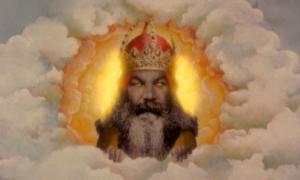
GOD!!!!

My current research explores how dramatists across a variety of genres continued actively to explore the theological issues concerning supernatural beings, including God, during the period 1533 – 1642. In this early stage I have been identifying dramatic works that contain explicit supernatural elements of a potentially religious nature.  This blog will share these early findings in respect of the disappearance, or otherwise, of the Christian God.  The data discussed comes from an electronic trawl of Dr Martin Wiggins’ work for his ongoing British Drama: A Catalogue, including all known dramatic works (not just plays) written in the period 1533 – 1642.[3]

Continue reading

Collinson and Drama

This post in our After Iconophobia Online Symposium comes from Adrian Streete, Senior Lecturer in English Literature 1500-1780 in the School of Critical Studies at the University of Glasgow.  Adrian’s books include the monograph Protestantism and Drama in Early Modern England and the edited volume Early Modern Drama and the Bible: Contexts and Readings, 1570-1625. Here he reflects upon the ways in which drama in Protestant England continued to represent God’s Word on the stage. 

Part of the post is taken from the essay ‘Literary Genres for the Espression of Faith: Drama’, in Andrew Hiscock and Helen Wilcox (eds), The Oxord Handbook of Early Modern Literature and Religion (Forthcoming, 2017).  Some of these topics are developed further in Adrian’s forthcoming book Anti-Catholicism and Apocalypse in Seventeenth-Century English Drama (CUP, 2017).

I want to raise two related questions stimulated by Professor Collinson’s lecture. What is ‘biblical drama’? And what does ‘representing the word’ on stage entail? Over the past thirty years, literary scholarship has offered a number of replies to these questions. I will outline what I think are the most important of these responses. But before I do this, I want to remark briefly on the striking interdisciplinarity of Collinson’s lecture. Think of the willingness today of historians like Peter Lake and Quentin Skinner to engage in literary analysis, or conversely of the fine historical work of literary scholars like Brian Cummings and David Norbrook. In 1985, these disciplinary boundaries were much less fluid. Historians were not always as keen to take literature seriously as historical evidence. Greenblatt’s Renaissance Self-Fashioning was only five years old. Dollimore’s Radical Tragedy had just been published in 1984. As we might expect, Collinson refers to a number of historically-minded literary scholars. But he also makes reference to the Marxist-inspired work of Margo Heinmann, and in his notes he thanks Michael O’Connell of the University of California, whose book The Idolatrous Eye would be published in 2000. With characteristic prescience, Collinson’s methodology assimilates key aspects of New Historicism and Cultural Materialism.

Continue reading

Protestants and Images in the Late-Seventeenth-Century

This post in our After Iconophobia Online Symposium comes from Laura Sangha, fellow monster-head and Lecturer in the Department of History at the University of Exeter.  Laura’s first monograph was on Angels and Belief in England 1480-1700, and she is currently working on the pious Leeds antiquarian and diarist Ralph Thoresby. Here she reflects upon the relationship between Protestants and Images in the latter part of the seventeeth century.

In this blog post I draw on Patrick Collinson’s article to reflect on my own research into the life and times of the devout antiquarian, Ralph Thoresby (1658-1725), posing a series of questions for readers. In particular the post considers what happens after iconophobia, in the context of the ‘long Reformation’, and it reconsiders the functions of images in post-Reformation England.

Sangha - Thoresby

1) The Second English Reformation/ and the rest

In ‘iconoclasm’, Patrick Collinson made the continuing development of religious cultures and the aging of the evangelical movement a headline. Continue reading

Definitions and Phases of Reform

This post in our After Iconophobia Online Symposium comes from Adam Morton, Lecturer in the History of Britain at Newcastle University.  Adam’s doctoral thesis, which he is currently revising for publication, focusses on (amongst other things) the impact of Reformed theology upon visual and material cultures. Here he reflects upon the legacy of Collinson’s article for the field of reformation studies.

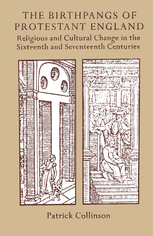
9780333439715I began my undergraduate career convinced that I wanted to be a historian, but entirely unsure which bit of the past I should dedicate my life to unlocking. Patrick Collinson’s Birthpangs of Protestant England (1988) – of which a revised version of his Stenton Lecture From Iconoclasm to Iconophobia (1986) formed a part – was one of four books (the others being John Bossy’s Christianity in the West (1985), Robert Scribner’s For the Sake of Simple Folk (1981) and Alexandra Walsham’s Providence in Early Modern England (1999)) which convinced me that the Reformation was the thing for me. In each case I became so absorbed in reading them that all sense of time lapsed. I emerged from their pages to discover that day had become night and in one instance a grumpy porter had to inform me rather briskly that the library was now closing. Such was their power that over a decade later I can still remember exactly where in the Morrell Library at the University of York I was sitting when I first encountered each author: remarkable experiences in an otherwise unremarkable building.
When I embarked on PhD study on the relationship between anti-Catholicism and visual culture several years later, I quickly discovered that for many historians working on popular culture ‘Collinson’ was a synonym for ‘wrong’. Continue reading

Introductory thoughts

This introductory post to our After Iconophobia Online Symposium comes from Tara Hamling, Senior Lecturer in Early Modern History in the Department of History at the University of Birmingham.  Tara is an Art Historian by training and has published widely on the impact of the reformation on visual and material cultures, for example in her monograph Decorating the Godly Household.  Here she reflects on Collinson’s article, its influence, its relevance, and some of the challenges it still presents.

Why are we here? We’re here to acknowledge, celebrate and reconsider Patrick Collinson’s seminal lecture ‘From Iconoclasm to Iconophobia: the Cultural Impact of the Second English Reformation’.  This hugely influential paper (published in 1986) which also informed chapter 4 of his book of 1988, The Birthpangs of Protestant England, has shaped a generation of scholarly enquiry into the impact of religion on culture, and of culture on religion, in post-reformation England.

My main interest, of course, is the visual arts – or to use Collinson’s term, pictorial arts, and especially the so-called ‘decorative’ arts in a domestic context. I want to offer, therefore, a few brief thoughts on how scholarship has tended to categorise sources and spaces, and the implications of these compartmentalised groupings for our understanding of Protestant attitudes to the image.

Categories of Image

2006am8212_jpg_l

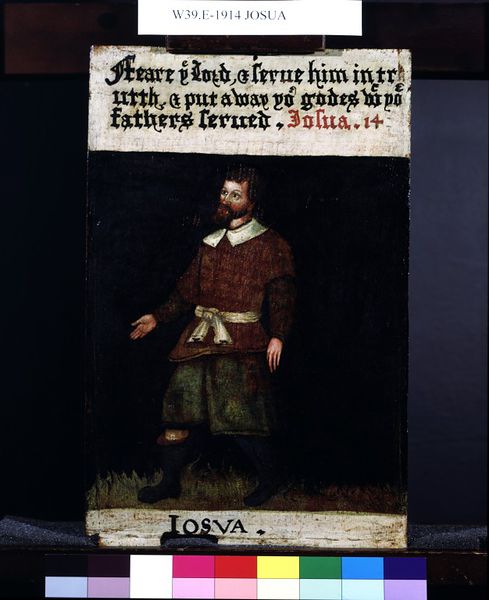
‘Joshua’, one of a set of painted panels with Old Testament figures, c.1600.  Victoria and Albert Museum. Copyright V&A, London

Since its publication 30 years ago, new work across disciplines on visual and material culture has uncovered a wealth of extant physical evidence that challenges the notion and process towards ‘iconophobia’ as established by Collinson. And yet, in the main, scholarship has tended to retain his basic framework, but point out that iconophobia couldn’t have extended to certain kinds of artwork in certain kinds of setting. Yet this newly noticed visual material has remained marginal. One of the reasons Collinson’s framework has survived the pressures placed on it by studies engaged with categories of surviving visual culture is that these artworks are deemed to be, well, not very good. Vernacular English art is judged rather embarrassing in its crude, awkward quality and this, together with an association with low culture and ‘lesser’ settings such as ‘cheap print’ or private houses, has allowed it to continue to pass relatively unrecognised. It has not been incorporated within the canon of early modern cultural forms.

Continue reading

After Iconophobia?

After Iconophobia? An Online Symposium

Tara Hamling and Jonathan Willis

aiIn 1985, Patrick Collinson delivered Reading University’s Stenton lecture on the topic ‘From Iconoclasm to Iconophobia: the Cultural Impact of the Second English Reformation.’ More than thiry years on, this essay (published in pamphlet form in 1986 and in revised form as Chapter 4 of The Birthpangs of Protestant England) has gone on to shape a generation of scholarly enquiry into the impact of religion on culture, and of culture on religion, in post-reformation England.  Scholars have accepted, rejected, and modified Collinson’s arguments, but one way or another they continue to exert a powerful influence over reformation studies today.
If you haven’t read Collinson’s original article/chapter, we would certainly encourage you to do so, although reasons of copyright prevent us from uploading a copy on the public internet.  Still, the definitions of his two key terms may well be of interest:

iconophobia definitions

Continue reading

Asking questions of speakers: top tips

Laura Sangha

Presentation ‘season’ has just begun at my University, where group and individual talks are part of the assessment for modules at every undergraduate level. Public speaking is apparently once of the most feared aspects of modern life, yet it is also a skill that students may well need in their future workplace, so it makes sense that all are called upon to regularly research, write and deliver presentations, building experience and confidence.

fear-of-public-speaking-40035

Many people aren’t fans of public speaking

At Exeter, the marking criteria is focused around preparation, content, structure, creativity and delivery, but students are also assessed on their handling of questions in a Q&A segment after they have presented. And it is this that has inspired this post. Of course, a presenter needs some good questions in order to be able to demonstrate the depth and scope of their knowledge in a Q&A session, but I have found that people can struggle to formulate queries and that they can as a result be a bit hesitant to raise their hand. So I have come up with some suggestions about the sorts of things that it might make sense to ask about, as a teaching resource I can point my students to. Please do add your own below the line. Continue reading

Imagining the Past

Mark Hailwood

cr3gbz5wgaenk69-jpg-large

‘Tis ale good and new

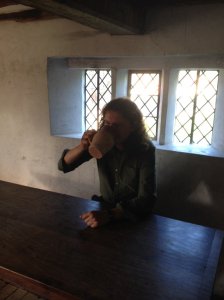
So, I recently had the chance to pop into a seventeenth-century alehouse for a quick beer – not a bad way to mark the publication of the paperback of my book on the subject, I’m sure you’ll agree. It was during a recent trip to the Weald and Downland Open Air Museum in Sussex with our Women’s Work Project team, which gave us the chance to recreate some early modern work activities, and in a spare half hour at the end of our visit I took the chance to visit the rescued seventeenth-century cottage that the museum thinks might have served as an alehouse in that period.

As I sat in front of the fireplace at the alebench with my quart in hand I tried to conjure up in my mind the other elements that would have filled out this scene four centuries ago. What sounds would have filled the place – what conversations and songs? What smells would have filled the air – the wood smoke, baking pies? Who might have been there? What would they have looked like, been wearing… smelt like? What bawdy or godly ballads might have been pasted up on the wall? How would the beer have tasted? What would the toilet facilities have been like? I tried to imaginatively immerse myself in a seventeenth-century alehouse scene.

The challenge of recapturing these sensory and experiential components of the past is something I have often blogged about, and this trip was obviously a stimulating one in bringing these issues to the forefront of my mind. But as I sat there in the alehouse mining my imagination I reflected that this process of imagining the past isn’t only triggered by being in an immersive environment like this one. It is something we all do all the time – just not as explicitly and self-consciously as we do when visiting a living history museum. Continue reading

All ancient history now: England’s damaging Reformation

Laura Sangha

On Tuesday 16 January, in the year of the 500th anniversary of the Reformation, the Archbishops and Canterbury and York issued a joint statement on ‘the damage done five centuries ago to the unity of the Church’. It reads:

The Reformation was a process of both renewal and division amongst Christians in Europe. In this Reformation Anniversary year, many Christians will want to give thanks for the great blessings they have received to which the Reformation directly contributed…

…Many will also remember the lasting damage done five centuries ago to the unity of the Church, in defiance of the clear command of Jesus Christ to unity in love. Those turbulent years saw Christian people pitted against each other, such that many suffered persecution and even death at the hands of others claiming to know the same Lord. A legacy of mistrust and competition would then accompany the astonishing global spread of Christianity in the centuries that followed.

MANDATORY CAPTION: (C) Keith Blundy / Aegies Associates

For a Reformation historian this was a fascinating moment. It was also humorous (in a sort of bitter, 2017 way), since the Daily Mail immediately took offence at this show of remorse, declaring that since Henry VIII’s ‘war with the Pope’ began 500 years ago, and that it wasn’t even a required subject for the National Curriculum, it was hardly a ‘burning issue’. Ann Widdecombe, a former Tory minister and Strictly Come Dancing Star provided a quote, saying:

These gestures are pointless. The Archbishop has not put anyone to death, as far as I know… Modern Christians are not responsible for what happened in the Reformation… You might as well expect the Italians to apologise for Pontius Pilate.

I’m looking forward to discussing all this with my students this term. There’s certainly a lot to be said of the way that the media are reporting this statement as an ‘apology’, as well as to ponder in the emphasis on unity and the healing of past divisions. Of course, Widdecombe is right that modern Christians are not individually responsible for what happened in the Reformation, but I disagree with the implicit argument underpinning the Mail article, that the Reformation is ancient history, and nothing to do with ‘us’. Since our understanding of the past and of where we came from is intimately tied to the way we conceptualise our contemporary identities, the way that we think of and interpret that past has a direct and immediate importance for the present. Members of the Church of England today are informed by, and understand their institution with reference to the past, so it seems appropriate to reflect on the evolution of the Church and to reconsider contemporary responses to it in this anniversary year. Continue reading