The Experience of Work in Early Modern England IV: Harvesters

This post is part of a series that marks the publication of The Experience of Work in Early Modern England. The book is co-authored by monster head Mark Hailwood, along with Jane Whittle, Hannah Robb, and Taylor Aucoin. It uses court depositions to explore everyday working life between 1500 and 1700, with a particular focus on how gender shaped work. It is an open access publication (i.e. it is available to view/download for free, here). The post first appeared on the ‘Women’s Work in Rural England, 1500-1700′ blog as a ‘work in progress’ piece in 2019 – it is reposted here to whet your appetite for finding out where the research ended up, which you can do by reading the book!

Mark Hailwood

As Clare Leighton put it so elegantly in her 1933 The Farmer’s Year, it is that time of year when ‘summer begins to tire’. For centuries of farmers it has been the time when ‘the supreme moment of his year is upon him’, and across the ‘vast sweep of landscape there is the golden glow of harvest.’ It is August, and ‘harvesting is due’.

Of course, it is not only the supreme moment of the year for the individual farmer: for our preindustrial forebears the harvest was, as Steve Hindle has put it, ‘the heartbeat of the whole economy’.[1] The economic fortunes of early modern societies were bound up with the quality and quantity of grain gathered from the fields at summer’s end.

The importance of the early modern harvest, a process so evocatively captured by Pieter Bruegel the Elder in 1565, can hardly be overstated, and when the time came to set it in motion it dominated men’s work schedules above all else: ‘the harvesting draws all men to it. Ploughboy and cowman, carter and shepherd, all are in the fields’ (Leighton again). But what of the role played by women in the ‘supreme moment’ of the agricultural cycle? It is another question our project can shed some light upon.

Continue reading

The Experience of Work in Early Modern England III: ‘Ploughmen go whistling to their toils’

This post is part of a series that marks the publication of The Experience of Work in Early Modern England. The book is co-authored by monster head Mark Hailwood, along with Jane Whittle, Hannah Robb, and Taylor Aucoin. It uses court depositions to explore everyday working life between 1500 and 1700, with a particular focus on how gender shaped work. It is an open access publication (i.e. it is available to view/download for free, here). The post first appeared on the ‘Women’s Work in Rural England, 1500-1700′ blog as a ‘work in progress’ piece in 2017 – it is reposted here to whet your appetite for finding out where the research ended up, which you can do by reading the book!

Mark Hailwood

leighton_november_1024x1024
Engraving from Clare Leighton’s wonderful book The Farmer’s Year

As a treat for surviving a long winter of data entry, I have indulged myself in recent days with some invigorating morning walks, enjoying the first signs of the turnover of the seasons (well, we have one daffodil out in the garden at least) a phase that the poet John Clare called ‘the thaw’ (the title of this post is borrowed from Clare too).[1] This time of year was a key watershed in the early modern agricultural year, of course, as thoughts drifted back to the fields after their dormant winter. With the passing of the frosts it was time to start ploughing the earth in preparation for sowing crops in the spring. It was time to set the agricultural cycle in motion once more.

It seems a reasonable assumption that it was not a favourite work task in the period, yoking the oxen (in the vast majority of our examples it was oxen rather than horses pulling the plough[2]) and heading out in inclement weather (Clare again: ‘March month of “many weathers” wildly comes’). There was certainly an element of danger involved. On 21st February 1564, James Treherne, a servant, was ‘driving six oxen of his master’s drawing a plough tilling the ground’ in Rowde, Wiltshire, when one of the oxen knocked him down, whereby he fell on an axe he was carrying and was fatally wounded. In 1651, Thomas Harding, of Bradninch, Devon, was giving testimony in a testamentary dispute when he recalled that the deceased, Thomas Potter of Broadhembury, had ‘died of a wound received by a ploughshare [blade] in his thigh as he was in a field at plough, which happened some days before his death’.

Continue reading

The Experience of Work in Early Modern England II: Family Fortunes

This post is part of a series that marks the publication of The Experience of Work in Early Modern England. The book is co-authored by monster head Mark Hailwood, along with Jane Whittle, Hannah Robb, and Taylor Aucoin. It uses court depositions to explore everyday working life between 1500 and 1700, with a particular focus on how gender shaped work. It is an open access publication (i.e. it is available to view/download for free, here). The post first appeared on the ‘Women’s Work in Rural England, 1500-1700′ blog as a ‘work in progress’ piece in 2016 – it is reposted here to whet your appetite for finding out where the research ended up, which you can do by reading the book!

Mark Hailwood

I often describe the main bulk of the work that underpins this project as ‘data entry’. But perhaps ‘data entry’ isn’t the best way to describe the harvesting process that has been our focus: reading thousands of depositions (I recently estimated that I’ve read somewhere between 6000-7000 individual depositions so far this year) and all of the stories of everyday life that they contain, and then carefully converting these complex qualitative sources into usable quantitative data, is a more varied and stimulating exercise than the term ‘data entry’ conjures up.

One of the upshots of this kind of work is that in among all the lengthy tithe and testamentary disputes that often turn out to be of little use to us, you occasional unearth a remarkably rich case that contains a veritable jackpot of work activities. And it is one such case that I want to discuss in this post.

‘Households in a landscape’

Step forward: the Conant Family of Moretonhampstead.

Continue reading

The Experience of Work in Early Modern England I: Winter is Coming

This post is part of a series that marks the publication of The Experience of Work in Early Modern England. The book is co-authored by monster head Mark Hailwood, along with Jane Whittle, Hannah Robb, and Taylor Aucoin. It uses court depositions to explore everyday working life between 1500 and 1700, with a particular focus on how gender shaped work. It is an open access publication (i.e. it is available to view/download for free, here). The post first appeared on the ‘Women’s Work in Rural England, 1500-1700′ blog as a ‘work in progress’ piece in 2015 – it is reposted here to whet your appetite for finding out where the research ended up, which you can do by reading the book!

Mark Hailwood

Brueghelian winter
Brueghelian winter

One aspect of the experience of work that our data sheds light on is seasonal patterns in work activities. As the English nights start to draw in, we ask: what tasks did early modern English workers do to make ready for the onset of winter?

A significant number of our examples from late November and early December relate to the replenishing of wood supplies to fuel much-needed winter fires. On the 25th of November 1591, Thomas Ven, an 80-year-old husbandman of King’s Brompton in Somerset, was up a ladder pruning an oak tree with an axe when he plummeted to his death. Locals must have started to wonder if evil spirits possessed the wood of Barlynch Grove, where Ven had fallen, for in December of the following year the 28-year-old Edward Norman met his end by falling out of an ash tree that he had climbed to cut branches from.

Continue reading

A new life for ‘British Printed Images to 1700’

Laura Sangha

This post introduces our new mini-series Visual Culture in early modern England. Guest posts in the mini-series will be published over the course of the next month – we will add links to this page as the post are published. The series celebrates the re-launch of the vital online primary source collection ‘British Printed Images to 1700’. It hopes to encourage use of the BPI archive and to promote conversation about the deployment of visual sources in the study of the past more broadly.

Adam Morton, Printed Images, Laughter and Early Modern History

Helen Pierce, Building Your Own Book: Printed Images, Producers and Buyers in early modern London

Malcolm Jones, Cut, copy, paste: What People Did with Early Modern Images

Adam Morton, Teaching with Early Modern Sources

Something to remember, or more likely forget

In the distant past, time out of memory of man, when I was writing an essay as part of my Postgraduate Certificate in Academic Practice (teaching training), I spent a week reading lots of articles about teaching and learning History. I remember very little about that immersion in the scholarship, but strangely the one article that stuck around in my mind was a study examining what students remembered about a lecture after they had heard it. The article described an experiment where students were asked to complete a questionnaire about the content of a lecture immediately after they walked out of it, and then they were asked to complete the same questionnaire again, after two weeks had passed.

The exact details of the results escape me, but the headlines were relatively pessimistic – students remembered little content, however basic, immediately after a lecture, and this diminished to almost nothing two weeks later. The one exception was that many of them could remember some of the images they had seen in the lecture, and in some cases, why they were shown – i.e. the idea that the lecturer was communicating by showing the image. Ergo: image memory is often superior to word memory.

Theories of cognition come to similar conclusions. According to Allan Paivio’s Dual Code Theory, images elicit words (verbal labels) so that they are stored in the memory twice. By contrast words do not automatically elicit images, a relatively impoverished memory representation that may make the retrieval of words less probable. Though more recent scholarship has nuanced these findings and would allow more scope for varying results according to different learning styles, on average many people retain more from images than they do from texts.

Continue reading

What would life have been like in English villages 400 years ago? New podcast series!

This post introduces a new podcast series by many-headed monster blogger Dr Mark Hailwood. You can access the podcasts via the Historical Association website here, and/or read on for some background on how they came about. If you have any comments on the episodes please add them at the bottom of this post.

Mark Hailwood

This simple question sits at the heart of pretty much all of the research I have undertaken as a historian. I have always been interested in the world of ‘ordinary’ women and men before modernity, and in how their world became this one. But it isn’t necessarily an easy question to answer. Working class rural dwellers in the past have left few written accounts of their everyday experiences, which has been enough to put off most historians from trying to recover their history.

There are though sources we can use, with a bit (well, a lot) of patience and some careful analysis. The most valuable of these, to my mind, are witness statements – or ‘depositions’ – from court cases, which relatively humble men and women were asked to give surprisingly often: early modern England was, as historians now know, a remarkably litigious society. And by combing through vast numbers of these surviving testimonies it is possible to discover a great deal about the day-to-day doings of seventeenth-century villagers – something I’ve blogged about before here, and here.

Typically my research on these sources has been concerned with specific topics – about the role of alcohol in preindustrial society, or about the differences between women’s and men’s working lives – but I am currently trying to draw these strands together to develop a more rounded picture of everyday life 400 years ago. Thanks to funding from the British Academy, I have spent the past year reflecting on, and re-reading some of, the tens of thousands of depositions I have consulted over the years, to draw out some of the most important themes that they reveal.

But that has not been an easy task either. Everyday life is a vast topic, and it is not possible to focus on everything these depositions might tell us. So, for this project, I thought I would concentrate on those aspects of seventeenth-century daily life that might surprise us the most, and challenge what we tend to assume about the period.

Continue reading

Reflecting on Habib’s Black Lives in the English Archives: An Online Symposium

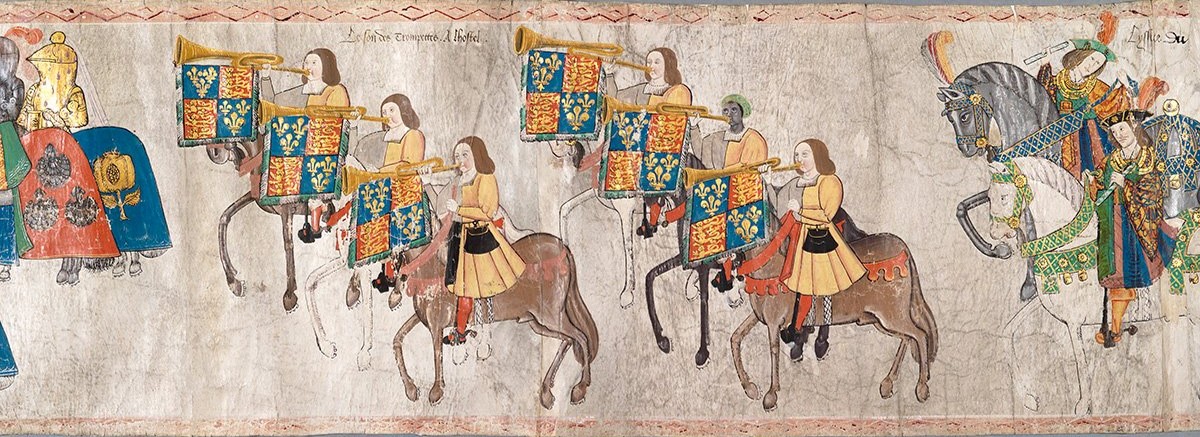
trumpeters-cropped

The many-headed monster is delighted to bring you a series of posts responding to Imtiaz Habib’s Black Lives in the English Archives, 1500-1677: Imprints of the Invisible (Ashgate: 2008, Routledge: 2020). The posts are part of Rebecca Adusei and Jamie Gemmell’s multi-event symposium, which brings together scholars working at the forefront of early modern Black history and premodern race studies to discuss the vital importance and continuing legacy of Habib’s text.

Rebecca and Jamie will introduce the blog series on Thursday 4 May, and we will then publish two posts a week over the following month – links to all the posts will be added to this page as we go, so you can bookmark it now if you want to follow along.

Rebecca and Jamie celebrated the publication of the blog series on Friday 19 May, at the London Metropolitan Archives, to tie in with their ‘Unforgotten Lives’ exhibition. This exhibition presents the stories of Londoners of African, Caribbean, Asian and Indigenous heritage who lived and worked in the city between 1560 and 1860 and are recorded in London’s archives.

Blogging and the Day Job: Tales from the Blarchive

Jonathan Willis

In a series of recent posts marking the tenth anniversary of the many-headed monster, my co-bloggers have reflected on a number of themes. Mark has discussed the transition of the blog from what seemed (at the time at least) to be a series of topical yet ephemeral interventions into something more permanent: a blog archive or ‘blarchive’ if you will. I fear the term probably won’t enter the running for OED word of the year, and if I’m being completely honest it puts me in mind of early 1990s children’s TV presenter Timmy Mallett (if you were a UK child born in the ‘80s you’ll know what I mean, if not, don’t worry about it!). Laura then highlighted a series of posts relating to the recurring theme of the relationship between historical writing and fiction, and Brodie explored how another prominent series of posts reflect the turbulent history of the historical discipline itself in UKHE and beyond over the past decade.

Parochial – geddit??

This post feels a little more ‘parochial’ (good reformation pun, that) in comparison, because looking back at my contributions to the blog has really given me pause to reflect on what blogging has meant to me at different stages of my career over the past ten years. So in some way this is quite a personal – really rather self-indulgent – set of autobiographical musings, but I hope it is also an interesting dive back into older content on the ‘monster, as well as a potentially useful series of thoughts about what the process of blogging can look like at different times and in different contexts.

Continue reading

Creativity and history: tales from the blarchive

Laura Sangha

This summer we are marking the ten-year anniversary of the many-headed monster blog with a collection of posts that highlight older material in our blog archive (or our ‘blarchive’, as Mark has christened it, to the great and growing pain of the other monster heads).

In my piece I want to pull at a thread that has run through our output over the years, that is, posts that sit on the fence between history and fiction.

Are you a fan of analogies, however laboured? Read on!

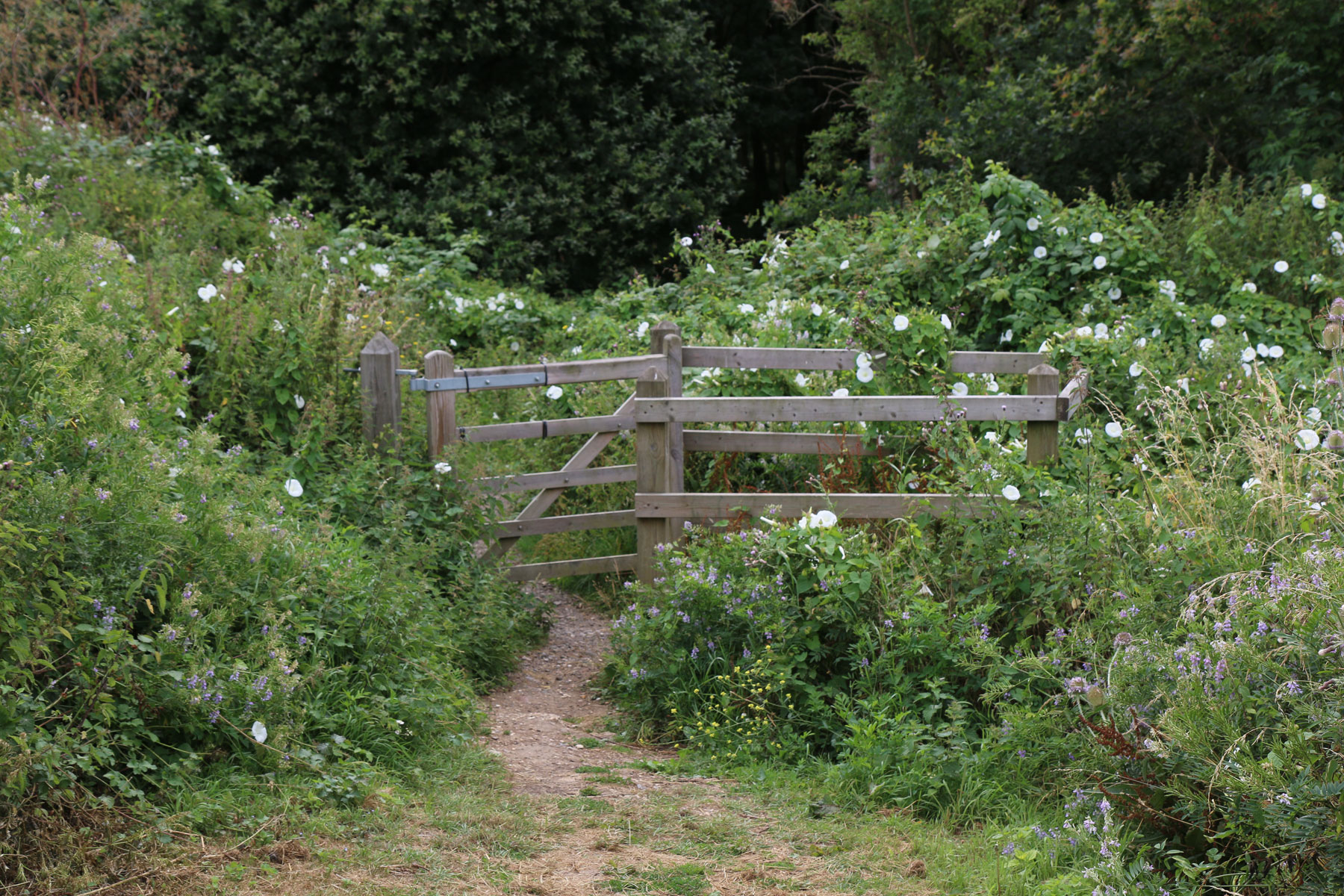
Of course, there isn’t really a fence betweenthese two spaces. Or at least, if there is, it was only erected recently, and in fact it’s pretty shoddy work, full of gaps and holes, plus one part of it blew down in a winter storm a few years back, while another is so deeply lost in the undergrowth it’s no longer effective, or even particularly visible. But anyway, let’s not get lost in the encroaching greenery trying to pinpoint the boundary, but rather, let’s consider the fruitful relationship between history and fiction by revisiting some of our related content.

Continue reading

Hangovers, Marxists, and Plebs: Tales from the Blarchive

Mark Hailwood

We typically think of digital media outputs as relatively impermanent and ephemeral: they enjoy a brief window of exposure before sinking to the bottom of timelines, coming to rest in obscure corners of the web or vanishing behind broken hyperlinks. They are timely, not timeless.

The blog post might fit this mould in some ways, and when we started the many-headed monster ten years ago we were very much writing posts for the present rather than posterity. But without particularly planning to (planning has never really been our MO) it turns out we’ve created quite the archive over the years. A blog archive. A blarchive, if you will.

Whilst some of our posts were rapid responses to specific current events – remember ‘plebgate’? – or conferences we had attended – History after Hobsbawm – a great many of them have aged fairly well. When we joined in debates about periodisation, or the importance of history from below, we were engaging with issues that continue to be relevant. Not least of all in the classroom: its clear that some of our posts and series have become widely used as teaching resources.

So we’ve come to think about the many-headed monster not just as a platform for posting new content, but as a repository of pieces that often come in useful years after they were first written. We’d like our readers to see it – and use it – that way too.

Our plan this this summer then, as we mark our tenniversary (I know, enough with the portmanteaus already…) is that each monster head will take a little trawl through our archives to highlight some of the older stuff that lurks there that might still have value for our readers. We hope it might even encourage you to seek out your own gems from our blarchive too!

***

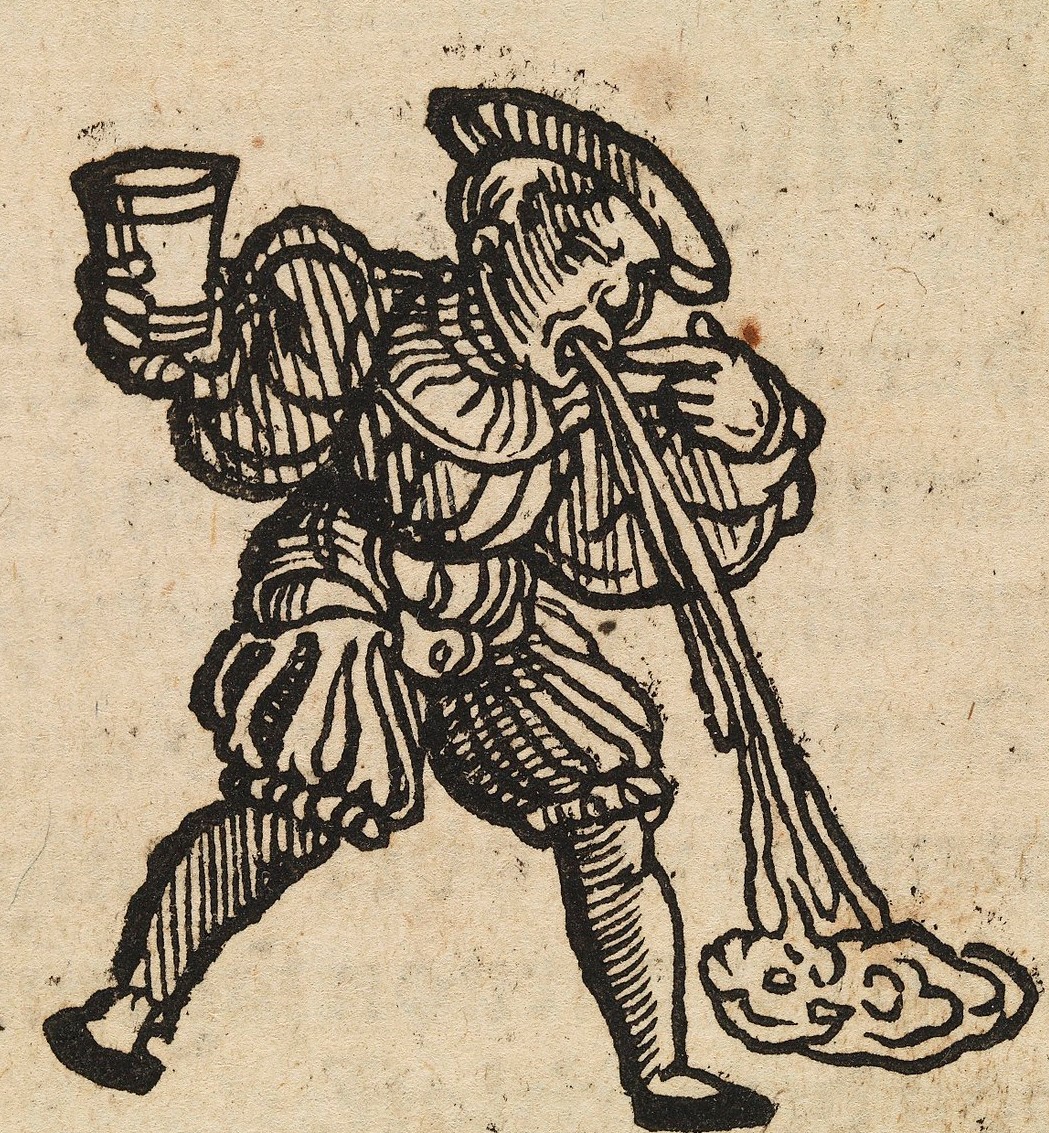
I started my own search by calling up my first ever post back in July of 2012. Unsurprisingly it was on a drink history topic – the 17th century hangover. I think it was mostly just an excuse to throw together some references to hangovers that I had come across in my research, but it did raise a bigger question that I came back to regularly in later posts: can historians recover the physical and sensory experiences of the past?

Continue reading