Carnivalesque 94: No bishop, no king

Brodie Waddell

Welcome to the 94th edition of Carnivaleque! Today we will be introducing you to a wonderfully motley menagerie of historical blogs and bloggers.

Finding any overall unifying theme is impossible with a collection of this sort, but there are a few key subjects that emerged from the nominations, each of which receives a section below:

  • The historian as detective
  • Bodily functions
  • A venerable criminal enterprise
  • Places, spaces and sites
  • Thinking about the historian’s craft

I think it is particularly interesting what’s not in the links below, namely kings and queens and ‘great battles’, the traditional material for popular histories. Not that political history and military history are entirely absent, just that they are approached from a different direction than usual. Although there are a few of gentlemen and noblewomen as well as a famous scientist, the vast majority of the nominated posts are focused on people who would have been largely excluded from textbooks written fifty years ago. What should we make of this? Is old-fashioned ‘top down’ history dying off? Or is it just that the type of people who read this blog and pay attention to Carnivaleque are predisposed against reading yet another story about Henry VIII and his wives or Charles I and his parliaments? I’d be interested to hear what you think.

However, before wandering into the carnival below, take a look at this truly heart-warming short animation that tells the tale of ‘the damnable life and death of one Stubbe Peeter, 1590’, a German werewolf. For more details, see the two posts at LOLManuscripts, but in the meantime, watch the video and be amazed.

Now, on with the show…
Continue reading

Workers’ Representation Part Three: Mining and Modernity

Mark Hailwood

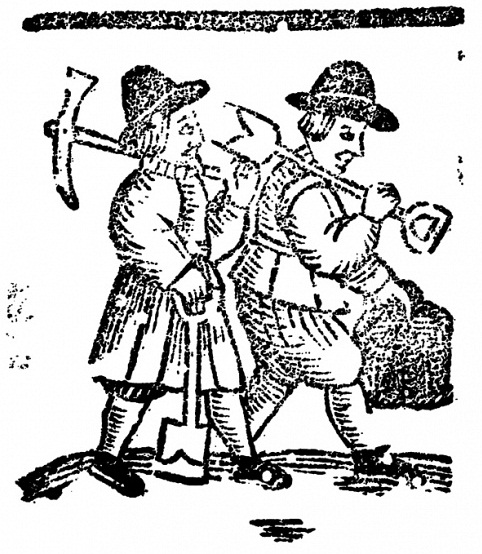
So, I thought it was about time to introduce another image of woodcut workers from my trawls through the English Broadside Ballad Archive, and what could be more appropriate than an image from a special new year’s ballad: A New-Years-Gift for Covetous Colliers, published sometime in the 1680s or 1690s. The ballad itself praises Parliament for acting against price-hiking colliers – those involved mainly in the distribution and sale of coal – but includes an image of the primary workers in the coal trade, miners:

miners

The image isn’t particularly remarkable. There is no evidence in this depiction of the hostile stereotype that miners were a ‘race apart’ from other workers; no coal-blackened faces to help symbolise this cultural otherness; no visual indicators that miners were, as Daniel Defoe put it, ‘subterranean wretches…a rude, boorish kind of people’.[1] Continue reading

Workers’ Representation Part Two: Making Hay

Mark Hailwood

Herein lies the second installment of my blog series on woodcut images of workers

As I sit here in fenland fog, my mind drifts back to sun-baked Californian afternoons at the Huntington Library. Often I would avail myself of a short break from such wonders as the Ashby-de-la-Zouch manor court records, and pop upstairs to the office of the Director of Research, Steve Hindle (who also happens to have been my PhD supervisor) to either pick his brains or raid his bookshelves.

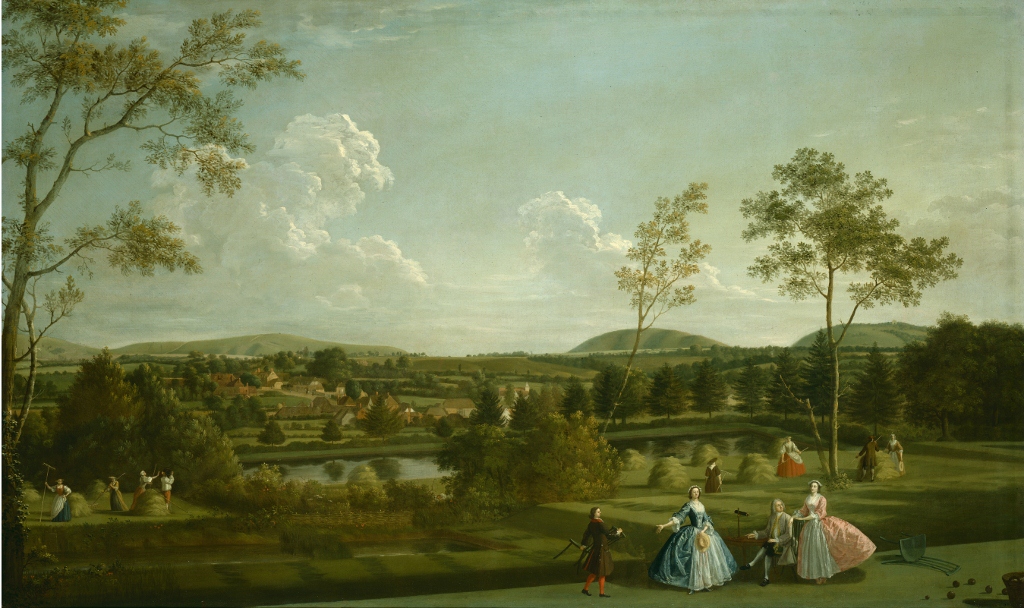
On one such afternoon we fell to discussing the following painting that hangs upon his office wall, a depiction of the Montagu family at their Sandleford Priory estate in Berkshire, by Edward Haytley, commissioned in 1743:

The Montagus at Sandleford Priory
Source: hayinart

At first I was a bit worried – what was this flag bearer of ‘history from below’ doing with an aggrandising portrait of the rural gentry in pride of place on his wall? Continue reading

Workers’ Representation Part One: Spinning a Yarn

Mark Hailwood

As Christopher Thompson rightly notes over at Early Modern History, one of the great things about working at The Huntington is the people you get to meet over coffee. Last week I had the pleasure of meeting for the first time Patricia Fumerton, from the University of California Santa Barbara. Paddy is the pioneer of the online ballad database, EBBA, a digital resource that has been indispensable to my own research, and has been linked to on this blog numerous times already.

This gave me the chance to tell Paddy how great I think the site is, and in particular to praise its latest function that I have been playing around with: the ability to search, by category, the woodcut illustrations that adorn most seventeenth-century broadside ballads. I’ve been working on an article on representations of workers in these ballads – in particular artisan tradesmen – but my focus has been on how they were represented in the text of these ballads: how they were described and characterised. I hadn’t been paying too much attention to looking at the pictures – but might these too be a useful source for the kind of cultural history of work and workers that I am interested in? I entered a search for woodcuts that had been categorised as depicting ‘occupation / trade’, and spent some time perusing the 122 results that came up.

I’m not sure I have the skills or training to confidently deploy this kind of visual evidence in a formal historical paper or article, but I do find it fascinating, and thought I would offer up some of my thoughts in a series of blogposts entitled ‘Workers’ Representation’.

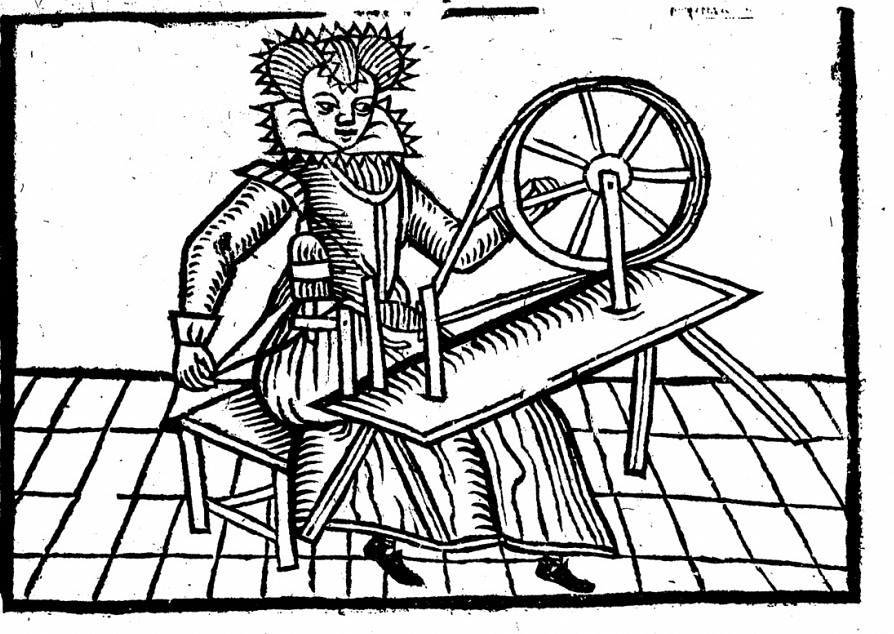
One of the first things that caught my eye was the common depiction of a key category of women’s work: spinning.

A woodcut taken from the ballad ‘Whipping Cheare’, from the Pepys collection, vol. I, no.208-109, c.1625. Source: EBBA

Continue reading