Brodie Waddell
Microhistory is, it seems, a many-headed sort of beast.
In my previous post I suggested that, despite its name, ‘microhistories’ were not simply ‘small histories’ and asked what might make microhistorians distinct:
Is it their interest in ‘strange and bizarre events and socially marginal peoples’? Or the personal nature of their sources? Or their reflective and open discussions of methodology and the limits of historical knowledge? Or perhaps it is really a ‘continental thing’, well beyond the abilities of us depressingly practical Anglos on this side of the Channel?
The responses I received in comments (and by email) were very helpful as it soon became obvious that there were many other possibilities that had never occurred to me. Indeed, I received not just five responses, but at least double that number of potential ‘defining features’. Here, however, I will just focus on four issues.
The characteristic that came up most often was the notion of focusing on the ‘exceptional’, ‘unique’, and ‘extraordinary’. This is something that both Laura and Nancy emphasised in their comments as well as a point made one of the pioneers of the genre, Giovanni Levi, who claimed it involved taking seriously things regarded by others as quirky or deviant.1 In Nancy’s words, ‘these studies use the documentation of peculiarity as a point of entry into the ordinary, daily lives of marginal or low-status persons’.2 However, this feature of microhistory also opens it up to critique. As Steve Hindle pointed out in a recent talk (which he kindly passed along in response to my original post), discerning the relationship between ‘the particular’ and ‘the general’ is even more fraught in cases like these where one’s primary subject is undeniably ‘unrepresentative’.3
Another feature that several people mentioned was an explicit engagement with methodological issues. As Nick noted in his comment, microhistories often adapt interdisciplinary approaches, ‘read against the grain’ and acknowledge the important role of imaginative or speculative reconstructions in the absence of conclusive evidence. Laura too suggests that this might ‘be at the core of what “microhistory” is’. In Levi’s reflections on the genre, this forthright discussion of the ambiguities and partialities inherent in narrative sources – such as depositions in inquisitorial courts – is a key element in these histories.4
Perhaps these two recurring features, rather than their scale, are what give microhistories their distinctiveness.
But I think it is worth pushing further, because subjects and methods and even styles can only provide a rather ‘unhistorical’ definition of a historiographical genre. (Note: If you’re an undergrad looking for a straightforward definition of ‘microhistory’, you can stop reading now.)
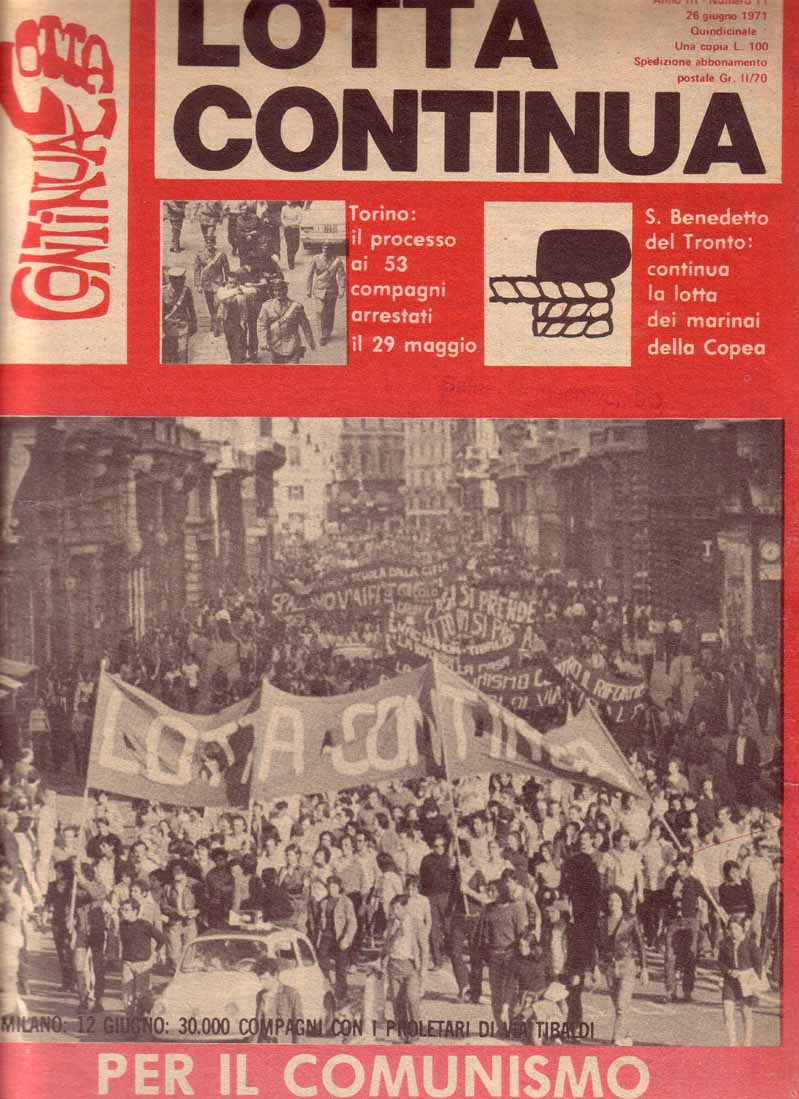
Let’s start with politics. Nick mentioned that he associated this type of history with ‘the 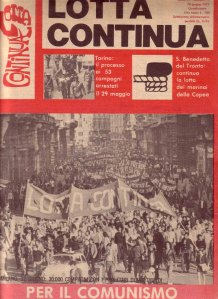 left’, a link that I hadn’t considered. I think he may be right: the ‘founder’ of the genre, Carlo Ginzburg, wrote a whole book deconstructing and critiquing the murder trial of an activist linked to the Italian leftist group, ‘Lotta Continua’.5 Similarly, the other ‘founder’, Giovanni Levi, has suggested that innovative historical methods can help to explain continuities between the present and the past that ‘neoliberalism’ tries to suppress. In fact Ginzburg and Levi both appear to take some of their inspiration from their Jewish identity and militant anti-fascist heritage. I’d welcome comments from any readers who know of additional (or contrary) examples, but what I think this ought to remind us is that even historiographical traditions that are not explicitly politicised still emerge from specific historical – and thus political – contexts. Microhistory is no exception.
The second issue is nomenclature. For, as Laura pointed out, if we want to find a definition we also need to ask a question: Who decides what is and isn’t ‘proper microhistory’? The power to name things is a very great power indeed, one traditionally reserved for deities and patriarchs.6 Part of the genius of Ginzburg and Levi was simply
their ability to come up with a concise, memorable term (microstoria) for what they were doing and to convince others to go along with it. This becomes clear when one realises that the word itself had already been used by an American historian, George R. Stewart in the title of one of his books more than a decade before the Italians took it up.7 Stewart may have coined the term, but it was only when Ginzburg and Levi turned it into a ‘brand’ that it became a widely acknowledged and widely imitated genre of history. It was then that it moved beyond the literal notion of a ‘small history’ to acquire all of these associations with specific types of subjects, methods and politics.
Here, at last, we have an explanation for why certain works of history which seem to fit the literal definition of ‘microhistory’ – such as E. P. Thompson’s Whigs and Hunters (1975) or Wrightson and Levine’s Poverty and Piety (1979) – are rarely granted that label. Ultimately, it comes down to politics, power and a damn good marketing campaign.
Footnotes
1 Giovanni Levi, ‘On Microhistory’, in Peter Burke (ed.), New Perspectives on Historical Writing (1991). Thanks to Steve Hindle for drawing my attention to this.
2 For an excellent recent example of this approach (including some ‘microhistories’ and some not), see The Extraordinary and the Everyday in Early Modern England: Essays in Celebration of the Work of Bernard Capp, edited by Garthine Walker and Angela McShane (2009). If you are interested in the connection between ‘microhistory’ and its ‘extraordinary’ antecedents in eighteenth and nineteenth-century ‘compilations of crimes, trials and other strange-but-true stories’, you might want to apply for a fully-funded PhD studentship on that topic at Ghent University in Belgium.
3 Steve Hindle, ‘Reducing the Scale of Historical Observation: Micro-history, Alltagsgeschichte, Local History’, at Huntington Library, Early Modern Studies Institute, ‘Past Tense’, 19 October 2012. There should be a podcast of this talk available soon at which point I will update with a link.
4 Levi, ‘On Microhistory’.
5 Carlo Ginzburg, The Judge and the Historian: Marginal Notes and a Late-Twentieth-century Miscarriage of Justice (1999).
6 Genesis 2:19 – ‘And out of the ground the LORD God formed every beast of the field, and every fowl of the air; and brought them unto Adam to see what he would call them: and whatsoever Adam called every living creature, that was the name thereof.’ See also this interesting recent post by Daniel Little on the nomenclature of ‘the human sciences’.
7 George R. Stewart, Pickett’s Charge: A Microhistory of the Final Charge at Gettysburg, July 3, 1863 (1959).

 The second is Beat Kümin’s historical travelogue,
 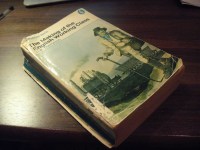 Making of the English Working Class (1963). There are, as she notes, a great many tributes and events happening this year to mark the fiftieth anniversary of its publication. However, what I enjoyed was hearing a little about her relationship with the materiality of the book itself, in all its tattered, dog-eared glory. I think I probably find myself reaching for Thompson’s Customs in Common (1991) more often than MEWC, yet I’m still strangely comforted to have a decent edition of the latter nearby. In her words, ‘despite my “digital humanism”, I still need those yellowed and annotated pages of the Penguin paperback to really get to the heart of Thompson’s writing’.

 the many-headed monster
