
Laura Sangha
A companion piece to: What is history for? Or: Doing history/thinking historically
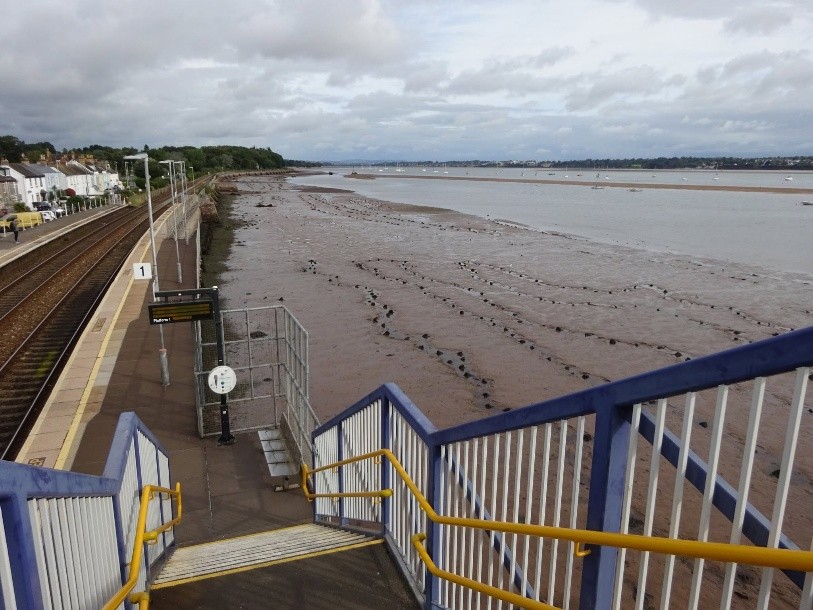
The train to Totnes this weekend was full of late holiday makers heading for Cornwall. They were gratifyingly impressed by one of the greatest rail journeys in England – the swoop down the Exe estuary coast where, if you are seated on the correct side of the train, there is nothing between you and the rippling water, scattered with gulls, oyster catchers, cormorants and mudlarks.
I was rather sadder to overhear the conversation as it turned to the climate crisis. Observing the rolling Devon hills, the shallow rooted grass now returned to a lush green after a couple of weeks of regular rain showers, one traveller compared it to their London experience. ‘I suppose it wasn’t as hot down here this summer’. The other, from Kent, agreed, adding ‘I expect it will be just like 1976. After that was all over things just returned to normal again very quickly’. The companion agreed wholeheartedly and conversation then moved on to the drought resistant planting that both travellers were beginning in their parched dust bowl gardens.
At first I was taken aback to again hear repeated the line about 1976. Although it was an idea that bounced around a lot during the first and second heatwaves, I felt that the persistent, life threatening heat that followed had rather snuffed it out. No doubt my own personal media bubble was to blame. But it soon got me thinking more generally about public or popular discourse, where ideas like ‘1976’ come from, and why they persist. Why can’t people see that this take on the exceptional, extra-ordinary weather we endured in England this summer is spectacularly wrong?
Continue reading
