Unknown's avatar

About Brodie Waddell

Brodie is a Lecturer in Early Modern History at Birkbeck, University of London.

Thinking about doing a PhD: who, where and how?

Brodie Waddell

Over the past few months, I’ve been getting some enquires from people thinking about doing a PhD in history. I’ve found myself repeating the same thing in many cases, so I thought I’d set it out here in case it’s helpful for current MA students thinking about the possibility. In most cases, there are important personal factors to consider, but I think there are a few pieces of advice that apply more generally.

Note, however, that as an ‘early career’ academic, there is still plenty that I’m learning about the whole process, despite having finished my own PhD over five years ago. Your own thoughts would be very welcome.

Don’t do it!

When a PhD goes horribly wrong, it often turns into a nightmarish snake-cat that stalks you in the library...

When a PhD goes horribly wrong, it often turns into a nightmarish snake-cat that stalks you in the library…

Obviously I don’t believe that or I wouldn’t be writing this post, but I think there are lots of good reasons to not do a PhD right now, the most important being the terrible job market for new humanities PhDs. As innumerable blog posts and articles have said before: even if you are extremely smart, original, hard-working and self-sacrificing, there is a decent chance that you won’t be able to find a permanent academic job. If you are aware of that, and want to do a PhD anyway – perhaps because you’re not doing it to get an academic job, or perhaps because you are young, carefree and willing to roll the dice – then please read on… Continue reading

The Woolcomber’s World, Part V: A defence of microhistory

Brodie Waddell

The life of Joseph Bufton is unlikely to ever appear in the Oxford Dictionary of National Biography amongst their nearly 60,000 ‘men and women who have shaped British history’. The only history that he shaped was his own.

Reduced to its essentials, his life is hardly worth writing about. As I’ve discussed in my previous posts, he was born in the small town of Coggeshall in 1650 and died in the village of Castle Hedingham, twelve miles down the road, in 1718. He spent nearly all of his sixty-eight years on this earth in north-eastern Essex. As far as we can tell, he never held any position of political or religious authority, never produced any works of artistic or literary merit, and never even married or had children.

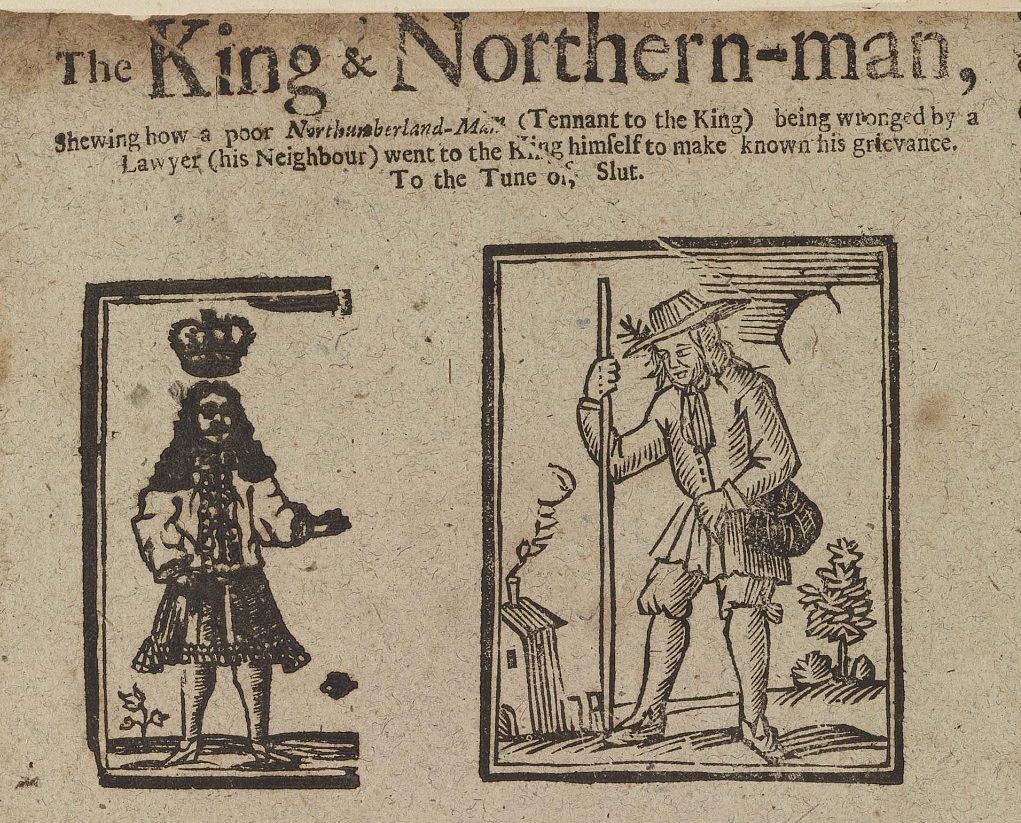
The King and Nortern-man ballad - Crawford_1_1188_2448x2448So why should anyone care about Bufton? One might say that we should simply care about everyone equally: does not the humble ploughman in the field deserve as much attention from historians as the king on his throne? The king may have ruled vast tracts of land, but his territories would have been worthless to him if the ploughman hadn’t supplied him with bread. However, our knowledge of the life of a ploughman is usually limited to a few lines in a parish register listing a baptism, a marriage and a burial. We encounter no such difficulty with kings.

Joseph Bufton, like a ploughman, earned his bread by the sweat of his brow. Yet unlike most ordinary people of the time, he left to posterity eleven volumes crammed with his scribblings. These little notebooks offer us glimpses of a life lived in humble obscurity, a life that would otherwise be almost entirely lost to us. Continue reading

The plebs: a brief history

Brodie Waddell

How, in the 21st century, can the word ‘pleb’ lead to a prominent MP resigning his government post and to a £2 million libel lawsuit? The recent conclusion of this ridiculous saga has reminded us that this seemingly obsolete term of social description still has bite, but why?

The BBC has offered its own little history lesson on ‘pleb’, focusing on its classical origins. However, they leap straight from the Latin source to its use in 19th century public schools. What the BBC misses, perhaps justifiably, is the re-emergence of this Latinate language in the early modern period and the fraught use of the term by historians studying that period. Yet for those of us interested the history of social relations and social conflict, the terminology is more than an anachronistic oddity.

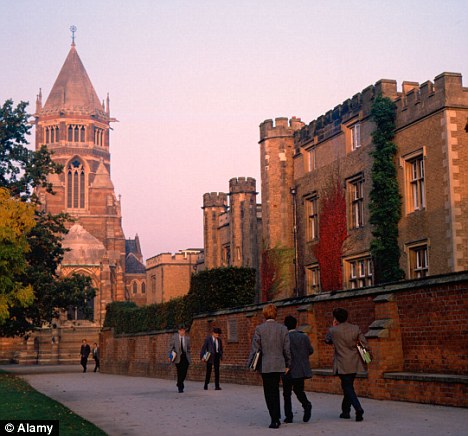
Rugby School, beloved by the plebs

Rugby School, beloved by the plebs

The abbreviated version – ‘pleb’ – used by Andrew Mitchell seems to have been an invention of the late 18th century. I haven’t found it in any of the thousands of transcribed texts on Early English Books Online except in Latin passages, and the Oxford English Dictionary records its first example in 1795. It is, by this time, derogatory Westminster School slang for ‘the son of a tradesman’. Mitchell, who attended the equally exclusive Rugby School, probably picked it up through this route though he might have learned a bit more about it when studying history at Cambridge. This explains why, in a moment of angry condescension, he spat out a term that most of us would regard as obscure and a bit silly. Nonetheless many other versions of the term have been circulating for at least a couple thousand years. Continue reading

The Woolcomber’s World, Part IV: Births, deaths, marriages and fighting cocks

Brodie Waddell

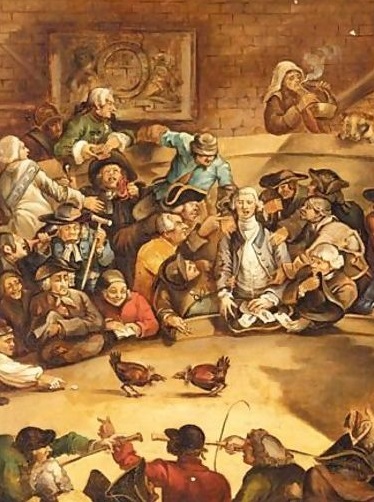
On 22 March 1697, ‘there were a great many fighting Cocks carried through Coxall on horsback in linen baggs’. So wrote Joseph Bufton in one of his eleven surviving notebooks.

Watching to cocks tear eachother apart: not as much fun as you might imagine

Watching two birds tear each other apart: not as much fun as you might imagine

But this odd little memorandum was not an isolated scribbling. It was, in fact, just one of about 180 entries in his Coggeshall chronicle, which he began in February 1678 and continued to May 1697. In it, we find festive celebrations, church business, unusual weather, family injuries, highway robberies and much else besides.

The entries from 1693, a fairly typical year, give a sense of the whole:

  • 11 Jan. 1693, John Bufton went to combing.
  • 4 Feb. 1693, my cousin Sparhawk was carried to prison.
  • 15 Feb. 1693, there was a bonfire made by the Crown for the joy that Squire Honeywood got the day of Sir Eliab Harvey and was not cast out of the Parliament and when he came home from Chelmsford through Coxall the night after he was chosen abundance of candles were lighted for joy.
  • 24 Mar. 1693, King William went through Kelvedon and went back again through Kelvedon 28 Mar.
  • early 1693, the new king’s arms and the 10 commandments new writ were set up in the church.
  • 1693, the Quakers made a new burying place in Crouches
  • 1 May 1693, the soldiers set up a Maypole at the Woolpack door
  • 18 May 1693, the poor did rise because the Bakers would not bake, because some of their bread was cut out the day before for being too light.
  • May 1693, my cousin Sparhawk came home.
  • beginning of May 1693 Francis Clark broke.
  • end of May 1693 the same month the Poor had Badges given them to weare which tis said were made of Pewter and Coggeshall Poor 1693 set upon them.
  • 1693, Mr Mayhew sold Coxall Lordship to Mr Nehemiah Lyde of London. 11 May he came first for his rent and 5 Jun kept court and Counsellor Cox was his steward.
  • June 1693, our 4th bell was carried to Sudbury to be new shot and brought home and the other were chipt to make them tuneable. They were first rung 6 July.
  • 30 Oct. 1693, King William went through Kelvedon.
  • 2 Nov. 1693, John Ancil had hung himself but was cut down in time.
  • 1693, a new pound was set up on Grange hill and the shambles was repaired.

Continue reading

The Woolcomber’s World, Part III: Rich clothiers, poor combers and the obscurity of early modern occupations

Brodie Waddell

Whether you’re a historian, a hairdresser or a helicopter pilot, you may well define yourself by your occupation. The same was true in the early modern period, as when legal scribes added ‘labourer’, ‘weaver’ or ‘yeoman’ after each and every name in their records.

Joseph Bufton, the Essex diarist and sermon-goer, was no different in some ways. His father, John, was listed as a ‘clothier’ in at least four documents between 1645 and 1692. His brother, also John, was likewise a ‘clothier’ in 1671 and 1695. Joseph himself was described as a ‘clothier’ when he served as a trustee for a local charity in 1695 and again when he made up his will in 1718. He was, then, a clothier in a family of clothiers.

So why have I titled this series ‘The Woolcomber’s World’? I’ve used that label because Joseph Bufton was – I think – a woolcomber for most of his life, closely linked with the trades of fulling and combing throughout his time at Coggeshall.

Isaac van Swanenburg's 'The Removal of the Wool from the Skins and the Combing' (1595)

Isaac van Swanenburg’s ‘The Removal of the Wool from the Skins and the Combing’ (1595)

The evidence for this comes from yet another almanac-turned-notebook, a Goldsmith’s Almanack of 1686, which Bufton later described as the one which ‘has the orders in Comber’s book, &c.’. In it he recorded the ordinances of his guild, warrants from magistrates to protect the craft, the articles of the journeymen’s ‘purse’, and of course several lengthy poems lauding the glories of the trade. Continue reading

When history and holidaying collide

Brodie Waddell

The international conference is a well-loved feature of academic life.

Its scholarly value should not be underestimated: it brings together researchers who might otherwise never have a chance to talk in person and can help to break down the boundaries between different national research cultures. It is too easy, especially as a Britain-based scholar of British history, to miss out on all of the excellent and often complementary work going on in other languages and in other places. Spending a few days in a foreign city discussing research with European or North American colleagues often provides a fresh perspective that can be very difficult to get at home, even in a cosmopolitan city like London.

However, international conferences aren’t just vital for ‘knowledge exchange’ and ‘developing strategic partnerships’, they’re also a nice perk of the job. Indeed, I’d go so far as to say they’re a customary perquisite that many academics would defend all the way to the Tyburn tree. They are usually at least partly subsidised and, if nothing else, provide a good excuse to fly off to somewhere you might otherwise never get around to visiting.

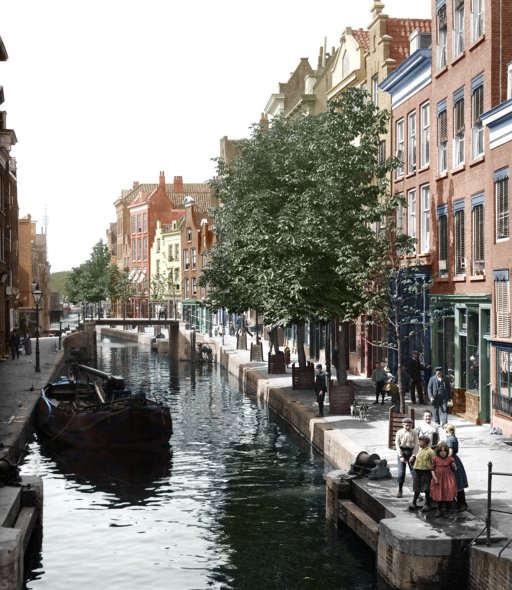
A Rotterdam canal in 1904. Note the narrowboat on the left, just chillaxin'

A Rotterdam canal in 1904. Note the narrowboat on the left, just chillin’

My first opportunity came whilst I was still a PhD student at Warwick in 2008 when the Social History Society decided to host their annual conference at Erasmus University Rotterdam. As this was one of the first times I’d presented a paper, I was inevitably nervous. Thankfully, some unusually sensible Dutch laws made relaxation easy … I remember with great fondness unwinding at the end of the day next to a picturesque old canal with a well-deserved local delicacy, watching the narrowboats slide calmly past.

Sometimes, however, I find that the ‘scholarly’ and the ‘recreational’ parts of international conference-going can get all mixed up together. Continue reading

The Woolcomber’s World, Part II: Finding God in seventeenth-century Essex

Brodie Waddell

Joseph Bufton spent a lot of time thinking about God. He assiduously went along to hear sermons by the local vicar and by travelling preachers. He read scores of books and pamphlets offering religious guidance. What’s more, he filled many volumes with notes and extracts from these sermons and published texts. He even tried his hand at spiritual poetry, with decidedly unimpressive results.

What, then, do we know about Bufton’s faith?

Bufton - Coggeshall parish church

The (mostly) 15th-century parish church in which Bufton spent many a Sunday

As I explained in my previous post on Bufton, almost all of our knowledge of this Essex woolcomber comes from the notes he scribbled in the margins and blank pages of eleven volumes of almanacs between the 1660s and the 1710s. As such we can learn a considerable amount about his exposure to diverse religious ideas and instruction.

However, there are limits. The volumes include only a few hints about his own personal thoughts on such matters, especially his place in the fraught religious politics of the later Stuart period. Still, the fact that eight of the eleven surviving volumes are mostly or entirely focused on spiritual concerns surely can tell us something about how a simple layman set about finding God in late seventeenth-century Coggeshall. Continue reading

The Woolcomber’s World, Part I: A life scribbled in the margins of almanacs

Brodie Waddell

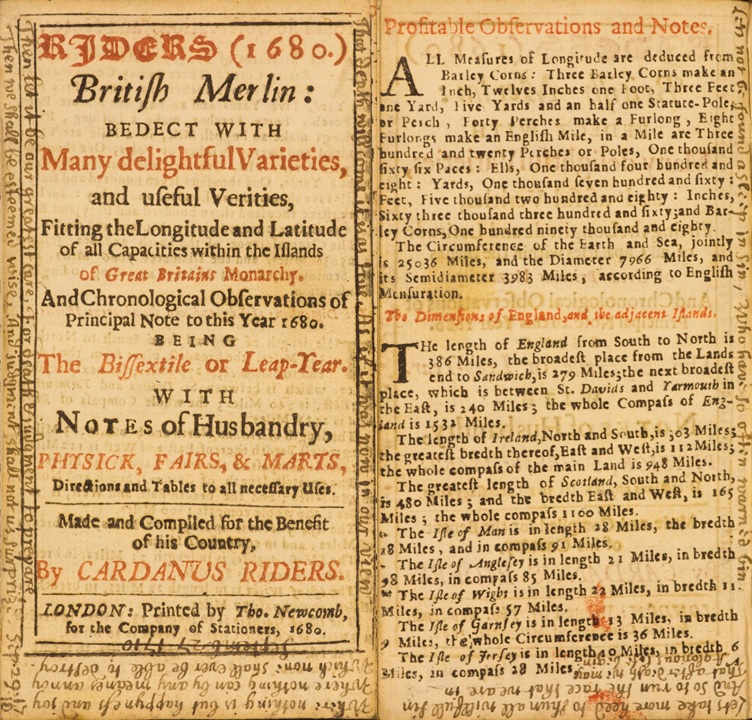
On 8 August 1716, Joseph Bufton sat down to take stock of his little archive.

For about forty years, he had been filling the margins and blank pages of old almanacs with notes. He now had quite a collection and his terse list hints at their contents.

‘I reckon I have here 22 almanacks’, he wrote…

  • Seven volumes were ‘filled up chiefly with things taken out of other books’, including ‘out of a dictionary’.
  • Five were account books, some ‘of household stuff, &c.’, but others probably related to his work.
  • Three volumes were ‘out of Irish letters, &c.’, that is to say, copies of letters between Joseph and his brother John, who had removed to Ireland in 1678.
  • Two were ‘filled up with notes of sermons’ and ‘an account of funerall sermons’.
  • One was ‘filled chiefly with buriall and marriage’, chronicling the vital events of his family members and neighbours.
  • Another ‘I keep on my board and write in dayly’, though its precise contents remain a mystery.
  • One he ‘fill’d great part with Bellman’s verses’, short poems celebrating the chief annual religious and civic festivals such as Christmastide and the royal birthday.
  • A final volume recorded the rules of his trade in the form of ‘the orders in Comber’s book, &c.’

This extraordinary little library has only partly survived the ensuing centuries. Only eleven volumes – half the total noted by Bufton in 1716 – are known to remain. Eight of these are held in his native county at the Essex Record Office and another three can be found at the Brotherton Library in Leeds. Still, the fact that any escaped the rubbish heap is surely a sign of providential favour – most personal jottings of this sort were long ago destroyed by unfortunate fires, spring cleanings or damp basements.

One of Bufton's almanacs, including a scrawl of notes in every available margin.

One of Bufton’s almanacs, including his scrawl of notes in every available margin.

This brings me to the question that I suspect most readers’ are now asking themselves: Who was Joseph Bufton and why should anyone care? Continue reading

The political economy of racism: the Evil May Day riots of 1517 and the rise of UKIP

Brodie Waddell

The UK Independence Party is doing extremely well in the local and European elections held across England yesterday. It is, to put it mildly, an unpleasant sort of political party. It has more than its fair share of bigots and homophobes. But it is more than simply a tribe of disgruntled nostalgics. It’s also a protest party, and its particular brand of protest has venerable linage that goes back to at least the Evil May Day riots of 1517.

The anti-immigrant violence that erupted in London at that time is sometimes dismissed as a mere race riot, emerging from hatred and hardship and nothing more. But when we look more closely at the various accounts of these events, we see that it too was a political protest. One chronicler described how Londoners saw the foreigners in their midst:

the Genowayes, Frenchemen and other straungers sayde and boasted them selfes to be in suche favoure with the kyng and hys counsaill, that they set naughte by the rulers of the citie: And the multitude of straungers was so great about London, that the pore Englishe artificers coulde ska[r]ce get any living: And most of all the straungers were so proude, that they disdained, mocked and oppressed the Englishemen, whiche was the beginning of the grudge.

Locals complained that the ‘strangers’ from overseas flouted the law with impunity, engaging in theft, kidnapping and even murder without facing the punishments that would have been meted out to a common English criminal.

The political element becomes even clearer when we examine the rioters’ main targets. The crowds of hundreds, or possibly thousands, who rushed through the streets that night did not burn and loot indiscriminately. Instead, they attacked the house of a French merchant who was also a royal secretary, the homes of alien artisans at a site officially designated for foreigners, and two ambassadors who were supposed to be under the king’s protection. When the rioters were captured, at least 15 were hanged, drawn and quartered for ‘treason’ because their attacks on the strangers had ‘broken the truce and league’ between Henry VIII and the other princes of Europe.

So, in the eyes of Tudor Londoners, what made these immigrants so dangerous was the apparent alliance between ‘the multitude of straungers’ and ‘the kyng and hys counsaill’. That is to say, the foreign threat came not from poor or marginalised immigrants but from outsiders who enjoyed special privileges and had the support of the political elites.

It would be easy to multiply such examples by looking at other moments of heightened anti-foreigner sentiment in early modern England. One could cite, for example, the opposition to King James I’s favouritism towards his fellow Scots, the francophobic riots of Charles II’s francophile reign, or the anti-Dutch sentiment that bubbled up after William III took the throne in 1689. In each case there were very real resentments about the apparent social and economic impact of immigrant groups, but these were combined with a sense that the current political regime was in league with the foreigners.

UKIP posters

A forlorn British worker, supposedly abondoned by Europhile political elites, and a big pointy hand.

UKIP offers a very similar argument. Unlike the BNP, its ideology is not built purely from racism. Instead, it incessantly attacks ‘the political establishment’ in Westminster and in Brussels for compromising British sovereignty by granting special privileges to immigrants. According to Nigel Farange, UKIP is simply providing voters with a weapon with which to attack this two-headed monster: ‘They [the voters] have made the connection. It took me bloody years to get immigration and Europe together, but I knew at the local elections this year it was now the same thing.’

Racism, then, is certainly an important ingredient in UKIP’s noisome ideology but it is not the only one. If we want to understand and counteract the rise of this dangerous party, we need to acknowledge that a vote for UKIP is as much a protest against the failures of Britain’s governing class as it is an anxious reaction against newcomers.

Sources

The events of 1517 are described several primary sources, all of which are freely available online: the chronicle of Edward Hall (1904 edition, edited by Charles Whibley, pp. 153-64, quote at 153-4), the chronicle of the Grey Friars and the Calendar of State Papers, Venetian.