

Jonathan Willis
(For the first, introductory post in the series, click here)
One of the most striking aspects of the Commandments of the Reformed Decalogue was the sheer range of actions which they came to be seen to enjoin or prohibit. However, this tendency to expand the commandments from the specific action forbidden (or exhorted) in the text to spiritual and temporal acts, in thought, word and deed, and to other similar types of offence, had impeccable biblical credentials. Christ himself, in Matthew 5:21-22, had explained:
Ye have heard that it was said of them of old time, Thou shalt not kill; and whosoever shall kill shall be in danger of the judgement: But I say unto you, That whosoever is angry with his brother shall be in danger of the judgement: and whosoever shall say to his brother, Raca, shall be in danger of the council: but whoseoever shall say, Thou fool, shall be in danger of hell fire.
 The four short monosyllables of the Sixth Commandment – thou shalt not kill – were therefore stretched and twisted by expositors of the Decalogue into some quite astonishingly intricate patterns, which reflected the religious and moral climate of the day. The godly vicar of Ryton, Francis Bunny, explained that the commandment forbade killing with hand, heart and tongue, ‘and all the things that tend to the hurt of any mans person’, including bereaving him, spoiling his goods and possessions, or omitting ‘such duties, as tend to the safety or good of other men’.[1] This was a totalising portrait of how to live one’s life with the utmost care for the lives of others. Continue reading
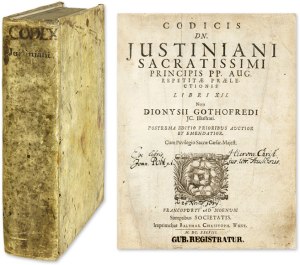 The Fifth Commandment was the first precept in the Second Table of the Reformed Decalogue, heading the list of precepts which ordered man’s relationship with his fellow man. The Edwardian reformer and Bishop of Gloucester John Hooper, in his Declaration of the Ten Commandments of Almighty God, explained that in the Second Table ‘is prescribed how, and by what means, one man may live with another in peace and unity in this civil life, during the time of this mortal body upon the earth’. None of the great lawmakers of the classical world – Lycurgus, Plato, Cicero, Constantine, Justinian – individually or together had ‘prescribed so perfect and absolute a form of a politic wealth, as Almighty God hath done unto his people in this second table and six rules’.
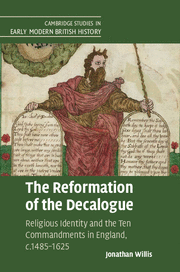 It is one of the arguments of
 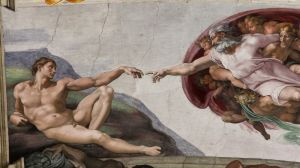 What this commandment required, however, was nothing short of true faith. The first component of faith was knowledge. The future bishop of Llandaff, Exeter and Worcester, Gervase Babington, wrote in his very Fruitful Exposition of the Commaundements in 1583 that the knowledge of God was declared by the magnificence of his creation (the heavens and earth, and all the creatures therein); by his word (in the form of the scriptures); by the holy spirit which brought the knowledge of salvation; and by the conscience of man, which comforted him when he acted in a way of which God approved, and accused him and made him afraid when he committed evil deeds.
  Regular readers of this blog may or may not be aware that I’ve spent the last seven years or so researching and writing
  The first challenge, and the one which has been taken up and answered with the most gusto, in the contributions to this symposium as well as in the scholarship more broadly, has been to disprove the notion of a shift to ‘iconophobia’ through the identification and presentation of concrete counter-examples. Religious imagery, religious music and religious drama did not cease to exist c.1580. It is worth pointing out at this juncture that Collinson’s article (perhaps unsurprisingly) stands up much better today upon re-reading than I had anticipated. Much of what people have challenged him on, he doesn’t actually claim. He doesn’t speak about religious music in general, for example; just godly ballads. He doesn’t speak about pictorial art in general, and explicitly rules out domestic decoration from consideration. His claims and evidence are much more limited than they are often taken to be, and therefore in a narrow sense they remain more or less correct.
 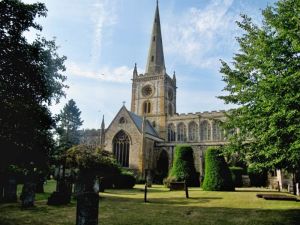 As Eamon Duffy and others have shown, the iconoclasts of the mid-16th century destroyed much of the splendour and symbolism of the late medieval church, and as Patrick Collinson suggested, some of the leaders of the second phase of the Reformation in the late 16th century wanted to narrow the range of religious imagery even further. But not only is it open to question whether these ‘iconophobes’ were sufficiently well-placed or organized to bring about the decisive further shift in English culture that Pat thought he could detect, but also it may be suggested that the impact of iconoclasm in mid-Tudor England had not been as severe as in Reformed churches abroad or in Scotland. This was partly because the English authorities deployed a narrower definition of idolatry, and partly because at all levels of clergy and laity there appears to have been a reluctance to go beyond the bare minimum of destruction authorized, especially if the offending objects were hard to reach or expensive to replace. As a result a significant proportion of fittings, decorations and monuments were left alone until the 1640s, or even the 19th century and beyond, as in the ‘Shakespeare church’, Holy Trinity, Stratford-upon-Avon, which has two 15th-century images of Christ, scores of angels, and symbols such as the three nails used to crucify Christ, and the five stigmata of the wounds he received.
  the many-headed monster