Unknown's avatar

About manyheadedhailwood

Mark Hailwood is a Senior Lecturer in Early Modern History at the University of Bristol

The Experience of Work in Early Modern England IV: Harvesters

This post is part of a series that marks the publication of The Experience of Work in Early Modern England. The book is co-authored by monster head Mark Hailwood, along with Jane Whittle, Hannah Robb, and Taylor Aucoin. It uses court depositions to explore everyday working life between 1500 and 1700, with a particular focus on how gender shaped work. It is an open access publication (i.e. it is available to view/download for free, here). The post first appeared on the ‘Women’s Work in Rural England, 1500-1700′ blog as a ‘work in progress’ piece in 2019 – it is reposted here to whet your appetite for finding out where the research ended up, which you can do by reading the book!

Mark Hailwood

As Clare Leighton put it so elegantly in her 1933 The Farmer’s Year, it is that time of year when ‘summer begins to tire’. For centuries of farmers it has been the time when ‘the supreme moment of his year is upon him’, and across the ‘vast sweep of landscape there is the golden glow of harvest.’ It is August, and ‘harvesting is due’.

Of course, it is not only the supreme moment of the year for the individual farmer: for our preindustrial forebears the harvest was, as Steve Hindle has put it, ‘the heartbeat of the whole economy’.[1] The economic fortunes of early modern societies were bound up with the quality and quantity of grain gathered from the fields at summer’s end.

The importance of the early modern harvest, a process so evocatively captured by Pieter Bruegel the Elder in 1565, can hardly be overstated, and when the time came to set it in motion it dominated men’s work schedules above all else: ‘the harvesting draws all men to it. Ploughboy and cowman, carter and shepherd, all are in the fields’ (Leighton again). But what of the role played by women in the ‘supreme moment’ of the agricultural cycle? It is another question our project can shed some light upon.

Continue reading

The Experience of Work in Early Modern England III: ‘Ploughmen go whistling to their toils’

This post is part of a series that marks the publication of The Experience of Work in Early Modern England. The book is co-authored by monster head Mark Hailwood, along with Jane Whittle, Hannah Robb, and Taylor Aucoin. It uses court depositions to explore everyday working life between 1500 and 1700, with a particular focus on how gender shaped work. It is an open access publication (i.e. it is available to view/download for free, here). The post first appeared on the ‘Women’s Work in Rural England, 1500-1700′ blog as a ‘work in progress’ piece in 2017 – it is reposted here to whet your appetite for finding out where the research ended up, which you can do by reading the book!

Mark Hailwood

leighton_november_1024x1024
Engraving from Clare Leighton’s wonderful book The Farmer’s Year

As a treat for surviving a long winter of data entry, I have indulged myself in recent days with some invigorating morning walks, enjoying the first signs of the turnover of the seasons (well, we have one daffodil out in the garden at least) a phase that the poet John Clare called ‘the thaw’ (the title of this post is borrowed from Clare too).[1] This time of year was a key watershed in the early modern agricultural year, of course, as thoughts drifted back to the fields after their dormant winter. With the passing of the frosts it was time to start ploughing the earth in preparation for sowing crops in the spring. It was time to set the agricultural cycle in motion once more.

It seems a reasonable assumption that it was not a favourite work task in the period, yoking the oxen (in the vast majority of our examples it was oxen rather than horses pulling the plough[2]) and heading out in inclement weather (Clare again: ‘March month of “many weathers” wildly comes’). There was certainly an element of danger involved. On 21st February 1564, James Treherne, a servant, was ‘driving six oxen of his master’s drawing a plough tilling the ground’ in Rowde, Wiltshire, when one of the oxen knocked him down, whereby he fell on an axe he was carrying and was fatally wounded. In 1651, Thomas Harding, of Bradninch, Devon, was giving testimony in a testamentary dispute when he recalled that the deceased, Thomas Potter of Broadhembury, had ‘died of a wound received by a ploughshare [blade] in his thigh as he was in a field at plough, which happened some days before his death’.

Continue reading

The Experience of Work in Early Modern England II: Family Fortunes

This post is part of a series that marks the publication of The Experience of Work in Early Modern England. The book is co-authored by monster head Mark Hailwood, along with Jane Whittle, Hannah Robb, and Taylor Aucoin. It uses court depositions to explore everyday working life between 1500 and 1700, with a particular focus on how gender shaped work. It is an open access publication (i.e. it is available to view/download for free, here). The post first appeared on the ‘Women’s Work in Rural England, 1500-1700′ blog as a ‘work in progress’ piece in 2016 – it is reposted here to whet your appetite for finding out where the research ended up, which you can do by reading the book!

Mark Hailwood

I often describe the main bulk of the work that underpins this project as ‘data entry’. But perhaps ‘data entry’ isn’t the best way to describe the harvesting process that has been our focus: reading thousands of depositions (I recently estimated that I’ve read somewhere between 6000-7000 individual depositions so far this year) and all of the stories of everyday life that they contain, and then carefully converting these complex qualitative sources into usable quantitative data, is a more varied and stimulating exercise than the term ‘data entry’ conjures up.

One of the upshots of this kind of work is that in among all the lengthy tithe and testamentary disputes that often turn out to be of little use to us, you occasional unearth a remarkably rich case that contains a veritable jackpot of work activities. And it is one such case that I want to discuss in this post.

‘Households in a landscape’

Step forward: the Conant Family of Moretonhampstead.

Continue reading

The Experience of Work in Early Modern England I: Winter is Coming

This post is part of a series that marks the publication of The Experience of Work in Early Modern England. The book is co-authored by monster head Mark Hailwood, along with Jane Whittle, Hannah Robb, and Taylor Aucoin. It uses court depositions to explore everyday working life between 1500 and 1700, with a particular focus on how gender shaped work. It is an open access publication (i.e. it is available to view/download for free, here). The post first appeared on the ‘Women’s Work in Rural England, 1500-1700′ blog as a ‘work in progress’ piece in 2015 – it is reposted here to whet your appetite for finding out where the research ended up, which you can do by reading the book!

Mark Hailwood

Brueghelian winter
Brueghelian winter

One aspect of the experience of work that our data sheds light on is seasonal patterns in work activities. As the English nights start to draw in, we ask: what tasks did early modern English workers do to make ready for the onset of winter?

A significant number of our examples from late November and early December relate to the replenishing of wood supplies to fuel much-needed winter fires. On the 25th of November 1591, Thomas Ven, an 80-year-old husbandman of King’s Brompton in Somerset, was up a ladder pruning an oak tree with an axe when he plummeted to his death. Locals must have started to wonder if evil spirits possessed the wood of Barlynch Grove, where Ven had fallen, for in December of the following year the 28-year-old Edward Norman met his end by falling out of an ash tree that he had climbed to cut branches from.

Continue reading

What would life have been like in English villages 400 years ago? New podcast series!

This post introduces a new podcast series by many-headed monster blogger Dr Mark Hailwood. You can access the podcasts via the Historical Association website here, and/or read on for some background on how they came about. If you have any comments on the episodes please add them at the bottom of this post.

Mark Hailwood

This simple question sits at the heart of pretty much all of the research I have undertaken as a historian. I have always been interested in the world of ‘ordinary’ women and men before modernity, and in how their world became this one. But it isn’t necessarily an easy question to answer. Working class rural dwellers in the past have left few written accounts of their everyday experiences, which has been enough to put off most historians from trying to recover their history.

There are though sources we can use, with a bit (well, a lot) of patience and some careful analysis. The most valuable of these, to my mind, are witness statements – or ‘depositions’ – from court cases, which relatively humble men and women were asked to give surprisingly often: early modern England was, as historians now know, a remarkably litigious society. And by combing through vast numbers of these surviving testimonies it is possible to discover a great deal about the day-to-day doings of seventeenth-century villagers – something I’ve blogged about before here, and here.

Typically my research on these sources has been concerned with specific topics – about the role of alcohol in preindustrial society, or about the differences between women’s and men’s working lives – but I am currently trying to draw these strands together to develop a more rounded picture of everyday life 400 years ago. Thanks to funding from the British Academy, I have spent the past year reflecting on, and re-reading some of, the tens of thousands of depositions I have consulted over the years, to draw out some of the most important themes that they reveal.

But that has not been an easy task either. Everyday life is a vast topic, and it is not possible to focus on everything these depositions might tell us. So, for this project, I thought I would concentrate on those aspects of seventeenth-century daily life that might surprise us the most, and challenge what we tend to assume about the period.

Continue reading

The People and the Law: an Online Symposium

Mark Hailwood

England in the sixteenth and seventeenth centuries was a remarkably – and increasingly – litigious society. Whether through a growing drive to prosecute crimes and enforce laws, or a greater willingness to take neighbours to court, early modern men and women across the social scale routinely found themselves in the legal arena as plaintiffs, defendants, and witnesses. This level of popular engagement with the law was arguably at a higher point in the years between 1560 and 1640 than at any other time in English history.  

This is great news for historians of this period, and especially for the practitioners of ‘history from below’; whilst the common people, who were likely to be illiterate, leave us few written sources penned by their own hands, their actions – and sometimes their attitudes – did leave an imprint in the legal sources recorded and retained by the many courts of early modern England. Since the 1970s, then – when social history began to take off in UK university History Departments – researchers have often turned to court records in their attempts to uncover the history of early modern non-elite actors.

The first wave of work on legal sources often focused, quite understandably, on what these records could tell us about patterns of crime and criminality, not infrequently using a quantitative approach to make sense of the changing nature of court business. From the 1990s, under the influence of the ‘cultural turn’, the emphasis shifted from counting crimes to offering close qualitative readings of legal sources, especially the detailed statements – or depositions – given by those called before the courts, for what they could reveal about the gender dynamics, or social conflicts, at the heart of certain types of case. More recent work has often adopted an ‘incidentalist’ approach, using these depositions to examine everyday activities that were mentioned in passing, rather than being the subject of a case, thereby reconstructing patterns of work and sociability, or the experiences of particular groups in this society, such as female servants.

Continue reading

The Rabble that Can Write: Rethinking Literacy in Rural England, 1550-1700

Mark Hailwood

I have often said that writing a blog post can be a good way to disseminate research findings or ideas that you don’t think would sustain a whole article. But sometimes a blog post can act as a seed that slowly germinates into something more substantial, and before you know it you realise that most of your articles started out as blog posts. At which point it feels like the right thing to do is to complete the cycle and blog about those articles, as some kind of superstitious homage – an offering of thanks – to the blog format, in the hope it will provide again.

So, this August saw the publication of my article on ‘Rethinking Literacy in Rural England, 1550-1700’ (open access!) which was the product of several years of musing on a post I wrote on this blog some nine years ago: ‘The Rabble that Cannot Read? Ordinary People’s Literacy in Seventeenth-Century England’. In that post, I wondered whether historians of the early modern period were missing a trick when using people’s signatures to ascertain their literacy skills, with a full signature taken as evidence of full literacy, and anything else – termed a ‘mark’ – as an indicator of illiteracy. It seemed to me that there was a lot of variety in the way people signed off on various legal documents – from full signatures to initials, images of tools, crosses, circles, and a whole host of other squiggles and shapes – that might in themselves reflect hierarchies of reading and writing skills.

Well, since then I have encountered a lot of signed documents as part of my research on the Women’s Work in Rural England project, so I duly collected as many examples of marks and signatures as I could, and in my recent article I subjected them to more sustained analysis. I don’t want to go into too much detail about the findings – I want you to read the article! – but the headline is that I think we can usefully sort sign offs into the following categories:

  • Signatures
  • Double Initials
  • Single Initials
  • Icons
  • Circles
  • Crosses
  • Multi-stroke marks
  • Single-stroke marks
  • Indistinct scrawls

Continue reading

Hangovers, Marxists, and Plebs: Tales from the Blarchive

Mark Hailwood

We typically think of digital media outputs as relatively impermanent and ephemeral: they enjoy a brief window of exposure before sinking to the bottom of timelines, coming to rest in obscure corners of the web or vanishing behind broken hyperlinks. They are timely, not timeless.

The blog post might fit this mould in some ways, and when we started the many-headed monster ten years ago we were very much writing posts for the present rather than posterity. But without particularly planning to (planning has never really been our MO) it turns out we’ve created quite the archive over the years. A blog archive. A blarchive, if you will.

Whilst some of our posts were rapid responses to specific current events – remember ‘plebgate’? – or conferences we had attended – History after Hobsbawm – a great many of them have aged fairly well. When we joined in debates about periodisation, or the importance of history from below, we were engaging with issues that continue to be relevant. Not least of all in the classroom: its clear that some of our posts and series have become widely used as teaching resources.

So we’ve come to think about the many-headed monster not just as a platform for posting new content, but as a repository of pieces that often come in useful years after they were first written. We’d like our readers to see it – and use it – that way too.

Our plan this this summer then, as we mark our tenniversary (I know, enough with the portmanteaus already…) is that each monster head will take a little trawl through our archives to highlight some of the older stuff that lurks there that might still have value for our readers. We hope it might even encourage you to seek out your own gems from our blarchive too!

***

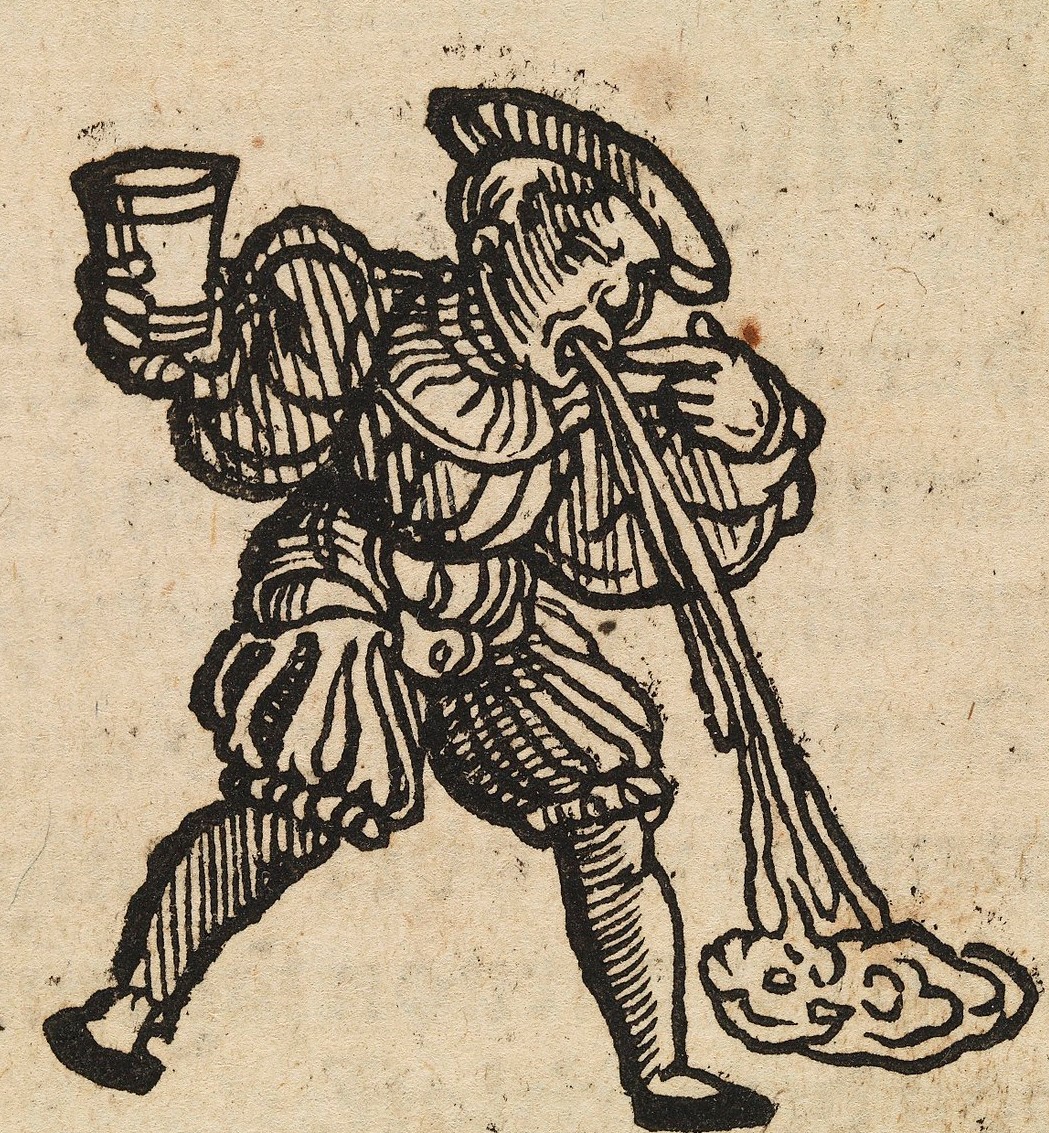
I started my own search by calling up my first ever post back in July of 2012. Unsurprisingly it was on a drink history topic – the 17th century hangover. I think it was mostly just an excuse to throw together some references to hangovers that I had come across in my research, but it did raise a bigger question that I came back to regularly in later posts: can historians recover the physical and sensory experiences of the past?

Continue reading

The Virtual Parish: Scholarly Communities Online

Laura Sangha & Mark Hailwood

In this post we reflect on eight years of running a ‘virtual’ scholarly community – this blog! – to consider questions that are currently pressing ones for all academics: what do we gain from taking our conversations online? What do we lose? What needs to be improved?   

In the spring of 2020, as much of the world was plunged into ‘lockdown’ by the advance of the coronavirus, regular forms of face-to-face interaction were swiftly replaced by online alternatives. For academics, the classroom morphed into the online seminar; the conference trip was replaced by a day tucked away in a corner of the bedroom staring at Zoom; the common-room catch-up was transferred to the Departmental WhatsApp group.

Innovative initiatives have abounded, including A Bit Lit, a series of fun and informal filmed conversations about history, literature and culture, designed to fill the gap left by the kind of over-a-coffee-conversations that might take place between scholars. We were delighted to receive an invite to take part, and you can see our ramblings here. In the opening film, Andy Kesson talked about A Bit Lit as part of a process of building new kinds of academic community—or to give it a more early modern twist, new kinds of ‘parish’—that would draw on digital forms of contact to overcome the obstacles of infection.

We liked this notion of new ‘virtual parishes’, especially since many of us have been involved in a variety of ad hoc ways in constructing such novel online communities in recent months. But this notion also struck a chord with us because we realised that we—along with Brodie Waddell and Jonathan Willis—had already created a ‘virtual parish’ long before the current crisis: this blog. The context of its creation was very different to the circumstances we face now, but the impulse to create a scholarly community that transcended physical obstacles was central. Indeed, the loss of physical proximity that we had enjoyed as a group of postgrads at Warwick was an important catalyst. Continue reading

Alice Clark’s *Working Life of Women in the 17th Century* at 100: An Online Reading Group

Mark Hailwood

The conditions under which the obscure mass of women live and fulfil their duties as human beings, have a vital influence upon the destinies of the human race…

Alice Clark, 1919

It was this conviction that drove Alice Clark to write her pioneering study of the working life of women in seventeenth-century England. One hundred years later, few historians would now contest such a statement, and as a consequence the obscurity of women’s lives in the early modern past is less acute than in Clark’s time. But how far have we come in our understanding of women’s work? How have historians added to, and revised, the picture mapped out by Alice Clark?

s-l1600The centenary of the publication of this seminal work presents a great opportunity to both celebrate the scholarship of Alice Clark, and to reflect on the current state of the history of early modern women’s work. And so, we would like to invite you, dear reader, to join an online reading group here on the many-headed monster that will do just that.

Between now and October of this year we will read one chapter a month of Working Life of Women in the Seventeenth Century (freely available on archive.org here). For each chapter a leading historian will offer their reflections on it in a blog post, which will serve as a starting point for discussion ‘below the line’ in the comments section (and/or on twitter, no doubt).

The blog posts will be published at the start of each month, on the following schedule, with a double-header in early April to kick us off: Continue reading