Unknown's avatar

About manyheadedmonster

The many-headed monster is a collaborative blog focusing on English society and culture in the early modern period, very broadly conceived.

Changing minds on early modern disability

This post is part of the Monster Carnival 2022 – Why Early Modern History Matters Now. Alasdair McNeill completed a BA in History this year at Birkbeck, University of London, and is now undertaking an MA in Early Modern History.

Alasdair McNeill

Earlier this year while writing my undergraduate dissertation about how eighteenth-century London polite society treated the physically disabled, the most common reaction from friends, family and fellow students was ‘oh, it must have been really terrible for disabled people back then’.

I understood what people were getting at, partly because my view had been similar before starting the research, and it is certainly hard to disagree that life back then was much more difficult than it is now.  But the early modern period was tough whoever you were, and I doubt many people today would willingly swap their life now for that of anyone, rich or poor, disabled or not, back then.

During these conversations I always asked that people suspend most of what they thought they knew and consider a couple of things unearthed during my research, things that might help them towards a view that was more nuanced than ‘life was terrible’.  One was the different use of language; the terms ‘disabled’ and ‘able-bodied’ were in use but did not divide people into categories based on their ability to participate equally in society.  Early modern society did not see a distinct group of ‘disabled’, and the sources reveal a great degree of community acceptance, support and simply living alongside those with physical impairment or mental illness. Continue reading

How dead are my early modern merchants?

This post is part of the Monster Carnival 2022 – Why Early Modern History Matters Now. Christophe Schellekens (@Christophe_Fir) works as a non-permanent lecturer in social and economic history at Utrecht University (The Netherlands). His main research interest is the history of commerce and capitalism in the pre-modern period.

Christophe Schellekens

“How are your dead Florentine merchants doing today?” A friend and fellow PhD-researcher regularly asked me that question when we ran into each other in the corridors of the European University Institute. In that institution, where we both did our doctorate between 2013 and 2018, a small but vibrant group of early modern historians (at the time five faculty members) was often confronted with such questions about their topic from colleagues working in other disciplines.

Why did my doctoral research on (absolutely certainly physically very dead) Florentine merchants in sixteenth century Antwerp matter to my friend, who studies EU administrative law? What did I have to share with my EUI flat mate researching contemporary welfare state regimes, or with one of the many other colleagues at the institute who were tackling topics that are more readily considered as socially or policy relevant? How dead or alive is the early modern world that I study?

The EUI’s Villa Salviati, a Renaissance building where lawyers inquire about the dead subjects of historians. Photo by Sailko on wikimedia.

The question how early modern history matters can be approached from a variety of angles and experiences. As I later worked as a postdoc in a EU Horizon 2020 project with a strong focus on societal impact, and then started to work as a lecturer in a PPE-program, my take on it is strongly shaped by working over the past decade as an early modernist in environments where early modern history is not at the institutional and intellectual core of the agenda of my direct workplace. In that sense it is thus a take from the margin. Continue reading

Plague, Religion, and Medicine in Seventeenth-Century England

This post is part of the Monster Carnival 2022 – Why Early Modern History Matters Now. Lisa Olson is a librarian and recent graduate of the Master of Information program at Dalhousie University where she completed a thesis focussed on plague publications in seventeenth-century England. Find her on Twitter @Olson_Bochord.

Lisa Olson

Three years since the start of the pandemic seems like an apposite time to see what lessons we can learn about the experience from a closer examination of early modern history. We have seen how widespread illness can effect profound change in society, as it has many times before. We have yet to understand the lasting effects of the current pandemic, however, and may benefit from a closer examination of similar occurrences throughout history.

Continue reading

The Suspicious Smell of Witchcraft

This post is part of the Monster Carnival 2022: Why Early Modern History Matters Now. Jordan Graham graduated from Cardiff University with a BA in History in the summer of 2022.

Jordan Graham

Over the last few years it is likely that you or someone you know has had Covid-19. One of the common side of effects has been loss of taste or smell, so much so that often when someone tells you they had Covid it may be one of the questions you ask. Could you smell anything? Could you taste anything? While the thought of not being able to taste your food is dreadful, how often have we really thought about how our sense of smell affects our daily lives? How did smell affect those who lived before us? How did smell help people decide between what was good or bad? The early modern witch offers an unexpected case study.

Throughout history the sense of smell has been viewed as nothing more than average. Even Aristotle put it in the middle of his hierarchy of the senses, behind sight, and hearing, but before taste and touch. When we think of the early modern witch we similarly often privilege how she looked or sounded. But smell mattered too. Early modern medical texts, plays, demonological texts and trial records all show that the witch’s foul-smelling qualities permeated society. This influenced early modern individuals to suspect and accuse others of witchcraft based merely on their personal odour.

Continue reading

Colonialism From Below

This post is part of the Monster Carnival 2022 – Why Early Modern History Matters Now. Misha Ewen (@mishaewen) is a Lecturer in Early Modern History at the University of Bristol, and has published on gender, colonialism, and trading companies in The Historical Journal, Gender & History, and Cultural and Social History. She has just published The Virginia Venture: American Colonization and English Society, 1580-1660 (Philadelphia: University of Pennsylvania Press, 2022).

Misha Ewen

Since the murder of George Floyd in May 2020 and the Black Lives Matter protests that followed, we have witnessed renewed scrutiny of British involvement in colonialism and the transatlantic trade in enslaved people. Many of the names and institutions at the centre of debates (and the manufactured so-called culture war) are early modern, from Edward Colston and Tobias Rustat to the Bank of England. It’s through the lens, and understanding, of the early modern period that apologies have been issued, new findings about institutional complicity have been made, and statues have been torn down. Calls for reparations, from private individuals like Richard Drax MP and institutions like the British monarchy, are also distinctly early modern in their basis and legitimacy.

With good reason, recent action and debate has focused on these particularly prominent individuals and institutions, but this narrowing of attention does mean that we often don’t discuss the wider public interest in and support for colonisation that permeated society in early modern Britain. My impression is that our general understanding about early modern colonisation does not extend to knowing how ordinary women, men, and children encountered and engaged with colonial activity in myriad ways, how they profited from it and upheld it. There were those who shaped policy in the Houses of Parliament and meeting rooms of trading companies, and then there are those who outfitted ships and provided food and lodging to colonists in the days leading up to their departure: women like Elizabeth Hibbert, who earned fifteen shillings providing this service to Virginia colonists departing aboard the Margaret from Gloucestershire in 1619.

Participation in the colonial project operated on a spectrum like this, from what could be considered more passive or fleeting, to active, deeper, engagement. For those individuals and institutions which were more tightly involved with colonial policy and projects, we sometimes have ample evidence of their outlook and activity, and this is where our focus usually lies, rather than on others like Elizabeth Hibbert, who contributed at the margins and remain there. Their imprint on the archive is much lighter, and their interaction with the colonial project appears short-lived. How does evidence of this kind, however fragmentary it is, not only impact how historians understand histories of colonisation and empire, but potentially challenge engrained narratives about our heritage?

Continue reading

The Depressing Relevance of Early Modern Russian History

This post is part of the Monster Carnival 2022 – Why Early Modern History Matters Now. Clare Griffin is an assistant professor at Indiana University Bloomington and a historian of the early modern Russian empire in global context. You can find more of her work at www.claregriffin.org.

Clare Griffin

If you have been in a state of consciousness at any time since February ‘22, you may have noticed something is up with Russia and Ukraine. Depending on which news sources you read, you may or may not know how central early modern Russian history is to this twenty-first-century war. Yet it is. Russian propaganda justifying the war, and Ukraine’s responses to that, are heavily concerned with both medieval Kyiv and early modern Moscow and its empire.

Earlier this year, I was in the bizarre situation of having an interview for a Russian history job on the same day that Russia invaded Ukraine. I had a pitch all lined up for why early modern Russia is relevant, but when the leader of the country you study is justifying an invasion on the basis of what you study this all becomes a decidedly dark moot point.

So what is Putin’s version of premodern East Slavic history, and why is this important to the Kremlin’s propaganda machine?

Continue reading

Reflecting on Black Lives in the English Archives: A call for participants

  • October – December 2022: Online Reading Sessions
  • February 2023: In-person Workshop at King’s College London
  • April – May 2023: Symposium blog posts published on the many-headed monster

The many-headed monster team are happy to bring you advance notice of our forthcoming Online Symposium, which will grow out of a series of events convened by doctoral students Rebecca Adusei and Jamie Gemmell. We invite current or recent postgraduate students to join us in this collaborative reflection on Imtiaz Habib’s Black Lives in the English Archives – read on for the call for participants and details of how to get involved, or visit the Online Symposium website for more.

Continue reading

Jobbing Historians: Tales from the Blarchive

Brodie Waddell

The world of UK universities has changed dramatically in the ten years since our first post appeared on the Many-Headed Monster, and it feels like the pace of change has recently accelerated.

So, while my co-bloggers are looking back at hangovers, Marxists, plebs and creative histories, I want to indulge in a bit of navel gazing. How has the role of the historian as a job been changing over the last decade? Much of my evidence comes from a sample size of one, but I think the sorts of things we’ve been talking about on the blog over the years give some sense of the wider climate.

I vividly remember my own circumstances in July 2012, when we started the blog, because it was a moment of personal chaos but also optimism. I was finishing up a postdoc and had recently been offered a three-year lectureship at Birkbeck, while at the same time trying to juggle the demands of a new baby. I have no idea why I thought it would be a good time to launch a new project, but I’m glad I did. Meanwhile, things were less chaotic but also less optimistic at the national level. The UK was in the midst of the Cameron-Clegg coalition government, and it was pretty clear that universities were generally going in the wrong direction, most obviously with annual tuition fees rising from £3,000 to £9,000 that very year.

What is intriguing, however, is that there is almost no evidence of this on the Many-Headed Monster. Posts from our first few years touched on lots of different historical topics, but very little on the job itself. That said, Laura’s reflections on conferences as ‘communitas’ and my complaints about boring exam questions are probably a fair reflection of the sort of day-to-day concerns of new lecturers, then and now, even if we somehow avoided mentioning the fact that we were then all currently or recently precariously employed. The closest we came to dealing with our jobs directly was ‘The Future of History from Below’ symposium in 2013, which included reflections on who we were writing for and why, an issue that we would now probably call ‘public history’, but which was barely discussed in academic circles just ten years ago. A couple years later, Laura set out her thinking on ‘What is history for?’ which again highlighted how we were increasingly questioning the purpose of our discipline in the wider world.

Continue reading

the many-headed monster is 10: looking forward

This year we are celebrating ten years of blogging about the unruly sort of clowns and other early modern peculiarities. But we are also laying out plans for the next ten years, because it felt like it was time to make some fundamental changes in how we do things at the Monster.

We started this blog in 2012, and in all sorts of ways the world is a very different place now than it was then. Back then, the global financial crash and the UK coalition government’s policy of austerity loomed large. Today, the ongoing impact of the covid pandemic, Brexit, the Trump presidency, the climate emergency and Russia’s invasion of Ukraine set an even more apocalyptic backdrop. The MeToo and Black Lives Matter movements have brought more positive change, but in countless less obvious ways the nature and tone of public discourse often feels more radical and polarised than ever. Closer to home, the university sector in the UK has been transforming too, thanks simultaneously to the tripling of tuition fees and cutting of budgets, a central government increasingly hostile to the arts and humanities, the rise of decolonising initiatives, and a series of bitter labour disputes.

Our own situations have also changed. All four of us are now on permanent open-ended contracts, with solid publication records and ever-expanding administrative responsibilities. This is in sharp contrast to 2012, when two of us were still in temporary posts and the other two were very junior lecturers. We all now officially fit the label of ‘mid-career scholars’. All this could have spelled an ignoble end to our grand and monstrous venture. However, rather than simply puttering along and writing an occasional isolated post, squeezed in between our many other professional duties, we decided to take advantage of our current positions as established scholars of early modern history and build on the huge success of our recent Early Career Researcher Takeover event in 2021. More practically, we all now have extensive experience as peer reviewers and academic editors, so this seems like an ideal new long-term role for the Monster heads.


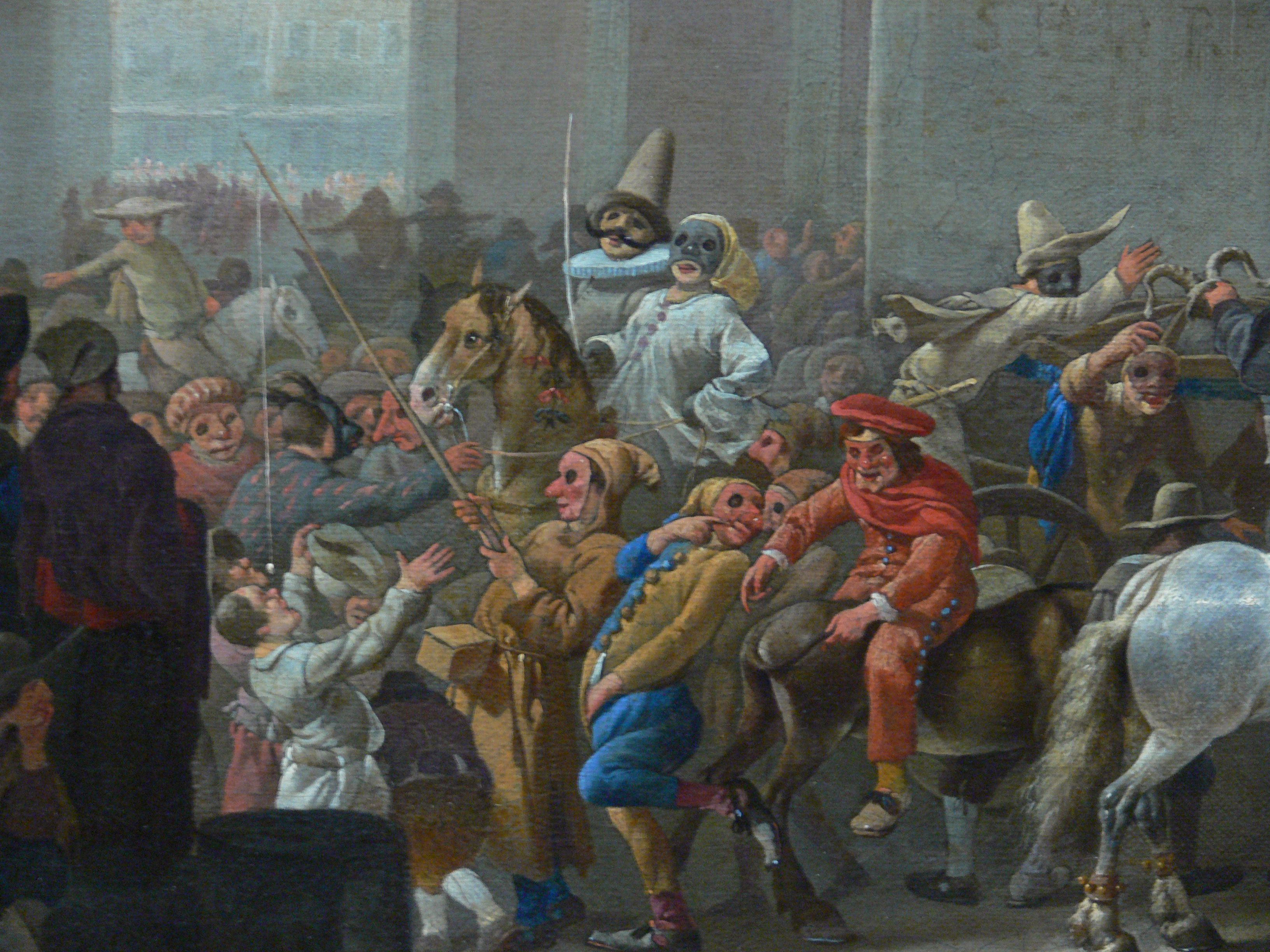
Welcome to the Monster Carnival! Johannes Lingbach, Carnival at Rome (1650-51)

Monster Carnivals

We are therefore delighted to announce that starting this year we will be hosting regular Monster Carnivals: online events that offer a platform for scholars of history, especially but not exclusively newer researchers, and those who study the late fifteenth to eighteenth centuries. The Carnivals will provide a forum for addressing critically important themes in current scholarship.

Continue reading

the many-headed monster is 10: looking back

When Brodie and Mark quietly announced the birth of the many-headed monster to the world in July 2012, little did they know how big their baby would grow or just how many readers and contributors the behemoth would ensnare. But it’s been quite a ride.

four photos of the monster heads when they were young
monster heads when they were young

It’s possibly obvious to our readers, but we have never had a strict editorial line, preferring the blog to develop organically and to lead us in whatever direction seems promising. We share a consensus that we want to reach broader audiences than journal articles and academic monographs can, and that the types of history that we discuss, the format, and particularly the tone of our writing is intended to be accessible and engaging for non-specialists, but beyond that, there aren’t really any rules. Indeed, until we four co-authors met late in 2021 to discuss how to mark our ten year anniversary we’d never had an editorial meeting, rather we very satisfactorily conducted matters via email, or a scatter of shared google docs for when we were feeling fancy.

This informal approach is perhaps one of our great strengths. For one thing, it keeps editorial and administrative duties to the barest minimum. Just as importantly, it has allowed us to develop ways of publishing content online that retains the quick blog post format, but which expand and adapt it for different purposes. At its simplest, this might mean breaking a longer post into more easily digestible chunks and posting each chunk individually across a week or a fortnight, as Mark did with his posts on the application of theory to the history of food and drink.

More distinctively, our ‘Monster Mini-Series’ quickly became a feature of our output. These are both finite and current/long-running collections of posts focused around a particular theme or topic. Laura’s posts on the history of the Tudor Southwest is an example of the former, and our co-authored series ‘On Periodisation’ of the latter.  

Continue reading