
Laura Sangha
This is a reproduction of a piece that I wrote for the local press after watching the first episode of Gunpowder.
When Gunpowder first aired a few weeks ago it reportedly shocked audiences with its graphic scenes of capital punishment. People particularly objected to an execution scene in the first episode, where a women was stripped naked and crushed to death, and a man was hung, eviscerated and his body chopped into quarters. Viewers were split between those who found the brutality gratuitous and unnecessary, and those who welcomed a historical drama that didn’t shy away from our gory, violent past.

A still from the execution scene that some viewers thought crossed a line.
I’m no expert on how violent television programmes should be, but I can say that this was a historically accurate representation – judicial execution was a part of Tudor and Stuart life, and killings were bloody affairs. Those who refused to plead either guilty or not guilty in court did face the hideous ordeal of ‘pressing to death’ – that is being laden with weights and stones until the victim either spoke to enter a plea, or died of suffocation. Although the character who suffered this fate in Gunpowder is fictional, her death appears to have been closely based on the execution of the catholic Margaret Clitheroe, who was accused of harbouring priests in 1586. Similarly, men convicted of high treason were hung, drawn and quartered, a punishment that reflected their deplorable crime of attacking the monarch’s authority. And the manner of execution was suitably deplorable – one historian estimated that the process of hanging, disembowelling and quartering a person would take at least half an hour, and there are contemporary reports that the smell and sight provoked horror and disgust in audiences at the time as well. Yet execution days could also be rowdy affairs, with crowds gathering to vent their anger at the victim, whilst pie men and ballad sellers circulated, taking advantage of the chance to earn a few extra pence. In some cases, public executions seem to have taken on an atmosphere of carnival. Continue reading
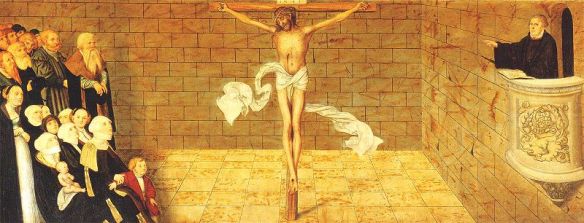
 At first glance, the Ninth Commandment, ‘Thou shalt not bear false witness against thy neighbour’, was rather niche compared to the first four precepts of the second table: honouring parents, and not killing, committing adultery with, or stealing from other people. However, as historians such as Alexandra Shepherd and Craig Muldrew have shown, credit and reputation were vital and powerful forces in early modern English society.
 Nowhere was this aspect of ‘making it up as they went along’ more visible than in discussions of the Eighth Commandment – for while certain sins were pretty much universals of human nature (sins of violence and lust, for example) the realities of economic life in sixteenth century England were very different from those of the ancient Middle East.
  The Seventh Commandment, ‘Thou Shalt Not Commit Adultery’, was one of the most commented upon in the whole Decalogue. ‘Adultery’ was quickly expanded by Protestant authors to include all forms of ‘uncleanness’, in thought, word and deed, alone and with other humans and creatures, both in and outside of wedlock. Fornication, buggery, masturbation and bestiality were some of the headline crimes, but authors also sought to proscribe all ‘occasions’ and ‘enticements’ to sins of the flesh, including mixed dancing, excess consumption of food and alcohol, as well as lewd pictures, cosmetics, alluring gestures and coquettish glances. In contrast to such filthy living, the commandment enjoined chastity, both in and out of marriage: ‘immoderate use of the marital bed’ was as much a sin as pre- and extra-marital sex.
 The four short monosyllables of the Sixth Commandment – thou shalt not kill – were therefore stretched and twisted by expositors of the Decalogue into some quite astonishingly intricate patterns, which reflected the religious and moral climate of the day. The godly vicar of Ryton, Francis Bunny, explained that the commandment forbade killing with hand, heart and tongue, ‘and all the things that tend to the hurt of any mans person’, including bereaving him, spoiling his goods and possessions, or omitting ‘such duties, as tend to the safety or good of other men’.
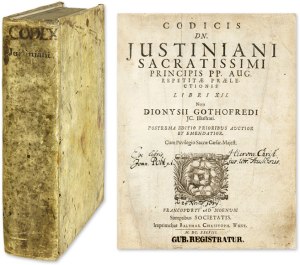 The Fifth Commandment was the first precept in the Second Table of the Reformed Decalogue, heading the list of precepts which ordered man’s relationship with his fellow man. The Edwardian reformer and Bishop of Gloucester John Hooper, in his Declaration of the Ten Commandments of Almighty God, explained that in the Second Table ‘is prescribed how, and by what means, one man may live with another in peace and unity in this civil life, during the time of this mortal body upon the earth’. None of the great lawmakers of the classical world – Lycurgus, Plato, Cicero, Constantine, Justinian – individually or together had ‘prescribed so perfect and absolute a form of a politic wealth, as Almighty God hath done unto his people in this second table and six rules’.
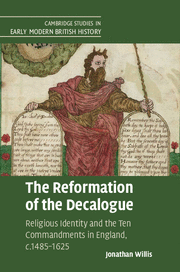 It is one of the arguments of
  the many-headed monster