
This post in our After Iconophobia Online Symposium comes from Ian Green, Honorary Professorial Fellow in the School for History, Classics and Archaeology at the University of Edinburgh. Ian has expertise and has published widely in a variety of fields, including early modern print, education and domestic devotion. Here he reflects upon some of the most fertile areas of future research in further refining our sense of the relationship between mature Protestantism and graphic depictions in visual and material cultures.
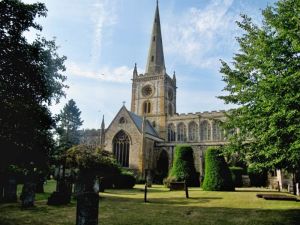 As Eamon Duffy and others have shown, the iconoclasts of the mid-16th century destroyed much of the splendour and symbolism of the late medieval church, and as Patrick Collinson suggested, some of the leaders of the second phase of the Reformation in the late 16th century wanted to narrow the range of religious imagery even further. But not only is it open to question whether these ‘iconophobes’ were sufficiently well-placed or organized to bring about the decisive further shift in English culture that Pat thought he could detect, but also it may be suggested that the impact of iconoclasm in mid-Tudor England had not been as severe as in Reformed churches abroad or in Scotland. This was partly because the English authorities deployed a narrower definition of idolatry, and partly because at all levels of clergy and laity there appears to have been a reluctance to go beyond the bare minimum of destruction authorized, especially if the offending objects were hard to reach or expensive to replace. As a result a significant proportion of fittings, decorations and monuments were left alone until the 1640s, or even the 19th century and beyond, as in the ‘Shakespeare church’, Holy Trinity, Stratford-upon-Avon, which has two 15th-century images of Christ, scores of angels, and symbols such as the three nails used to crucify Christ, and the five stigmata of the wounds he received. Continue reading


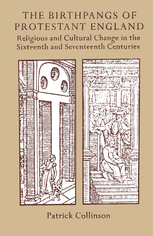 I began my undergraduate career convinced that I wanted to be a historian, but entirely unsure which bit of the past I should dedicate my life to unlocking. Patrick Collinson’s Birthpangs of Protestant England (1988) – of which a revised version of his Stenton Lecture From Iconoclasm to Iconophobia (1986) formed a part – was one of four books (the others being John Bossy’s Christianity in the West (1985), Robert Scribner’s For the Sake of Simple Folk (1981) and Alexandra Walsham’s Providence in Early Modern England (1999)) which convinced me that the Reformation was the thing for me. In each case I became so absorbed in reading them that all sense of time lapsed. I emerged from their pages to discover that day had become night and in one instance a grumpy porter had to inform me rather briskly that the library was now closing. Such was their power that over a decade later I can still remember exactly where in the Morrell Library at the University of York I was sitting when I first encountered each author: remarkable experiences in an otherwise unremarkable building.
 the many-headed monster