The Experience of Work in Early Modern England IV: Harvesters

This post is part of a series that marks the publication of The Experience of Work in Early Modern England. The book is co-authored by monster head Mark Hailwood, along with Jane Whittle, Hannah Robb, and Taylor Aucoin. It uses court depositions to explore everyday working life between 1500 and 1700, with a particular focus on how gender shaped work. It is an open access publication (i.e. it is available to view/download for free, here). The post first appeared on the ‘Women’s Work in Rural England, 1500-1700′ blog as a ‘work in progress’ piece in 2019 – it is reposted here to whet your appetite for finding out where the research ended up, which you can do by reading the book!

Mark Hailwood

As Clare Leighton put it so elegantly in her 1933 The Farmer’s Year, it is that time of year when ‘summer begins to tire’. For centuries of farmers it has been the time when ‘the supreme moment of his year is upon him’, and across the ‘vast sweep of landscape there is the golden glow of harvest.’ It is August, and ‘harvesting is due’.

Of course, it is not only the supreme moment of the year for the individual farmer: for our preindustrial forebears the harvest was, as Steve Hindle has put it, ‘the heartbeat of the whole economy’.[1] The economic fortunes of early modern societies were bound up with the quality and quantity of grain gathered from the fields at summer’s end.

The importance of the early modern harvest, a process so evocatively captured by Pieter Bruegel the Elder in 1565, can hardly be overstated, and when the time came to set it in motion it dominated men’s work schedules above all else: ‘the harvesting draws all men to it. Ploughboy and cowman, carter and shepherd, all are in the fields’ (Leighton again). But what of the role played by women in the ‘supreme moment’ of the agricultural cycle? It is another question our project can shed some light upon.

Continue reading

Black Lives in the Restoration Household: The Queen’s Account

This post is part of Reflecting on Imtiaz Habib’s Black Lives in the English Archives: An Online Symposium, organised and edited by Rebecca Adusei and Jamie Gemmell. The blog series is introduced here. You can join Rebecca and Jamie to celebrate the publication of the posts at a free event at the London Metropolitan Archives on Friday 19 May – the event includes presentations by the post authors and a tour of the LMA’s new ‘Unforgotten Lives’ exhibition.

Susannah Lyon-Whaley

Susannah Lyon-Whaley is completing her PhD in Art History at the University of Auckland in Aotearoa New Zealand on the Stuart queen consort Catherine of Braganza.

Imtiaz Habib’s groundbreaking study Black Lives in the English Archives, 1500-1677: Imprints of the Invisible (2008) searches for traces of its subjects in parish registers, legal documents, and also amidst the records of the royal court. Histories of European kings and queens – even to the present day – often say little about black lives, yet royal records offer rich, if sporadic, evidence of these. To establish the presence of African slaves in the train of Catherine of Aragon, the Spanish princess who arrived in England in 1501 to marry Henry VIII’s older brother, Habib looks to official letters and the accounts of bystanders.[1] While these records are rich, their references to black lives are not easy to find but must be mined, likely why Habib does not apply the same detail to the Restoration court of the seventeenth century (c. 1660-1688) as he does to the household of the Spanish princess.

Similar to many of Habib’s finds, the £2 paid “To the Lady Wood ffor the Blackemores Lienning [linen]” – in 1663 in the accounts of Catherine of Braganza (1638-1705), Portuguese queen consort of Charles II (r. 1649/1660-1685), is easily glossed over, sandwiched between payments to attendants at the waters of the spa at Tunbridge Wells and for gold to play at cards. While ‘Lady Wood’ can be identified as Dame Mary Wood (d. 1665) through her appearance in Catherine’s household lists, the ‘Blackemores’ – a phrase indicating African heritage – are not named, gendered, nor even quantified.[2]  By the Restoration, Habib argues that blackness was more likely to be associated with enforced servitude.[3] What, then, can the ‘queen’s account’ of these lives tell us about black lives in the Restoration household? Continue reading

Love Me or Leave Me: Black Lives in the English Archives, A Response

This post is part of Reflecting on Imtiaz Habib’s Black Lives in the English Archives: An Online Symposium, organised and edited by Rebecca Adusei and Jamie Gemmell. The blog series is introduced here. You can join Rebecca and Jamie to celebrate the publication of the posts at a free event at the London Metropolitan Archives on Friday 19 May – the event includes presentations by the post authors and a tour of the LMA’s new ‘Unforgotten Lives’ exhibition.

Jacqui Stanford, PhD

I thought I knew what I would call this post. Someone had kindly dropped a citation in the chat as a group of people working on race in medieval/early modern Britain met in an online symposium discussing Habib’s Black Lives in the English Archives. My contributions to the symposium were really me still responding in my head to the final words in another book. That book had taken Habib to task on the idea of black slaves being in Britain in Tudor times, and Habib’s decision to include as many people in his database as their names suggested they were Black to him, Blackmoore and its variations being a chief source. I hadn’t even read Habib’s Black Lives when I was reading the critique, yet I felt protective of Habib and had a willingness also to allow what he had done. Call it instinct…

Now, I am sitting on my own book. Rather it’s sitting inside of me. Rather it’s a maelstrom seething begrudgingly in the depths of me. For it is time.

My book’s about six Black individuals I discovered in the archives. Others have seen their names before me. My six are not unknown. They are listed and noted in the parish registers, although they have remained out of focus as other things and people, who share the same pages on which they are recorded come into focus. No one as yet has taken up the detritus about them. Removed the dust, excavated the site of their burial in a single line, if that, set in parchment. There they lay, sullen, aggrieved; … something caught my eye. Continue reading

Black mermaids and the long legacy of eighteenth-century racism

This post is part of the Monster Carnival 2022 – Why Early Modern History Matters Now. Onni Gust is Associate Professor of History at the University of Nottingham. Their research focuses on ideas of sex and the human-animal boundary in eighteenth-century British imperial thought.

Onni Gust

Towards the end of the summer, Disney launched a trailer for its new version of The Little Mermaid, starring Halle Bailey as Ariel. The launch generated much excitement on social media. Parents of young Black girls posted videos of their daughters’ faces lighting up when they saw a heroine that looked similar to themselves. And then came the inevitable pile-on by racists. According to some commentators, the casting of a young, Black actress as Ariel was a distortion of the original, ‘authentic’ and necessarily white Ariel. To turn Ariel into a Black mer-girl was yet another egregious example of ‘wokeness’.

Arnaud Gautier D’Agoty, ‘A mermaid, with a measuring scale’ (1757). Wellcome Collection, 3327i.

Hans Christian Anderson wrote The Little Mermaid in 1836 and the best-known adaptation is Disney’s 1989 film. In both versions Ariel is portrayed as having white skin – ‘delicately fair’ – with long flowing hair and blue eyes. There is nothing politically neutral about this physical description. These images are deeply embedded in racialised concepts of beauty and femininity that were being developed in the long eighteenth century in the context of European colonial expansion. A brief look at the history of mermaid sightings, capture and display during this period offers some insights into this history of racism and anti-blackness that resurfaces continuously in our own times.

Mermaids have a long and enduring presence across the globe in literature, myth and spiritual beliefs. As Celeste Headlee and Kalyani Saxena write, Black mermaids, notably the gender-fluid Mami Wata, have an important presence in African folklore; aquatic goddesses and spirits also exist in various forms in myths and legends across Asia; in Europe mermaids and sirens were regular features of sea-faring stories and ancient myth. In eighteenth-century Europe, however, a renewed fascination with merfolk formed part of a wider interest in the limits and possibilities of the natural world.

Continue reading

Changing minds on early modern disability

This post is part of the Monster Carnival 2022 – Why Early Modern History Matters Now. Alasdair McNeill completed a BA in History this year at Birkbeck, University of London, and is now undertaking an MA in Early Modern History.

Alasdair McNeill

Earlier this year while writing my undergraduate dissertation about how eighteenth-century London polite society treated the physically disabled, the most common reaction from friends, family and fellow students was ‘oh, it must have been really terrible for disabled people back then’.

I understood what people were getting at, partly because my view had been similar before starting the research, and it is certainly hard to disagree that life back then was much more difficult than it is now.  But the early modern period was tough whoever you were, and I doubt many people today would willingly swap their life now for that of anyone, rich or poor, disabled or not, back then.

During these conversations I always asked that people suspend most of what they thought they knew and consider a couple of things unearthed during my research, things that might help them towards a view that was more nuanced than ‘life was terrible’.  One was the different use of language; the terms ‘disabled’ and ‘able-bodied’ were in use but did not divide people into categories based on their ability to participate equally in society.  Early modern society did not see a distinct group of ‘disabled’, and the sources reveal a great degree of community acceptance, support and simply living alongside those with physical impairment or mental illness. Continue reading

How dead are my early modern merchants?

This post is part of the Monster Carnival 2022 – Why Early Modern History Matters Now. Christophe Schellekens (@Christophe_Fir) works as a non-permanent lecturer in social and economic history at Utrecht University (The Netherlands). His main research interest is the history of commerce and capitalism in the pre-modern period.

Christophe Schellekens

“How are your dead Florentine merchants doing today?” A friend and fellow PhD-researcher regularly asked me that question when we ran into each other in the corridors of the European University Institute. In that institution, where we both did our doctorate between 2013 and 2018, a small but vibrant group of early modern historians (at the time five faculty members) was often confronted with such questions about their topic from colleagues working in other disciplines.

Why did my doctoral research on (absolutely certainly physically very dead) Florentine merchants in sixteenth century Antwerp matter to my friend, who studies EU administrative law? What did I have to share with my EUI flat mate researching contemporary welfare state regimes, or with one of the many other colleagues at the institute who were tackling topics that are more readily considered as socially or policy relevant? How dead or alive is the early modern world that I study?

The EUI’s Villa Salviati, a Renaissance building where lawyers inquire about the dead subjects of historians. Photo by Sailko on wikimedia.

The question how early modern history matters can be approached from a variety of angles and experiences. As I later worked as a postdoc in a EU Horizon 2020 project with a strong focus on societal impact, and then started to work as a lecturer in a PPE-program, my take on it is strongly shaped by working over the past decade as an early modernist in environments where early modern history is not at the institutional and intellectual core of the agenda of my direct workplace. In that sense it is thus a take from the margin. Continue reading

Jobbing Historians: Tales from the Blarchive

Brodie Waddell

The world of UK universities has changed dramatically in the ten years since our first post appeared on the Many-Headed Monster, and it feels like the pace of change has recently accelerated.

So, while my co-bloggers are looking back at hangovers, Marxists, plebs and creative histories, I want to indulge in a bit of navel gazing. How has the role of the historian as a job been changing over the last decade? Much of my evidence comes from a sample size of one, but I think the sorts of things we’ve been talking about on the blog over the years give some sense of the wider climate.

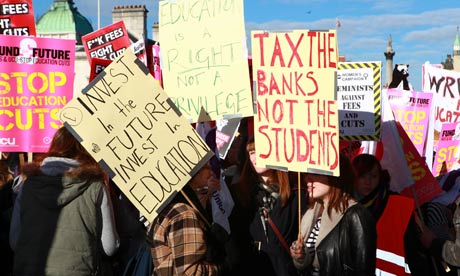
I vividly remember my own circumstances in July 2012, when we started the blog, because it was a moment of personal chaos but also optimism. I was finishing up a postdoc and had recently been offered a three-year lectureship at Birkbeck, while at the same time trying to juggle the demands of a new baby. I have no idea why I thought it would be a good time to launch a new project, but I’m glad I did. Meanwhile, things were less chaotic but also less optimistic at the national level. The UK was in the midst of the Cameron-Clegg coalition government, and it was pretty clear that universities were generally going in the wrong direction, most obviously with annual tuition fees rising from £3,000 to £9,000 that very year.

What is intriguing, however, is that there is almost no evidence of this on the Many-Headed Monster. Posts from our first few years touched on lots of different historical topics, but very little on the job itself. That said, Laura’s reflections on conferences as ‘communitas’ and my complaints about boring exam questions are probably a fair reflection of the sort of day-to-day concerns of new lecturers, then and now, even if we somehow avoided mentioning the fact that we were then all currently or recently precariously employed. The closest we came to dealing with our jobs directly was ‘The Future of History from Below’ symposium in 2013, which included reflections on who we were writing for and why, an issue that we would now probably call ‘public history’, but which was barely discussed in academic circles just ten years ago. A couple years later, Laura set out her thinking on ‘What is history for?’ which again highlighted how we were increasingly questioning the purpose of our discipline in the wider world.

Continue reading

Hangovers, Marxists, and Plebs: Tales from the Blarchive

Mark Hailwood

We typically think of digital media outputs as relatively impermanent and ephemeral: they enjoy a brief window of exposure before sinking to the bottom of timelines, coming to rest in obscure corners of the web or vanishing behind broken hyperlinks. They are timely, not timeless.

The blog post might fit this mould in some ways, and when we started the many-headed monster ten years ago we were very much writing posts for the present rather than posterity. But without particularly planning to (planning has never really been our MO) it turns out we’ve created quite the archive over the years. A blog archive. A blarchive, if you will.

Whilst some of our posts were rapid responses to specific current events – remember ‘plebgate’? – or conferences we had attended – History after Hobsbawm – a great many of them have aged fairly well. When we joined in debates about periodisation, or the importance of history from below, we were engaging with issues that continue to be relevant. Not least of all in the classroom: its clear that some of our posts and series have become widely used as teaching resources.

So we’ve come to think about the many-headed monster not just as a platform for posting new content, but as a repository of pieces that often come in useful years after they were first written. We’d like our readers to see it – and use it – that way too.

Our plan this this summer then, as we mark our tenniversary (I know, enough with the portmanteaus already…) is that each monster head will take a little trawl through our archives to highlight some of the older stuff that lurks there that might still have value for our readers. We hope it might even encourage you to seek out your own gems from our blarchive too!

***

I started my own search by calling up my first ever post back in July of 2012. Unsurprisingly it was on a drink history topic – the 17th century hangover. I think it was mostly just an excuse to throw together some references to hangovers that I had come across in my research, but it did raise a bigger question that I came back to regularly in later posts: can historians recover the physical and sensory experiences of the past?

Continue reading

The Evil May Day riot of 1517 and the European Union elections of 2014: Writing about the history of anti-immigrant politics

[This piece is cross-posted at On History. It emerges from a new article on The Evil May Day riot of 1517 and the popular politics of anti-immigrant hostility in early modern London, published in the latest issue of Historical Research.]

Brodie Waddell

In the Spring of 2014, it felt like a wave of anti-immigrant hostility was sweeping through England. In the European Union elections of May that year, the UK Independence Party won more seats than Labour and the Conservatives combined. The British press was running ever-more stories on migrants, many of them focused on the supposed dangers of ‘mass immigration’. As it turned out, this was merely a foretaste of the torrent of xenophobia that came with the Brexit Referendum in 2016, but we didn’t know that then.

Meanwhile, I was a junior lecturer scrabbling around for a good idea for a conference paper, as Koji Yamamoto had invited me to speak at an event he had organised on ‘Stereotypes in Early Modern Britain’ in June. Moreover, I was also an immigrant. As a white, anglophone Canadian, I was hardly the main target of Nigel Farage or the Daily Mail, but nonetheless I was probably more aware of my ‘foreignness’ that Spring than I had been since my arrival in the UK almost a decade earlier. Although as a historian I had long been interested in how notions of ‘Englishness’ influenced economic life in the early modern period, I think it was only because of my own status as an immigrant at that particular moment that I decided to focus on perhaps London’s most famous explosion of anti-immigrant hostility: Evil May Day.

Continue reading

On A Fool’s Errand: Writing A Biography of Will Somer

In this guest post Dr Peter K. Andersson reflects on the challenges of trying to write a biography of Henry VIII’s court fool, Will Somer. Dr Andersson is based at Örebro University in Sweden and works on the history of fools and clowns from the early modern to the modern age. His previous research has looked at Victorian streetlife and popular culture from below.

It’s strange to think that among the people who were closest to King Henry VIII was a man who, by all accounts, was a humble commoner and possibly intellectually disabled. In the early modern period, there was virtually only one way in which a person of low birth from a poor background could become close to a monarch and spend as much time with him or her as their family members. Naturally, it was possible for a commoner to enter the royal household as a servant, but I think it’s safe to say that there was only one occupation that transgressed the social hierarchy in such an extreme way. I am, of course, referring to the position of court fool.

There were many hundreds of court fools and jesters from the Middle Ages until well into the eighteenth century, and most of them enjoyed a status not far from that of a stable boy or scullery maid, or, at the other end of the spectrum, a hired entertainer living at best close to the court, but only seeing the king when called for to entertain. One of the most famous fools in all of history, however, appears to have lived as close to the monarch as possible, and he did so for an unusually long time.

Henry VIII and Will Somer, from Museum of Fine Arts, Houston, BF.1985.6

To posterity, his name is often known as Will Summers, or Sommers, but this spelling only really emerges after his death. To his contemporaries, he was Will, or William Somer – sometimes with an -s added. During the sixteenth century, he grew to become one of the most legendary comics of the age, and after his death turned into a recurring folk hero, cropping up in ballads, jestbooks and pamphlets – not to mention plays, most famously by Thomas Nashe and Samuel Rowley. When Shakespeare omitted him from his play about Henry VIII, he had to include a prologue that explained to the audience that they would not be seeing the beloved fool, so as not to force anyone to sit through it waiting for him to come on.

Continue reading