
Jonathan Willis
This week (18-24 May 2020) is ‘Mental Health Awareness Week’ in the UK – May is also US ‘Mental Health Month’, and ‘World Mental Health Day’, in case you were wondering, is a separately-coordinated enterprise, and will be on Saturday 10 October. The fact that we have events such as these in the twenty-first century tells you two things. Explicitly it is evidence that, in general, our society pushes itself to recognise the importance of mental health, the prevalence of mental illness, and that signposting the various specialist treatments and  resources that are available for people struggling with any number of specific conditions is an urgent priority. The implicit message, though, is that mental health and mental illness have long been neglected in our broader political, social and medical public discourse. While there are valuable and life-saving public health campaigns around specific physical conditions such as various forms of cancer, strokes, heart disease, etc., there is palpably no need for a special day or week or month to remind people that physical illness is, in fact, a ‘thing’.
My motivation for writing this post comes from two sources – firstly, from the project I am working on on the relationship between mental health and the English reformation, and secondly from my own experience of suffering from and receiving treatment for anxiety over the past few years. By accident rather than design(!), it just so happened during the autumn of 2019 that I read a lot of brilliant work about early modern mental health, mental illness, and the history of the early modern emotions, at the same time as I was working on my own mental health during a course of therapy. In this context I could not help but reflect upon the  concordances and divergences between how we and our early modern forebears understood the workings of the human mind. In this post I want to offer some broad reflections on the similarities and differences between early modern and twenty-first century conceptions of mental illness, based largely on secondary literature. In subsequent posts (for I see this post by way of introduction) I plan to delve more deeply into the specific relationship between religious beliefs and mental illness, using evidence drawn from early modern letters.
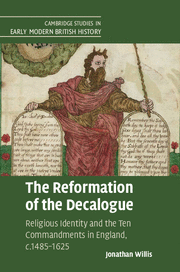 After a brief mid-term hiatus, in this last post marking the publication last month of my latest monograph,
  At first glance, the Ninth Commandment, ‘Thou shalt not bear false witness against thy neighbour’, was rather niche compared to the first four precepts of the second table: honouring parents, and not killing, committing adultery with, or stealing from other people. However, as historians such as Alexandra Shepherd and Craig Muldrew have shown, credit and reputation were vital and powerful forces in early modern English society.
 Nowhere was this aspect of ‘making it up as they went along’ more visible than in discussions of the Eighth Commandment – for while certain sins were pretty much universals of human nature (sins of violence and lust, for example) the realities of economic life in sixteenth century England were very different from those of the ancient Middle East.
  The Seventh Commandment, ‘Thou Shalt Not Commit Adultery’, was one of the most commented upon in the whole Decalogue. ‘Adultery’ was quickly expanded by Protestant authors to include all forms of ‘uncleanness’, in thought, word and deed, alone and with other humans and creatures, both in and outside of wedlock. Fornication, buggery, masturbation and bestiality were some of the headline crimes, but authors also sought to proscribe all ‘occasions’ and ‘enticements’ to sins of the flesh, including mixed dancing, excess consumption of food and alcohol, as well as lewd pictures, cosmetics, alluring gestures and coquettish glances. In contrast to such filthy living, the commandment enjoined chastity, both in and out of marriage: ‘immoderate use of the marital bed’ was as much a sin as pre- and extra-marital sex.
 The four short monosyllables of the Sixth Commandment – thou shalt not kill – were therefore stretched and twisted by expositors of the Decalogue into some quite astonishingly intricate patterns, which reflected the religious and moral climate of the day. The godly vicar of Ryton, Francis Bunny, explained that the commandment forbade killing with hand, heart and tongue, ‘and all the things that tend to the hurt of any mans person’, including bereaving him, spoiling his goods and possessions, or omitting ‘such duties, as tend to the safety or good of other men’.
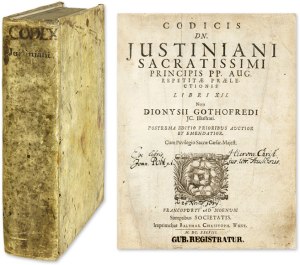 The Fifth Commandment was the first precept in the Second Table of the Reformed Decalogue, heading the list of precepts which ordered man’s relationship with his fellow man. The Edwardian reformer and Bishop of Gloucester John Hooper, in his Declaration of the Ten Commandments of Almighty God, explained that in the Second Table ‘is prescribed how, and by what means, one man may live with another in peace and unity in this civil life, during the time of this mortal body upon the earth’. None of the great lawmakers of the classical world – Lycurgus, Plato, Cicero, Constantine, Justinian – individually or together had ‘prescribed so perfect and absolute a form of a politic wealth, as Almighty God hath done unto his people in this second table and six rules’.
 the many-headed monster