
Our latest post in our Postgraduate and Early Career Takeover is from Ellen Paterson. Ellen is a DPhil candidate and Clarendon scholar at Lincoln College, University of Oxford, researching anti-monopoly petitioning activity in late Elizabethan and Jacobean England. Find her on twitter at @elpatersonPhD.
In July 1605, the London Company of Dyers not only upset the Privy Council through their writing and attempted presentation of a ‘slanderous & scandalous’ petition, but also the King himself who was ‘much offended’ by their appearance before him at court.[1] Whilst petitioning was an accepted and common practice in the early modern period, the petitioning of the Dyers’ Company in this instance generated a degree of concern amongst the Council, who promptly ordered Thomas Sackville, the Earl of Dorset, to investigate their petitioning activity.
The Dyers had petitioned the King and Council to express their discontent with a new patent of monopoly granted for the product of logwood. This was a type of dyeing wood which had been introduced into England in the sixteenth century, which produced black, grey, and red dyes. The use of it was prohibited as it was thought to produce defective colours, but licences were sometimes issued allowing limited imports of the commodity, as part of the Crown’s larger reliance on patents and grants as a much-needed source of revenue. In August 1604, a group of courtiers led by Sir Arthur Aston had been given such a grant, allowing them to import logwood and to make a new dyeing mixture from it. This was a cause of vexation to the Dyers’ Company; not only did they complain in their petition that this dyeing mixture was sold at an ‘intollerable’ price, but they also alleged that it was unfit for use and consequently ‘unprofitable to the comon Welthe.’[2]
In many ways this case was not unique. Groups of artisans and traders often came together to protest against grants and monopolies which were seen as infringing on their trades and livelihoods. However, the response of the Council and the investigation that the Dyers’ petition provoked is certainly interesting. Why was this particular petitioning episode worthy of investigation?
Continue reading resources that are available for people struggling with any number of specific conditions is an urgent priority. The implicit message, though, is that mental health and mental illness have long been neglected in our broader political, social and medical public discourse. While there are valuable and life-saving public health campaigns around specific physical conditions such as various forms of cancer, strokes, heart disease, etc., there is palpably no need for a special day or week or month to remind people that physical illness is, in fact, a ‘thing’.
 concordances and divergences between how we and our early modern forebears understood the workings of the human mind. In this post I want to offer some broad reflections on the similarities and differences between early modern and twenty-first century conceptions of mental illness, based largely on secondary literature. In subsequent posts (for I see this post by way of introduction) I plan to delve more deeply into the specific relationship between religious beliefs and mental illness, using evidence drawn from early modern letters.
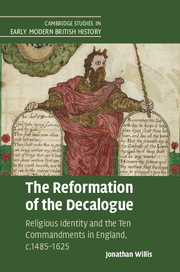 After a brief mid-term hiatus, in this last post marking the publication last month of my latest monograph,
  At first glance, the Ninth Commandment, ‘Thou shalt not bear false witness against thy neighbour’, was rather niche compared to the first four precepts of the second table: honouring parents, and not killing, committing adultery with, or stealing from other people. However, as historians such as Alexandra Shepherd and Craig Muldrew have shown, credit and reputation were vital and powerful forces in early modern English society.
 Nowhere was this aspect of ‘making it up as they went along’ more visible than in discussions of the Eighth Commandment – for while certain sins were pretty much universals of human nature (sins of violence and lust, for example) the realities of economic life in sixteenth century England were very different from those of the ancient Middle East.
  The Seventh Commandment, ‘Thou Shalt Not Commit Adultery’, was one of the most commented upon in the whole Decalogue. ‘Adultery’ was quickly expanded by Protestant authors to include all forms of ‘uncleanness’, in thought, word and deed, alone and with other humans and creatures, both in and outside of wedlock. Fornication, buggery, masturbation and bestiality were some of the headline crimes, but authors also sought to proscribe all ‘occasions’ and ‘enticements’ to sins of the flesh, including mixed dancing, excess consumption of food and alcohol, as well as lewd pictures, cosmetics, alluring gestures and coquettish glances. In contrast to such filthy living, the commandment enjoined chastity, both in and out of marriage: ‘immoderate use of the marital bed’ was as much a sin as pre- and extra-marital sex.
 The four short monosyllables of the Sixth Commandment – thou shalt not kill – were therefore stretched and twisted by expositors of the Decalogue into some quite astonishingly intricate patterns, which reflected the religious and moral climate of the day. The godly vicar of Ryton, Francis Bunny, explained that the commandment forbade killing with hand, heart and tongue, ‘and all the things that tend to the hurt of any mans person’, including bereaving him, spoiling his goods and possessions, or omitting ‘such duties, as tend to the safety or good of other men’.
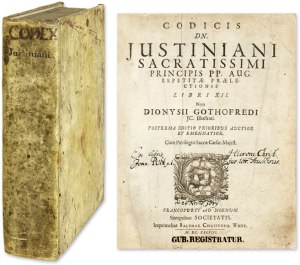 The Fifth Commandment was the first precept in the Second Table of the Reformed Decalogue, heading the list of precepts which ordered man’s relationship with his fellow man. The Edwardian reformer and Bishop of Gloucester John Hooper, in his Declaration of the Ten Commandments of Almighty God, explained that in the Second Table ‘is prescribed how, and by what means, one man may live with another in peace and unity in this civil life, during the time of this mortal body upon the earth’. None of the great lawmakers of the classical world – Lycurgus, Plato, Cicero, Constantine, Justinian – individually or together had ‘prescribed so perfect and absolute a form of a politic wealth, as Almighty God hath done unto his people in this second table and six rules’.
