
Mark Hailwood
Back in October I was writing a lecture on E.P. Thompson when I learnt, to my surprise, that he had written a sci-fi novel towards the end of his career. Published in 1988, The Sykaos Papers seems to have made very little impact, despite being generally well reviewed at the time as far as I can tell. The New York Times said it possessed ‘undeniable power’; the Observer opined it ‘will surely become a classic’. Well, it didn’t. When I asked around on Twitter there were only a few responses from people who had heard of it, let alone read it. ‘Should I bother with it, dear twitter?’ ‘It depends how into Thompson deep-cuts you are’… enough, I decided, to order a copy.
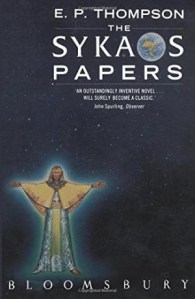 Now I’ve read it. I had low expectations – presumably it had fallen off the radar because it was junk, right? – but I must say I think it is a belter. It is a bit mad, I’ll grant you, but endlessly inventive and stimulating, and at times downright hilarious and at others deeply affecting – neither of which I was expecting. And, I’d say it is much more fluent than his academic writing, which I have heard described recently by a historian who shall remain anonymous as ‘wittering’. I’m not sure I’d go that far, but I take the point, and I was expecting a slog – it wasn’t one. Anyway, I’m no great book reviewer – of fiction at any rate – and you can make your own mind up on this stuff, but I would recommend it to readers of this blog. With Christmas coming up and all that…
Not sure? I’ll try to give you a bit more to go on. The book’s central character is Oi Paz. He has been sent to Earth (which his people call ‘Sykaos’), sometime in the 1990s, from the planet Oitar, which has endured ecological catastrophe, to assess whether this planet might make a suitable location for a new Oitarian colony. What ensues is an anthropological face-off between Oi Paz and the humans (and in particular Dr Helena Sage, an anthropologist, who is the other major character in the book) as each side tries to unpack and decipher the other’s society and culture, often with hilarious consequences (not that Oi Paz laughs: his culture has no laughter, so he calls it ‘the Incongruous Noise’).
In a sense, you could call it a work of anthropological fiction, as much as science fiction, and there are interesting attempts to construct the alien subjectivity of Oi Paz (it’s also interesting, given that gender is often seen as his blind-spot, to witness Thompson’s attempt to construct the subjectivity of a female academic, Dr Sage). But historians should not feel left out, for the book’s main nod to Thompson’s own craft is the fact that the novel is structured as though the story of Oi Paz’s expedition has been reconstructed later, by the Oitarians, from a series of surviving PRIMARY SOURCES! There are the notebooks and diaries of Oi Paz and Helena Sage, interspersed with news reports, official communications, memos, etc, which the account – partial and multi-vocal, of course, like all histories – has been pieced together from.
I did wonder if part of the reason for the book’s low impact is that many of its key themes seemed less urgent as the Cold War ended and the 1990s progressed, dating it quickly. But the threat of nuclear war, a reckless U.S. President, a dangerous Russia, a tension between nationalism and the need for humankind to unite to confront its most pressing threats, ecological catastrophe – sadly, none of these feel like outdated themes today.
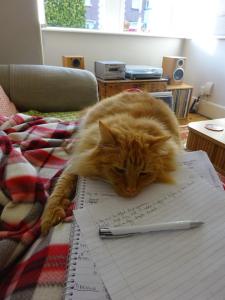
E.P. Thompson: an #AcademicWithCats?
But Thompson’s prescience doesn’t end there, for the book also prefigures the social media age’s valorisation of the cat as a vital antidote to doom and gloom. The Oitarians worship them: they have good vibes. I strongly suspect, in fact, that E.P. Thompson himself would have been an avid consumer of, and contributor to, #AcadecmicsWithCats. A sci-fi novel, by E.P. Thompson, with cats! Surely that’s mad enough to warrant a look…
And if you do read it, or have done, please come back and share your thoughts in the comments section below – I’d love to know what other people think of it, positive or negative.
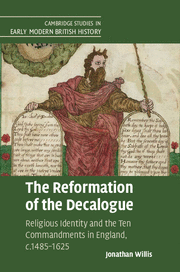 After a brief mid-term hiatus, in this last post marking the publication last month of my latest monograph,
 At first glance, the Ninth Commandment, ‘Thou shalt not bear false witness against thy neighbour’, was rather niche compared to the first four precepts of the second table: honouring parents, and not killing, committing adultery with, or stealing from other people. However, as historians such as Alexandra Shepherd and Craig Muldrew have shown, credit and reputation were vital and powerful forces in early modern English society.
 Nowhere was this aspect of ‘making it up as they went along’ more visible than in discussions of the Eighth Commandment – for while certain sins were pretty much universals of human nature (sins of violence and lust, for example) the realities of economic life in sixteenth century England were very different from those of the ancient Middle East.
  The Seventh Commandment, ‘Thou Shalt Not Commit Adultery’, was one of the most commented upon in the whole Decalogue. ‘Adultery’ was quickly expanded by Protestant authors to include all forms of ‘uncleanness’, in thought, word and deed, alone and with other humans and creatures, both in and outside of wedlock. Fornication, buggery, masturbation and bestiality were some of the headline crimes, but authors also sought to proscribe all ‘occasions’ and ‘enticements’ to sins of the flesh, including mixed dancing, excess consumption of food and alcohol, as well as lewd pictures, cosmetics, alluring gestures and coquettish glances. In contrast to such filthy living, the commandment enjoined chastity, both in and out of marriage: ‘immoderate use of the marital bed’ was as much a sin as pre- and extra-marital sex.
 The four short monosyllables of the Sixth Commandment – thou shalt not kill – were therefore stretched and twisted by expositors of the Decalogue into some quite astonishingly intricate patterns, which reflected the religious and moral climate of the day. The godly vicar of Ryton, Francis Bunny, explained that the commandment forbade killing with hand, heart and tongue, ‘and all the things that tend to the hurt of any mans person’, including bereaving him, spoiling his goods and possessions, or omitting ‘such duties, as tend to the safety or good of other men’.
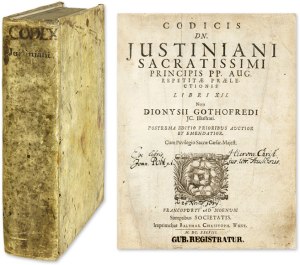 The Fifth Commandment was the first precept in the Second Table of the Reformed Decalogue, heading the list of precepts which ordered man’s relationship with his fellow man. The Edwardian reformer and Bishop of Gloucester John Hooper, in his Declaration of the Ten Commandments of Almighty God, explained that in the Second Table ‘is prescribed how, and by what means, one man may live with another in peace and unity in this civil life, during the time of this mortal body upon the earth’. None of the great lawmakers of the classical world – Lycurgus, Plato, Cicero, Constantine, Justinian – individually or together had ‘prescribed so perfect and absolute a form of a politic wealth, as Almighty God hath done unto his people in this second table and six rules’.
 the many-headed monster