
This concluding post to our After Iconophobia Online Symposium comes from Jonathan Willis, monster-head and Senior Lecturer in Early Modern History in the Department of History at the University of Birmingham. Jonathan is a reformation historian who has worked on the musical and material cultures of the English parish church, in his Church Music and Protestantism in Post-Reformation England and in his forthcoming book The Reformation of the Decalogue. Here he reflects on Collinson’s article, its influence, its relevance, and some of the challenges it still presents.
Collinson’s original lecture, which posited a shift in Protestant attitudes to religious imagery, music and drama around the year c.1580 from creative engagement (his idiosyncratic definition of ‘iconoclasm’) to ideological disengagement (‘iconophobia’) presents three challenges to historians. Well, it probably presents more than three, but there are three in particular that I want to focus on here…
 The first challenge, and the one which has been taken up and answered with the most gusto, in the contributions to this symposium as well as in the scholarship more broadly, has been to disprove the notion of a shift to ‘iconophobia’ through the identification and presentation of concrete counter-examples. Religious imagery, religious music and religious drama did not cease to exist c.1580. It is worth pointing out at this juncture that Collinson’s article (perhaps unsurprisingly) stands up much better today upon re-reading than I had anticipated. Much of what people have challenged him on, he doesn’t actually claim. He doesn’t speak about religious music in general, for example; just godly ballads. He doesn’t speak about pictorial art in general, and explicitly rules out domestic decoration from consideration. His claims and evidence are much more limited than they are often taken to be, and therefore in a narrow sense they remain more or less correct. Continue reading
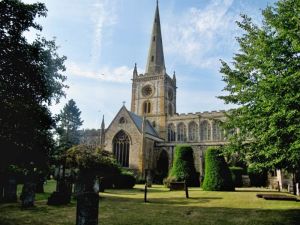 As Eamon Duffy and others have shown, the iconoclasts of the mid-16th century destroyed much of the splendour and symbolism of the late medieval church, and as Patrick Collinson suggested, some of the leaders of the second phase of the Reformation in the late 16th century wanted to narrow the range of religious imagery even further. But not only is it open to question whether these ‘iconophobes’ were sufficiently well-placed or organized to bring about the decisive further shift in English culture that Pat thought he could detect, but also it may be suggested that the impact of iconoclasm in mid-Tudor England had not been as severe as in Reformed churches abroad or in Scotland. This was partly because the English authorities deployed a narrower definition of idolatry, and partly because at all levels of clergy and laity there appears to have been a reluctance to go beyond the bare minimum of destruction authorized, especially if the offending objects were hard to reach or expensive to replace. As a result a significant proportion of fittings, decorations and monuments were left alone until the 1640s, or even the 19th century and beyond, as in the ‘Shakespeare church’, Holy Trinity, Stratford-upon-Avon, which has two 15th-century images of Christ, scores of angels, and symbols such as the three nails used to crucify Christ, and the five stigmata of the wounds he received.
 the many-headed monster