Imagining early modern working women, or, economic history’s image problem

Brodie Waddell

In 1658, the Czech scholar John Amos Comenius published what’s been called ‘the first children’s picture book’. It proved extremely popular and was republished many times, in many different languages. What brought it to my attention was the fact that it included 150 pictures of ‘the visible world’, a rare treat in an early modern publication.

It was designed to teach Latin and, in the 1705 edition, English to young people, so most of its illustrations depicted the sorts of things a child might be expected to know from life. They would find, for example, pictures of youth at study and at play, stilt-walking or bowling.
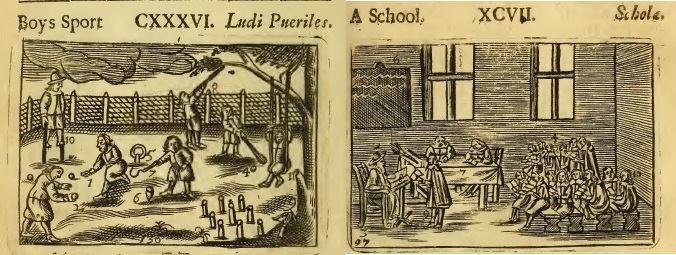
At school and at playHowever, the ones that caught my eye were the many illustrations of working life. If you, like me, teach or write about early modern economic history, you’ll know that this particular subfield has an ‘image problem’. Perhaps thanks to a strong seam of ‘iconophobic’ Calvinism, post-Reformation England was not exactly awash in imagery of any kind and I have often found it particularly difficult to find images of economic life. One can find many pictures of kings and noblemen. But there are frustratingly few depictions of ordinary people doing their jobs, whether as artisans, traders or labourers. This gap is partly filled by the broadside ballad woodcuts on EBBA that Mark Hailwood has discussed here before. However, it remains difficult to find the sort of rich visual material that one can find, for instance, in Dutch ‘Golden Age’ paintings or in nineteenth-century periodicals. Continue reading
Alehouse Characters #4: The Good Fellowette

Mark Hailwood

This is the fourth in a series of posts written to mark the publication of my book, Alehouses and Good Fellowship in Early Modern England, which is now available in paperback. Monster readers can take advantage of a special offer to get 25% off (getting the book for just £13.49) by using the promotion code ‘BB125’ when ordering here. Each post in this series focuses on a character that features in the book, and uses them to highlight some of my key themes and arguments.

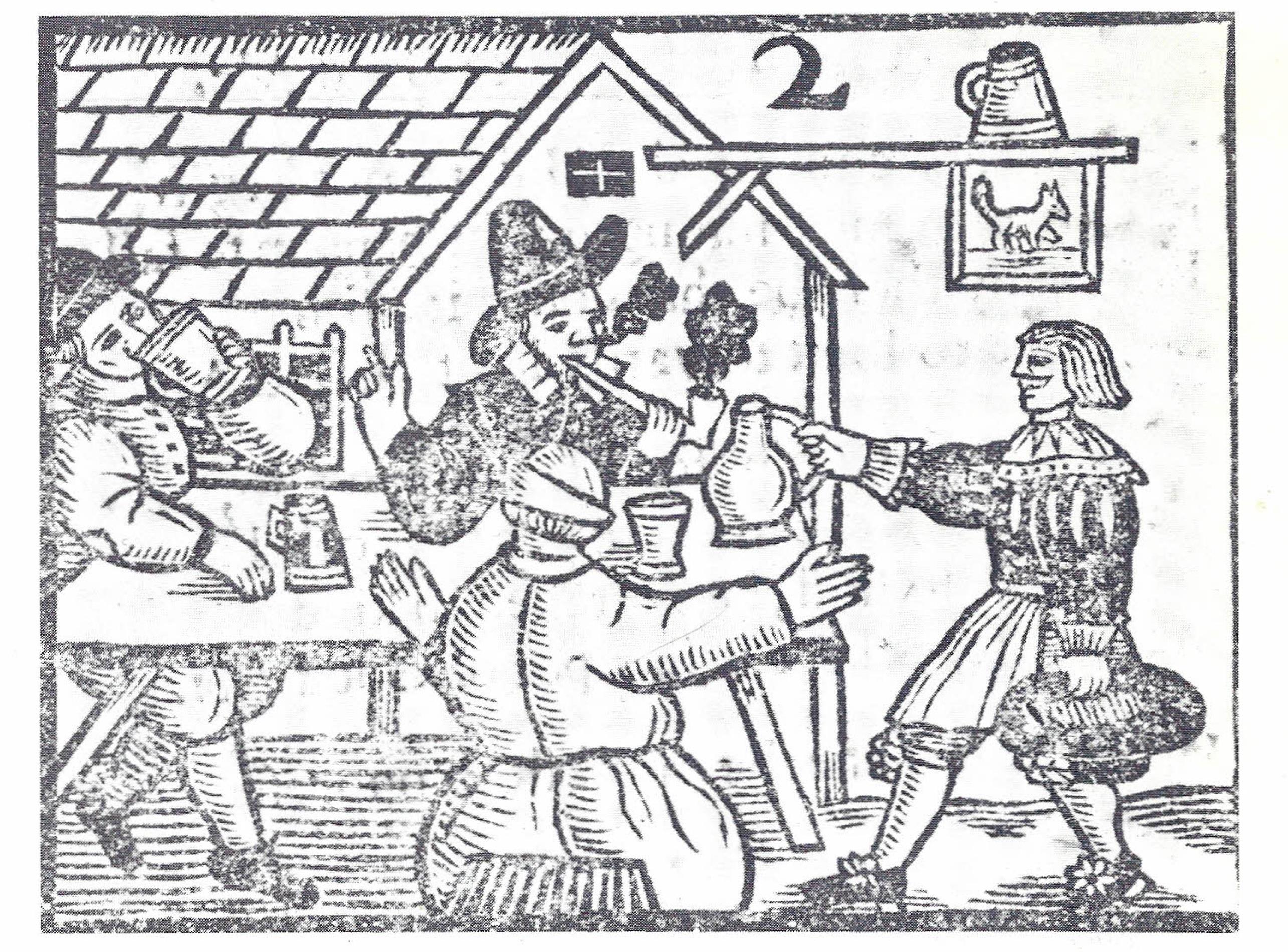
The seventeenth-century English alehouse was undoubtedly a male-dominated space. It was certainly not, however, an exclusively male space. For a start, it was common for alehouses to be run by widows, or by the wives of men whose name was actually the one on the license, and many young women would have worked as serving maids in these institutions. But women also represented a significant component of alehouse customers. Indeed, one historian has estimated that as many as 30% of the customers in Essex alehouses in the sixteenth and seventeenth centuries were women.[1]

Case

Women were a sizeable minority of the alehouse crowd

Women often drank in alehouses with their husbands, and young women frequented them as part of mixed-gender groups of friends. Of course, the alehouse was an important centre of courtship for the young in the villages and small towns of seventeenth-century England, in an age when a trip to the cinema or the bowling alley—or whatever it is young folk do for courtship these days—were not available options. (Although some alehouses did have bowling alleys attached to them even then, so the link between bowling and courtship may be older than we think). Continue reading

Alehouse Characters #3: The Wastrel Husband

Mark Hailwood

This is the third in a series of posts written to mark the publication of my book, Alehouses and Good Fellowship in Early Modern England, which is now available in paperback. Monster readers can take advantage of a special offer to get 25% off (getting the book for just £13.49) by using the promotion code ‘BB125’ when ordering here. Each post in this series focuses on a character that features in the book, and uses them to highlight some of my key themes and arguments.

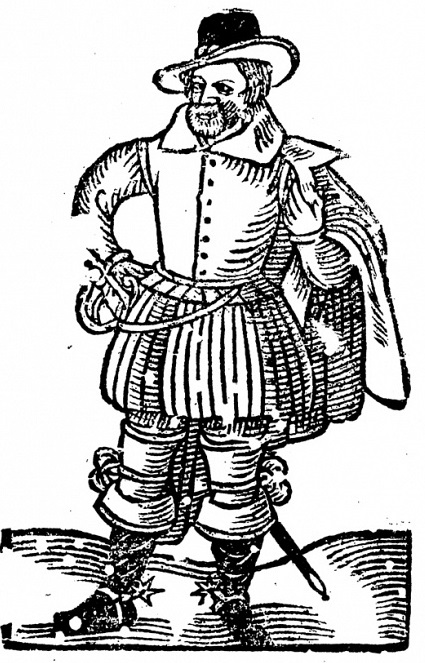
As we saw in the previous post, the rising popularity of alehouses and good fellowship in seventeenth-century England met with considerable opposition from Church and State. But concerns over developments in England’s drinking culture did not just emanate from hostile ruling elites—from the ‘top down’—they were also voiced within popular culture. This can be seen most clearly in contemporary anxieties that ‘good fellowship’ spawned ‘wastrel husbands’. One such example is the central character of this post: John Jarret.

John Jarret

John Jarret

Jarret, like Roaring Dick of Dover, is the central character of a broadside ballad, and whilst both men are keen partakers of alehouse good fellowship, John Jarret’s drinking is portrayed in rather more problematic terms than Roaring Dick’s. Rather than being a celebration of good fellowship, the ballad featuring Jarret—narrated by his long suffering wife—is a warning about its dire consequences.[1] Continue reading

Norwich Entertainments – Part VI: Rope dancing and nine-pins

Brodie Waddell

On 1 December 1677, the Norwich Mayor’s Court granted permission for a new performer to ply her trade in the city:

Mrs Saboul Rymers hath Lycence to make shew of Dauncing upon the Rope at the Redd Lion in St Stephens for a weeke from this day.1

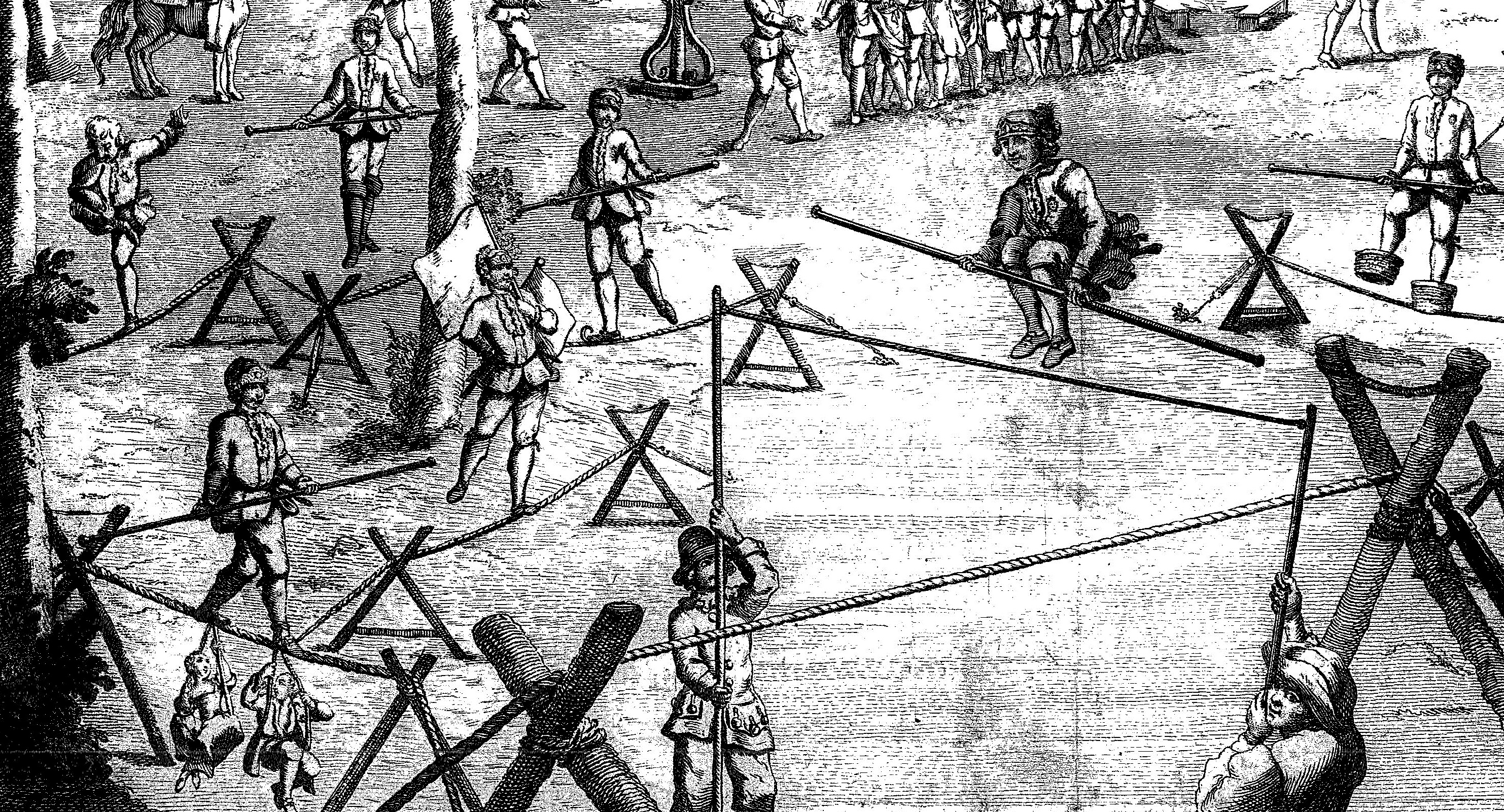
Rope dancing, now usually known as ‘tight-rope walking’, had already been a popular entertainment for thousands of years by the time Mrs Rymers arrived in Norwich. It was a common amusement in the seventeenth century, apparently beloved by rich and poor alike. The Duchess of Cleveland, King Charles II’s famous mistress, ‘greatly admired’ one these acrobats, and Samuel Pepys reported that he ‘saw the best dancing on the ropes that I think I ever saw in my life’ at Bartholomew’s Fair in 1664.

Rope dancers Continue reading

Julie-Marie Strange, ‘Historicising the comfort of “things” in late-Victorian and Edwardian working-class culture’

[This is the seventeenth piece in ‘The Future of History from Below’ online symposium (#historyfrombelow). Julie-Marie Strange is Senior Lecturer in Victorian Studies at the University of Manchester. Her research and publications focus on inter-personal dynamics in working-class and poor families in late Victorian and Edwardian Britain. Here she contributes to our conversation about the relationship between material culture and ‘history from below’ by asking how the study of  ‘things’  can bring new or alternative perspectives on overlooked aspects of working-class lives.]

In The Comfort of Things (2008), the anthropologist Daniel Miller presented a series of ‘portraits’, stories of individuals and the things in their home that mattered to them, to challenge a narrative of consumption as corruption. Miller’s vignettes illuminate how objects embody people’s aspirations for sure, but, he also explores how the stories people tell about their things are intrinsic to their struggle to make their lives meaningful. For Miller, we appropriate objects to give meaning to social processes and relationships.[1] This post – a brief presentation of two case studies from late-Victorian and Edwardian working-class culture – makes a foray into how working people’s ‘stuff’ can be interrogated to explore the inter-personal dynamics of family life.

There is, of course, a rapidly growing literature on material culture and the ways in which historians might make use of it to understand the past, particularly ‘hidden’ aspects of history. What I’m going to focus on here is how things in working-class homes suggest insights into family relationships, particularly between children and their fathers. I’m focusing on fathers because they have typically been perceived by historians and contemporaries as on the periphery of family life in accounts that have privileged children’s relationships with mothers. Continue reading

Selina Todd, ‘History from below: modern British scholarship’

[This is the fifteenth piece in ‘The Future of History from Below’ online symposium (#historyfrombelow). Selina Todd is a Lecturer in Modern British History and Fellow of St Hilda’s College, University of Oxford. Her research and publications focus on working-class and women’s history in modern Britain. Here she brings our conversation about ‘history from below’ through to the twentieth century, providing a survey of the recent historiography on modern Britain, and identifying some of the major challenges and future directions for ‘history from below’ in that field.]

Fifty years on from E.P. Thompson’s call to rescue working people from ‘the enormous condescension of posterity’, and myriad ‘turns’ later, history from below is flourishing in modern British scholarship. An emphasis on ‘ordinary people’ has replaced an earlier stress on the working class, and studies of collective protest are less numerous than those on everyday life. [1] But there is no sign that scholars consider Thompson’s original project ‘cliched’ or ‘tired’.

This post reflects on how history ‘from below’ has developed, the state it is in, and suggests some possible future directions. As the first section will show, we have reasons to be hopeful. But in the second section I argue that we need to historicise the material circumstances in which our scholarship is produced in order to fight for our future. In the final section I propose that we could use more studies of class, which might help us to restate the centrality of history ‘from below’ to understandings of modern Britain. Continue reading

Andy Wood, ‘History from below and early modern social history’

[This is the thirteenth piece in ‘The Future of History from Below’ online symposium (#historyfrombelow). Andy Wood is Professor of Social History at Durham University. His research and publications focus on popular protest, customary rights and social memory in early modern England. Here he takes us through the relationship between ‘history from below’ and early modern social history, and outlines a number of key principles and approaches that might inform that relationship going forward.]

History-from-below poses a question. Like Bertoldt Brecht’s Questions from a worker who reads and Virginia Woolf’s A room of one’s own, history-from-below asks us to describe the lives, ideas and experiences of those who lay ‘below’ dominant historical narratives. Like Subaltern Studies (developing at the same time, from the early 1970s) history-from-below focused on a disparate range of groups, spanning time and distance: workers, peasants, slaves, women, the marginalized, oppressed ethnic, religious and sexual minorities.

The history-from-below tradition grew out of the English Marxism of the CPHG (Communist Party Historians’ Group). It was the badly-behaved adolescent offspring of the CPHG, loosely grouped around History Workshop Journal and its attendant movement rather than around the journal Past and Present, which by the 1970s had lost its explicit political focus. Like the CPHG, history-from-below valorized resistance and largely ignored questions of subordination, social integration and hegemony. But unlike the CPHG generation, it was explicitly open to histories of women, gender, race and sexuality. It represented the historiographical expression of a broader shift at work within the British Left in the 1970s and 1980s, the urge – in the face of deindustrialization and the late-recognized halt in the forward march of labour – to create new alliances beyond the traditional labour movement. That political project achieved its clearest expression in Livingstone’s GLC (Greater London Council), in a resurgent CND (Campaign for Nuclear Disarmament) with its connection (via Greenham) to second-wave feminism and in the diverse range of groups attracted to the Miners’ Support Groups during the 1984-5 strike. Although this ‘rainbow alliance’ (the term originated with Jesse Jackson and was anglicised by the International Marxist Group as an ‘alliance of the oppressed’) was to be defeated, its historiographical expression in the fuzzy History Workshop tradition had its successes – as this symposium shows, nowadays it is hard to write social and cultural history without reference to some of the concerns of History Workshop, most of all the legacy of feminism and the lesbian and gay liberation movement. Histories of class, marginalized by the cultural turn of the last 20 years, are starting to reassert themselves too. I’ll come back to this resurgence towards the end.

Continue reading

John Arnold, ‘History from below – some medievalist perspectives’

[This is the twelfth piece in ‘The Future of History from Below’ online symposium (#historyfrombelow). John Arnold is Professor of Medieval History at Birkbeck. His research and publications focus in particular on medieval ‘belief’. Here he takes us through some of the ways ‘history from below’ approaches have played an important role in medieval scholarship on both England and France.]

“And so our interpretation of history will be both materialist with Marx and mystical with Michelet. It was economic life that was the basis and the mechanism of human history, but across the succession of social forms man, a thinking force, aspired to the full life of thought, the ardent community of the unquiet intelligence, avid for unity and the mysterious universe.”

[Jean Jaurès, Histoire Socialiste de la Révolution Française, Paris, 1911. Introduction. See http://www.marxists.org/archive/jaures/1901/history/introduction.htm]

‘History from below’ has tended predominantly to be an early modernists’ term; [1] and it is a very baggy term. Is it simply the same as ‘social history’; is it related to Alltagsgeschichte; does it make a particular claim about collective historical agency from ‘below’; or is it more concerned with the experience of ordinary people at the sharp end of historical change? The term’s capacious vagueness is perhaps the main point – and an indication of its anglophone origin, freed from the strictures of theoretical precision. But when one starts to think about its connotations for different period specialisms, issues of purpose and project become naggingly apparent. Medievalists and early modernists tend to share some sense that making ordinary (/subaltern/plebeian/lower sort/peuple menu/popolani …. etc etc, pick one’s own inevitably problematic term) people visible and audible is in itself an historiographical success worth pursuing, because the weight of the evidence – so we tend to say, though this bears further discussion in itself – submerges the majority of humanity in favour of the visible, powerful elite. That shared project immediately requires some further nuance however.

Continue reading

Brodie Waddell, ‘History from below: today and tomorrow’

[This is the tenth piece in ‘The Future of History from Below’ online symposium (#historyfrombelow). Brodie Waddell is a historian of early modern England and one of the founders of the many-headed monster.]

We’ve won.

At least on one battlefield, ‘history from below’ has been totally victorious. The men and women who pioneered this approach had to fight hard to gain academic recognition. But today, their work is part of mainstream historical research and their subjects – poor stockingers, radical shoemakers, East End gangsters, peasant women – are warmly welcomed into the pages of academic journals. Indeed, two of the most influential journals in the profession, Past & Present (1952) and History Workshop Journal (1976), were actually founded by these once marginalised historians.

Yet winning the battle is not the same as winning the war. As other contributors have shown, many crucial struggles are still on-going. For example, female scholars continue to experience a level of discrimination in academia that limits their personal options and professional advancement. Although feminists have succeeded in making universities much less unbalanced than they were a generation ago, women are still systematically underrepresented amongst academic decision-makers. In addition, other fronts that had once seen steady progress have turned into partial reversals or outright routs. Access to higher education in Britain and North America expanded dramatically through much of the twentieth century, but the recent spike in tuition fees in England and the long-term rise in the US has made university much less affordable for students from working-class families. Worse still, this has hit part-time students especially hard, leading to a 40% fall in part-time applications since 2010 in the UK. These and other setbacks, discussed in more detail by Samantha Shave, mean that today’s advocates of a truly democratic ‘history from below’ cannot simply welcome our triumphs in research and quietly get on with our own work. We must do more. Continue reading

Samantha Shave, ‘History for below’

[This is the ninth piece in ‘The Future of History from Below’ online symposium (#historyfrombelow). Samantha Shave is a research associate at the University of Cambridge, working on the project ‘Inheritance, Families and the Market in Nineteenth and Twentieth-Century Britain’. She has recently published on paupers’ lives and poor law reform in the early nineteenth century.]

Historians of welfare and poverty have seemingly now found the sources which, in the words of Tim Hitchcock, provide a more ‘democratic’ history from below (Down and Out, p. 239). The voices of the poor are being found in court records, ballads, threatening letters and petitions for poor relief, to name just a few sources, and we are putting them at the centre of our analyses. The word ‘democratic’ here has always struck me though; it makes me wonder whether, whilst we have been busying ourselves with this task, history itself has – as a discipline – become less democratic? I asked the workshop at Birkbeck to think about whether there is a ‘history for below’. Indeed, the central contradiction here is that we produce histories of those who have either been silenced or marginalised or ignored, that we strive to re-create social worlds from, ‘enforced narratives’ (Carolyn Steedman, Feminism and Autobiography, p. 25), but those people in similar positions today are being increasingly denied the opportunity to study and write history at university.

We need to consider how people decide to study history, and how recent changes to the curriculum could leave a generation uninspired to take the subject further. Those who are not put off by ‘fact and date’ history may attempt to study the subject at university. That’s if they want to get into a phenomenal amount of debt. There are small reductions to fees for those with household incomes below £25,000 per annum, and a few charity-like pockets of money issued by universities, but the overall debt for any student who started university in 2012 from a working household will be huge. With fees at an average of £8,770 a year, the average student could graduate with over £50,000 of debt over the course of their degree. The immediate consequences of the fee rise can be seen in application figures. UK applicants to university were down 8.7% in 2012, and a further 6.5% for admission this year. Worryingly, last year applications from people aged over 19 years old declined by 11.8%. Continue reading