The 200th Post!

200Welcome to the many-headed monster’s 200th blog post! We started the blog back in July of 2012, so it’s taken us about three-and-a-half years to get here. In that time we have managed to produce a post (on average) about once a week, so there has been plenty of content for our readers to get their teeth into over the past few years.

We thought we would take this milestone as an opportunity to revisit some of that content, and pluck out a few highlights from our archive (we are historians, after all). So, if you missed any of these the first time round, or indeed fancy reading them again, here are some of our other milestone posts:

The 1st Post: Norwich entertainments–Part I: A monstrous hairy child and a boneless girl
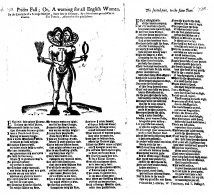
Prides Fall (1684-6)The blog kicked off with Brodie’s first installment of his ‘Norwich entertainments’ series – also launching the mini-series format that has proved a popular one on the ‘monster – in which he reflects on what 17th century Norvicians’ penchant for viewing ‘monstrous’ deformities might reveal about the culture of our early modern forebears. You can revisit the rest of this series here.


The 50th Post: Eating Animals: A Bit of History
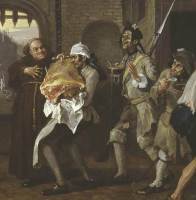
In this milestone post Mark examined the relationship early moderns had with eating meat – finding evidence that whilst meat eating was more widespread in the 17th century than we might expect, so too were notions of vegetarianism. Plenty of fodder here for those dinner table discussions! For more on the history of food and drink see Mark’s ‘Food for Thought’ series.


The 100th Post: Elizabethan ‘madmen’ Part I: Not such a Virgin Queen
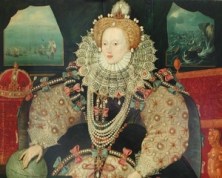
west-country-to-worlds-end-tyrwhitt-drake-collection-43Our century of posts came up with the first part of Jonathan’s Elizabethan ‘madmen’ series, which looks at a selection of unusual letters written directly to the Queen by some of her more marginal – and eccentric – subjects. In this instance the writer makes an extraordinary paternity claim. Jonathan reflects further on the signficance of these letters in his contribution to our Voices of the People symposium.

The 150th Post: Memorial and History: appendix ii, further discoveries
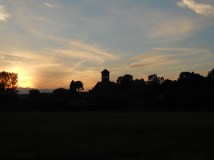
DSCN5322In this post Laura adds a postscript to her Memorial and History series. This examined a whole range of monuments and memorials – often found in rather unexpected places – which reveal how battles over how we remember the Reformation have raged down the centuries. It also includes some lovely holiday snaps. Stay tuned to the ‘monster, for next week’s post revisits the issue of how history and memory are embedded in our landscape.

Just a few highlights then from our archive, and here’s to many more to come! Thanks to all of our followers, readers, commenters, guest bloggers and re-tweeters – your interest and support for the blog are what make it tick, so keep on coming back…
Addressing Authority: Petitions and Supplications in Early Modern Europe

Brodie Waddell

How can we study the sort of people who – according to William Harrison’s oft-quoted phrase – had ‘neither voice nor authority in the commonwealth’? This is a question we have returned to repeatedly on this blog. In our ‘Voices of the People’ and ‘History from Below’ symposiums, we discussed the many ways in which historians might attempt to get at the experiences and opinions of those who did not hold the reins of power in early modern Europe.

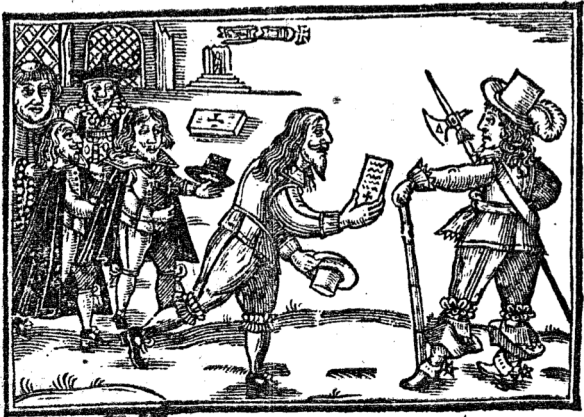
The Humble Petition of Jock of Bread (1648)

The Humble Petition of Jock of Bread (1648)

One type of source that some of contributors to the events found particularly promising was the ‘petition’ or ‘supplication’. Such documents have received attention on this blog from Mark Hailwood, Jonathan Healey, Michael Ohajuru, Laura Stewart, Jonathan Willis and myself. However, this failed to satisfy my own fascination with such documents, so I’ve joined with three colleagues from Birkbeck – Rebecca Tomlin, Laura Stewart and Sue Wiseman – to organise an event focusing specifically on these sources. Here are the details…

Addressing Authority: Petitions and Supplications in Early Modern Europe

One-day workshop

Friday, 18 March 2016

Birkbeck, University of London

Invitation for Participants

This event will have space for 10-15 participants in addition to the 12 speakers. The workshop will be informal and conversational with substantial time for discussion between the panel presentations, so there will be an opportunity for all attendees to participate.

If you would like to attend, please send a brief statement of your research interests in this topic (100-300 words) to Brodie Waddell (b.waddell@bbk.ac.uk) by Friday, 12 February 2016. Postgraduates and early career scholars are especially welcome.

Continue reading

The many-headed monster devours its 100,000th victim

The monster heads

We are delighted to report that we recently received our 100,000th view on the many-headed monster! We would like to thank everyone who reads the blog, as well as all those who share posts with others, or who take the time to comment. It is safe to say we wouldn’t be here without you.

The monster celebrates like it is 1566.

The monster celebrates like it is 1566.

We usually mark milestones with some reflection, so here goes:

The monster’s first post appeared 18 July 2012 (so we will soon be 3 years old as well). Mark Hailwood and Brodie Waddell were the founding members, soon joined by Laura Sangha and Jonathan Willis. Since then we’ve:

  • Posted 167 blogs
  • Had 48,500 visitors
  • Featured 11 mini-series
  • Received 766 comments

Our most successful post is now Brodie’s ‘A missing child and a suspicious meat pie in 1645’, relating the strange case of human flesh allegedly being sold as food. After being featured on the suspiciously named Hacker News, this post received an astonishing 4,857 views (4,246 visitors) on 2 June 2015. Continue reading

Women’s Work in Rural England, 1500-1700

Mark Hailwood

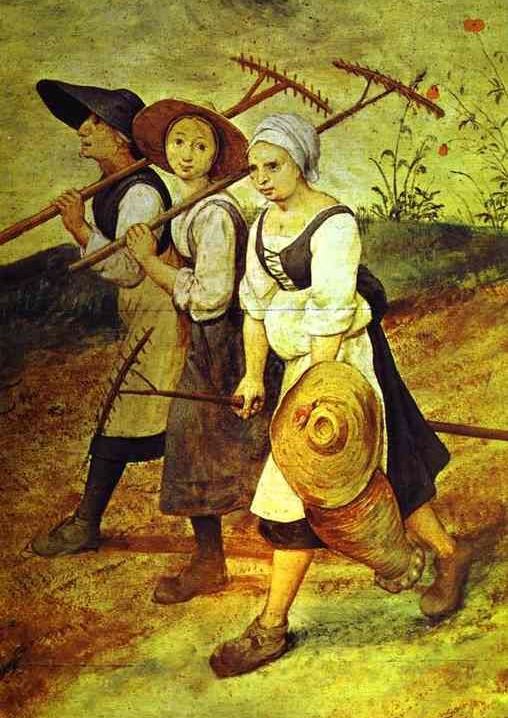
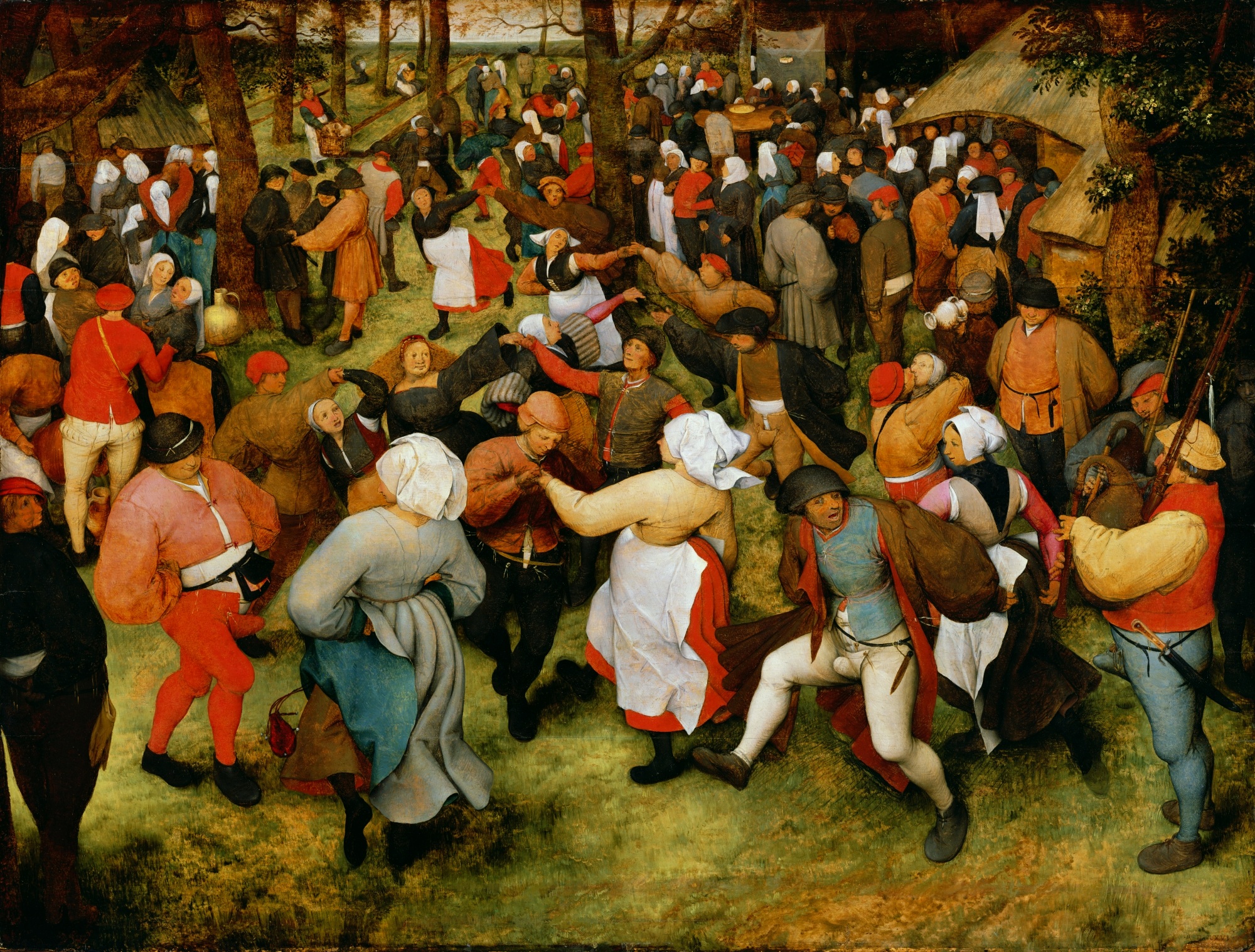
bruegel hay makersMany ‘monster readers will have already deduced that I recently started a new job. So I thought it would be a nice idea to write a very short post introducing the project that I’m now working on. It is based at the University of Exeter, funded by the Leverhulme Trust, and will run until the summer of 2018. The leader of the project is Professor Jane Whittle and I will be the main researcher. Our aim is to gather an unprecedented level of information about the everyday working lives of early modern English women by extracting incidental information about work activities from witness statements given in court cases (and a few other types of record too). We hope that this innovative methodology will help us to capture aspects of women’s work – for instance domestic and other types of unpaid work – that more conventional history of work sources – such as wage data – do not.

If you want to know more about the aims, methods and sources we will be using I have set up a website for the project here, that contains a lot more detail about what we will be doing. I’ll also be blogging over there about our progress from time to time, so if you are interested please do follow the project.

In fact, we already have a couple of blog posts up:

  • ‘What is Work?’ – project leader Jane Whittle challenges some of the more conventional definitions of work that historians use, and offers a more suitable alternative that we will be adopting for the project.
  • ‘Did Women Work in Agriculture?’ – in this post I examine some of our first archival gleanings, and use them to raise some questions about the gendered division of agricultural work in rural England.

Finally, I should mention that we are looking for a third person to complete our project team, and as such are offering a fully-funded PhD studentship at Exeter. So, if you like the sound of the project or know of someone who you think might like to apply, then all the relevant details can be found here. The deadline for applications is 1st June.

A large part of my job will be working through thousands of witness testimonies from quarter sessions and church courts, with their rich and fascinating vignettes of everyday life. In addition to the information I am after for the project this will turn up plenty of stories about the lives of ordinary men and women in early modern England for me to regale ‘monster readers with, so keep watching this space!

A revolution, an economic crisis and a very sarcastic clergyman

Brodie Waddell

Update 25/04/17: An open-access version of my article on ‘The Politics of Economic Distress’ is now available though Birkbeck’s institutional repository or, alternatively, on my Academia.edu profile.

Thomas Smith was not a man of the people. Although born to a London merchant, he made his name teaching Hebrew at Oxford, publishing a thesis on Aramaic in the Old Testament and spending several years in Constantinople hunting down Greek manuscripts. Smith was, above all, an uncompromising believer in a very particular brand of high-church Anglicanism, so when William and Mary captured the throne in 1689 he refused to take the oath to the new monarchs.

In the 1690s, Smith watched the aftermath of the Revolution unfold. It was not a pretty sight. Maritime trade was battered by war with France, taxes doubled within a few years, food prices rose dramatically and the people lost faith in the currency. Although Smith seems to have lived a fairly comfortable life and remained focused on his scholarly work, his correspondence reveals that he had a good eye for the problems that beset ‘the common people’ in this decade. Continue reading

The reformation of Christmas carols?

Jonathan Willis

Merry Christmas everybody! By now, the last scraps of turkey have hopefully been consumed, the last of the wrapping paper been thrown away. You might have decided to hit the sales; you might even be back at work; and you may also have asked yourself one or more of the following questions: ‘what shall we doe in the long winter nights: how shall we passe away the time on Sundayes, what wold you have us doe in the Christmas Hollydayes’? No need to risk a family feud by dusting off the monopoly board just yet, because John Rhodes, the Jacobethan ‘minister of Enborne’ (Berkshire) anticipated just such a need amongst ‘the Schollers of pettie Schooles’ and ‘the poore Countrieman and his familie’.[1]

christmas-tree-and-fireplaceRhodes’ solution for chasing away the winter blues, and passing the long winter evenings, was simple: sing! Rhodes dedicated his book for such as ‘are naturally given to sing’, so that they might ‘please their merrie minds a little’, and that by winning them ‘to sing good things’ they might ‘forsake evill’. Early modern carols were primarily a popular tradition, and Rhodes’ efforts might be mistrusted on two fronts. Firstly, his aim was clearly a moralising one, recalling the original purpose of metrical psalms, to supplant vain, bawdy or worldly songs with more godly fare. Secondly, pastiches of pastoral or country songs were a moderately popular genre, and examples of ‘countrie’ carols were often affected rather than genuine. In 1611, the enterprising composer Thomas Ravenscroft attempted to cover all his bases in Melismata Musicall phansies, by including a blend of tunes, striving to please ‘the noblest of the court, liberallest of the country, and freest of the city’ in their own respective ‘elements’. Continue reading

Happy Blogiversary! The Monster is Two

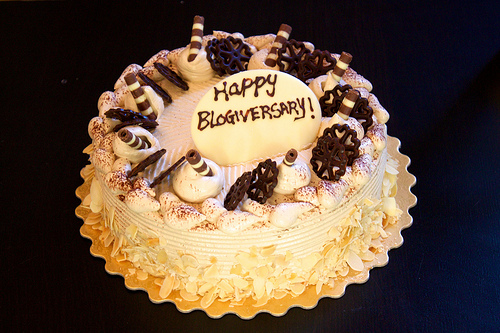
Apparently a ‘blogiversary’ is a thing. It is, no doubt, another one of those neologisms that will make many of you cringe. But its also an excuse for a bit of fun, so we are going to take the chance to celebrate the fact that the many-headed monster is now two-years old! And what better way to celebrate than with a virtual cake and some statistics?!

Let them eat cake!

Let them eat cake!

It all started back on 18th July 2012, with Brodie’s first post in his ‘Norwich Entertainments‘ series, about the providential messages inherent in the parading of a hairy child and a boneless girl around the city. Over the first two weeks we averaged a modest but respectable 10 hits a day.

Since then we have received over 53,500 hits on the blog, spread across 122 posts, complete with 685 comments, at closer to an average of 100 hits per day. These hits have come, somewhat unbelievably, from 140 countries! Less surprisingly most of our readers come from the UK, the US, Canada and Australia – though Germany and France are also well represented in our viewing statistics. India also makes the top ten.

More low-calorie virtual cake, anyone?

More low-calorie virtual cake, anyone?

Our top five most popular posts are all from our ‘History from Below’ online symposium held last summer. Laura’s post on John Dee’s Conversations with Angels is the most popular outside of that event. We summarised some of the other most popular posts in our 100th post recently if you want to know more.

One of the more curious things about our blog statistics are some of the unusual search terms that have led readers to the site. ‘Okapi’ has introduced no less than 11 unsuspecting stripy-animal enthusiasts into the world of early modern history (courtesy of Laura’s posts on the use of analogy in history writing). A search for ‘dirty mind of young sally’ has sent 9 browsers into our midst – and I think we would rather not know how or why.

Much more innocently the search ‘be nice to archivists’ has produced 8 visitors: certainly a sentiment we are happy to be logarithmically associated with. ‘Male hunk zodiac signs’ rather less so. Although, if this search produced a link to the John Dee post we’d like to think he would have been flattered…

So there you go: two-years of the ‘unruly sort of clowns’ and other early modern peculiarities. Some people out there seem to think the age of the blog is coming to an end. Others that they are an increasingly important component of being a historian in the 21st century. Whichever way the wind may be blowing we’re hoping to have many more blogiversaries if you, our beloved readers, keep coming back. Thanks for all the views, comments and tweets: we hope you’re enjoying the blog half as much as we are.

The Many-Headed Monster

Monster Mini-Series

The ‘monster now has a number of long running ‘mini-series’ – collections of posts that are grouped around a particular theme, topic, or source collection. For your delectation we now bring you a list of the said mini-series, with a brief description of the contents of each. For future reference the link is just up there, on the right end of the menu bar. Happy browsing!

The 100th Post

You are currently reading post number 100 on the many-headed monster. On realising this (statistically) significant event was approaching, we monster heads decided it would be worth marking in some way. The blog has been enormously rewarding as an arena to think through our ideas and to share our archival discoveries, but also as a way to connect with you, the reader. Since our first post in July 2012, we have had more than 40,000 views and 541 comments, and we are enormously grateful that so many people have read our musings and engaged with us on the blog. Thus, this is a round-up of some pearls from the blog archive: our most popular posts, collectively and individually,  alongside a nominated personal favourite from each contributor. Enjoy, and we look forward to continuing to work with you in the future!

Our heaviest traffic on the ‘monster comes from the ‘The Future of History From Below Online Symposium’, a collection of multi-authored papers based on two conferences on the topic. For the heads, this has become an important resource for research and teaching, and was also responsible for our busiest day in July 2013 when we received a spectacular 481 views.

Mark Hailwood

Most popular post: The Immersive Turn: Or, what did a seventeenth-century drinking song sound like? (Nov. 2013)

Nominated post: “many of my favourite ‘monster posts are those that have generated a lot of debate about aspects of ‘the craft’ – digital v archival sources; the use of jargon etc – but the post I would like to nominate here does something rather different: it’s one of Brodie’s ‘Norwich Entertainments’ series, ‘Ballad-singers and dangerous news, with coffee‘ (Nov. 2012). Historians of early modern England now make a lot of use of printed materials like ballads and pamphlets, but we know less than we would like about their dissemination and consumption. This fascinating little post provides us with some valuable insight into the social history of print in an early modern city.”

Laura Sangha

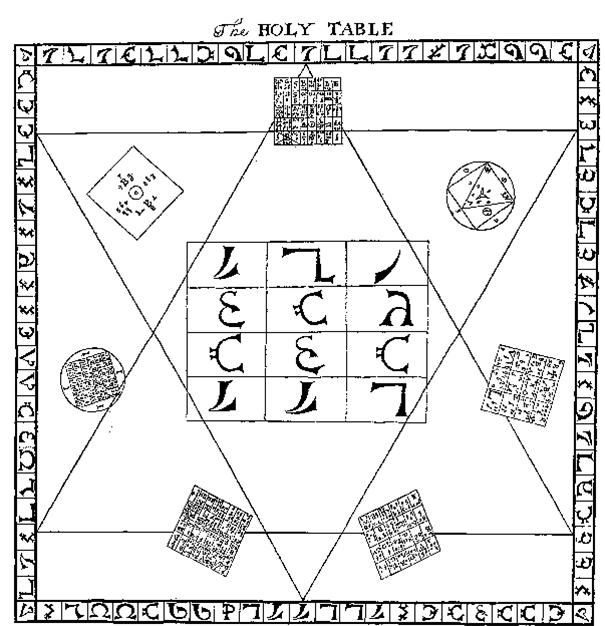
Holy TableMost popular post: John Dee’s conversations with Angels (Nov. 2012)

Nominated post: “Jonathan’s Idols of the mind, or What does God look like? (June 2013) tackles a ticklish question: how did people in the past visualise God? The delightful post explores this central and controversial aspect of the early modern mentality, taking in some wonderful illustrations along the way.”

Brodie WaddellDante_Gabriel_Rossetti_-_Fair_Rosamund

Most popular post: Norwich Entertainments – Part III: A medieval royal mistress in the 17th century and beyond (Aug. 2012)

Nominated post: “Laura’s two History and Analogy posts (Sept. 2013). A light-hearted look at one of the least-discussed but most-important aspects of historical writing and teaching. Some of the examples, including some offered in the comments, got me chuckling.”

Jonathan Willis

david-starkey_2622826bMost popular post: Tudor history on TV, and a partial review of David Starkey’s ‘Music and Monarchy’ (Aug. 2013)

Nominated post: “Mark’s three-part ‘Workers Representation’ series. As someone who’s worked on ballads primarily as musical and textual artefacts (and for the evidence they provide about religious identity), the use of ballad images for information about occupational identity had never really occurred to me and these are a fascinating series of discussions. If I had to pick just one of the three, I think I’d go for ‘spinning a yarn’ (Sept. 2012): one of my favourite quotes has to be ‘a woman of lower or middling status didn’t need to wear the highest quality clothing to win a man’s heart – she needed to be able to make it’.”

The Future of ‘History from Below’ Online Symposium – Part II

Mark Hailwood

It’s been great to see so much interest and enthusiasm generated around the subject of ‘history from below’ this summer. The online symposium on it’s future that we have been running here on the many-headed monster – which grew out of a physical version held between a group of early career historians at Birkbeck in April – has been a real success. So we thought we would bring you more.

In July we held a second event, in Cambridge, on ‘History from Below in the 21st Century’. This grew out of conversations I’d been having with Jon Lawrence, a historian of modern Britain, who helped to organise the workshop – and who used his pull to secure the participation of some of the leading historians in this field. In particular, we were keen to get a group together who worked on diverse time periods, to get a sense of the different ways medieval, early modern, and modern historians viewed the current state of ‘history from below’. Needless to say, the resulting conversations were fascinating, for although Brodie has rightly pointed out that ‘many of the most interesting discussions about history aren’t happening in wood-panelled seminars rooms’, some do.

But, in the spirit of democratising history that has been a key theme in the online symposium so far, we thought we would bring the discussions we had that day out of the seminar room and into this wider conversation taking place here on the blog. So each day this week we will be posting a paper from the Cambridge workshop. Here is the programme:

These posts will differ a little from those we have seen so far in the online symposium: they are full versions of the papers that were presented at the workshop, rather than custom-made blog-posts, so they are a bit longer, more heavily footnoted, and were composed for an audience of academic historians. They are, of course, packed with really interesting insights, and are well worth taking that bit of extra time to read.

Feel free, as ever, to leave your comments – we will encourage the authors to respond to direct questions, but we can’t make any promises that they will. Either way, that shouldn’t stop your own conversations developing in the comments section, so keep posting your thoughts, and let’s keep the discussion going…