‘Christmas Imprisoned’: the ‘popular’ assault on the festive season

Jonathan Willis

It is beginning, as the seasonal classic reminds us, to look a lot like Christmas, everywhere you go. Shops are blaring out Mariah Carey and town centres are aglow with fairy lights, whilst trees festooned with tinsel are popping up everywhere. A good many of us, I expect, are rather looking forward to Christmas. Whether it is as a religious festival, a great big party, a consumer frenzy, a chance to get together with our loved ones, or even just an excuse to take some time off work, there is no denying that Christmas at the beginning of the twenty-first century is a still major cultural phenomenon, and a calendrical landmark of great prominence.

Christmas Fireplace

The stockings were hung by the chimney with care…

What Christmas is not, today, is a political issue. Continue reading

What flesh eatest thou? A missing child and a suspicious meat pie in 1645

Brodie Waddell

On 26 June 1645, as the war between the King and Parliament raged, John Coleman sat down at his lodgings in London to eat a meat pie. As he ate it, a strange thought occurred to him: ‘What flesh eatest thou’?

At that moment, even as he chewed, a flood of doubts and suspicions swept into Coleman’s mind. Why had his landlady made meat pies on a fast day? Why had the girl who delivered it to his room been acting so oddly? What had happened to the child who had been missing the previous evening?

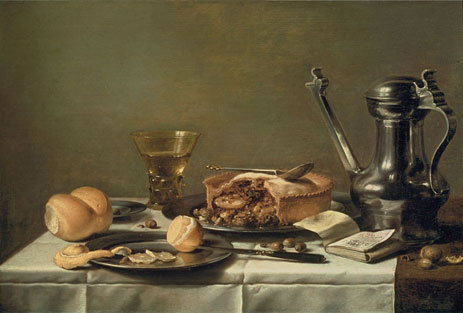
The answers must have struck him like a blow, because suddenly ‘hee could eate noe moore’, verily believing ‘the Pye was made of a Childs flesh’. Pieter Claesz (c1630) Still Life with Pewter Pitcher, Mince Pie, and AlmanacAccording to his later testimony, Coleman then went out into the neighbourhood to try to learn more. Here he heard from several women that a child in a yellow coat had been seen wandering the streets on previous evenings and that a butcher’s wife had unexpectedly given the child bread and butter. A gentlewoman, it was said, was ‘almost madd for her chyld which was lost’.

Although Coleman’s testimony ends there, an incident six weeks earlier seems to reveal more. On May 13th, a crowd attacked Mary Hodges, saying that under her apron she had ‘sugar plumbs and dyer bread to entice young Children away’. Another group attacked Hodges on June 2nd, accusing her of being ‘a night walking whore’.

Then the story, like the pie, goes cold. Continue reading

The reformation of Christmas carols?

Jonathan Willis

Merry Christmas everybody! By now, the last scraps of turkey have hopefully been consumed, the last of the wrapping paper been thrown away. You might have decided to hit the sales; you might even be back at work; and you may also have asked yourself one or more of the following questions: ‘what shall we doe in the long winter nights: how shall we passe away the time on Sundayes, what wold you have us doe in the Christmas Hollydayes’? No need to risk a family feud by dusting off the monopoly board just yet, because John Rhodes, the Jacobethan ‘minister of Enborne’ (Berkshire) anticipated just such a need amongst ‘the Schollers of pettie Schooles’ and ‘the poore Countrieman and his familie’.[1]

christmas-tree-and-fireplaceRhodes’ solution for chasing away the winter blues, and passing the long winter evenings, was simple: sing! Rhodes dedicated his book for such as ‘are naturally given to sing’, so that they might ‘please their merrie minds a little’, and that by winning them ‘to sing good things’ they might ‘forsake evill’. Early modern carols were primarily a popular tradition, and Rhodes’ efforts might be mistrusted on two fronts. Firstly, his aim was clearly a moralising one, recalling the original purpose of metrical psalms, to supplant vain, bawdy or worldly songs with more godly fare. Secondly, pastiches of pastoral or country songs were a moderately popular genre, and examples of ‘countrie’ carols were often affected rather than genuine. In 1611, the enterprising composer Thomas Ravenscroft attempted to cover all his bases in Melismata Musicall phansies, by including a blend of tunes, striving to please ‘the noblest of the court, liberallest of the country, and freest of the city’ in their own respective ‘elements’. Continue reading

The Woolcomber’s World, Part IV: Births, deaths, marriages and fighting cocks

Brodie Waddell

On 22 March 1697, ‘there were a great many fighting Cocks carried through Coxall on horsback in linen baggs’. So wrote Joseph Bufton in one of his eleven surviving notebooks.

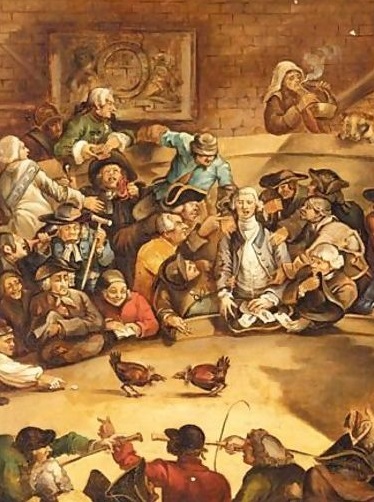
Watching to cocks tear eachother apart: not as much fun as you might imagine

Watching two birds tear each other apart: not as much fun as you might imagine

But this odd little memorandum was not an isolated scribbling. It was, in fact, just one of about 180 entries in his Coggeshall chronicle, which he began in February 1678 and continued to May 1697. In it, we find festive celebrations, church business, unusual weather, family injuries, highway robberies and much else besides.

The entries from 1693, a fairly typical year, give a sense of the whole:

  • 11 Jan. 1693, John Bufton went to combing.
  • 4 Feb. 1693, my cousin Sparhawk was carried to prison.
  • 15 Feb. 1693, there was a bonfire made by the Crown for the joy that Squire Honeywood got the day of Sir Eliab Harvey and was not cast out of the Parliament and when he came home from Chelmsford through Coxall the night after he was chosen abundance of candles were lighted for joy.
  • 24 Mar. 1693, King William went through Kelvedon and went back again through Kelvedon 28 Mar.
  • early 1693, the new king’s arms and the 10 commandments new writ were set up in the church.
  • 1693, the Quakers made a new burying place in Crouches
  • 1 May 1693, the soldiers set up a Maypole at the Woolpack door
  • 18 May 1693, the poor did rise because the Bakers would not bake, because some of their bread was cut out the day before for being too light.
  • May 1693, my cousin Sparhawk came home.
  • beginning of May 1693 Francis Clark broke.
  • end of May 1693 the same month the Poor had Badges given them to weare which tis said were made of Pewter and Coggeshall Poor 1693 set upon them.
  • 1693, Mr Mayhew sold Coxall Lordship to Mr Nehemiah Lyde of London. 11 May he came first for his rent and 5 Jun kept court and Counsellor Cox was his steward.
  • June 1693, our 4th bell was carried to Sudbury to be new shot and brought home and the other were chipt to make them tuneable. They were first rung 6 July.
  • 30 Oct. 1693, King William went through Kelvedon.
  • 2 Nov. 1693, John Ancil had hung himself but was cut down in time.
  • 1693, a new pound was set up on Grange hill and the shambles was repaired.

Continue reading

‘The Rabble that Cannot Read’? Ordinary People’s Literacy in Seventeenth-Century England

Mark Hailwood

Those of us historians intent on exploring the world of ordinary women and men in the sixteenth and seventeenth centuries conduct a lot of our research by looking at surviving examples of what such people read–for instance, cheap printed broadside ballads–or of what they wrote–take, say, Joseph Bufton’s notebooks. These materials are fascinating and undoubtedly useful, but regular readers of this blog might understandably find themselves wondering about the validity of this approach, and asking themselves a simple but important question: to what extent could the lower classes of England actually read and write in the seventeenth century?

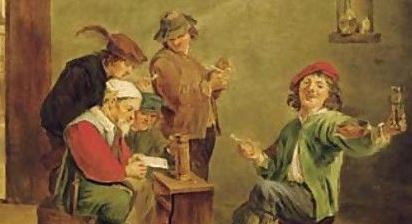
David Teniers the Younger 'Peasants Reading a Letter...' But could they?

David Teniers the Younger ‘Peasants Reading a Letter…’ But could they?

It’s a fair question, and has important implications. Does this material really provide a window into the minds of the most humble people in Tudor and Stuart society, or were reading and writing skills the preserve of the more affluent, or at least the middling, classes of society? After all, in 1691 the puritan writer Richard Baxter had described his lower-class neighbours as ‘the rabble that cannot read’. Was this fair? Continue reading

The Woolcomber’s World, Part II: Finding God in seventeenth-century Essex

Brodie Waddell

Joseph Bufton spent a lot of time thinking about God. He assiduously went along to hear sermons by the local vicar and by travelling preachers. He read scores of books and pamphlets offering religious guidance. What’s more, he filled many volumes with notes and extracts from these sermons and published texts. He even tried his hand at spiritual poetry, with decidedly unimpressive results.

What, then, do we know about Bufton’s faith?

Bufton - Coggeshall parish church

The (mostly) 15th-century parish church in which Bufton spent many a Sunday

As I explained in my previous post on Bufton, almost all of our knowledge of this Essex woolcomber comes from the notes he scribbled in the margins and blank pages of eleven volumes of almanacs between the 1660s and the 1710s. As such we can learn a considerable amount about his exposure to diverse religious ideas and instruction.

However, there are limits. The volumes include only a few hints about his own personal thoughts on such matters, especially his place in the fraught religious politics of the later Stuart period. Still, the fact that eight of the eleven surviving volumes are mostly or entirely focused on spiritual concerns surely can tell us something about how a simple layman set about finding God in late seventeenth-century Coggeshall. Continue reading

Norwich Entertainments – Part VII: The science of music

Brodie Waddell

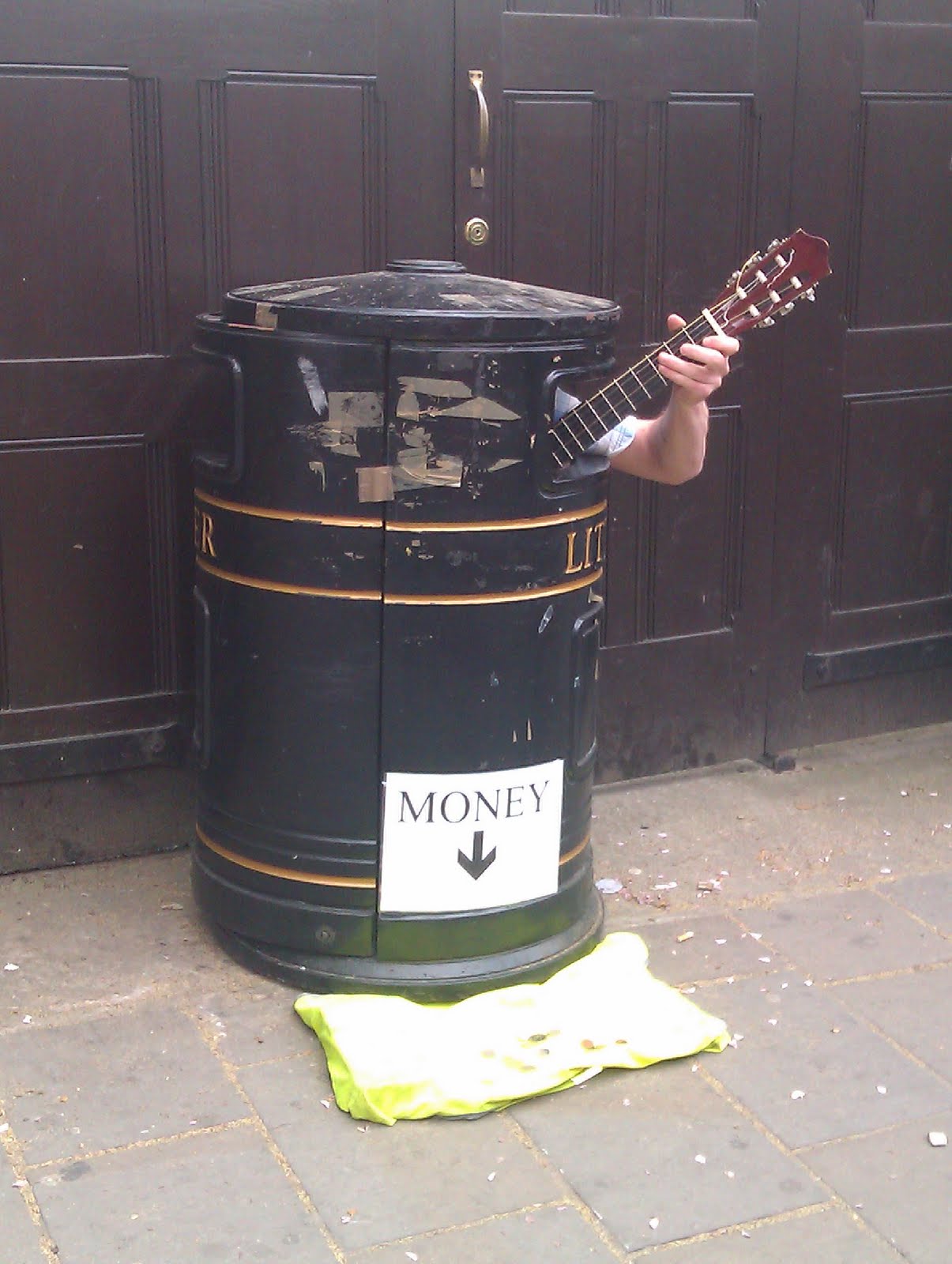
I live in Cambridge, a well-touristed little town, and when the sun is out the streets are Cambridge bin buskerawash with buskers. Some are quite good. For instance, there’s the chap who strums tunes on his guitar from inside a litter bin who always makes me chuckle even when his playing isn’t brilliant.

But there are also some that are decidedly displeasing to the ear. If only – I find myself muttering – these unmusical musicians had been sufficiently trained in the science of music. Continue reading

E.P. Thompson’s Desert Island Discs

Brodie Waddell

E.P. Thompson had, with one or two notable exceptions, rather boring taste in music.

Thompson has always been one of my favourite historians and I’ve been learning more about him recently as 2013 marks the fiftieth anniversary of the publication of his Making of the English Working Class. We celebrated earlier with ‘The Future of History From Below’ event and I’ll be giving talks at Oxford (Nov. 29th) and at Birkbeck (Jan. 24th) on EPT’s legacy over the next few months.

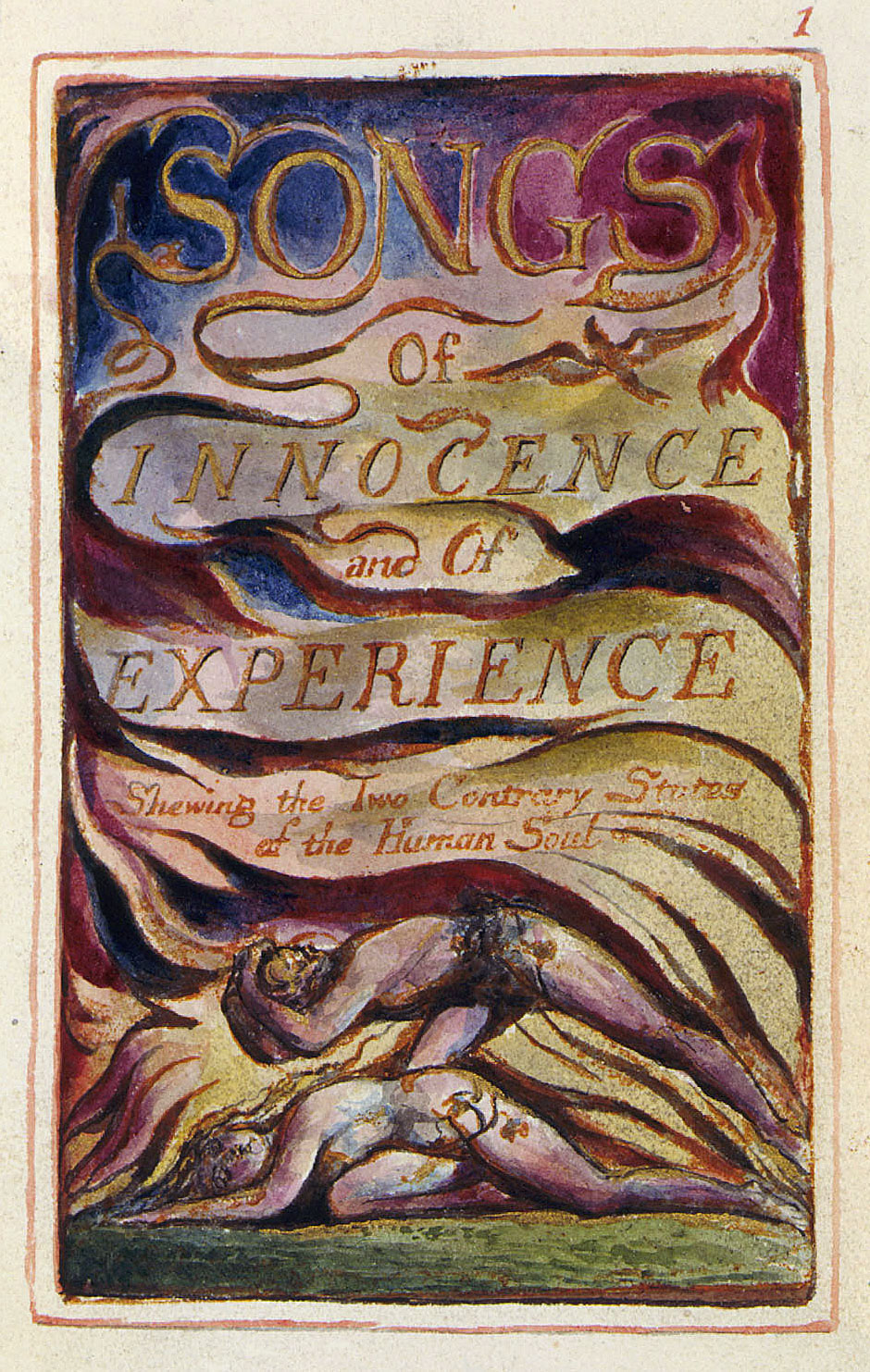
William Blake's 'Songs of Innocence and Experience' (1789): Thompson's choice of reading material

William Blake’s ‘Songs of Innocence and Experience’ (1789): Thompson’s choice of reading material

So imagine my delight when I heard – via Jonathan Healey – that Thompson had been a guest on the famed BBC programme ‘Desert Island Discs’ and that the episode was freely available online. It was broadcast in 1991, just two years before his death at the age of 69, and his health was clearly not great, but he was still very intellectually sharp and irrepressibly politically engaged.

Thompson made a couple of inspired musical choices. For instance, I was struck by the raw power of Paul Robeson, the African-American communist actor and entertainer, belting out ‘Peat Bog Soldiers’, a song composed in the Börgermoor concentration camp in 1933. Even more interesting is Thompson’s second choice. He offers a beautiful recording of Rabindranath Tragore, the Bengali poet, singing a totally transformed version of ‘Auld Lang Syne’. It’s a wonderful piece of music and a wonderful encapsulation of Thompson’s close links to India. As he says in the interview, his father was a Research Fellow in Indian history at Oxford and former Methodist missionary, with close links to the Indian National Congress. Thompson recounts a childhood memory of Gandhi visiting his family home in the late 1920s or early 1930s:

‘I was just about the height of the sideboard. My main memory of Gandhi coming was the sideboard piled with all these fruits that we didn’t usually get. But there he was, and he was doing his daily stint of charkha – spinning – in the corner of our house, and it’s a very pleasant memory.’

In light of this, it is quite easy to see how Thompson’s ideas about poverty and protest emerge not only from his extra-mural teaching in the West Riding but also from his long and deep connections to South Asia.

However, almost as notable as these two striking choices of records is – to my mind – the ‘conservative’ nature of the rest of his choices. Despite being a political radical and an incredibly innovative historian, his other six records seem distinctly nostalgic and a bit earnest. There’s some eighteenth-century Irish harp music, an unbearably miserable rendition of a Yeats poem, two well-known classical pieces and an early English Baroque song. There’s nothing particularly objectionable about any of them – with the possible exception of Warlock’s composition – but they’re hardly the inspiring music one would hope for from a man like Thompson.

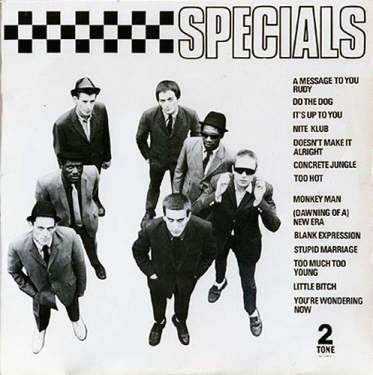
Where are the radical musicians of his own age, who often combined musical invention with a hard political edge?  Where are the Sex Pistols or the Specials or even the Rolling Stones? Was it really possible to be an activist in the 1960s and 70s without liking rock and roll?

The Specials (1979)

Sorely lacking from Thompson’s playlist.

Continue reading

Norwich Entertainments – Part VI: Rope dancing and nine-pins

Brodie Waddell

On 1 December 1677, the Norwich Mayor’s Court granted permission for a new performer to ply her trade in the city:

Mrs Saboul Rymers hath Lycence to make shew of Dauncing upon the Rope at the Redd Lion in St Stephens for a weeke from this day.1

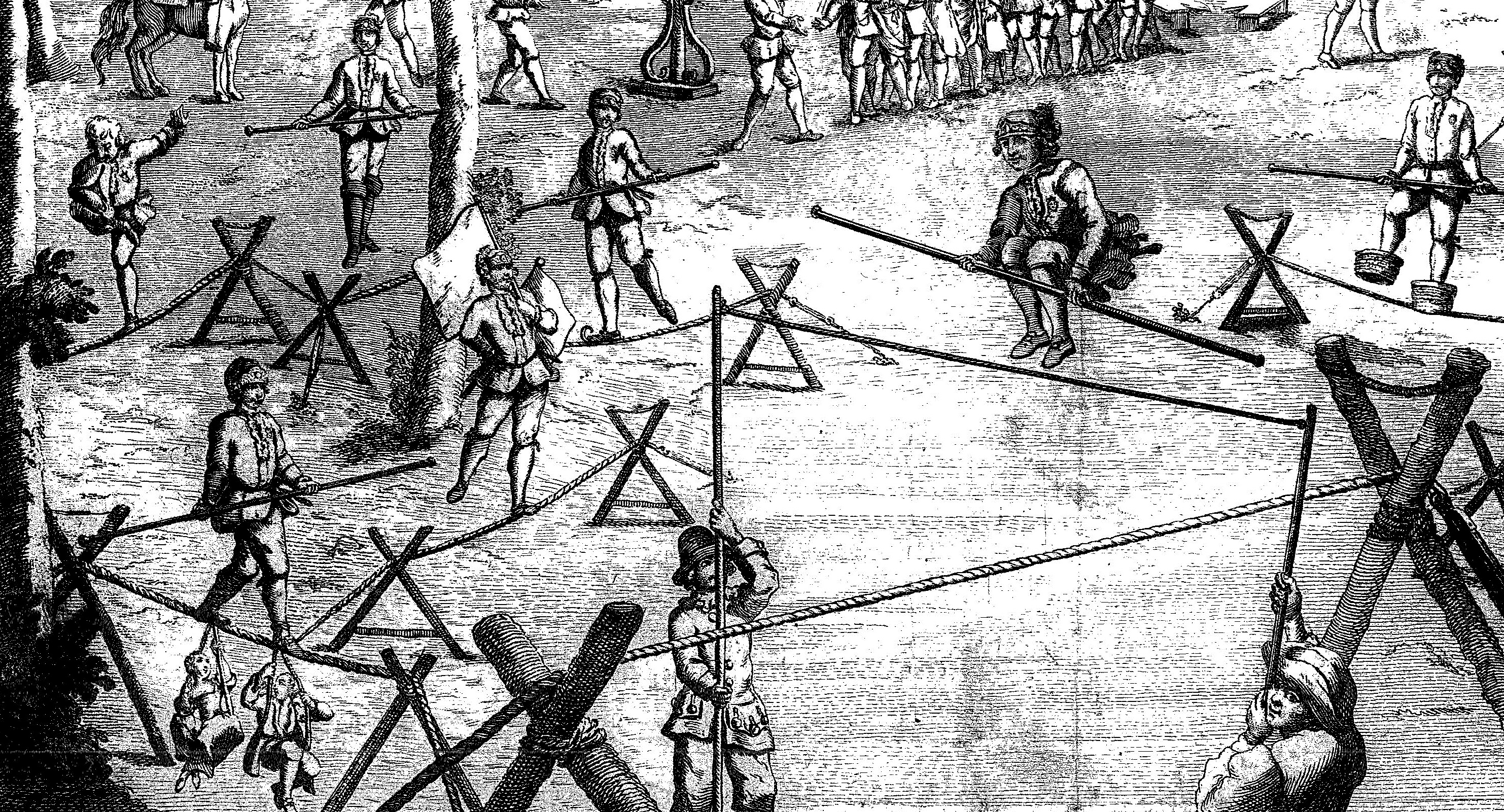
Rope dancing, now usually known as ‘tight-rope walking’, had already been a popular entertainment for thousands of years by the time Mrs Rymers arrived in Norwich. It was a common amusement in the seventeenth century, apparently beloved by rich and poor alike. The Duchess of Cleveland, King Charles II’s famous mistress, ‘greatly admired’ one these acrobats, and Samuel Pepys reported that he ‘saw the best dancing on the ropes that I think I ever saw in my life’ at Bartholomew’s Fair in 1664.

Rope dancers Continue reading

Idols of the mind; or, what on earth does God look like?

Jonathan Willis

Term has ended, I’m organising a big conference next week, and I also urgently need to start writing the paper I am giving at said conference; so what better time, I thought, to write a blog post on an entirely unrelated topic? Frankly, it was either this or finally write that book review I’ve been putting off for weeks…

This post is about God; or more specifically, about what God looks like; or, more specifically still, about how people may have thought about and/or visualised God in Reformation England. I’ve been thinking about this for some time, largely related to different aspects of my work on the ten commandments. First of all, the commandments as a whole derived much (let’s not beat around the bush, pretty much all) of their authority from the fact that they had been given by God himself. Exodus 19 describes how God came down upon mount Sinai in ‘thunders and lightnings, and a thick cloud upon the mount’. He ‘descended’ upon the mountain ‘in fire’ and delivered his commandments. Afterwards, Moses, Arron, Nadab, Abihu and seventy elders came up the mountain to see God, although only Moses himself was given leave to come near to God. Exodus 24:10 describes the supernatural encounter:

And they saw the God of Israel: and there was under his feet as it were a paved work of a sapphire stone, and as it were the body of heaven in his clearness.

Several chapters later, Exodus 31:18 describes another pivotal moment, the point at which the commandments were passed to Moses:

And he gave unto Moses, when he had made an end of communing with him upon mount Sinai, two tables of testimony, tables of stone, written with the finger of God.
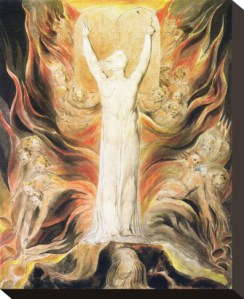
william-blake-god-writing-the-commandments-boards_i-G-59-5923-ZI3RG00Z

Blake’s vision of God, writing the Commandments

God’s presence in Exodus is suitably awe-inspiring and mysterious, cloaked as it is in fire, earthquakes, trumpets and smoke. But for the careful reader and listener there are some rather intriguing human details. Firstly, God spoke. Now we in the twenty-first century have seen and read enough works of science-fiction and fantasy fiction to imagine a booming voice emitting from nowhere, or perhaps beaming telepathically directly into our heads. But for most early moderns, surely a voice would have implied a mouth, a tongue, a head… Exodus 24:10 talks of a sapphire pavement under God’s feet, and perhaps most crucially, the ten commandments are described as having been written with the finger of God.There is a marvellous depiction of God doing precisely that, engraving stone tablets with his right index finger extended like some sort of divine welding torch, by the romantic poet and painter William Blake. But such a depiction would have been unthinkable in Reformation England, because of the great weight placed upon the commandments themselves, and in particular the first, ‘Thou shalt have no other gods before me’, and the second. Exodus 20:4 stated quite clearly,

Thou shalt not make unto thee any graven image, or any likeness of any thing that is in heaven above, or that is in the earth beneath, or that is in the water under the earth.
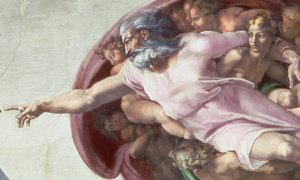
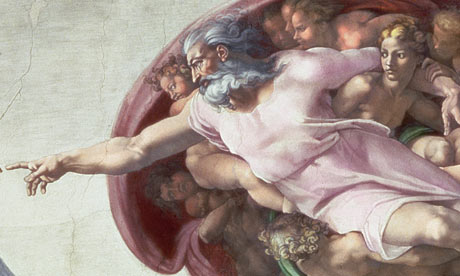
Michaelangelo's God as shown creating Adam on the ceiling of the Sistine Chapel

Michaelangelo’s God as shown creating Adam on the ceiling of the Sistine Chapel

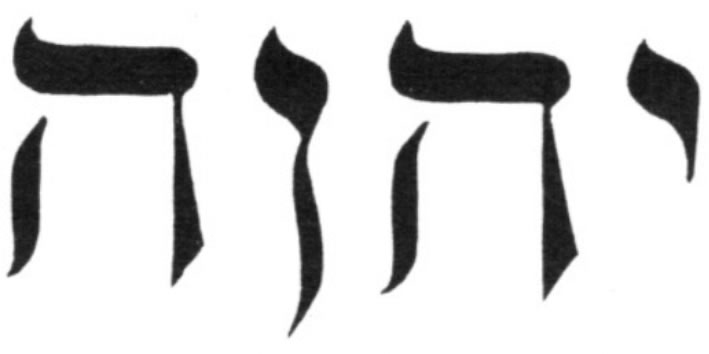
This is in large part a familiar story. Depictions of God the Father as a white-bearded old man (like the rather famous one above) were out in Protestant Reformation England, and so imaginative painters, printmakers and carvers resorted to figurative alternatives like the Hebrew ‘tetragrammaton’:
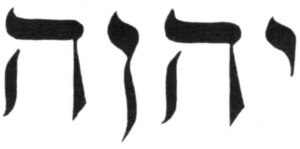
YHWH, or 'Yaweh', in Hebrew

YHWH, or ‘Yaweh’, in Hebrew

People recognised this as a symbolic depiction of God, the newest element of a longstanding visual language which recognised that rays of light and prominent doves could function as representations of the holy spirit, and that indeed Christ could be represented as a lamb, or by the ‘holy monogram’ IHS and other Christograms.

But people recognised the lamb and the holy name as symbols. They did not think that Christ was a sheep – the bible was rather insistent on the fact that he had been both God and man. So when people saw the tetragrammaton, or heard references to God’s voice, and feet, and fingers, what could they do but picture somebody in the form of a man, a man old enough to be the ‘father’ of the ‘son’ who had died for their sins? It is therefore easy to see an unresolved tension in the way in which most writers discussed the second commandment, with its absolute ban on images of the divine directly contradicted by the partial painting of a picture of God in words, through references to hands, feet, mouth, voice, and other physical elements of fleshy human bodies.

While most ministers and godly authors like Samuel Purchas and John Brinsley were happy to speak of a law ‘renued by the voice and finger of God on Mount Sinai’,[1] or of ‘the Ten Commandements written by the Lords owne finger’,[2] others recognised this inherent contradiction and were more careful. Calvin, in his sermons on Deuteronomy, explained that while God had chosen to write his law on stone tables with his own finger, we should not believe

that God hath anie hands: but that the holy scripture speaketh so by a resemblance as if it were saide, the lawe was note written or ingrauen by mans hand: but God approoued and ratified it by way of miracle.[3]

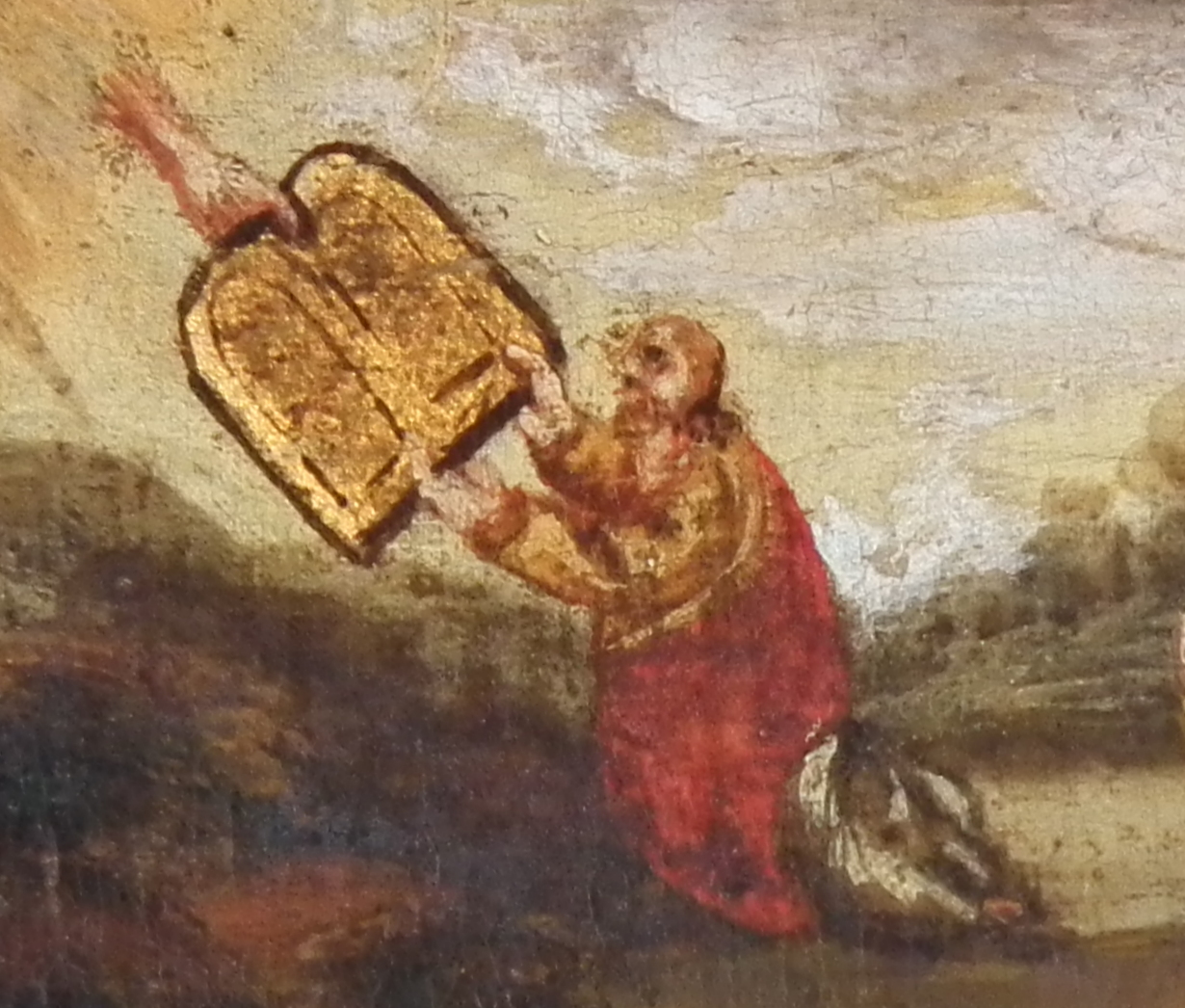
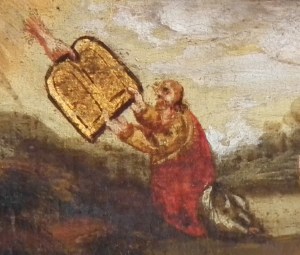
Not many people could maintain such a rigid division in their heads, however, and occasionally idols of the mind could be made partially manifest. I want to share just two examples today. The first, taken from a rare Elizabethan commandment board hanging in a Hampshire church, shows what is unmistakeably a divine hand, fully formed with four celestial fingers and a god-like thumb, handing the ten commandments out of the sky to a kneeling Moses.
Gravatar

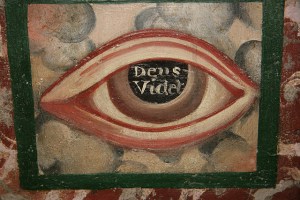
The second, knowledge of which I very gratefully owe to University of Birmingham PhD student Susan Orlik, is the baleful eye of God staring down at the occupants of an astonishing family pew in a Berkshire church, the pupil of which is inscribed with the words deus videt – God watches.
3780847851_57fff22182_z

If any monster readers have come across any interesting, unusual or incongruous representations or descriptions of, or references to, God, I’d be very interested to hear about them here!


[1] Samuel Purchas, Purchas his pilgrimage (1613), p. 17.

[2] John Brinsley, The fourth part of the true watch containing prayers and teares for the churches (1624), p. 78.

[3] Jean Calvin, The sermons of M. Iohn Caluin vpon the fifth booke of Moses called Deuteronomie, trans. Arthur Golding (1583), p. 391.