
Mark Hailwood
Days before I boarded a plan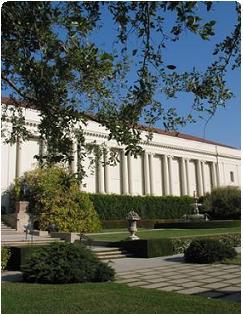 e to Los Angeles to spend my summer as a research fellow here at the Huntington Library, I came across this article in the Times Higher Education supplement. Needless to say, the following quote only added to my sense of anticipation: ‘One of my friends said that if she died and went to Heaven, she would expect St Peter to ask for her Huntington reader’s card at the pearly gates.’ Six weeks later, and I can see where she was coming from.
But there was something else from that article that I carried with me across the Atlantic – a question mark about the relative merits of (cheap, easy and efficient) access to digitised primary sources on one hand, and to (often expensive, labour intensive and time-consuming) hands-on access to original materials on the other. The article echoed a sentiment I have often heard expressed at an academic conference or seminar series: historical research may be a lot easier today due to advances in digital technology, but as a result something valuable has undoubtedly been lost. But what?
Too often, the arguments deployed here reach for an intangible, almost mystical quality to doing good old-fashioned grubbing in dusty archives. That handling original sources is somehow more righteous; it allows us to ‘get a better feel’ for our sources; in some way by touching centuries old parchment we can almost touch the past itself. I often find myself thinking in these ways after a day in the archives, but as a historian who is trained to judge arguments in a detached and ‘rational’ manner, I have to admit that they don’t add up to a very concrete or convincing case. As a historian that has done a reasonable amount of work on both digitised print material, and on fusty manuscript legal records, I can’t honestly put my finger on a tangible difference in the quality of research I produce from each. Even if exploring one does contain a greater sense of adventure than the other.
It was with this jumble of thoughts on  my mind that I bunked off from the library for a few hours to take a look at a new exhibition of ‘Huntington Treasures’. It’s hard to imagine a more star-studded collection of early modern books together in one place: an original Gutenberg Bible, which was the first major book produced on a printing press anywhere in
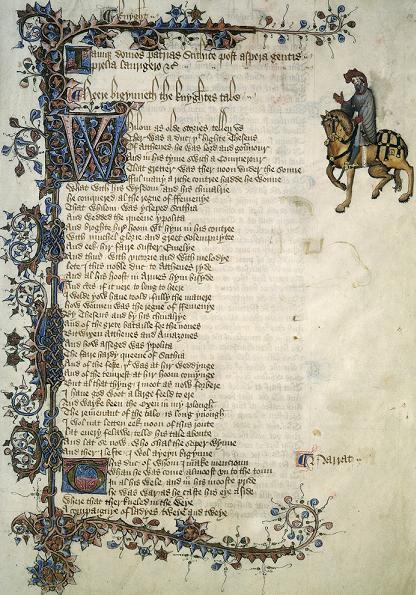 the world; the Ellesmere Chaucer, one of the earliest collections of the Canterbury Tales produced around the turn of the 15th century; a first folio edition of Shakespeare’s collected plays from 1623; first editions of works by Hobbes, Locke, Ben Jonson… I could go on. I was, of course, appropriately impressed
There was something exhilarating about seeing original editions of these landmark texts, but I wasn’t prepared to let that steamroller my lingering uncertainty about the innate superiority of consulting originals over reproductions. What as a historian had I really gained from seeing these texts up close and personal? I wasn’t convinced that it brought me any closer to how contemporaries would have connected with these works: venerated in an exhibition hall, in a glass case, as a ‘treasure’ rather than as reading material. There were aspects of the ‘materiality’ of these books that could provide more tangible insights for the historian to take away: the sheer size of a Gutenberg or King James bible meant that reading it would have required some supporting apparatus, whereas a single sheet broadside ballad could be read on the move or in any position (think hefty hard-back versus kindle, perhaps). The act of reading one or the other would have been very physically different, and would have therefore been experienced, approached and understood as a distinct type of reading activity. Sure, but I didn’t really need to travel 5000 miles to see the originals to figure that out.
I am, admittedly, trying to be provocative here. I wouldn’t disagree that there is value in consulting original materials rather than relying exclusively on digital reproductions. That said, I do think that historians should be asking themselves to come up with far more rigorous explanations as to why that’s true.

