Unknown's avatar

About Jonathan Willis

Jonathan Willis is a Senior Lecturer in Early Modern History at the University of Birmingham, and is on twitter as @CREMS_Bham and @drjpwillis

After Iconophobia?

After Iconophobia? An Online Symposium

Tara Hamling and Jonathan Willis

aiIn 1985, Patrick Collinson delivered Reading University’s Stenton lecture on the topic ‘From Iconoclasm to Iconophobia: the Cultural Impact of the Second English Reformation.’ More than thiry years on, this essay (published in pamphlet form in 1986 and in revised form as Chapter 4 of The Birthpangs of Protestant England) has gone on to shape a generation of scholarly enquiry into the impact of religion on culture, and of culture on religion, in post-reformation England.  Scholars have accepted, rejected, and modified Collinson’s arguments, but one way or another they continue to exert a powerful influence over reformation studies today.

If you haven’t read Collinson’s original article/chapter, we would certainly encourage you to do so, although reasons of copyright prevent us from uploading a copy on the public internet.  Still, the definitions of his two key terms may well be of interest:

iconophobia definitions

Continue reading

Understanding Sources: Churchwardens’ Accounts

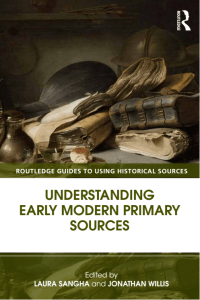
To celebrate the launch of Understanding Early Modern Primary Sources the monster-heads have each written a brief post offering a personal perspective on the source type that they most like working with (the introductory post is here). Do tell us your own below the line, or on twitter #histsources

Jonathan Willis

I have a confession to make: I love churchwardens’ accounts, and in this post I want to tryPicture1 to convince you that they have something to offer pretty much everybody interested in researching, reading or writing about early modern England.  As well as co-editing Understanding Early Modern Primary Sources with Laura, I contributed a chapter on ‘Ecclesiastical Sources’, and one of the nice things about editing or co-editing a volume like this is being able to choose exactly what you want to write about!  I happen to be, of course, a reformation historian, and so sources relating to or generated by the Church are naturally something I’m going to be interested in.  But in that chapter, and in this post, it is my intention to show that ecclesiastical sources in general (and churchwardens’ accounts in particular) are of enormous interest and value, almost no matter what area of history you are interested in.  Politics?  Economics?  Society?  Culture?  They’ve got it all! Continue reading

Hidden gems of Tudor Church reform: the equal opportunities that never were, and dressing up smart for God…

Jonathan Willis

Chasing up some last-minute references for the book I’ve been writing up over the past year or so on the Ten Commandments, over Easter I found myself making use of a local academic library to consult Gerald Bray’s editions, prepared for the Church of England Record Society, of the Anglican Canons and the Reformatio Legum Ecclesiasticarum.  As I sat in this unfamiliar space, surrounded by undergraduates feverishly working on essays and revising for their exams, I couldn’t help but be struck by what seemed like some of the more unlikely concerns of sixteenth-century reformers.  The topic of Tudor Church reform doesn’t exactly promise thrills, spills and adrenaline from the outset, but it does occasionally provide a fascinating insight into a range of social and cultural prejudices, alongside the rather more predictable fare of the duties of churchwardens, the alienation and renting out of ecclesiastical goods, and the nuts and bolts of the process of episcopal visitation.

Continue reading

On periodisation: religion, early modernity, and ‘The Reformation’

Links to other posts in the ‘On Periodisation’ series:

Jonathan Willis

In some ways, ‘The Reformation’ (I’ll explain the excessive punctuation in a bit) may seem like an odd contribution to a blog mini-series on periodisation.  After all, surely ‘The Reformation’ was a thing, an event, something that happened, rather than a neutral description of a period of time (although, as we are coming to discover, there is rarely anything neutral about how anybody, let alone a historian, parcels up the past).  As Laura mentioned in her introductory post, use of ‘The Reformation’ to describe a period of time tends to have most currency in North America, where ‘Ren-Ref’ is a convenient shorthand for the periods of the renaissance and reformation, c.1400-c.1600, or c.1350-c.1650, or c.1300-c.1700; well you get the idea…  I am a product of the UK Higher Education system, however, having never studied or worked in the US or Canada, and so I’m going to leave ‘Ren-Ref’ to one side for now.  Instead, there are two related questions I want to address in this post.  Firstly, how useful is religion in helping us to define the early modern period?  And secondly, how should we define the chronology of ‘The Reformation’ itself?

Religion and Early Modernity

wooden_hourglass_3

A less contentious way of measuring time?

To what extent can we define early modernity with reference to developments in the religious sphere?  For the sake of argument, and because one post can’t do everything, I’m going to work within the eurocentrism of the term early modern, and accept for now its customary definition as c.1500-c.1700.  In some ways, there is a fairly good case for arguing that the early modern period saw within it some fairly distinctive developments in matters of religion, and that therefore these developments do help give a sense of coherence (or at least, of coherent incoherence) to the period as a whole.  To start with the most obvious, we might characterise the early modern period as one which witnessed at its outset the collapse of 1500 years of broad religious unity: provocatively, one recent overview of early modern history has taken as its title Christendom Destroyed.[1]  The Protestant Reformation, and the growth in number of religious sects and denominations that broke away from the previously hegemonic monolith of the (Roman) Catholic Church, and subsequently from one another, could plausibly be seen as the defining characteristic of the early modern age. Continue reading

‘Christmas Imprisoned’: the ‘popular’ assault on the festive season

Jonathan Willis

It is beginning, as the seasonal classic reminds us, to look a lot like Christmas, everywhere you go. Shops are blaring out Mariah Carey and town centres are aglow with fairy lights, whilst trees festooned with tinsel are popping up everywhere. A good many of us, I expect, are rather looking forward to Christmas. Whether it is as a religious festival, a great big party, a consumer frenzy, a chance to get together with our loved ones, or even just an excuse to take some time off work, there is no denying that Christmas at the beginning of the twenty-first century is a still major cultural phenomenon, and a calendrical landmark of great prominence.

Christmas Fireplace

The stockings were hung by the chimney with care…

What Christmas is not, today, is a political issue. Continue reading

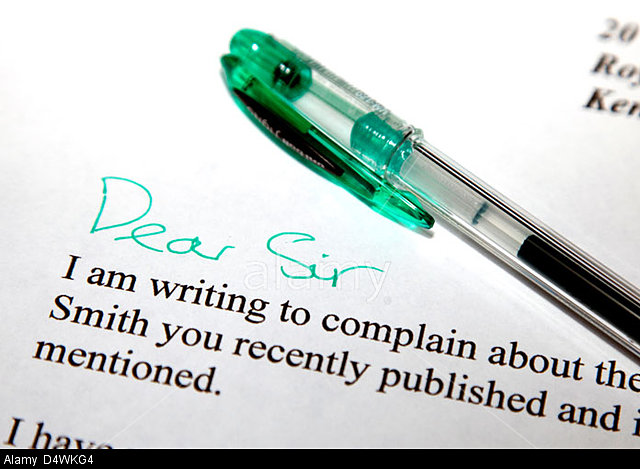
Voices of the Disgruntled: ‘Green-Ink Letters’ in Elizabethan England

Our next post in ‘The Voices of the People’ symposium (full programme here) is by the many-headed monster’s very own Jonathan Willis, Lecturer in Early Modern History at the University of Birmingham. Jonathan uses some rather intriguing letters found amongst the Elizabethan State Papers to raise some crucial questions about the relationship between eccentric individuals and the wider culture they belong to – what we might term the ‘Menocchio question’ .

Jonathan Willis

A few years ago, I stumbled across an interesting letter in the Elizabethan State Papers. I would say that it was ‘by accident’, but it wasn’t really, as I was actively looking for references to the Ten Commandments, as part of the monograph I’m currently writing on the reformation of the Decalogue. Still, I wasn’t exactly expecting to find what the calendar compliers described as ‘two letters to the Queen from Robert Banister, a great quoter of Scripture, yet mighty vehement against some Puritans who plagued him’, and which the caption on the letter itself (dated 1578) records as ‘two letters to Queen Elizabeth by Robert Banister a Religious mad-man, who seems to have concedid great indignation against the Puritans his prosecutors’.[1] Banister’s letters were written in black ink, but otherwise seem to fit the modern definition of a letter written by a card-carrying member of the green-ink brigade, which one website defines as:

a particular kind of letter writer, who claims that he is the victim of some injustice, or who composes long and vehement complaints against a person or an organisation, or who believes that a numerical calculation based on the name of the Prime Minister shows he’s an agent of the devil, or who is sure that invisible rays are being beamed into his house by his next-door neighbour to cause him injury, or who puts forward a thesis which, if adopted, will lead inevitably to world peace.[2]
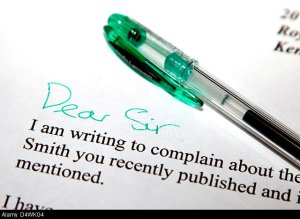
Banister’s letters contained a request for the queen to grant him permission to publish a treatise designed to clear his name from puritan accusations that he was a member of the secretive radical sect, the Family of Love. Banister may in fact have been a familist – his letters are ambiguous. He refers scathingly to ‘the phamily of lewde love’, and claims that never to have been ‘acoynted with any of that sect’, but he also described the puritans as a ‘vile, & most faulse family’, and spoke repeatedly of ‘gods love’. What is clear though is that, familist or no, Banister was a rare Elizabethan antinomian – that is, somebody who rejected the authority of the moral law, or Ten Commandments. His attack on his puritan persecutors was based on the fact that they were pharasaical legalists, ‘English Jues … that spie moses motes in every eye’. Attempts to trace Banister in all the usual locations – parish registers, ODNB, ESTC, CCED, lists of university alumni, etc. – have so far proved fruitless. (If any reader has come across him in another context, I’d be very happy to hear about it!). Still, in a way Banister’s anonymity opens up as many possibilities as it closes down. It seems to suggest that, other than his extraordinary views, expressed in these startling letters, he was an ‘ordinary’ person. Continue reading

‘A guide, a mistress in godliness…’: in search of clergy wives in reformation England

Jonathan Willis

OLYMPUS DIGITAL CAMERA

Christ Church, Oxford

The marriage of Protestant clergymen was one of the most controversial aspects of the reformation, in England as elsewhere. Opprobrium was heaped upon clergy who married, and also upon their wives. Even death was no escape from censure. During the reign of Mary I, Strype tells us, Richard Marshall, the dean of Christ Church, exhumed the body of Peter Martyr Vermigli’s wife from its resting place in the cathedral, and had it thrown onto a dunghill, presumably because in the eyes of the Catholic authorities she was no better than a heretical priest’s whore.[1]


817xcpDamhLHistorical interest in clerical marriage and clergy wives has increased substantially in recent years, with our understanding of the field primarily shaped by the work of Eric Carlson and Helen Parish.[2] This also seems to be a topic that really captures the imagination of students: when I ask my seminar groups to look at the Marian Injunctions of 1554, for example, they often marvel at the amount of attention given to clerical marriage, together with the uncompromising and uncharitable tone of the articles (the ones that say that married priests must no longer be allowed to be working priests, or to remain ‘married’). I’ve recently finished supervising an undergraduate dissertation on clerical marriage, and whilst the student, Helena Theo, worked extremely hard, and turned up some interesting material, it is clear that there is not exactly a wealth of sources giving an intimate picture of the relationships of the first generation of married clergy and their wives, especially from the female point of view (thank you Helena, for a very enjoyable supervisory experience, and for your permission to mention you here!).

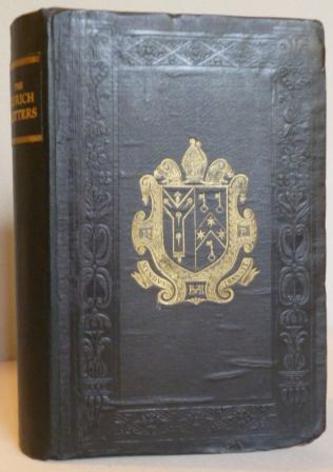
full_1198

The Zurich Letters

In this post, I want to try to explore this relationship in a little more detail, and especially the extent to which marriage was an important aspect of the identity these early reformers constructed for themselves. I’m going to do so using a very well-known source, but one which (to my knowledge) has not been extensively mined for this sort of material, either by any historian of clerical marriage, or indeed by Helena, whose project went off in a slightly different direction. That source is the two-volumes of The Zurich Letters, published by the Parker Society in the 1840s, and, as it says on the title page, ‘comprising the correspondence of several English bishops and others with some of the Helvetian reformers during the reign of Queen Elizabeth’. Continue reading

Woodford’s woes: debt and divine favour in early modern England

Jonathan Willis

Lately I’ve been reading and writing about a large number of godly lives. This is a fascinating genre. Individual stories have always played an important role in Christianity – the gospels themselves, of course, are first and foremost accounts of the life of Christ, written by the evangelists Matthew, Mark, Luke and John. The Confessions of Augustine; the hagiographical accounts of the lives (and deaths) of saints; the intensely spiritual and personal visions of mystics like Julian of Norwich: all these are examples of how life writing of different kinds has played an important role in shaping religious belief and practice in the millennium and a half following the birth of Christ. However, we see two new and distinctive developments occurring in the early modern period. One is the growth of something which starts to look recognisably like modern autobiography: a warts and all account of the trials and tribulations of an individual life, from start to end.[1] The second is the invention of the so-called ‘spiritual diary’ – that puritan specialism, which combined observations on daily life with deeply personal soul-searching: prayer, godly meditation, and the anatomisation and identification of sin. This is where my interest in these documents primarily lies, because the Ten Commandments (about which I’m currently writing a book) were one of the main tools used by puritan authors to forensically examine their spiritual health.

Augustine - father of the spiritual autobiography?

Augustine – father of the spiritual autobiography?

Continue reading

The reformation of Christmas carols?

Jonathan Willis

Merry Christmas everybody! By now, the last scraps of turkey have hopefully been consumed, the last of the wrapping paper been thrown away. You might have decided to hit the sales; you might even be back at work; and you may also have asked yourself one or more of the following questions: ‘what shall we doe in the long winter nights: how shall we passe away the time on Sundayes, what wold you have us doe in the Christmas Hollydayes’? No need to risk a family feud by dusting off the monopoly board just yet, because John Rhodes, the Jacobethan ‘minister of Enborne’ (Berkshire) anticipated just such a need amongst ‘the Schollers of pettie Schooles’ and ‘the poore Countrieman and his familie’.[1]

christmas-tree-and-fireplaceRhodes’ solution for chasing away the winter blues, and passing the long winter evenings, was simple: sing! Rhodes dedicated his book for such as ‘are naturally given to sing’, so that they might ‘please their merrie minds a little’, and that by winning them ‘to sing good things’ they might ‘forsake evill’. Early modern carols were primarily a popular tradition, and Rhodes’ efforts might be mistrusted on two fronts. Firstly, his aim was clearly a moralising one, recalling the original purpose of metrical psalms, to supplant vain, bawdy or worldly songs with more godly fare. Secondly, pastiches of pastoral or country songs were a moderately popular genre, and examples of ‘countrie’ carols were often affected rather than genuine. In 1611, the enterprising composer Thomas Ravenscroft attempted to cover all his bases in Melismata Musicall phansies, by including a blend of tunes, striving to please ‘the noblest of the court, liberallest of the country, and freest of the city’ in their own respective ‘elements’. Continue reading

The editing game…

Jonathan Willis

editing-ratesRegular monster readers may have noticed that my productivity as a blogger has dipped in recent months. I’m not trying to claim extenuating circumstances, but I attribute this (at least in part) to the fact that I’m currently involved in the production of three edited volumes of essays (two as co-editor, and one as sole editor). Editing other people’s work is a great privilege, and most of the time it’s immensely rewarding and enjoyable. Editing a volume of essays, though, is also extremely time consuming, and trying to coordinate your own hectic work patterns with the schedules of ten other academics, perhaps a dozen or maybe more, is often easier said than done. In this post, I’d therefore like to spend some time reflecting on my experience of ‘the editing game’, and the rewards it can bring, as well as some of the potential pitfalls to avoid. If you’re short of time, why not scroll straight to the bottom to see my top 10 dos and don’ts for editors! Continue reading