Unknown's avatar

About manyheadedhailwood

Mark Hailwood is a Senior Lecturer in Early Modern History at the University of Bristol

Food for Thought II: Sociology – Civility and Habitus

Mark Hailwood

In this second of three posts introducing some key theoretical concepts through the history of food and drink (see here for the first) I’m going to move on to think about some of those borrowed from sociologists. The last post ended by stating that a concern with change over time plays an important role in the types of theories historians tend to like and dislike: and it helps to explain why they have been taken with our next key concept – the notion of the ‘civilising process’.
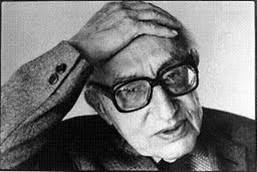
Norbert Elias

Norbert Elias

This was a theory first posited by the German sociologist Norbert Elias, back in 1939, but its main impact on Anglophone historians only came when it was translated into English in 1969, as: The Civilizing Process, Vol. 1: The History of Manners (1969). Its central claim was that between the middle ages (c.800AD) and the nineteenth century the manners of Europeans had become gradually more ‘civilised’ – by which he didn’t necessarily mean ‘better’ or more ‘progressive’ (he wasn’t passing judgement) but marked by increasing levels of self-restraint and self-control, especially with regards to violence, sexual behaviour, bodily functions, table-manners and forms of speech. By reading conduct manuals – guides to appropriate forms of social etiquette, a very popular genre – from across these centuries, Elias identified a shift away from an aristocratic honour culture in the middle ages which had seen aggression, violence, and the excessive consumption of food and drink as acceptable and laudable, towards an increasing sense of shame and repugnance towards all of these behaviours. Continue reading

Food for Thought: An Introduction to Theory via the History of Food and Drink

Mark Hailwood

Prologue

Most historians are not especially enthusiastic about theory. We tend to have an aversion to dealing with abstract concepts, and struggle to see how they might apply to what we work on. Instead, we feel much more at home when we are dealing with context; with specific evidence grounded in, and bounded by, time and place. But like it or not, theoretical concepts have played a major role in shaping historical research – though they are concepts usually borrowed from other disciplines, not produced by historians themselves – so ignoring theory is really not an option.

Doc Brown's thinking cap: not essential for understanding theory

Doc Brown’s thinking cap: not essential for understanding theory

This is as true of food and drink history as other types of history – perhaps more so. The history of drinking, for instance, might just seem like a series of amusing anecdotes (see my alehouse characters series) but really it is all about how we interpret the instances of eating and drinking that we find in the archives, how we use them to tell stories about the societies and cultures that they take place in. For this, historians of eating and drinking tend to rely on various theoretical concepts developed outside of history to try and make sense of the rituals of food and drink consumption that we find in the archives.

So, in the various courses I have taught about the history of food and drink in early modern England I usually have to broach theory at some stage. Trying to teach theory to undergraduate historians is rarely the easiest of teaching assignments, so what I try to do is to show how ideas have been applied to the specific field of food and drink history to help students see their relevance. The aim is not to provide them with a complete mastery of the concepts we discuss – I wouldn’t claim to have this myself – but rather to give them an introductory sense of them so that (a) when they come across mentions of them in the literature they will have an idea of what they mean, and (b) to provide them with a platform to build from should they wish to delve deeper into these concepts in their essays and projects.

Anyway, when recently backing up some computer files I came across the lecture I usually give on this theme, and thought that it might also work well as a series of blog posts that could serve as a very basic introduction to some of the key theoretical concepts used by historians – structuralism, habitus, the civilising process – that might be of interest to undergrads, postgrads, or anyone else who is keen to (or perhaps for a course they are taking, has to) engage with some theory but is a bit daunted by the prospect of delving straight into [insert archetypal daunting theory book here]. Anyone who is a master of these concepts might like to read on and helpfully point out where I get them wrong!

The lecture is a bit long for one post, so I’ll break it down into 3 posts over the next couple of weeks. Part I, below, deals with ‘Anthropology and Structuralism’; Part II will look at ‘Sociology: Civility and Habitus’; and Part III at ‘A Literary Critic and the Carnivalesque’. Tuck in… Continue reading

The Rise of ‘The People’

Mark Hailwood

One of our ongoing conversations on this blog has revolved around the most appropriate terms that practitioners of history ‘from below’ can use to describe their subjects: are we studying ‘the working class’? The ‘lower classes’? The ‘middling and poorer sort of people’? The ‘plebs’? This post doesn’t provide any answers I’m afraid, but in it I want to resume the conversation by highlighting and briefly interrogating a term that seems to me to have been enjoying a certain vogue recently: ‘the people’. Continue reading

Alehouse Characters Christmas Special: The Festive Binge-Drinker

Mark Hailwood

This is the fifth and final post in a series written to mark the publication of my book, Alehouses and Good Fellowship in Early Modern England, which is now available in paperback. Monster readers can take advantage of a special offer to get 25% off (getting the book for just £13.49) by using the promotion code ‘BB125’ when ordering here. Each post in this series focuses on a character that features in the book, and uses them to highlight some of my key themes and arguments.

scrooge0_lg

Totting up the end of year accounts…

On the 22nd of December, 1647, as the wind and rain lashed down outside, the Yorkshire yeoman farmer Adam Eyre spent his day at home casting up his accounts of his expenses for the year. He was a reasonably prosperous man—a member of what historians of the seventeenth-century would call the ‘middling sort’—but he was not at all happy with the level of his outgoings.

What was to blame for his profligacy? The alehouse, of course. So, like many of us do as the year draws to a close, he made a resolution:

‘hereafter never to pay for anybody in the alehouse, nor never to entangle myself in company so much again as I have done’

Adam Eyre did not want to go the way of the fictional ‘wastrel husband’ John Jarret: instead, he determined to renounce ‘good fellowship’.

But Eyre’s resolve did not last long. On 26th December—St Stephen’s Day, later to become Boxing Day—Eyre’s horse had a minor fall when trying to leap over a muddy ditch. As Eyre sought to regain his composure he encountered a fellow officer in the Parliamentary army, Corporal Richard Barber, who persuaded Adam to take a restorative draft of ale or two in an alehouse in nearby Thurlstone. Eyre spent 4 pence (the standard measure of ale then was a quart, or two pints, and this typically cost 2p: so it was a penny a pint). Continue reading

Alehouse Characters #4: The Good Fellowette

Mark Hailwood

This is the fourth in a series of posts written to mark the publication of my book, Alehouses and Good Fellowship in Early Modern England, which is now available in paperback. Monster readers can take advantage of a special offer to get 25% off (getting the book for just £13.49) by using the promotion code ‘BB125’ when ordering here. Each post in this series focuses on a character that features in the book, and uses them to highlight some of my key themes and arguments.

The seventeenth-century English alehouse was undoubtedly a male-dominated space. It was certainly not, however, an exclusively male space. For a start, it was common for alehouses to be run by widows, or by the wives of men whose name was actually the one on the license, and many young women would have worked as serving maids in these institutions. But women also represented a significant component of alehouse customers. Indeed, one historian has estimated that as many as 30% of the customers in Essex alehouses in the sixteenth and seventeenth centuries were women.[1]

Case

Women were a sizeable minority of the alehouse crowd

Women often drank in alehouses with their husbands, and young women frequented them as part of mixed-gender groups of friends. Of course, the alehouse was an important centre of courtship for the young in the villages and small towns of seventeenth-century England, in an age when a trip to the cinema or the bowling alley—or whatever it is young folk do for courtship these days—were not available options. (Although some alehouses did have bowling alleys attached to them even then, so the link between bowling and courtship may be older than we think). Continue reading

Alehouse Characters #3: The Wastrel Husband

Mark Hailwood

This is the third in a series of posts written to mark the publication of my book, Alehouses and Good Fellowship in Early Modern England, which is now available in paperback. Monster readers can take advantage of a special offer to get 25% off (getting the book for just £13.49) by using the promotion code ‘BB125’ when ordering here. Each post in this series focuses on a character that features in the book, and uses them to highlight some of my key themes and arguments.

As we saw in the previous post, the rising popularity of alehouses and good fellowship in seventeenth-century England met with considerable opposition from Church and State. But concerns over developments in England’s drinking culture did not just emanate from hostile ruling elites—from the ‘top down’—they were also voiced within popular culture. This can be seen most clearly in contemporary anxieties that ‘good fellowship’ spawned ‘wastrel husbands’. One such example is the central character of this post: John Jarret.

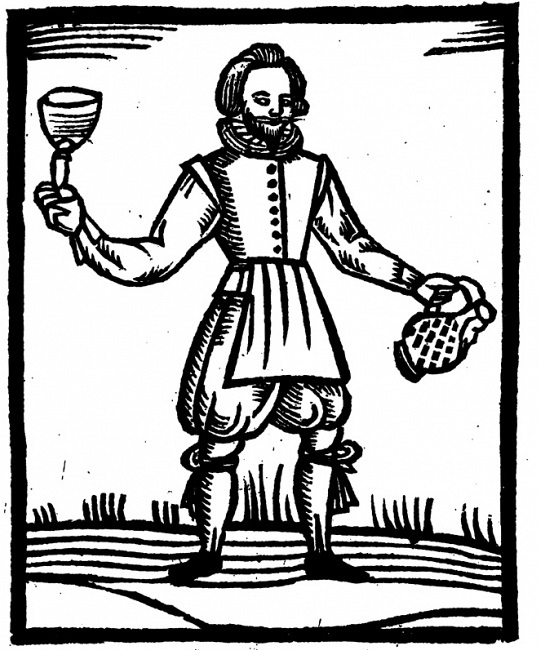
John Jarret

John Jarret

Jarret, like Roaring Dick of Dover, is the central character of a broadside ballad, and whilst both men are keen partakers of alehouse good fellowship, John Jarret’s drinking is portrayed in rather more problematic terms than Roaring Dick’s. Rather than being a celebration of good fellowship, the ballad featuring Jarret—narrated by his long suffering wife—is a warning about its dire consequences.[1] Continue reading

Alehouse Characters #2: The Drunken Constable

Mark Hailwood

This is the second in a series of posts written to mark the publication of my book, Alehouses and Good Fellowship in Early Modern England, which is now available in paperback. Monster readers can take advantage of a special offer to get 25% off (getting the book for just £13.49) by using the promotion code ‘BB125’ when ordering here. Each post in this series focuses on a character that features in the book, and uses them to highlight some of my key themes and arguments..

On an October evening, in the year 1604, a weary traveller by the name of John Oultings entered Turner’s alehouse in the Essex parish of Layer Marney. It was around 6 o’clock, and Oultings ordered himself some beer and cheese, and requested a room in which to rest overnight. It was the kind of routine stopover that was a common occurrence in England’s seventeenth-century alehouses, as the institution represented an important component of the country’s hospitality infrastructure.

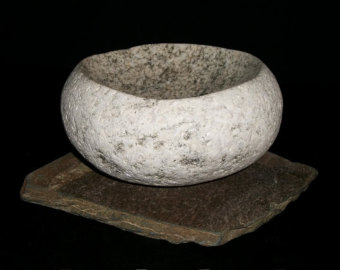
So far, then, nothing particularly remarkable. But what Oultings was to witness during his stay was a sequence of rather more intriguing events. On his arrival he found John Lufkin – the central character of this post – drinking with one Thomas Marsh and several other men. Whether Oultings joined these men is not clear, but at around 9 o’clock he saw John Lufkin call to the alehousekeeper to bring forth ‘a huge great stone pot’, which contained ‘very near two gallons’ (that’s 16 pints) of beer, a vessel that the drinkers referred to as ‘Fowler’—a rather odd nickname for a drinking vessel, but its provenance will become clear. Oultings was not interested in participating in whatever drinking ritual was about to ensue, and retired to his bed chamber.

Bring forth 'The Fowler'!

Bring forth ‘The Fowler’!

Continue reading

Alehouse Characters #1: The Jovial Good Fellow

Mark Hailwood

This is the first in a series of posts written to mark the publication of my book, Alehouses and Good Fellowship in Early Modern England, which is now available in paperback. Monster readers can take advantage of a special offer to get 25% off (getting the book for just £13.49) by using the promotion code ‘BB125’ when ordering here. Each post in this series focuses on a character that features in the book, and uses them to highlight some of my key themes and arguments.

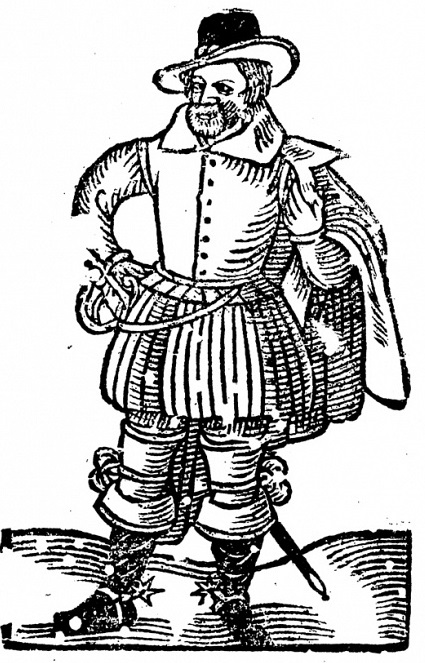
Meet our first alehouse character: Roaring Dick of Dover, the Jovial Good Fellow of Kent.

Roaring Dick of Dover

Roaring Dick of Dover

Roaring Dick is the narrator of an eponymous 1630s drinking ballad of the sort that would have been performed in, and perhaps even pasted onto the walls of, England’s seventeenth-century alehouses. Continue reading

‘The Rabble that Cannot Read’? Ordinary People’s Literacy in Seventeenth-Century England

Mark Hailwood

Those of us historians intent on exploring the world of ordinary women and men in the sixteenth and seventeenth centuries conduct a lot of our research by looking at surviving examples of what such people read–for instance, cheap printed broadside ballads–or of what they wrote–take, say, Joseph Bufton’s notebooks. These materials are fascinating and undoubtedly useful, but regular readers of this blog might understandably find themselves wondering about the validity of this approach, and asking themselves a simple but important question: to what extent could the lower classes of England actually read and write in the seventeenth century?

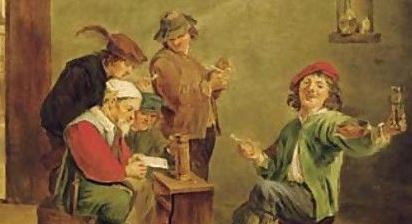
David Teniers the Younger 'Peasants Reading a Letter...' But could they?

David Teniers the Younger ‘Peasants Reading a Letter…’ But could they?

It’s a fair question, and has important implications. Does this material really provide a window into the minds of the most humble people in Tudor and Stuart society, or were reading and writing skills the preserve of the more affluent, or at least the middling, classes of society? After all, in 1691 the puritan writer Richard Baxter had described his lower-class neighbours as ‘the rabble that cannot read’. Was this fair? Continue reading