The ‘monster now has a number of long running ‘mini-series’ – collections of posts that are grouped around a particular theme, topic, or source collection. For your delectation we now bring you a list of the said mini-series, with a brief description of the contents of each. For future reference the link is just up there, on the right end of the menu bar. Happy browsing!
Author Archives: manyheadedmonster
A mini-series on ‘The Tudor South West’ at Exeter’s Royal Albert Memorial Museum
Laura Sangha
In November I had the pleasure of visiting a wonderful new exhibition at Exeter’s recently refurbished Royal Albert Memorial Museum. Titled ‘West Country to World’s End: the South West in the Tudor Age’, the publicity describes it as ‘celebrating the spirit of adventure and enterprise of south west people’ during the Elizabethan ‘Golden Age’.
In this mini-series of blogs I take monster readers through a virtual tour of some of the exhibition’s objects and images, exploring what they tell us about the history of the early modern South West.
- A City Map: a 1587 map of Exeter, full of delightful and telling details.
- Domestic Decoration: what are two images of Moses and Job doing in post-Reformation, Protestant England?
- Goldsmiths and Urban Redevelopment: including some lesser known consequences of reform, and why iconoclasm is like town planning.
- The Spanish Armadas: the South West in the front line of Catholic-Protestant hostilities, some more maps and some Houses of Parliament tapestries.
- Parting Thoughts: a round up of what the exhibition has taught me about the South West.
‘West Country to World’s End: the South West in the Tudor Age’ runs until 2 March 2014 at Exeter’s RoyalAlbertMemorialMuseum. You can find all the details about the museum, it’s opening times, it’s wonderful café and more on their website.
The 100th Post
You are currently reading post number 100 on the many-headed monster. On realising this (statistically) significant event was approaching, we monster heads decided it would be worth marking in some way. The blog has been enormously rewarding as an arena to think through our ideas and to share our archival discoveries, but also as a way to connect with you, the reader. Since our first post in July 2012, we have had more than 40,000 views and 541 comments, and we are enormously grateful that so many people have read our musings and engaged with us on the blog. Thus, this is a round-up of some pearls from the blog archive: our most popular posts, collectively and individually, alongside a nominated personal favourite from each contributor. Enjoy, and we look forward to continuing to work with you in the future!
Our heaviest traffic on the ‘monster comes from the ‘The Future of History From Below Online Symposium’, a collection of multi-authored papers based on two conferences on the topic. For the heads, this has become an important resource for research and teaching, and was also responsible for our busiest day in July 2013 when we received a spectacular 481 views.

Most popular post: The Immersive Turn: Or, what did a seventeenth-century drinking song sound like? (Nov. 2013)
Nominated post: “many of my favourite ‘monster posts are those that have generated a lot of debate about aspects of ‘the craft’ – digital v archival sources; the use of jargon etc – but the post I would like to nominate here does something rather different: it’s one of Brodie’s ‘Norwich Entertainments’ series, ‘Ballad-singers and dangerous news, with coffee‘ (Nov. 2012). Historians of early modern England now make a lot of use of printed materials like ballads and pamphlets, but we know less than we would like about their dissemination and consumption. This fascinating little post provides us with some valuable insight into the social history of print in an early modern city.”
Laura Sangha
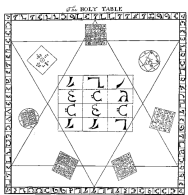
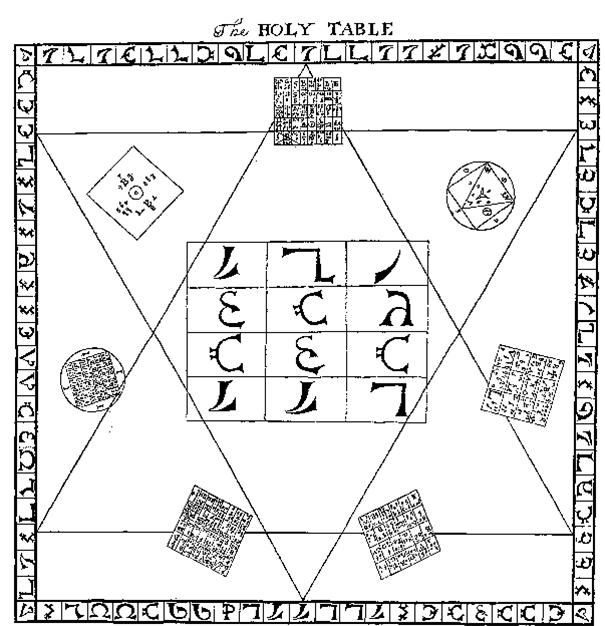
Most popular post: John Dee’s conversations with Angels (Nov. 2012)
Nominated post: “Jonathan’s Idols of the mind, or What does God look like? (June 2013) tackles a ticklish question: how did people in the past visualise God? The delightful post explores this central and controversial aspect of the early modern mentality, taking in some wonderful illustrations along the way.”
Most popular post: Norwich Entertainments – Part III: A medieval royal mistress in the 17th century and beyond (Aug. 2012)
Nominated post: “Laura’s two History and Analogy posts (Sept. 2013). A light-hearted look at one of the least-discussed but most-important aspects of historical writing and teaching. Some of the examples, including some offered in the comments, got me chuckling.”
Jonathan Willis
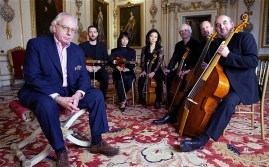
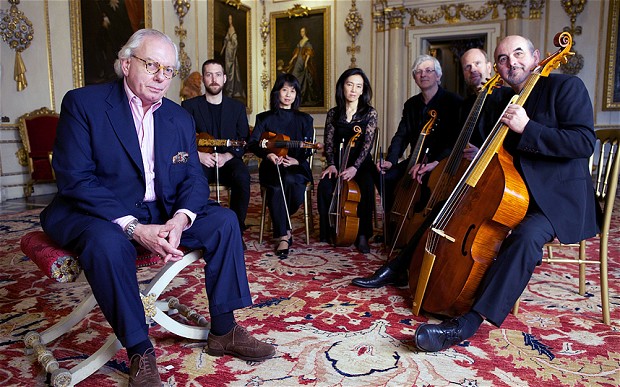
Most popular post: Tudor history on TV, and a partial review of David Starkey’s ‘Music and Monarchy’ (Aug. 2013)
Nominated post: “Mark’s three-part ‘Workers Representation’ series. As someone who’s worked on ballads primarily as musical and textual artefacts (and for the evidence they provide about religious identity), the use of ballad images for information about occupational identity had never really occurred to me and these are a fascinating series of discussions. If I had to pick just one of the three, I think I’d go for ‘spinning a yarn’ (Sept. 2012): one of my favourite quotes has to be ‘a woman of lower or middling status didn’t need to wear the highest quality clothing to win a man’s heart – she needed to be able to make it’.”
History from below at NACBS
We don’t generally advertise events, but given the recent interest on the Monster in ‘history from below’, we thought we’d pass along a request from a colleague:
We are looking to put together a panel – provisionally entitled ‘New approaches to History from Below in Early Modern England, c. 1500-1800’ – for the upcoming North American Conference on British Studies in Minneapolis, MN, 7-9 November 2014.
We invite papers that:
– offer methodologically innovative approaches to understanding the continued relevance and significance of history from below
– suggest potential new directions and future possibilities of history from below
– consider what history from below can tell us and the significance of the different worlds it can revealPapers could take the form of case studies; discussions of the historiography of history from below in early modern England; explorations of the interaction between different analytical categories (e.g. class and gender); theoretical treatments; etc.
Please submit a 300 word abstract and one-page CV to hillary.taylor@yale.edu by Tuesday February 25th for the March 1st NACBS submission deadline. Proposals from graduate students and established scholars are equally welcome.
Feel free to be in touch with any questions.
All best,
Jason Rozumalski (PhD candidate, Berkeley)
Hillary Taylor (PhD candidate, Yale)
Julie-Marie Strange, ‘Historicising the comfort of “things” in late-Victorian and Edwardian working-class culture’
[This is the seventeenth piece in ‘The Future of History from Below’ online symposium (#historyfrombelow). Julie-Marie Strange is Senior Lecturer in Victorian Studies at the University of Manchester. Her research and publications focus on inter-personal dynamics in working-class and poor families in late Victorian and Edwardian Britain. Here she contributes to our conversation about the relationship between material culture and ‘history from below’ by asking how the study of ‘things’ can bring new or alternative perspectives on overlooked aspects of working-class lives.]
In The Comfort of Things (2008), the anthropologist Daniel Miller presented a series of ‘portraits’, stories of individuals and the things in their home that mattered to them, to challenge a narrative of consumption as corruption. Miller’s vignettes illuminate how objects embody people’s aspirations for sure, but, he also explores how the stories people tell about their things are intrinsic to their struggle to make their lives meaningful. For Miller, we appropriate objects to give meaning to social processes and relationships.[1] This post – a brief presentation of two case studies from late-Victorian and Edwardian working-class culture – makes a foray into how working people’s ‘stuff’ can be interrogated to explore the inter-personal dynamics of family life.
There is, of course, a rapidly growing literature on material culture and the ways in which historians might make use of it to understand the past, particularly ‘hidden’ aspects of history. What I’m going to focus on here is how things in working-class homes suggest insights into family relationships, particularly between children and their fathers. I’m focusing on fathers because they have typically been perceived by historians and contemporaries as on the periphery of family life in accounts that have privileged children’s relationships with mothers. Continue reading
Chris Briggs, ‘Household possessions of the 14th and 15th century peasantry’
[This is the sixteenth piece in ‘The Future of History from Below’ online symposium (#historyfrombelow). Chris Briggs is Lecturer in Medieval British Social and Economic History at the University of Cambridge. His research and publications focus on various aspects of society, economy, and the law in England and Europe during the later middle ages (1200-1500). This post – along with the next post by Julie-Marie Strange, and Ruth Mather’s earlier in the summer – turns the conversation to a particular theme that was prominent at both of our ‘history from below’ events: the relationship between material culture and ‘history from below’. Here, Chris examines how this relationship might be developed in the medieval context.]
This post discusses an ongoing research project on the possessions of the medieval English peasantry, and considers how far and in what ways it should be considered an exercise in ‘History from below’. The paper begins by outlining what I see as the characteristics of ‘History from below’, both in general and with respect to the English middle ages in particular. I also ask whether history from below, a movement that was at its most confident roughly 50 years ago, can still be traced in the more recent and current work of English medievalists. Next I briefly describe my project on peasant goods and chattels, which is still at the stage of identifying questions, methods and sources. The final part looks at ways at which this work might and might not advance the history from below agenda. Continue reading
Selina Todd, ‘History from below: modern British scholarship’
[This is the fifteenth piece in ‘The Future of History from Below’ online symposium (#historyfrombelow). Selina Todd is a Lecturer in Modern British History and Fellow of St Hilda’s College, University of Oxford. Her research and publications focus on working-class and women’s history in modern Britain. Here she brings our conversation about ‘history from below’ through to the twentieth century, providing a survey of the recent historiography on modern Britain, and identifying some of the major challenges and future directions for ‘history from below’ in that field.]
Fifty years on from E.P. Thompson’s call to rescue working people from ‘the enormous condescension of posterity’, and myriad ‘turns’ later, history from below is flourishing in modern British scholarship. An emphasis on ‘ordinary people’ has replaced an earlier stress on the working class, and studies of collective protest are less numerous than those on everyday life. [1] But there is no sign that scholars consider Thompson’s original project ‘cliched’ or ‘tired’.
This post reflects on how history ‘from below’ has developed, the state it is in, and suggests some possible future directions. As the first section will show, we have reasons to be hopeful. But in the second section I argue that we need to historicise the material circumstances in which our scholarship is produced in order to fight for our future. In the final section I propose that we could use more studies of class, which might help us to restate the centrality of history ‘from below’ to understandings of modern Britain. Continue reading
Emma Griffin, ‘Working class autobiography in the industrial revolution’
[This is the fourteenth piece in ‘The Future of History from Below’ online symposium (#historyfrombelow). Emma Griffin is Professor of History at the University of East Anglia. Her research and publications focus on the impact of the industrial revolution on the lives of the working poor. Here, she brings our conversation about ‘history from below’ forward into the eighteenth and nineteenth centuries, and considers the light working class autobiography can shed on workers’ experiences of the British industrial revolution – and argues that approaching this landmark historical development ‘from below’ can radically alter our perspective on it.]
The industrial revolution was possibly the single most significant event in our history. But when we think about the men, women and children, who with their strong backs and nimble fingers did the most to power the industrial revolution, we tend to feel that there is little to celebrate. The introduction of new working patterns which compelled men to work at the relentless pace of the machines. Children forced into factories and down mines at ever younger ages. Families squeezed into dark, disease-ridden cities. And nothing but the workhouse for those who slipped through the net. All the great Victorian commentators – Engels, Dickens, Blake – painted their industrial times in a very dark hue. And their dismal litany echoed throughout the twentieth century, as a succession of pioneering social historians – the Hammonds, Eric Hobsbawm, and of course E. P. Thompson – turned their attention to the devastating impact of the industrial revolution on the working poor.
Yet despite the frequency with which various versions of the bleak account of the industrial revolution have been retold, the claim that this period was worse than anything that has gone before has not received the kind of scrutiny it deserves. In particular, it is remarkable that so little effort has been made to listen to what working people themselves had to say about their life and times. Of course, it is usually countered that such an effort would be futile as working people did not leave behind much in the way of written sources. But whilst it is certainly true that they wrote far less than their social superiors, it is not the case that they wrote nothing at all. Less well known, but no less important, is a remarkable collection of autobiographies written by working people themselves. And if we listen to these, we hear a story that is very different to the one that we are used to.
Andy Wood, ‘History from below and early modern social history’
[This is the thirteenth piece in ‘The Future of History from Below’ online symposium (#historyfrombelow). Andy Wood is Professor of Social History at Durham University. His research and publications focus on popular protest, customary rights and social memory in early modern England. Here he takes us through the relationship between ‘history from below’ and early modern social history, and outlines a number of key principles and approaches that might inform that relationship going forward.]
History-from-below poses a question. Like Bertoldt Brecht’s Questions from a worker who reads and Virginia Woolf’s A room of one’s own, history-from-below asks us to describe the lives, ideas and experiences of those who lay ‘below’ dominant historical narratives. Like Subaltern Studies (developing at the same time, from the early 1970s) history-from-below focused on a disparate range of groups, spanning time and distance: workers, peasants, slaves, women, the marginalized, oppressed ethnic, religious and sexual minorities.
The history-from-below tradition grew out of the English Marxism of the CPHG (Communist Party Historians’ Group). It was the badly-behaved adolescent offspring of the CPHG, loosely grouped around History Workshop Journal and its attendant movement rather than around the journal Past and Present, which by the 1970s had lost its explicit political focus. Like the CPHG, history-from-below valorized resistance and largely ignored questions of subordination, social integration and hegemony. But unlike the CPHG generation, it was explicitly open to histories of women, gender, race and sexuality. It represented the historiographical expression of a broader shift at work within the British Left in the 1970s and 1980s, the urge – in the face of deindustrialization and the late-recognized halt in the forward march of labour – to create new alliances beyond the traditional labour movement. That political project achieved its clearest expression in Livingstone’s GLC (Greater London Council), in a resurgent CND (Campaign for Nuclear Disarmament) with its connection (via Greenham) to second-wave feminism and in the diverse range of groups attracted to the Miners’ Support Groups during the 1984-5 strike. Although this ‘rainbow alliance’ (the term originated with Jesse Jackson and was anglicised by the International Marxist Group as an ‘alliance of the oppressed’) was to be defeated, its historiographical expression in the fuzzy History Workshop tradition had its successes – as this symposium shows, nowadays it is hard to write social and cultural history without reference to some of the concerns of History Workshop, most of all the legacy of feminism and the lesbian and gay liberation movement. Histories of class, marginalized by the cultural turn of the last 20 years, are starting to reassert themselves too. I’ll come back to this resurgence towards the end.
John Arnold, ‘History from below – some medievalist perspectives’
[This is the twelfth piece in ‘The Future of History from Below’ online symposium (#historyfrombelow). John Arnold is Professor of Medieval History at Birkbeck. His research and publications focus in particular on medieval ‘belief’. Here he takes us through some of the ways ‘history from below’ approaches have played an important role in medieval scholarship on both England and France.]
“And so our interpretation of history will be both materialist with Marx and mystical with Michelet. It was economic life that was the basis and the mechanism of human history, but across the succession of social forms man, a thinking force, aspired to the full life of thought, the ardent community of the unquiet intelligence, avid for unity and the mysterious universe.”
[Jean Jaurès, Histoire Socialiste de la Révolution Française, Paris, 1911. Introduction. See http://www.marxists.org/archive/jaures/1901/history/introduction.htm]
‘History from below’ has tended predominantly to be an early modernists’ term; [1] and it is a very baggy term. Is it simply the same as ‘social history’; is it related to Alltagsgeschichte; does it make a particular claim about collective historical agency from ‘below’; or is it more concerned with the experience of ordinary people at the sharp end of historical change? The term’s capacious vagueness is perhaps the main point – and an indication of its anglophone origin, freed from the strictures of theoretical precision. But when one starts to think about its connotations for different period specialisms, issues of purpose and project become naggingly apparent. Medievalists and early modernists tend to share some sense that making ordinary (/subaltern/plebeian/lower sort/peuple menu/popolani …. etc etc, pick one’s own inevitably problematic term) people visible and audible is in itself an historiographical success worth pursuing, because the weight of the evidence – so we tend to say, though this bears further discussion in itself – submerges the majority of humanity in favour of the visible, powerful elite. That shared project immediately requires some further nuance however.