The Experience of Work in Early Modern England IV: Harvesters

This post is part of a series that marks the publication of The Experience of Work in Early Modern England. The book is co-authored by monster head Mark Hailwood, along with Jane Whittle, Hannah Robb, and Taylor Aucoin. It uses court depositions to explore everyday working life between 1500 and 1700, with a particular focus on how gender shaped work. It is an open access publication (i.e. it is available to view/download for free, here). The post first appeared on the ‘Women’s Work in Rural England, 1500-1700′ blog as a ‘work in progress’ piece in 2019 – it is reposted here to whet your appetite for finding out where the research ended up, which you can do by reading the book!

Mark Hailwood

As Clare Leighton put it so elegantly in her 1933 The Farmer’s Year, it is that time of year when ‘summer begins to tire’. For centuries of farmers it has been the time when ‘the supreme moment of his year is upon him’, and across the ‘vast sweep of landscape there is the golden glow of harvest.’ It is August, and ‘harvesting is due’.

Of course, it is not only the supreme moment of the year for the individual farmer: for our preindustrial forebears the harvest was, as Steve Hindle has put it, ‘the heartbeat of the whole economy’.[1] The economic fortunes of early modern societies were bound up with the quality and quantity of grain gathered from the fields at summer’s end.

The importance of the early modern harvest, a process so evocatively captured by Pieter Bruegel the Elder in 1565, can hardly be overstated, and when the time came to set it in motion it dominated men’s work schedules above all else: ‘the harvesting draws all men to it. Ploughboy and cowman, carter and shepherd, all are in the fields’ (Leighton again). But what of the role played by women in the ‘supreme moment’ of the agricultural cycle? It is another question our project can shed some light upon.

Continue reading

The Experience of Work in Early Modern England III: ‘Ploughmen go whistling to their toils’

This post is part of a series that marks the publication of The Experience of Work in Early Modern England. The book is co-authored by monster head Mark Hailwood, along with Jane Whittle, Hannah Robb, and Taylor Aucoin. It uses court depositions to explore everyday working life between 1500 and 1700, with a particular focus on how gender shaped work. It is an open access publication (i.e. it is available to view/download for free, here). The post first appeared on the ‘Women’s Work in Rural England, 1500-1700′ blog as a ‘work in progress’ piece in 2017 – it is reposted here to whet your appetite for finding out where the research ended up, which you can do by reading the book!

Mark Hailwood

leighton_november_1024x1024
Engraving from Clare Leighton’s wonderful book The Farmer’s Year

As a treat for surviving a long winter of data entry, I have indulged myself in recent days with some invigorating morning walks, enjoying the first signs of the turnover of the seasons (well, we have one daffodil out in the garden at least) a phase that the poet John Clare called ‘the thaw’ (the title of this post is borrowed from Clare too).[1] This time of year was a key watershed in the early modern agricultural year, of course, as thoughts drifted back to the fields after their dormant winter. With the passing of the frosts it was time to start ploughing the earth in preparation for sowing crops in the spring. It was time to set the agricultural cycle in motion once more.

It seems a reasonable assumption that it was not a favourite work task in the period, yoking the oxen (in the vast majority of our examples it was oxen rather than horses pulling the plough[2]) and heading out in inclement weather (Clare again: ‘March month of “many weathers” wildly comes’). There was certainly an element of danger involved. On 21st February 1564, James Treherne, a servant, was ‘driving six oxen of his master’s drawing a plough tilling the ground’ in Rowde, Wiltshire, when one of the oxen knocked him down, whereby he fell on an axe he was carrying and was fatally wounded. In 1651, Thomas Harding, of Bradninch, Devon, was giving testimony in a testamentary dispute when he recalled that the deceased, Thomas Potter of Broadhembury, had ‘died of a wound received by a ploughshare [blade] in his thigh as he was in a field at plough, which happened some days before his death’.

Continue reading

The Experience of Work in Early Modern England II: Family Fortunes

This post is part of a series that marks the publication of The Experience of Work in Early Modern England. The book is co-authored by monster head Mark Hailwood, along with Jane Whittle, Hannah Robb, and Taylor Aucoin. It uses court depositions to explore everyday working life between 1500 and 1700, with a particular focus on how gender shaped work. It is an open access publication (i.e. it is available to view/download for free, here). The post first appeared on the ‘Women’s Work in Rural England, 1500-1700′ blog as a ‘work in progress’ piece in 2016 – it is reposted here to whet your appetite for finding out where the research ended up, which you can do by reading the book!

Mark Hailwood

I often describe the main bulk of the work that underpins this project as ‘data entry’. But perhaps ‘data entry’ isn’t the best way to describe the harvesting process that has been our focus: reading thousands of depositions (I recently estimated that I’ve read somewhere between 6000-7000 individual depositions so far this year) and all of the stories of everyday life that they contain, and then carefully converting these complex qualitative sources into usable quantitative data, is a more varied and stimulating exercise than the term ‘data entry’ conjures up.

One of the upshots of this kind of work is that in among all the lengthy tithe and testamentary disputes that often turn out to be of little use to us, you occasional unearth a remarkably rich case that contains a veritable jackpot of work activities. And it is one such case that I want to discuss in this post.

‘Households in a landscape’

Step forward: the Conant Family of Moretonhampstead.

Continue reading

The Experience of Work in Early Modern England I: Winter is Coming

This post is part of a series that marks the publication of The Experience of Work in Early Modern England. The book is co-authored by monster head Mark Hailwood, along with Jane Whittle, Hannah Robb, and Taylor Aucoin. It uses court depositions to explore everyday working life between 1500 and 1700, with a particular focus on how gender shaped work. It is an open access publication (i.e. it is available to view/download for free, here). The post first appeared on the ‘Women’s Work in Rural England, 1500-1700′ blog as a ‘work in progress’ piece in 2015 – it is reposted here to whet your appetite for finding out where the research ended up, which you can do by reading the book!

Mark Hailwood

Brueghelian winter
Brueghelian winter

One aspect of the experience of work that our data sheds light on is seasonal patterns in work activities. As the English nights start to draw in, we ask: what tasks did early modern English workers do to make ready for the onset of winter?

A significant number of our examples from late November and early December relate to the replenishing of wood supplies to fuel much-needed winter fires. On the 25th of November 1591, Thomas Ven, an 80-year-old husbandman of King’s Brompton in Somerset, was up a ladder pruning an oak tree with an axe when he plummeted to his death. Locals must have started to wonder if evil spirits possessed the wood of Barlynch Grove, where Ven had fallen, for in December of the following year the 28-year-old Edward Norman met his end by falling out of an ash tree that he had climbed to cut branches from.

Continue reading

Teaching early modern History with Images

This is the fourth guest post in the mini-series Visual Culture in Early Modern England (read the introduction and find links to other posts here). Adam Morton shares his experience of using images to get students talking in seminars, exploring their ability to get students thinking about things like opinion, polemic and ambivalence in primary material.

Adam Morton is Reader in Early Modern British History at Newcastle University. He researches the long-Reformation in England, with a particular focus on anti-popery and visual culture. His publications include Civil Religion in the early modern Anglophone World (Boydell & Brewer, 2024) (with Rachel Hammersley), The Power of Laughter & Satire in Early Modern Britain: Political and Religious Culture, 1500-1820 (Boydell & Brewer, 2017) (with Mark Knights), Queens Consort, Cultural Transfer and European Politics, c.1500-1800 (Routledge, 2016) (with Helen Watanabe-O’Kelly), and Getting Along? Religious Identities and Confessional Relations in Early Modern England – Essays in Honour of Professor W.J. Sheils (Routledge, 2012). His current project considers the visual culture of intolerance in early modern England.

Adam Morton

I’ve always found that images get History students talking. They see things I don’t see and ask questions I’ve not thought to ask. The chattiest students are often the ones I least expect, the ones who have been quiet in previous weeks, the ones you worry are struggling with or not enjoying the course. Approaching a seminar topic through images can bring those students out of themselves.

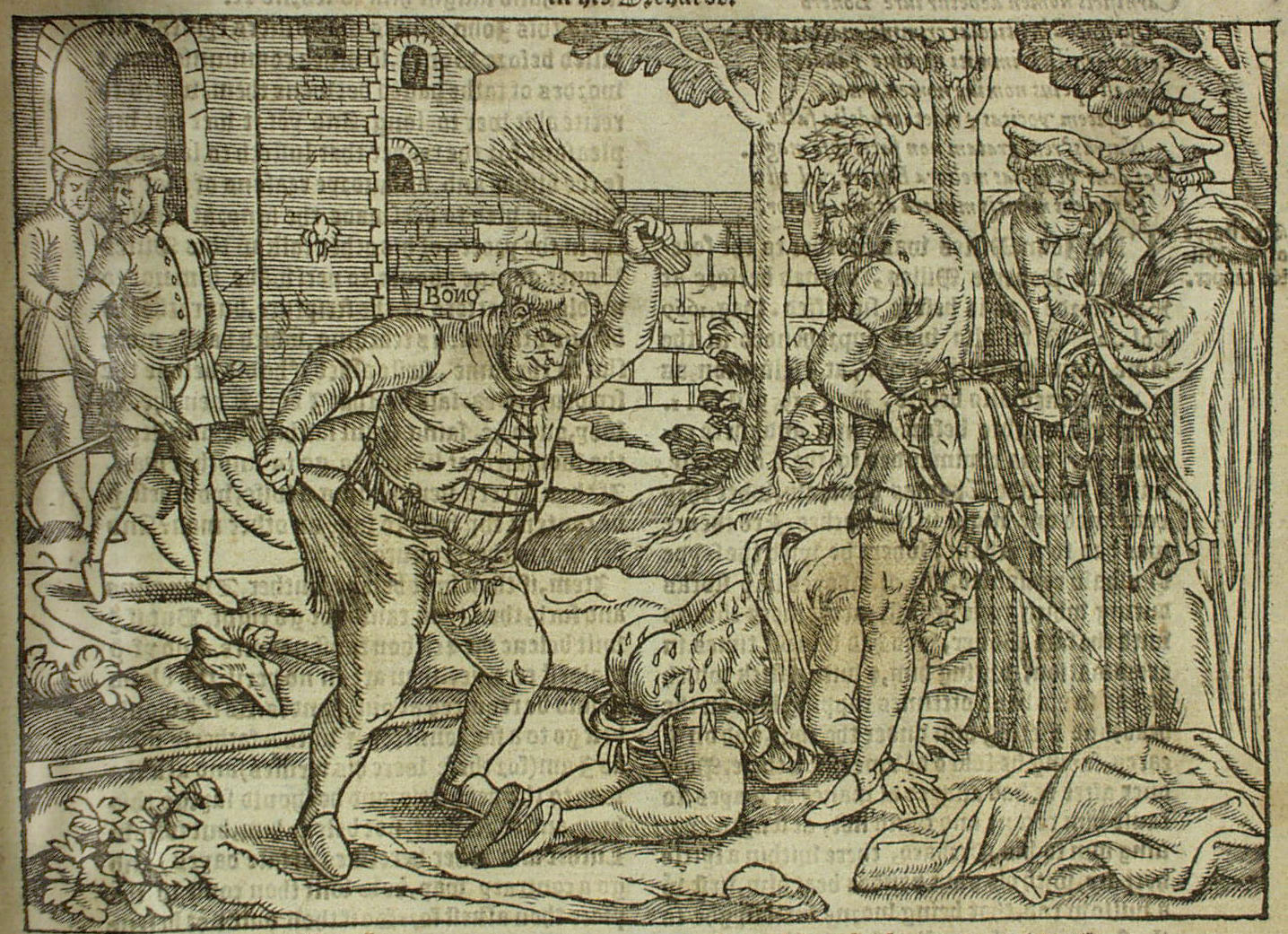
I remember one instance, long ago on a second year Reformation course timetabled in the drabness and drizzle of the autumn term’s Friday afternoon slot, with fondness. A woodcut from John Foxe’s Acts and Monuments showing Edmund Bonner, the Bishop of London, stripped to his underwear and thrashing a Protestant’s buttocks, left one usually quiet student tripping over her tongue with things to say [Fig. 1].[1] She prodded the seminar to life with thoughts about humour, about cruelty and humiliation, about images as acts of revenge, and about the control involved in having the power to portray someone. Long dead Reformers suddenly seemed very human to her. “Is the image sexual?”, she asked the room. The discussion took off. Now I was the silent one: the teaching was going well.

Figure 1. TITLE from John Foxe, Acts and Monuments (1570).

Foxe’s woodcuts are an obvious candidate for primary sources in undergraduate seminars, of course. Although they are no longer as rooted in public life as firmly as they were two generations ago, ‘The Book of Martyrs’’ images still provide a way into the big problems of Reformation history in the seminar room because they offer us dramatic vignettes that pare abstractions – martyrdom, heresy, theology, and memory – down to something tangible. But images can be much more than ice breakers. They can be the bedrock of seminar discussion, too. Continue reading

Cut, copy, paste: what people did with early modern Printed Images

This is the third guest post in the mini-series Visual Culture in Early Modern England (read the introduction and find links to other posts here). As in our previous post by Helen Pierce, Malcolm Jones considers how people consumed prints – in this case by adapting them in various ways. Please click on images for enlargements.

Malcolm Jones

In my youth I worked in museums and as a lexicographer, and subsequently until my retirement in 2010, as a lecturer in the English Department of Sheffield University, the year in which my book, The Print in Early Modern England – An Historical Oversight, was published. Since then I have published various articles on early modern prints, and am currently working on a book showcasing the wealth of imagery to be found in early modern alba amicorum (‘friendship books’). These days I do most of my art history informally in maintaining my 100+ Pinterest boards, and exercise my lifelong interest in language in reading the inscriptions on late medieval metal-detectorists’ finds for the British Museum’s Portable Antiquities Scheme.

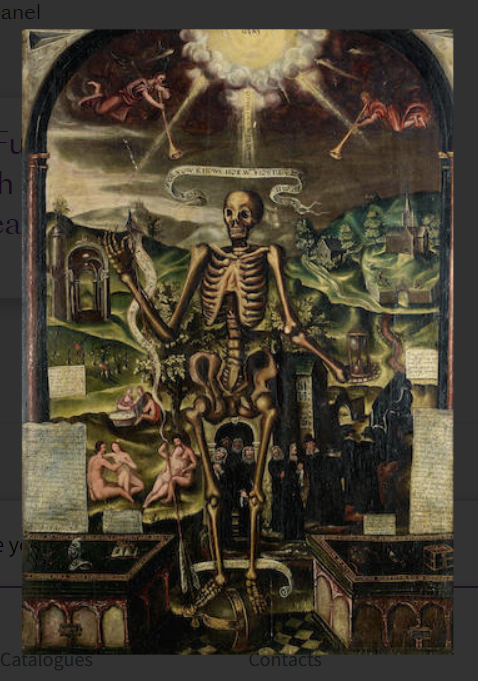
Although unknown to me at the time, just as my book The Print in Early Modern England: an Historical Oversight (London/New Haven, 2010) was going through the press in late 2009, the auctioneers, Bonhams, were selling The Chelsea Collection of Severin Wunderman. I later discovered that Lot 202 was minimally catalogued as a painting on panel, 112 x 77.5 cms., editorially entitled “An Allegory of Death”, described as “English School, circa 1600”, and as “inscribed with various verses from the Bible”. [Figure .1][1]

Figure 1: An Allegory of Death, c.1600.

It was immediately apparent to me that the painting reproduced the entire print known as Death his Anatomy, with the memory of the Righteous, and oblivion of the wicked, in sentences of Scripture,[2] when issued by John Overton in 1669, but that is now only known in the form of four fragments preserved in the British Library, bearing both Peter Stent’s and John Overton’s imprints [Figure. 2].[3] Continue reading

Building Your Own Book: Printed Images, producers and buyers in early modern London

This is the second guest post in the mini-series Visual Culture in Early Modern England (read the introduction and find links to other posts here). In this post, Helen Pierce explores the lively world of London print makers and buyers and introduces us to an innovative sales technique.

Helen Pierce is Senior Lecturer in Art History at the University of Aberdeen. She specialises in the visual and material culture of early modern Britain, with a particular focus on printed images as vehicles for political engagement.

Helen Pierce

The early decades of the seventeenth century saw the rise of commercial printmaking in England. Previously, both single-sheet prints and book illustrations had been primarily available through trade and exchange, arriving in London from centres of print publishing in the Low Countries, or they were the work of visiting artists, but broader social developments were now informing their production at home.[1]

During the later sixteenth century, London had become a refuge for significant numbers of Dutch, Flemish and French Protestants, seeking freedom of worship following episodes of persecution in northern Europe. Many of these ‘strangers’ brought with them notable skills in creative industries such as painting, goldsmithing, weaving and printmaking, and once permanently settled, children commonly followed their parents into the same sectors. English print sellers were now able to engage directly with professional engravers in London, rather than relying on trade with imported material.

In 1603, John Sudbury and his nephew George Humble established their print selling business at Pope’s Head Alley, just steps away from the commerce hub of the Royal Exchange. John had initially specialised in map publication, and while this continued under his partnership with Humble, they also expanded to printed pictures, both imported and published in London. Sudbury and Humble became well-known for their specialist stock; in 1622 the schoolmaster and author Henry Peacham, who considered himself to have some expertise as a print connoisseur, advised that works by the prolific Dutch engraver Hendrick Goltzius were ‘to be had in Popes head alley.’[2] Here, the customer could also purchase a range of portrait prints engraved by London-based artists including the prolific Renold Elstrack, and from the mid-1610s, Francis Delaram and Simon de Passe. These were primarily half- and full-length representations of monarchs past and present, and other significant figures associated with the Jacobean court and church.

Figure 1: Renold Elstrack, Baziliologia, a Booke of Kings, published by Compton Holland, 1618. Copyright of the Trustees of the British Museum.

Sudbury and Humble’s dominance of this new market for printed images was maintained until 1616, when a further family-based print selling business was set up within walking distance of their Pope’s Head Alley premises. At the sign of the Globe in Cornhill ‘over against the Exchange’, publisher and print seller Compton Holland collaborated with his brother Henry, a printer and member of the Stationers’ Company, on a novel and commercially clever project: the Baziliologia. Taking advantage of the broader cultural interest in portraits of monarchs established by Sudbury and Humble, the Hollands also tapped into King James’s own longstanding interest in his personal genealogy; its perceived longevity back to the ancient King of the Britons, Brutus, enhanced his legitimacy as both a Scottish and English ruler. Continue reading

Printed Images, Laughter and early modern History

This is the first guest post in the new monster mini-series Visual Culture in Early Modern England (read the introduction here). To begin, Adam Morton considers what historians should do with the alien and often cruel humour of past ages and in particular the subversive content of satirical prints.

Adam Morton is Reader in Early Modern British History at Newcastle University. He researches the long-Reformation in England, with a particular focus on anti-popery and visual culture. His publications include Civil Religion in the early modern Anglophone World (Boydell & Brewer, 2024) (with Rachel Hammersley), The Power of Laughter & Satire in Early Modern Britain: Political and Religious Culture, 1500-1820 (Boydell & Brewer, 2017) (with Mark Knights), Queens Consort, Cultural Transfer and European Politics, c.1500-1800 (Routledge, 2016) (with Helen Watanabe-O’Kelly), and Getting Along? Religious Identities and Confessional Relations in Early Modern England – Essays in Honour of Professor W.J. Sheils (Routledge, 2012). His current project considers the visual culture of intolerance in early modern England.

Adam Morton

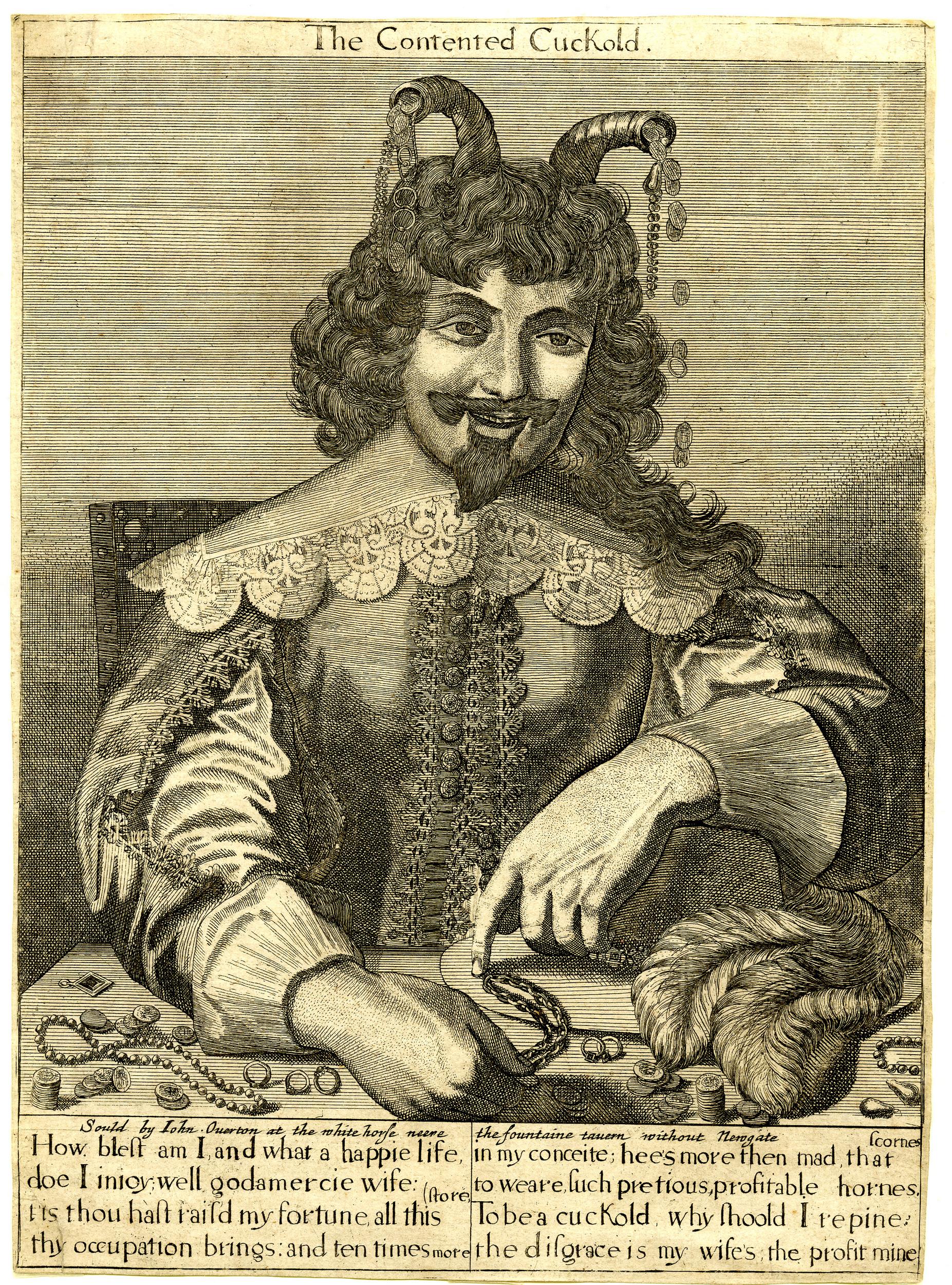
Old jokes unsettle me. Not only because I don’t always get them, but because the ones I do get are often brazenly cruel. They mock, scoff, and jeer at the butt of the joke in a laughter of scorn and humiliation. This cruelty unsettles me because humour is intimate, it speaks to the most human aspects of a culture, the intimate ties, social bonds, and moral norms that glue people into a society. We laugh when something disrupts or breaks those conventions, and laughter therefore takes us close to what made people in the past tick, their assumptions about the world, their emotions, and their view of what was proper.[1]

Laughter, in short, is intuitive, something that Clive James captured succinctly. “Common sense and a sense of humour are the same thing moving at different speeds. A sense of humour is common sense, dancing”. Early modern people? Their ‘common sense’ led them to laugh at rape victims, at the disabled, at those who experienced devastating misfortune, and at domestic violence, among other cruelties.[2] Studying humour takes us closer to early modern people. I am unsettled because I don’t always like what I see.

The Contented Cuckold (1673) Copyright of the Trustees of the British Museum. BM 1996,0608.1.

Continue reading

A new life for ‘British Printed Images to 1700’

Laura Sangha

This post introduces our new mini-series Visual Culture in early modern England. Guest posts in the mini-series will be published over the course of the next month – we will add links to this page as the post are published. The series celebrates the re-launch of the vital online primary source collection ‘British Printed Images to 1700’. It hopes to encourage use of the BPI archive and to promote conversation about the deployment of visual sources in the study of the past more broadly.

Adam Morton, Printed Images, Laughter and Early Modern History

Helen Pierce, Building Your Own Book: Printed Images, Producers and Buyers in early modern London

Malcolm Jones, Cut, copy, paste: What People Did with Early Modern Images

Adam Morton, Teaching with Early Modern Sources

Something to remember, or more likely forget

In the distant past, time out of memory of man, when I was writing an essay as part of my Postgraduate Certificate in Academic Practice (teaching training), I spent a week reading lots of articles about teaching and learning History. I remember very little about that immersion in the scholarship, but strangely the one article that stuck around in my mind was a study examining what students remembered about a lecture after they had heard it. The article described an experiment where students were asked to complete a questionnaire about the content of a lecture immediately after they walked out of it, and then they were asked to complete the same questionnaire again, after two weeks had passed.

The exact details of the results escape me, but the headlines were relatively pessimistic – students remembered little content, however basic, immediately after a lecture, and this diminished to almost nothing two weeks later. The one exception was that many of them could remember some of the images they had seen in the lecture, and in some cases, why they were shown – i.e. the idea that the lecturer was communicating by showing the image. Ergo: image memory is often superior to word memory.

Theories of cognition come to similar conclusions. According to Allan Paivio’s Dual Code Theory, images elicit words (verbal labels) so that they are stored in the memory twice. By contrast words do not automatically elicit images, a relatively impoverished memory representation that may make the retrieval of words less probable. Though more recent scholarship has nuanced these findings and would allow more scope for varying results according to different learning styles, on average many people retain more from images than they do from texts.

Continue reading

What would life have been like in English villages 400 years ago? New podcast series!

This post introduces a new podcast series by many-headed monster blogger Dr Mark Hailwood. You can access the podcasts via the Historical Association website here, and/or read on for some background on how they came about. If you have any comments on the episodes please add them at the bottom of this post.

Mark Hailwood

This simple question sits at the heart of pretty much all of the research I have undertaken as a historian. I have always been interested in the world of ‘ordinary’ women and men before modernity, and in how their world became this one. But it isn’t necessarily an easy question to answer. Working class rural dwellers in the past have left few written accounts of their everyday experiences, which has been enough to put off most historians from trying to recover their history.

There are though sources we can use, with a bit (well, a lot) of patience and some careful analysis. The most valuable of these, to my mind, are witness statements – or ‘depositions’ – from court cases, which relatively humble men and women were asked to give surprisingly often: early modern England was, as historians now know, a remarkably litigious society. And by combing through vast numbers of these surviving testimonies it is possible to discover a great deal about the day-to-day doings of seventeenth-century villagers – something I’ve blogged about before here, and here.

Typically my research on these sources has been concerned with specific topics – about the role of alcohol in preindustrial society, or about the differences between women’s and men’s working lives – but I am currently trying to draw these strands together to develop a more rounded picture of everyday life 400 years ago. Thanks to funding from the British Academy, I have spent the past year reflecting on, and re-reading some of, the tens of thousands of depositions I have consulted over the years, to draw out some of the most important themes that they reveal.

But that has not been an easy task either. Everyday life is a vast topic, and it is not possible to focus on everything these depositions might tell us. So, for this project, I thought I would concentrate on those aspects of seventeenth-century daily life that might surprise us the most, and challenge what we tend to assume about the period.

Continue reading