On periodisation: two ‘early modern’ Englands?

Links to the other posts in the ‘On Periodisation’ series:

Brodie Waddell

Last week I had the privilege of attending Laura Gowing’s inaugural lecture on ‘A Trade of One’s Own’. She told the fascinating story of women’s changing relationship with London and its livery companies over the course of the seventeenth century.

It was a brilliant lecture in all sorts of ways, but what caught my ear was the way she implicitly divided her story into two periods. From my recollection, there were relatively few formal changes in the way the companies dealt with women over the course of the sixteenth, seventeenth and eighteenth centuries – yet Gowing showed that unofficial norms shifted substantially. Specifically, she showed that the number of women as mistresses and apprentices rose from the 1640s onwards and resulted in a new landscape in which – for example – about 40 percent of the shops in the Royal Exchange were owned by women by the end of the century.
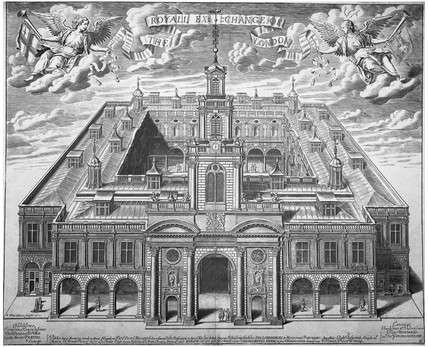
The Royal Exchange, 1671

The Royal Exchange, 1671

Although Gowing did not discuss the reasons for this shift in detail, she alluded to the disruptions of the Civil Wars, the rise of new women-made fashions such as the mantua gown, and the increasing preponderance of women among migrants to the metropolis. In fact, pinning down a specific cause may be impossible because the change seems to have been almost ‘over-determined’. In the middle decades of the seventeenth century, everything seemed to be changing.

Dividing ‘early modernity’

This lecture set me thinking about my own sense of periodisation. Laura has talked about start and end points for the ‘early modern’, Mark has discussed the question of ‘modernity’ itself, and Jonathan has addressed the thorny notion of a ‘Reformation era’. But what about the divisions within the ‘early modern period’, however defined?

It seems to me that there has increasingly emerged a sense of an ‘early early modern period’ and a ‘late early modern period’. I’ll call them the EEMP and LEMP, because acronyms add an air of authority. Continue reading
On periodisation: religion, early modernity, and ‘The Reformation’

Links to other posts in the ‘On Periodisation’ series:

Jonathan Willis

In some ways, ‘The Reformation’ (I’ll explain the excessive punctuation in a bit) may seem like an odd contribution to a blog mini-series on periodisation.  After all, surely ‘The Reformation’ was a thing, an event, something that happened, rather than a neutral description of a period of time (although, as we are coming to discover, there is rarely anything neutral about how anybody, let alone a historian, parcels up the past).  As Laura mentioned in her introductory post, use of ‘The Reformation’ to describe a period of time tends to have most currency in North America, where ‘Ren-Ref’ is a convenient shorthand for the periods of the renaissance and reformation, c.1400-c.1600, or c.1350-c.1650, or c.1300-c.1700; well you get the idea…  I am a product of the UK Higher Education system, however, having never studied or worked in the US or Canada, and so I’m going to leave ‘Ren-Ref’ to one side for now.  Instead, there are two related questions I want to address in this post.  Firstly, how useful is religion in helping us to define the early modern period?  And secondly, how should we define the chronology of ‘The Reformation’ itself?

Religion and Early Modernity

wooden_hourglass_3

A less contentious way of measuring time?

To what extent can we define early modernity with reference to developments in the religious sphere?  For the sake of argument, and because one post can’t do everything, I’m going to work within the eurocentrism of the term early modern, and accept for now its customary definition as c.1500-c.1700.  In some ways, there is a fairly good case for arguing that the early modern period saw within it some fairly distinctive developments in matters of religion, and that therefore these developments do help give a sense of coherence (or at least, of coherent incoherence) to the period as a whole.  To start with the most obvious, we might characterise the early modern period as one which witnessed at its outset the collapse of 1500 years of broad religious unity: provocatively, one recent overview of early modern history has taken as its title Christendom Destroyed.[1]  The Protestant Reformation, and the growth in number of religious sects and denominations that broke away from the previously hegemonic monolith of the (Roman) Catholic Church, and subsequently from one another, could plausibly be seen as the defining characteristic of the early modern age. Continue reading

On periodisation: a defence of ‘early modern’

Links to the other posts in the ‘On periodisation’ series:

Mark Hailwood

As Laura outlined in the previous post of this ‘monster series on periodisation, the term ‘early modern’ has – since the 1970s, at least in the history departments of UK universities  – come to be seen as one of the ‘holy trinity’ of historical periods: the medieval, the early modern, the modern. But why?

There a number of reasons why its widespread acceptance and use could be considered somewhat surprising. Its current prevalence in publication and job titles – and on this blog, which self-identifies as an ‘early modern history’ blog – is remarkable given that it is a relative newcomer to the periodisation party. And as Laura has already highlighted, there is little agreement on when exactly it was (1500-1700 is, of course, the right answer…)[1]

But to me the main reason why its rise to near canonical status seems a little odd is because of what it implies: that the sixteenth and seventeenth centuries are best understood as being on their way to somewhere else, or as a sub-period of modernity, rather than being a distinct historical period in their own right. But these kinds of ‘modernisation narratives’ – viewing the past as if the only story is the triumphant and inevitable march of all things towards the shiny here and now (more pessimistic forms of historical determinism are, of course, available) – were heavily criticised and fell into decline among historians at more-or-less the same time that the term ‘early modern’, with all its ‘modernisation narrative’ implications, was enjoying its assent.[2] Very odd.

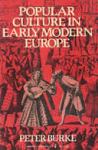
pid_2559indexIndeed, since the 1970s one of the most significant developments in historical approaches to the sixteenth and seventeenth centuries has been a desire to excavate the beliefs, culture and actions of contemporaries and to understand them ‘on their own terms’ – in the process often emphasising just how different and distinct, rather than similar and vaguely modern, the period was. Is ‘early modern’ really the best term for capturing this singularity? Perhaps not, but the term was and is widely deployed by cultural historians nonetheless. In fact, Keith Thomas, Natalie Zemon Davis and Peter Burke can all be counted among the pioneers of both cultural history and the term ‘early modern’. Continue reading

On periodisation: or, what’s the best way to chop history into bits?

Laura Sangha

This is the first post in our new Monster Mini-Series on periodisation. Click here for the Series introduction.

There are many different ways to divide the past up into analytical chunks, but some ways are more popular than others. In this post I offer a brief overview of some of the most common periodisations. It is of course a broad brush summary with a tendency to generalisation. Please do flesh it out with your own comments and refinements below the line – we have had a great response to the series on twitter and I will be collating many of these contributions for a later blog.

Binaries: modern / pre-modern

Starting with the simplest division: if you are short of time, the strongest chronological distinction often appears to be between the modern age, and all the stuff that happened before it. You know, when everyone was blindly superstitious, 99% percent of the population spent their lives covered in sheep poo, there was no electricity, no penicillin, no roads and subsequently a bunch of kings ordered everyone about whilst riding over-mighty dragons. Or something. Sometimes undergraduate ‘survey’ modules are organised along these chronological lines: at Exeter the ‘pre-modern’ module covers c. 500-1750; the ‘modern’ module covers 1750-present.

grail07

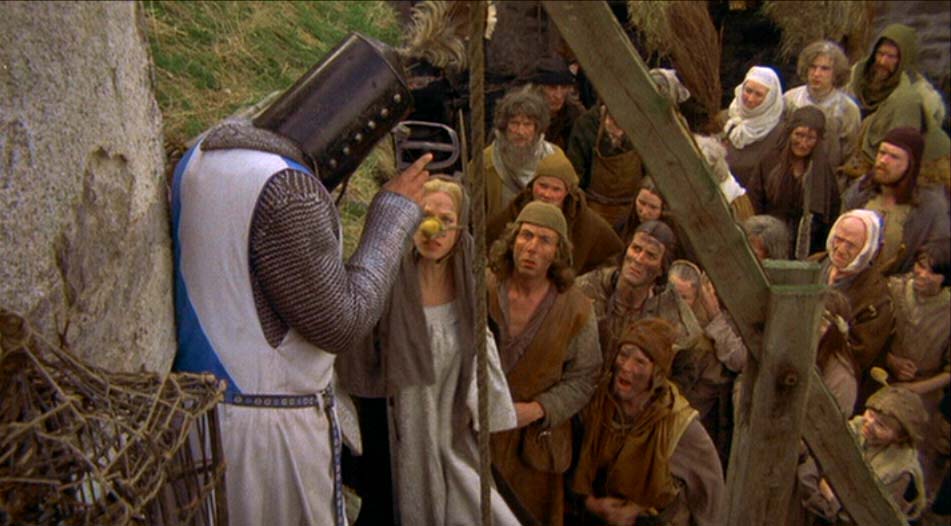
Pre-modernity: knights, witches, muddy peasants and that sort of thing.

Of course this rather oversimplifies things. Europe in 700 didn’t look or feel anything like Europe in 1700. The divide also massively prioritises the last 200 or so years of history and diminishes the previous 1,300. It is a useful shorthand for showing potential undergraduates the breadth of your teaching programme or identifying yourself at a multi-disciplinary event, but not much more.

The holy trinity: medieval / early modern / modern

In Europe and North America, history is often chopped into three: the medieval (c. 500-1500), the early modern (er… let’s say c. 1500-1800) and the modern (c. 1800 – present). Continue reading

On periodisation: an introduction

Laura Sangha

This is the introductory post to our new occasional Monster Mini-Series on periodisation in history. In a series of related blogs we will be exploring historical chronologies, examining the ways in which we chop up the past into more digestible chunks. We are interested both in how we do this, but also why, and what the consequences are for both how we conceive of the past, and how this in turns effects the organisation and practice of the discipline. The other posts are:

Posts that also engage with the theme:

IMG_0204

The University of Exeter’s community day: What does early modern mean, and who is this strange horned and hoofed man?

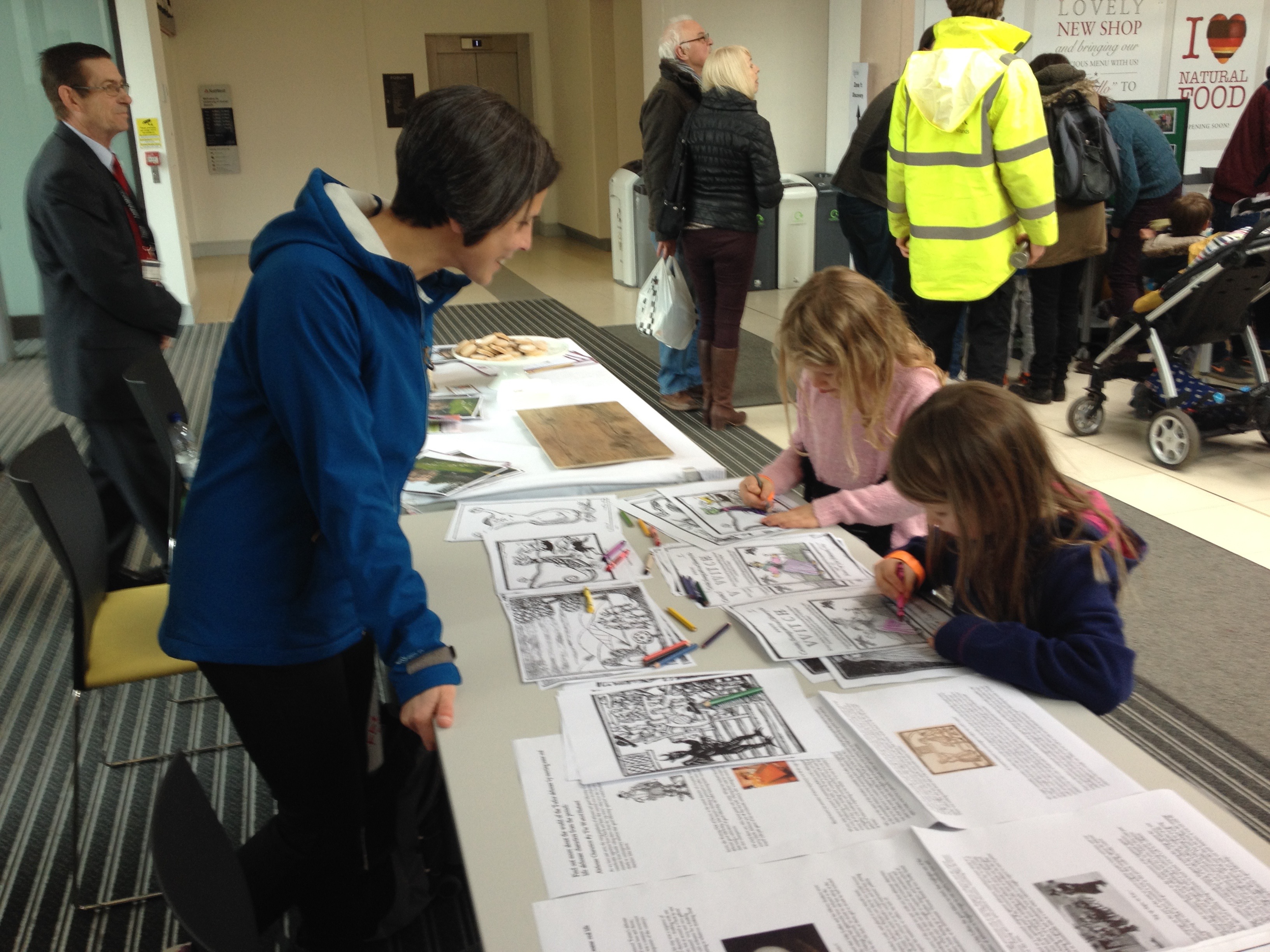
I quite often find myself needing to explain what period of history I work on, and it isn’t always straightforward. For example, my students are often not familiar with the term ‘early modern’ and remain convinced that anything that isn’t modern is ‘medieval’. At the University of Exeter’s recent Community Day, one of the most popular questions from visitors to the ‘Centre for Early Modern Studies’ stand was: what dates / centuries / years does that refer to? (In case you are interested, the other top question was: ‘what’s the devil’ from children colouring in woodcuts of said infernal being).

This is an issue that has a bearing on the many-headed monster too. We self-identify as an early modern blog, and the Monster’s tagline is that we offer “‘the history of ‘the unruly sort of clowns’ and other early modern peculiarities”. Whilst fellow academics might have a grasp of what that means, the blog aspires to reach an audience beyond professional historians, to whom the term may appear rather opaque.

The answer to what ‘early modern’ means is, of course, 1480-1700. Or perhaps 1500-1750. Or maybe 1450-1800. Actually it really depends. Oh, and if you are outside of Europe and North America you might not recognise the term at all, being equipped with a completely different way to think about your national past. Continue reading

Amplifying the Voices of the People

Our next post in ‘The Voices of the People’ symposium (full programme here) is by the many-headed monster’s very own Brodie Waddell, Lecturer in Early Modern History at Birkbeck, University of London. Brodie reinforces the message that has emerged from our last few posts: that the voices of the people do survive in abundance in the archives of the early modern period. They may do so in ways that are mediated or formalised, yes, but he argues that this should not blind us to the enormous importance of these valuable historical documents. Brodie finishes with a rallying cry that echoes that of Helmut Groser and Ann Tlusty: these documents are too significant to be allowed to remain buried in archival repositories, or worse to be lost altogether to the vagaries of record survival. Instead they should be digistised and made freely available as a matter of priority to promote the ongoing renaissance of history from below.  

Brodie Waddell

As a historian, digging up the dead is part of my job. I arrive at the archives as a grave-robber intent on plunder. I riffle through their clean, grey cardboard boxes searching for a peculiar treasure – tatty papers recording dead people’s words in stark black ink.

I’m privileged enough to have the time, the funds and the training necessary to make such plundering expeditions a routine part of my professional life. As a result, I regularly emerge from the archives with prizes like the letter below, which lay among dozens of other papers in a box labelled ‘QS/4 box 134’, carefully preserved in the storeroom of the Devon Heritage Centre.

The letter, written in 1693, was sent from a widow named Elizabeth Snow to the county magistrates:

To John Elwell Esquire & the rest of the Honourable Bench,

Most Honoured Gentell men I hope your worships will take this my humble pittishon [=petition] in Consideration that I being here Commited form [=from] the bare [=bar] to this prison and am not able to paye the fine but must here pireish [=perish] without your mercyfull Consideration to take of[f] my fine for I have not one penny in the world to helpe my selfe with out of the Cherryty [=charity] of good people to relefe me for I have maintaind a Crippell Childe this 16 yeares and never had but one penny a day towards it[.] this being in great malish [=malice] sworen against me undeserving I hope you will for the Lords sake pitty my miserable Consdishon and relefe me out of this misry which shall be bounde in dewty Ever to pray for you all most Honnerable gentellmen which am a poore distressed widdow

Elizabeth Snow

I don’t know why she was imprisoned and I don’t know whether she was successful in her petition for release. In fact, I don’t know anything about Elizabeth apart from the claims in this letter, though further digging in the archives would probably reveal more. Continue reading

The Marginal and the Monstrous: The ‘Voices’ of Prostitutes and Traffickers in Modern History

Our second post in The Voices of the People symposium (full programme here) is by Julia Laite, Lecturer in British History at Birkbeck, University of London. Reflecting on her own work on prostitutes and traffickers in the early twentieth century, Julia addresses a number of themes that will recur frequently throughout this symposium: the value of the microhistorical approach and the capacity of digital technology to support the work of close contextualisation; the importance of self-reflecting on ‘history from below’ writing as a genre and methodology; and the ethics of recovering the ‘voices of the people’.      

Julia Laite

When Lydia Rhoda Harvey steamed away from the shores of New Zealand, enroute to Buenoes Aires where she would, according to her traffickers, ‘see gentlemen’, what did she think? What did she say? What did her traffickers, Antonio Adolfo Carvelli and Veronique White, say to her? To each other? Is it possible to guess, and if so, do I want to and should I?

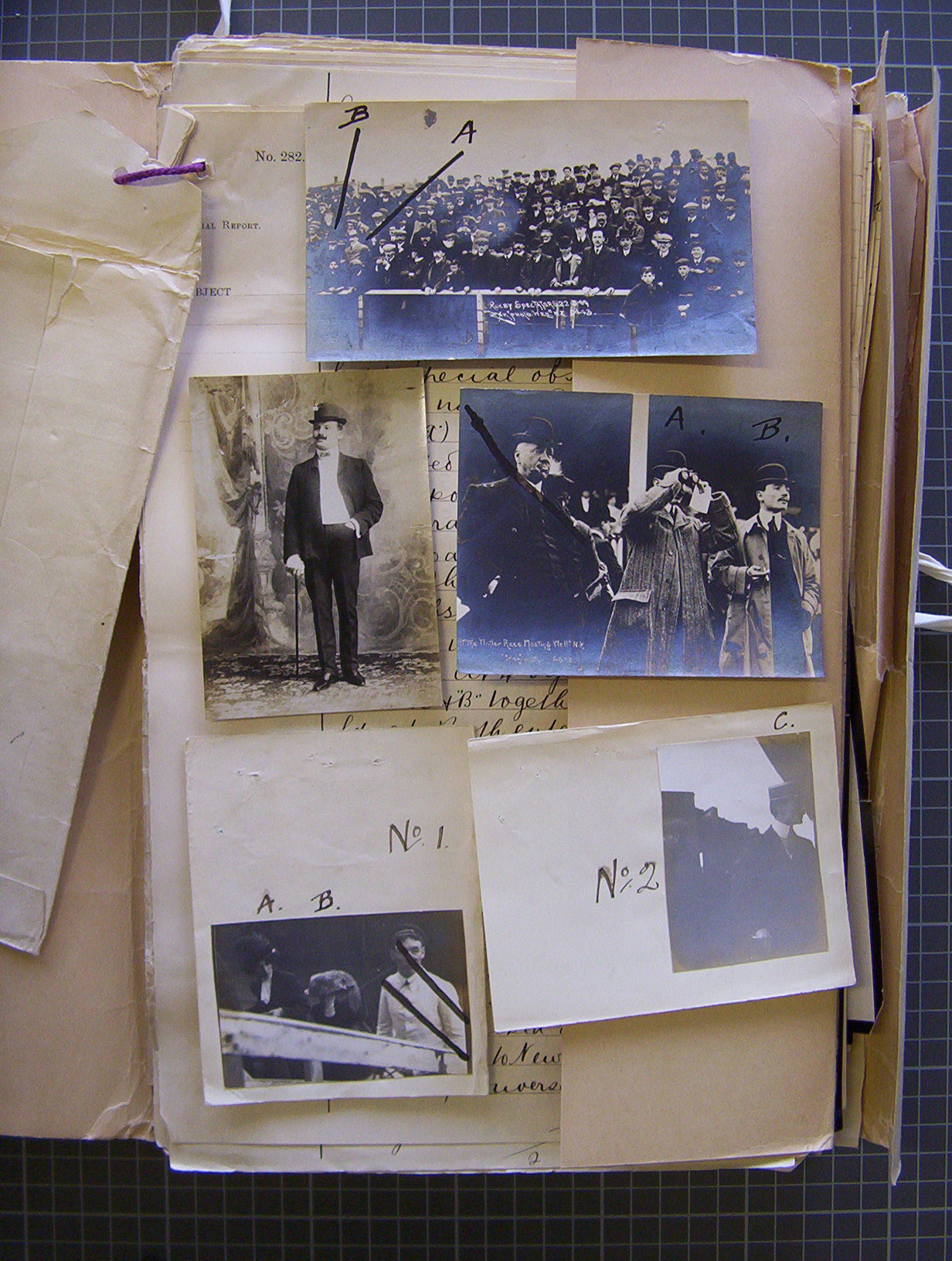
'A collection of voiceless photographs from the Carvelli/Harvey trafficking case, London, The National Archives, MEPO 3/197

A collection of voiceless photographs from the Carvelli/Harvey trafficking case, London, The National Archives, MEPO 3/197

My new book project examines the story of Carvelli, White, Harvey and the other women who were trafficked alongside of her, as well as some of the police officers, campaigners, and social workers who were directly or indirectly involved in the case. The project didn’t start out as a global microhistory, but as I got further into my research on the subject of trafficking, I became increasingly convinced that examining it in this way would allow me to capture, more effectively than any other way, the complexity of trafficking as a historical subject. Debates rage in the historiography over whether trafficking is most meaningfully described as a form of migrant labour or as exploitation; scholars examine it either from a national or an international perspective; they examine either state action or philanthropic campaigning; they examine the formation of law or the way law looks in practice (though this is actually not very well covered). Histories of trafficking are methodologically transnational (by their very nature), but scholars are coming to realise that they are also very locally contingent. Trafficking also tells us a great deal about power: state power, patriarchal power, economic power; but it also reveals complex voices of people caught up in, facilitating, or fighting ‘the traffic in women’.

A microhistory is an excellent lens with which to capture this complexity; but while also focusing on these individual voices. And so I have spent some time thinking—at times agonizing—about what it means to capture the voices of ‘ordinary’ people in such an extraordinary case; people who were thought of as marginal and monstrous in equal measure: as abject victims, as despicable ruffians. I’ll share some of this thinking here, in the form of four interrelated questions that have been troubling and captivating me as I have gotten deeper into the project, and into my historical actor’s lives. The first is,

How can I listen? Continue reading

What is history for? Or: Doing history/thinking historically

Laura Sangha

Last week, I delivered the introductory lecture for a second year undergraduate module, ‘Doing History’, and for various tedious reasons, I also recently spent some time reading, reflecting on and writing about why I consider history to be valuable. In the process, I conducted an entirely unscientific google trawl, trying to gauge what the general perception of the discipline was. I was struck by the fact that the popular or ‘commonsense’ perception of history encourages a rather limited assessment of its social and intellectual usefulness. What exactly do I mean?

Narratives and stories

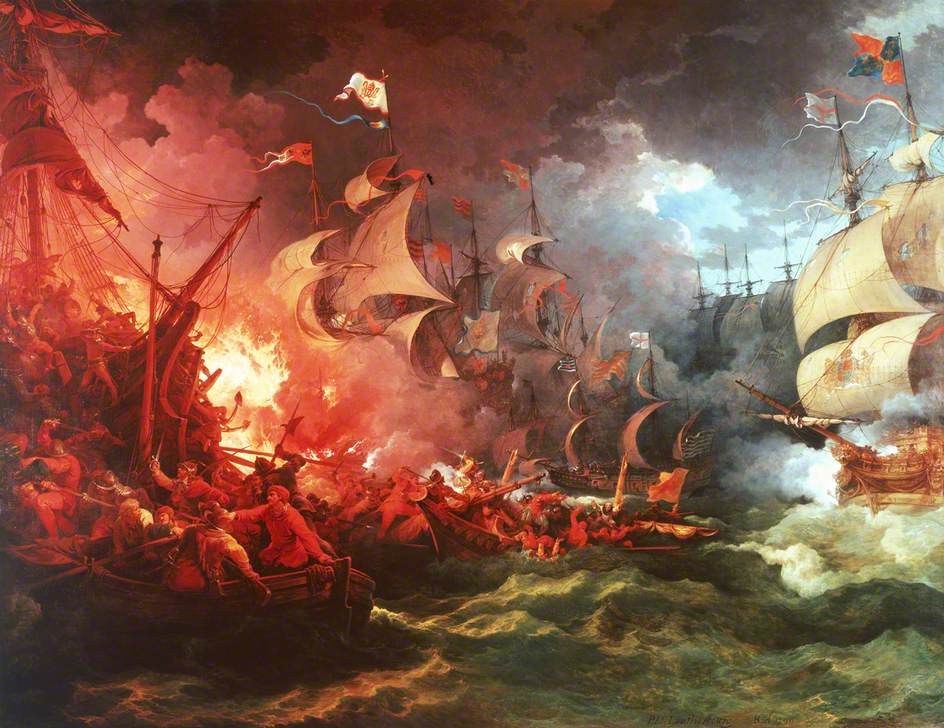
Drake’s defeat of the Armada – a rollicking yarn!

Perception: The past provides a seemingly endless supply of rollicking good yarns, from Henry VIII’s tortuous relationship status to Sir Francis Drake’s swashbuckling Caribbean adventures. These are easily converted into good reads.

That’s nice, but it doesn’t make history particularly valuable. Anyway, the best stories are made up ones. Continue reading

Food for Thought III: A Literary Critic and the Carnivalesque

Mark Hailwood

This is the third and final post in a series introducing some key theoretical concepts through the history of food and drink (see here for the first, here for the second). The previous post concluded on Pierre Bourdieu’s point that the cultures of different social groups were relational to one another. But what was the nature of this relationship? It can be interpreted in a number of ways. Elias, for instance, as I mentioned in the previous post, tended to think that the cultural practices and preferences of the elites gradually ‘percolated’ down through the rest of society. Sometimes a similar argument is made with reference to the term ’emulation’ – the idea that lower social groups tend to ape the culture of higher social groups, and that this in turn causes those higher social groups to reinvent themselves to maintain their sense of distinctiveness and superiority.

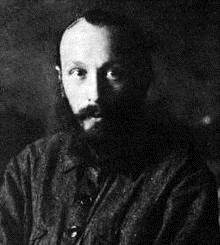
Bakhtin

Bakhtin

A rather different way of looking at the relationship between the cultures of different social groups can be seen in our next concept that has proved popular with historians of food and drink – Mikhail Bakhtin’s notion of ‘carnival’. Bakhtin was a Russian literary critic, most famous for his book about the French Renaissance humanist Francois Rabelais, published in 1965 (although written under the Stalinist regime during WWII) Rabelais and His World. In the book, Bakhtin argued that Rabelais’ work provided a valuable insight into what he called the ‘folk culture’ of early modern Europe. If Elias’ conduct books could reveal the eating and drinking culture of European elites, what Bakhtin termed ‘official culture’, then Rabelais had written a carefully observed account of the consumption practices and dispositions prevalent amongst ordinary men and women. Continue reading