
Jonathan Willis
I was lucky enough to travel down to Canterbury on Tuesday 25 June 2019 to attend the launch of a new ARHC project, ‘Middling Culture: the Cultural Lives of the Middling Sort, Writing and Material Culture, 1560-1660’. The project is being run by Catherine Richardson (Kent), Tara Hamling (Birmingham) and Graeme Earl (KCL), along with Callan Davies and Ceri Law, and you can find out more about it (and read their own blog) here.
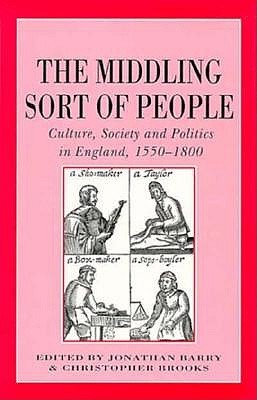
The growth of a sector of society that was more educated and prosperous than the ‘plebs’ or ‘meaner sort’ but which lacked the established wealth and pedigree of the gentlemen or exalted members of the aristocracy was one of the distinguishing features of early modern English society. The ‘middling sort’ encompassed a diverse range of people, including ‘yeoman and husbandmen farmers and artisans’ and those who worked in business or the professions.[1] Middling households had to work for their income, but they were operating at a higher level than their own subsistence, and so had money and time to invest in non-essential objects or practices, and they might be even wealthy enough to employ servants of their own. Jonathan Barry, who co-edited an important collection of essays on the middling sort in 1994, suggested that while attempts at precise quantification are neither possible nor helpful, the middling sort may have constituted between thirty and fifty per cent of early modern society at one time or another.
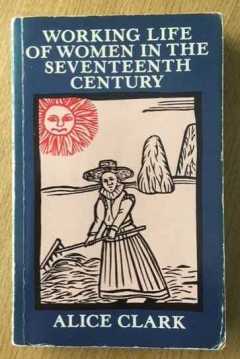 I’m reading the chapter in my 1982 edition of Alice Clark (the only history book I stole from my mother’s bookshelves), complete with a woodcut of a woman haymaking on the cover (although this image has been edited to remove the couple canoodling in the background which is present in the original below). Is this deeply significant? Probably not …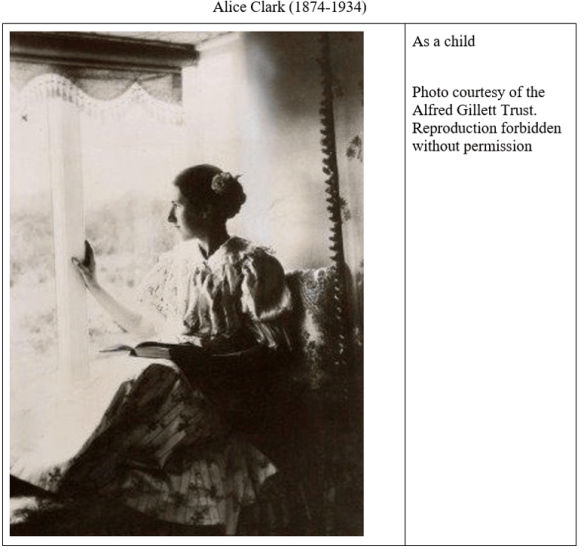
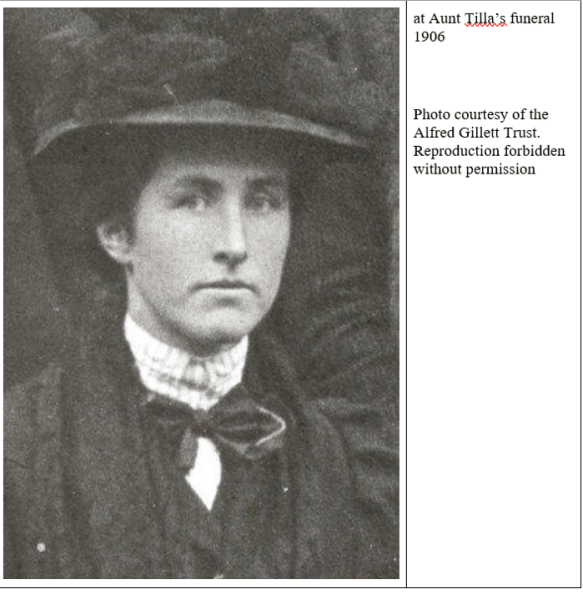
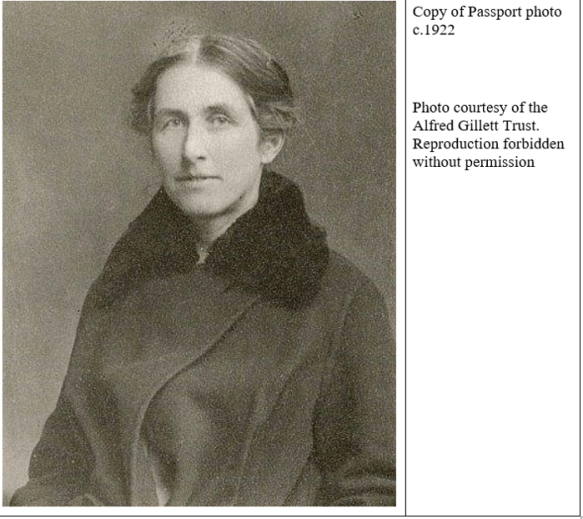
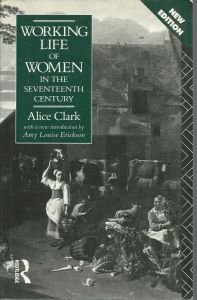 Those who have never read Alice Clark’s Working Life of Women might wonder why we would pay any attention to a work that is a hundred years old, and superseded by recent research on women. Yet anyone who works on the history of women, and particularly the history of women’s work, in early modern England owes a debt to Alice Clark’s work. It was reissued in 1982 with an introduction by Miranda Chaytor and Jane Lewis, and again in 1992 with an introduction by Amy Erickson. As Natalie Davis noted in a paper delivered at the Second Berkshire Conference in 1974, Clark consulted archives, differentiated among women, and had an overarching theory.
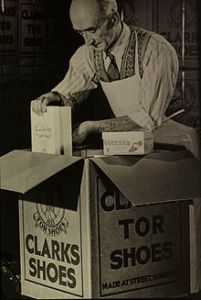 At first glance Alice Clark seems the most unlikely of historians. Due to ill health she managed only sporadic periods at school and she never went to university. She was a capitalist, not a scholar, spending most of her adult life as a director of the family business, known today as Clarks Shoes Ltd. Yet from a young age she was a voracious reader and would have joined her sister at Cambridge had her parents not felt strongly that the shoe company would benefit from the involvement of a female family member.
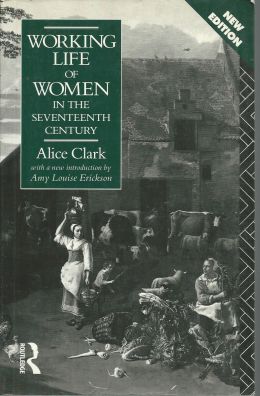 The centenary of the publication of this seminal work presents a great opportunity to both celebrate the scholarship of Alice Clark, and to reflect on the current state of the history of early modern women’s work. And so, we would like to invite you, dear reader, to join an online reading group here on the many-headed monster that will do just that.
 the many-headed monster