The 200th Post!

200Welcome to the many-headed monster’s 200th blog post! We started the blog back in July of 2012, so it’s taken us about three-and-a-half years to get here. In that time we have managed to produce a post (on average) about once a week, so there has been plenty of content for our readers to get their teeth into over the past few years.

We thought we would take this milestone as an opportunity to revisit some of that content, and pluck out a few highlights from our archive (we are historians, after all). So, if you missed any of these the first time round, or indeed fancy reading them again, here are some of our other milestone posts:

The 1st Post: Norwich entertainments–Part I: A monstrous hairy child and a boneless girl
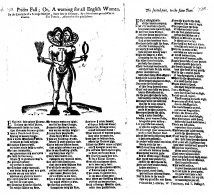
Prides Fall (1684-6)The blog kicked off with Brodie’s first installment of his ‘Norwich entertainments’ series – also launching the mini-series format that has proved a popular one on the ‘monster – in which he reflects on what 17th century Norvicians’ penchant for viewing ‘monstrous’ deformities might reveal about the culture of our early modern forebears. You can revisit the rest of this series here.


The 50th Post: Eating Animals: A Bit of History
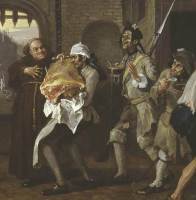
In this milestone post Mark examined the relationship early moderns had with eating meat – finding evidence that whilst meat eating was more widespread in the 17th century than we might expect, so too were notions of vegetarianism. Plenty of fodder here for those dinner table discussions! For more on the history of food and drink see Mark’s ‘Food for Thought’ series.


The 100th Post: Elizabethan ‘madmen’ Part I: Not such a Virgin Queen

west-country-to-worlds-end-tyrwhitt-drake-collection-43Our century of posts came up with the first part of Jonathan’s Elizabethan ‘madmen’ series, which looks at a selection of unusual letters written directly to the Queen by some of her more marginal – and eccentric – subjects. In this instance the writer makes an extraordinary paternity claim. Jonathan reflects further on the signficance of these letters in his contribution to our Voices of the People symposium.

The 150th Post: Memorial and History: appendix ii, further discoveries

DSCN5322In this post Laura adds a postscript to her Memorial and History series. This examined a whole range of monuments and memorials – often found in rather unexpected places – which reveal how battles over how we remember the Reformation have raged down the centuries. It also includes some lovely holiday snaps. Stay tuned to the ‘monster, for next week’s post revisits the issue of how history and memory are embedded in our landscape.

Just a few highlights then from our archive, and here’s to many more to come! Thanks to all of our followers, readers, commenters, guest bloggers and re-tweeters – your interest and support for the blog are what make it tick, so keep on coming back…
Addressing Authority: Petitions and Supplications in Early Modern Europe

Brodie Waddell

How can we study the sort of people who – according to William Harrison’s oft-quoted phrase – had ‘neither voice nor authority in the commonwealth’? This is a question we have returned to repeatedly on this blog. In our ‘Voices of the People’ and ‘History from Below’ symposiums, we discussed the many ways in which historians might attempt to get at the experiences and opinions of those who did not hold the reins of power in early modern Europe.

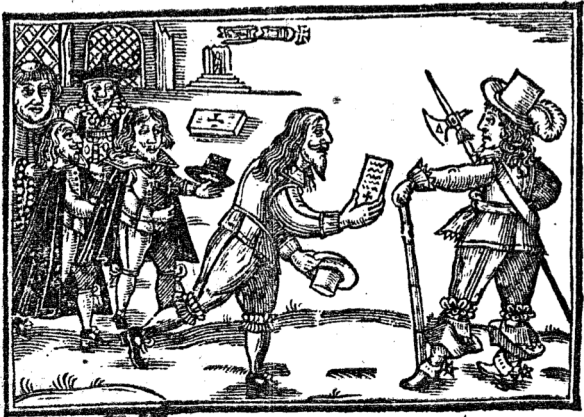
The Humble Petition of Jock of Bread (1648)

The Humble Petition of Jock of Bread (1648)

One type of source that some of contributors to the events found particularly promising was the ‘petition’ or ‘supplication’. Such documents have received attention on this blog from Mark Hailwood, Jonathan Healey, Michael Ohajuru, Laura Stewart, Jonathan Willis and myself. However, this failed to satisfy my own fascination with such documents, so I’ve joined with three colleagues from Birkbeck – Rebecca Tomlin, Laura Stewart and Sue Wiseman – to organise an event focusing specifically on these sources. Here are the details…

Addressing Authority: Petitions and Supplications in Early Modern Europe

One-day workshop

Friday, 18 March 2016

Birkbeck, University of London

Invitation for Participants

This event will have space for 10-15 participants in addition to the 12 speakers. The workshop will be informal and conversational with substantial time for discussion between the panel presentations, so there will be an opportunity for all attendees to participate.

If you would like to attend, please send a brief statement of your research interests in this topic (100-300 words) to Brodie Waddell (b.waddell@bbk.ac.uk) by Friday, 12 February 2016. Postgraduates and early career scholars are especially welcome.

Continue reading

Fantastic Thoresby V: a late seventeenth-century Christmas

Laura Sangha

Last week Jonathan laid bare the attack on Christmas in England in the 1640s and 1650s, describing the puritan campaign to convince the public that Christmas was popish and profane, and to persuade people to abandon the traditional merry-making that took place on 25 December. This got me wondering about the resilience and enduring popularity of the festival. Specifically, what did Ralph Thoresby do when the day came around each year?

Thoresby’s Christmas 

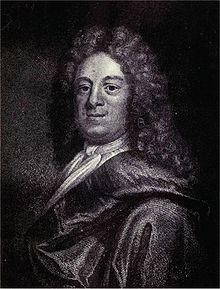
Ralph Thoresby

Ralph Thoresby, antiquarian, pious diarist, author of the first history of Leeds.

For those of you that haven’t met him yet – Ralph Thoresby (1658-1725) is the pious Leeds antiquarian and life-long diarist that I am currently researching (view the related posts here).[1] Disappointingly, but probably predictably, Thoresby’s diaries suggest that Christmas didn’t register that much on the antiquarian’s radar – Thoresby didn’t gorge on plum-pottage and mince pies, he didn’t entertain lavishly, he didn’t feast with his neighbours, and there is no evidence that he even indulged in a little tipple. On the morning of 26 December 1680 he did write that he ‘lay too long’ in bed, which we might chalk up to overindulgence the day before, but since Thoresby’s regular habit was getting up at 4 o’clock in the morning to pray, we probably shouldn’t read too much into this supposed sloth.

Why do I say that this lack of interest is quite predictable? It is because Thoresby began his life as a moderate nonconformist, attending both dissenting meetings as well as Church of England worship (though in the 1690s he conformed fully to the Church of England). In Thoresby’s case, his nonconformity was of a distinctly puritan flavour, so his lack of enthusiasm for the festivities of the Christmas season are in keeping with his austere style of piety, his avoidance of unsuitable company and his horror of idleness. Yet clearly times had changed – this was the 1650s no longer. On Christmas day Thoresby did attend Church without fail (by contrast, during the interregnum churches were locked on December 25), often hearing a sermon ‘suitable to the day concerning the birth of Christ’. Continue reading

‘Christmas Imprisoned’: the ‘popular’ assault on the festive season

Jonathan Willis

It is beginning, as the seasonal classic reminds us, to look a lot like Christmas, everywhere you go. Shops are blaring out Mariah Carey and town centres are aglow with fairy lights, whilst trees festooned with tinsel are popping up everywhere. A good many of us, I expect, are rather looking forward to Christmas. Whether it is as a religious festival, a great big party, a consumer frenzy, a chance to get together with our loved ones, or even just an excuse to take some time off work, there is no denying that Christmas at the beginning of the twenty-first century is a still major cultural phenomenon, and a calendrical landmark of great prominence.

Christmas Fireplace

The stockings were hung by the chimney with care…

What Christmas is not, today, is a political issue. Continue reading

Green Paper Blues: A Shiny New Bureaucracy for University Teaching

Earlier this month the UK government published its Higher Education Green Paper which sets out its plans for universities. Here John Arnold, Professor of Medieval History at Birkbeck and friend of the Monster, offers his reaction to the new policies and their justifications. This will not be of interest to everyone, but all UK academics and those of you thinking about doctoral studies, who may have read our earlier posts on the state of the field, need to be aware of what is going on. For the uninitiated, ‘TEF’ is Teaching Excellence Framework, ‘REF’ is Research Excellence Framework, and ‘HEFCE’ is the Higher Education Funding Council for England.

Gosh, isn’t it exciting finally to see the Government’s Green Paper? Turns out some rumours were true – there will be a TEF, say bye-bye to HEFCE – and others not so much (REF will live on). There’s quite a lot of it to wade through, but – regarding TEF in particular – as one colleague said in a management meeting earlier this week, ‘it’s not actually as bad as all that’.

And of course that’s right. Who could object to ‘putting students at the heart of the system’, and who would not want us to value teaching as well as research? The starting point for TEF is a mild adjustment to something we already do, i.e. institutional audit for quality. So – nothing to worry about here, and perhaps some things to celebrate? Continue reading

The undeserving poor: ‘rich beggars’

Brodie Waddell

Fear and hatred of the ‘undeserving’ poor pollutes our thinking about poverty. The shadows of scroungers, fraudsters and cheats who falsely claim to need our help loom over every conversation about benefits and over every new welfare policy.

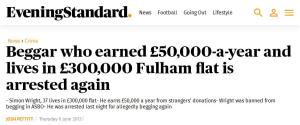
Rich beggar (2013) Evening StandardHeadlines about workshy swindlers march across the front pages of our papers almost every day. A quick online search reveals over 10,000 news stories on ‘benefit fraud’, reported both in the nation’s most popular newspapers and in local papers like the Bromley Times and Coventry Telegraph.

Such stories are part of our deep anxiety about those who get something for nothing. We worry that our taxes, our donations, our hard-earned money is being spent on people who don’t need it. The public believes that fraud accounts for over one in every four pounds in Britain’s welfare budget, when in fact it is well under one in a hundred. Such fear and fury are not confined to any particular class – they are common enough among the wealthy and educated as well as the working class. You have, I’m sure, occasionally heard examples of this from family and friends, just as I have. Sadly, if you pay careful attention, you’ll probably find it sometimes lurks in your own thoughts too. Continue reading

West Country Rebels

Mark Hailwood

A patchwork of conversations, thoughts and observations on the rebellious history of the South West of England, stitched together by a Somerset-born honorary-Devonian….

It’s a small world. On a recent archival trip to the Hampshire Record Office I got chatting to their immensely helpful Principal Archivist Sarah Lewin, and after a bit of biographical back-and-forth it transpired that I had done my undergraduate degree in her hometown of Norwich, where she grew up as good friends with my now MP – as a resident of Exeter – recent Labour Deputy Leadership candidate Ben Bradshaw.

Anyway, our conversation then moved on to the remarkable fact that the said Ben Bradshaw is now the only non-Conservative MP in the South West outside of Bristol (and you can take quite a broad definition of the South West here, encompassing Cornwall, Devon, Somerset, Dorset, Wiltshire and Gloucestershire). Whilst the Conservatives have long been the dominant party in the region, this is nonetheless a significant historical departure: few governments have ever been able to consider the West Country quite the stronghold that this one can.[1]

The remarkable Tory dominance of the South West, courtesy of BBC News website

The remarkable Tory dominance of the South West, courtesy of BBC News website

Continue reading

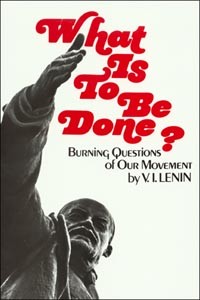
What is to be done? Seven practical steps for historians

Brodie Waddell

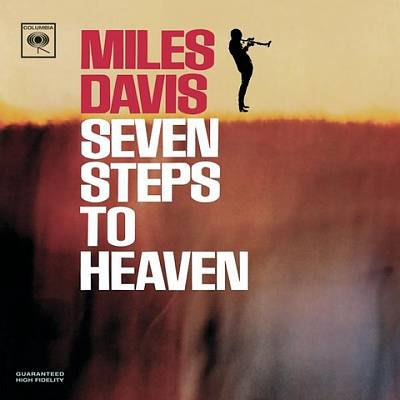
MI0000444321I’m very grateful to all of you who’ve already offered your thoughts on how we can improve the history profession. I agree with most of the comments on my previous posts on academic employment and practical responses – in fact some of the suggestions below are borrowed from those comments. However, I promised that I would offer my own tuppence so here I’ll try to set out some steps that we can take individually or collectively. Most of these are quite minor, but hopefully they are a good start. They aren’t in order of priority, but the first four are generally about gathering and publishing information and the rest are about more direct action. Continue reading

What is to be done? Mending academic history

Brodie Waddell

The study of history in Britain is not in crisis. The numbers set out in my post last week show that the last few decades have been a period of massive expansion for the field. There are more people ‘doing history’ at all levels of higher education, from new undergraduates to doctoral students and teaching staff. What’s more, I’d argue that public interest in history has been growing as well, a point brought home to me by the extraordinary response to the ‘History from Below’ and ‘Voices of the People’ online workshops that we’ve hosted.

It would, however, be irresponsible for historians like myself – who enjoy secure academic positions – to overlook the very real problems that confront the history profession today. In my recent posts I’ve highlighted two specific issues: the rapid growth in the number of doctoral students who are unlikely to obtain a permanent university post and, relatedly, the substantial number of early career historians trapped in precarious ‘casual’ employment. One might also add the under-representation of women in the academic upper ranks, the collapse in part-time studies, and the rising debt burden imposed on our students, among other things.

My previous posts provoked a flurry of valuable responses including one from Peter Mandler and another from Adam Smith, respectively President and Honorary Secretary of the Royal Historical Society. I’m very grateful to both of them for their feedback, which not only augmented and corrected some of my own conclusions, but also invited me to think about what practical measures the RHS (or other bodies such as the IHR) could take in the future. What sort of data should they be collecting and how? What kind of advice or information should they be providing? Is there anything else they can be doing to help to counter-act these problems?

i3rzjg8ciyls3ruxcheaThis presents an obvious chance for me to pretend to know everything there is to know about the historical profession in Britain and make some sagacious pronouncements about ‘what is to be done’. However, in the interests of continuing the conversation, rather than closing it off, I’m going to restrain myself, at least momentarily. Instead, I’d like you, whatever your position or career stage, to offer your thoughts in the comments below (or on twitter, tagging me, which I’ll post here). I will add my own ideas in the comments in the next day or so, some of which I hinted at in the conclusions of the previous post. But in the meantime, let’s find out what the rest of the historical community thinks.