Our next post in ‘The Voices of the People’ symposium (full programme here) is by Nicholas F. Radel, Professor in the English Department at Furman University. In the first of a batch of posts focused in particular on the power dynamics of voice and voicelessness, Nick examines seventeenth-century anxieties about allowing male same-sex activity a voice – and in the process picks up on the theme of Will Pooley’s post about the importance of attending to silences as much as voices when studying marginalised groups and individuals.
Nicholas F. Radel
A few years back I published an essay on the 1631 trial of the Earl of Castlehaven whose title, like that of the present post, tropes Gayatri Spivak’s famous question about the subaltern in postcolonial society. In the essay I thought about the ways one particular servant in Castlehaven’s household, Laurence (or Florence) Fitzpatrick, was made to speak as a type of voluntary agent of sodomy when he presumably had little power to stage the monstrous inversions of social, civic, or moral order for which that particular sexual crime has been said to stand symbolically in early modern England. As the title of Cynthia Herrup’s superb work, A House in Gross Disorder, suggests, accusations of sodomy against the Earl did not arise primarily in response to his sexual habits with men but his mismanagement of house and patrimony. So what did it mean that Fitzpatrick, who had little control of either, was convicted of and executed for sodomy as well?
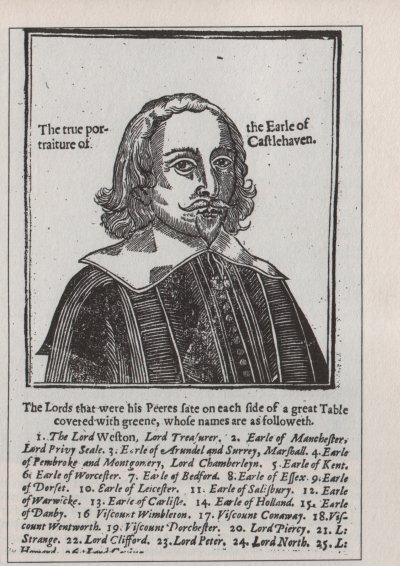 In the proceedings of the trial Fitzpatrick was labeled a “voluntary prostitute” (Cobbett, State Trials, vol. 3, col. 420). His confession of sexual acts with the Earl were assumed to imply his agency and consent to a crime that was, so the story goes, usually identified as an offense observable in others but rarely imagined as a subjective position from which one might act or speak. As regards his sexual actions, Fitzpatrick surely was not a subject but rather a young man subjected to the Earl and the social system that privileged his betters. Fitzpatrick himself seemed to understand as much, for in his forlorn speech from the scaffold he says that “he was not only sorry for [his sins], but also resolved never to come into my lord’s house again; but it was through frailty, and because he was not furnished of another place” (State Trials, col. 422). Nevertheless, because the justices depended on Fitzpatrick’s testimony to corroborate the charges of sodomy against Castlehaven, they seemed to privilege his confession (which was probably unfairly obtained) with an agency the otherwise disenfranchised underling wouldn’t have had. Of course, this agency was imposed on Fitzpatrick, but in my reading the Castlehaven case provided evidence that sodomy, by which I mean for the purpose of this post illicit male same-sex activity, could be imagined and represented as speaking on its own behalf, in its own voice. Continue reading