John Arnold, ‘History from below – some medievalist perspectives’

[This is the twelfth piece in ‘The Future of History from Below’ online symposium (#historyfrombelow). John Arnold is Professor of Medieval History at Birkbeck. His research and publications focus in particular on medieval ‘belief’. Here he takes us through some of the ways ‘history from below’ approaches have played an important role in medieval scholarship on both England and France.]

“And so our interpretation of history will be both materialist with Marx and mystical with Michelet. It was economic life that was the basis and the mechanism of human history, but across the succession of social forms man, a thinking force, aspired to the full life of thought, the ardent community of the unquiet intelligence, avid for unity and the mysterious universe.”

[Jean Jaurès, Histoire Socialiste de la Révolution Française, Paris, 1911. Introduction. See http://www.marxists.org/archive/jaures/1901/history/introduction.htm]

‘History from below’ has tended predominantly to be an early modernists’ term; [1] and it is a very baggy term. Is it simply the same as ‘social history’; is it related to Alltagsgeschichte; does it make a particular claim about collective historical agency from ‘below’; or is it more concerned with the experience of ordinary people at the sharp end of historical change? The term’s capacious vagueness is perhaps the main point – and an indication of its anglophone origin, freed from the strictures of theoretical precision. But when one starts to think about its connotations for different period specialisms, issues of purpose and project become naggingly apparent. Medievalists and early modernists tend to share some sense that making ordinary (/subaltern/plebeian/lower sort/peuple menu/popolani …. etc etc, pick one’s own inevitably problematic term) people visible and audible is in itself an historiographical success worth pursuing, because the weight of the evidence – so we tend to say, though this bears further discussion in itself – submerges the majority of humanity in favour of the visible, powerful elite. That shared project immediately requires some further nuance however.

Continue reading

Tudor history on TV, and a partial review of David Starkey’s ‘Music and Monarchy’…

Jonathan Willis

Early modern history has done pretty well out of the BBC lately. Earlier this year, in late May and early June, there was a season of programmes (apparently 5 documentaries constitute a ‘season’) based around the Tudor Court. We had an interesting and quite adventurous treatment of The Last Days of Anne Boleyn, which made the brave decision not to give top billing to a single authoritative historical narrator, or wrap up its argument with neat historical conclusions, but instead featured a real diversity of opinions from half a dozen historians and historical novelists. Diarmaid McCulloch presented a view of Thomas Cromwell which, while at first glance appearing to owe much to GR Elton, also contained a few tantalising hints of the major new biography he is working on (and which I for one am very much looking forward to reading). Thomas Penn told the story of Henry VII, Winter King, and Ian Mortimer presented a Time-Traveller’s Guide to Elizabethan England. And finally, Melvyn Bragg made the case for William Tyndale as The Most Dangerous Man in Tudor England in appropriately evangelical mode, in a strange piece of film which was shot like an episode of the late-lamented popular BBC spy drama, Spooks.
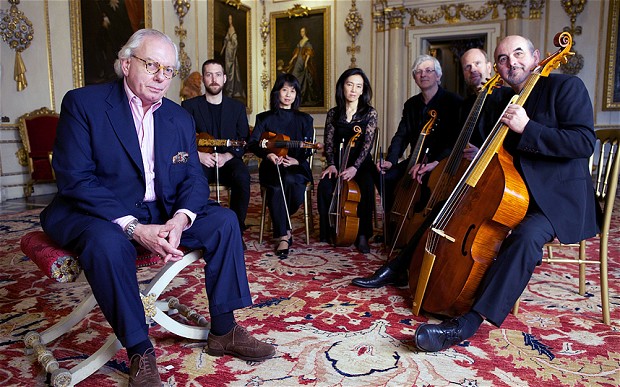
spooks002These documentaries were accompanied by re-runs of the Showtime series, The Tudors (which I don’t intend to dissect here!), and all in all I think that this sort of documentary interest in the period is, in the immortal words of Sellar and Yeatman, A Good Thing. Another recent onscreen foray into Tudor England has been conducted by David Starkey, in his four-part series Music and Monarchy, which began airing on 20 July and finished on Saturday 10 August: UK residents can still catch it on iplayer. Entitled ‘Crown and Choir’, the first episode looked at ‘royal music’ in England from Henry V to the death of Elizabeth I. I have to say, that as a historian who has written a fair amount about sixteenth century music, I had somewhat mixed feelings about watching this documentary. I like the fact that the history of music is something that people (and documentary-makers) seem to be increasingly interested in: in recent years the BBC has also given us Sacred Music and Howard Goodall’s Story of Music, both of which were interesting pieces of television. But music and monarchy? Starkey is of course primarily an historian of elites, and of court culture. But (and I hope that, given the recent online symposium on history from below, I am preaching largely to the converted) the story of music in the sixteenth century is so much more interesting than that, in terms of the broader role it played in popular culture and religion. david-starkey_2622826b

On balance, watching this first episode of Music and Monarchy I was pleasantly surprised. Starkey, for all his controversy and confrontational style as a commenter on current affairs, is a compelling and captivating storyteller, and it’s pretty clear that he is passionately interested in his subject. The tone strikes about the right balance: it isn’t overly simplified or patronising, and neither is it loaded with too much technical jargon. Occasionally Starkey allows his effusiveness about the music to cloud what could be a more rigorous analysis, but this is popular TV, not an academic lecture. He talks to a small number of musicians and academics, including the multi-talented David Skinner, and includes lots of long, sumptuous performances of pieces of early music in the venues in which they were (or at least in which they could possibly have been) performed. All in all then, this documentary too, to my surprise, is probably A Good Thing. Except… For 50 minutes of ‘Crown and Choir’ I broadly enjoyed what I was watching. But for the last 10, I pulled out my hair, and if my train carriage had had opening windows I might have thrown the iPad I was watching out of one of them. This is for two main reasons.
ipadrepairspreston

Bad Thing #1. In large part, the interplay between music and monarchy (and religion) was dealt with well, but in the final ten minutes what had functioned quite successfully as a lens turned suddenly into a pair of blinkers. Elizabeth I saved church music, we were told (partly right), but not only that, she did it singlehandedly, solely by maintaining a chapel royal of equivalent musical magnificence to her father, Henry VIII. Inside it, Elizabeth composed for herself a warm and dazzling sacred oratorio; beyond her chapel was merely a cold and frosty Protestant wasteland. Now that is just plain wrong. Even if we leave aside the complex musical picture in the Elizabethan parish church, which may well have still contained an organ, a choir, or at least a couple of paid singers, what about the musical livings she preserved elsewhere, and the university college and cathedral choirs up and down the country? True the chapel royal was probably the best resourced choir in Elizabethan England, but its musical reputation was maintained in part by poaching singers and composers from other musical establishments, such as the composer and organist William Byrd from Lincoln Minster.

Bad Thing #2. Where the parish church was briefly mentioned, it was as a cold, austere, whitewashed box, devoid of all visual and oral ornament. Cue a group of aged parishioners slowly and tunelessly droning out the ‘Old Hundredth’, a musical oxymoron; ‘all people than on earth do dwell, sing to the lord with cheerful voice’! That, Starkey observed, was as good as it got: the best that the man in the street (or at least the parish church) could aspire to. Again, leaving aside the complexity of the parish situation, which I would characterise as a vibrant and amorphous fusion of traditional and innovatory musical forms, the problem with this sort of approach is that it harks back to an outdated musicological approach that equated musical ‘quality’ with historical significance. Congregational metrical psalmody might not be the sort of music that features on the glossy CDs produced by modern choirs like the Sixteen or the Tallis Scholars, but that does not mean that it lacked value or importance (interestingly, the bibliography of the book that accompanies the series references rather dated literature on this topic, such as Temperley’s 1979 Music of the English Parish Church). For the first time, ordinary men and women were invited to play an active and participatory role in parish church worship, by joining in and singing praises together in one resounding voice. Starkey even misses a trick here in terms of his focus on music and monarchy. Such was the popularity and success of congregational song, that in the 1570s the government produced a series of metrical anthems, to be sung to familiar tunes to the glory of both God and the Queen. These works were most obviously to be sung on the ‘Crownation Day’ celebrations of 17 November, and far more people sang them than ever even heard Byrd’s beautiful motet, O Lord, let thy servant, Elizabeth. The reason that the vernacular sacred oratorios of Handel proved so popular in the eighteenth century, one might surmise, is at least in part because by that point the English had been singing themselves Protestant for the best part of two centuries. The reformation had effectively turned every parish church into a choir, albeit often a not very good one.

I don’t feel professionally qualified to comment on the rest of the series, and anyway this is supposed to be a blog, not a monograph. I’m now three-quarters of the way through, and broadly I think that his perspective is an interesting one, and that the documentary is a Good Thing – it might even inspire some people to find out more. But just as the story of popular religious music cannot be told without paying some attention to the interventions of kings and queens, so the musical legacy of kings and queens cannot be properly told without paying some attention to popular reception. And ‘reception’ in this context should not be envisaged as a passive process, but as a means by which people helped to shape the Protestant nation of which they themselves were part.


Brodie Waddell, ‘History from below: today and tomorrow’

[This is the tenth piece in ‘The Future of History from Below’ online symposium (#historyfrombelow). Brodie Waddell is a historian of early modern England and one of the founders of the many-headed monster.]

We’ve won.

At least on one battlefield, ‘history from below’ has been totally victorious. The men and women who pioneered this approach had to fight hard to gain academic recognition. But today, their work is part of mainstream historical research and their subjects – poor stockingers, radical shoemakers, East End gangsters, peasant women – are warmly welcomed into the pages of academic journals. Indeed, two of the most influential journals in the profession, Past & Present (1952) and History Workshop Journal (1976), were actually founded by these once marginalised historians.

Yet winning the battle is not the same as winning the war. As other contributors have shown, many crucial struggles are still on-going. For example, female scholars continue to experience a level of discrimination in academia that limits their personal options and professional advancement. Although feminists have succeeded in making universities much less unbalanced than they were a generation ago, women are still systematically underrepresented amongst academic decision-makers. In addition, other fronts that had once seen steady progress have turned into partial reversals or outright routs. Access to higher education in Britain and North America expanded dramatically through much of the twentieth century, but the recent spike in tuition fees in England and the long-term rise in the US has made university much less affordable for students from working-class families. Worse still, this has hit part-time students especially hard, leading to a 40% fall in part-time applications since 2010 in the UK. These and other setbacks, discussed in more detail by Samantha Shave, mean that today’s advocates of a truly democratic ‘history from below’ cannot simply welcome our triumphs in research and quietly get on with our own work. We must do more. Continue reading

Samantha Shave, ‘History for below’

[This is the ninth piece in ‘The Future of History from Below’ online symposium (#historyfrombelow). Samantha Shave is a research associate at the University of Cambridge, working on the project ‘Inheritance, Families and the Market in Nineteenth and Twentieth-Century Britain’. She has recently published on paupers’ lives and poor law reform in the early nineteenth century.]

Historians of welfare and poverty have seemingly now found the sources which, in the words of Tim Hitchcock, provide a more ‘democratic’ history from below (Down and Out, p. 239). The voices of the poor are being found in court records, ballads, threatening letters and petitions for poor relief, to name just a few sources, and we are putting them at the centre of our analyses. The word ‘democratic’ here has always struck me though; it makes me wonder whether, whilst we have been busying ourselves with this task, history itself has – as a discipline – become less democratic? I asked the workshop at Birkbeck to think about whether there is a ‘history for below’. Indeed, the central contradiction here is that we produce histories of those who have either been silenced or marginalised or ignored, that we strive to re-create social worlds from, ‘enforced narratives’ (Carolyn Steedman, Feminism and Autobiography, p. 25), but those people in similar positions today are being increasingly denied the opportunity to study and write history at university.

We need to consider how people decide to study history, and how recent changes to the curriculum could leave a generation uninspired to take the subject further. Those who are not put off by ‘fact and date’ history may attempt to study the subject at university. That’s if they want to get into a phenomenal amount of debt. There are small reductions to fees for those with household incomes below £25,000 per annum, and a few charity-like pockets of money issued by universities, but the overall debt for any student who started university in 2012 from a working household will be huge. With fees at an average of £8,770 a year, the average student could graduate with over £50,000 of debt over the course of their degree. The immediate consequences of the fee rise can be seen in application figures. UK applicants to university were down 8.7% in 2012, and a further 6.5% for admission this year. Worryingly, last year applications from people aged over 19 years old declined by 11.8%. Continue reading

Simon Sandall, ‘History lessons from below?’

[This is the eighth piece in ‘The Future of History from Below’ online symposium (#historyfrombelow). Simon Sandall is a lecturer at the University of Winchester whose recent publications focus on custom, law, community and popular politics and popular protest in early modern England. His forthcoming book will be titled ‘Custom and Popular Memory in the Forest of Dean, c. 1550-1832’.]

Now, as much as at any time in the recent past, the study of labouring people and non-elites is crucial, not only in rescuing them from the ‘condescension of posterity’, but in forging a broader understanding of the historical context in which we enter the twenty-first century. As social services are being slashed, the terms of unemployment and disability benefits rendered untenable, sections of poorer communities pejoratively stereotyped in the name of austerity, the culpability of the super rich whitewashed, and Michael Gove’s attempts to hide any historical evidence to the contrary, this context is sorely needed.

Add to this the fact that a significant proportion of the British public draw their knowledge of the past from centre-right newspapers and other media, nuanced and critical histories ‘from below’ are clearly needed to restore balance to some of the more heated debates that pervade the current political climate. While the criteria of the Research Excellence Framework look to be developing an increased focus on wider dissemination of funded research, we should be thinking carefully about the nature of these studies and their impact. Gove’s current drive emphasises a simplified, top-down, political narrative which nods towards the benefits of British influence in the world, the development of stock trading, the banking industry, together with the associated rise of capitalism and industrialisation. As historians, our duty is surely to complicate these teleologies and work to emphasise the reality of contingency and agency, to advance our understanding of those in the lower echelons of societies past. At almost every one of these historical junctures, there have been passionately defended alternatives. A closer focus on the experiences of particular communities and broader histories from below reveals, also, that at each of these key transitional moments it has generally been the poor that have suffered to advance the interests of the rich and powerful. Continue reading

David Hitchcock, ‘Why history from below matters more than ever’

[This is the seventh piece in ‘The Future of History from Below’ online symposium (#historyfrombelow). David Hitchcock is an IAS Early Career Fellow at the University of Warwick and will be taking up a post at Canterbury Christ Church University in October. He has published on vagrancy in early modern England and blogs at Post.Hoc.]

As I write these words, Sohel Rana, the owner of an illegally constructed clothing factory and living complex in Bangladesh called the ‘Rana Plaza’, is probably sitting in a Dhaka jail. I have not the slightest clue what he’s thinking. But I hope he has time for a few regrets. Rana will be now be immortalised as the man who stood in front of a building that was literally cracking down its seams, and assured tenants and workers that it was perfectly safe to stay inside. Factory line managers in Rana’s clothing manufacturing operations on the top floors insisted that their workers continue their shifts, and clothing workers make up the bulk of the over 1,100 dead people in this particular tragedy.

As I write these words, Governor Rick Perry, the architect of modern Texas’ stunningly under-regulated industrial landscape, lambasts anyone but himself for the shameful practices at the West Texas fertilizer plant which recently exploded, levelling a town (which it was conveniently located right next to) and causing a 2.1 scale earthquake. The plant had not been inspected in twenty years. Fifteen people died, most were fire-fighters or first responders trying to control the blaze and to save others.

I’m choosing to begin this post on ‘History from Below’  with recent news stories about factory disasters on opposite ends of the world for one reason: to separate wheat from chaff. These kinds of stories should make you angry, they should make you think about why those factory workers felt they had to obey, and stayed at their posts in a factory that was literally crumbling around them, they should invite you to explore the sad history of industrial production, of ‘developing nation’ factory workers, and of brutal, naked economic exploitation in places like Bangladesh. I hope you want to understand why a place like Rana Plaza was openly permitted to exist. I hope you want to know what life was like for the approximately 1,150 people who died because they were not permitted to escape from an imploding building. Continue reading

Mark Hailwood, ‘Who is below?’

[This is the sixth piece in ‘’The Future of History from Below’’ online symposium (#historyfrombelow). Mark Hailwood is a historian of early modern England and one of the founders of the many-headed monster.]

The posts that have appeared so far in this symposium have suggested a number of interesting directions for the future of ‘history from below’: a future that opens up new avenues for research through explorations of material culture, of the landscape, and of global connections and comparisons, with a critical but ultimately optimistic disposition regarding the possibilities of drawing together fragmentary evidence, potentially through the use of digital databases. All of this excites and encourages me. And yet, there is one particular problem that I think we all need to address if ‘history from below’ is to have a coherent future: how to define its subjects.

I’m not so much concerned here with who should ‘qualify’ as an appropriate subject for ‘history from below’ – I’m not sure prescriptive precision here is possible or helpful, but maybe someone would like to take this up in the comments section – so much as with the labels we use to refer to those that are generally accepted to fall within its remit. Let’s start with that classic statement of the ‘history from below’ agenda found in Thompson’s preface to The Making… ‘I am seeking to rescue the poor stockinger, the Luddite cropper, the “obsolete” hand-loom weaver, the “Utopian” artisan, and even the deluded follower of Joanna Southcott, from the enormous condescension of posterity.’ Continue reading

William Farrell, ‘Global history from below?’

[This is the fourth piece in ‘The Future of History from Below’ online symposium (#historyfrombelow). William Farrell is a doctoral candidate at Birkbeck, University of London, exploring silk and globalization in eighteenth century London, which has resulted in several working papers.]

Could there be a meeting of global history and history from below?1 The participants at the Birkbeck workshop seemed sceptical I have to admit. The key works in global history have been Big History syntheses. The key works in history from below, on the other hand, have deliberately used a smaller scale.

Despite these signs of a dialogue of the deaf, I still think the potential for a ‘global history from below’ is there. We shouldn’t forget that micro-history is supposed to be a rich, empirical testing ground for arguments about wider social change. Equally, many of the articles in the Journal of Global History or Journal of World History do actually use a case study method. There should, therefore, be many places were these apparently contrasting traditions meet. Continue reading

Ruth Mather, ‘The Home-Making of the English Working Class’

[This is the second piece in ‘The Future of History from Below’ online symposium (#historyfrombelow). Ruth Mather is a doctoral candidate at Queen Mary, University of London, studying the links between working-class political identities and the home in the late eighteenth and early nineteenth centuries. She also blogs about her adventures in research.]

I became interested in ‘history from below’ as an undergraduate through the encouragement of Professor Robert Poole, who introduced me to E.P. Thompson’s The Making of the English Working Class. Thompson’s book, which reaches its half-century this year, showed me a new way of doing history, one which didn’t patronise working people, or subsume them in a narrative of progress, but instead constructed a story about thinking, feeling people with their own ideas about their lives and their own strategies for living them. It’s important that our histories show the humanity of our subjects  – in my case the English labouring classes in the late-eighteenth and early-nineteenth century. This is not about glorifying poverty or writing hero narratives, but simply attempting to understand the messy, complicated details of the real lives of ordinary people.

I’m not alone in thinking this is particularly crucial at the moment, when a new history curriculum threatens to take us back to stories of great men and Whiggish progress and welfare recipients are demonised for political gain. However, other participants in this symposium will be discussing the continued relevance of ‘history from (and for) below’ in much more detail over the coming weeks, and it is not difficult to find excellent explanations of why ‘history matters’ more generally. So, having outlined why ‘history from below’ is important to me, I’d like to focus on the question of how we can find sources that can help to uncover the domestic lives of ordinary people as part of this wider project of uncovering voices that have been underprivileged in the historical record. Continue reading

The future of ‘history from below’: an online symposium

Brodie Waddell

Those of us who think that historical research ought to consist of more than the study of kings, ministers and generals owe a great debt to the pioneers of ‘history from below’ . Foremost amongst them must be E.P. Thompson, who published his epic The Making of the English Working Class exactly half a century ago. The impressive wave of work that followed will be well-known to many of you and, if nothing else, I think most historians would agree that historical scholarship would be poorer if not for the intervention of these spirited men and women.

But what about the next fifty years? Has ‘history from below’, and perhaps social history more generally, outlived its usefulness? What, if anything, can it contribute to contemporary scholarship and the wider world? How should it be adapted or reoriented in the coming years? What new tools or techniques could strengthen it? Where will it fit in the wider academic and social landscape?

On 16 April 2013, eighteen of us gathered for a workshop at Birkbeck to try to figure out some answers to these questions. As is usually the case with these events, the discussion carried on in the pub afterwards and, although we certainly didn’t come up with any conclusive answers, we all agreed this was a conversation that needed to continue.

To that end, Mark and I invited the participants to contribute to an online symposium on the future of ‘history from below’. So, over the next few weeks we will be posting a series of short pieces by historians early in their academic careers that attempt to offer some possible answers to these questions. We hope that this will spur further discussion and open up the conversation to the rest of the world. Please leap in with your comments, suggestions and critiques. We welcome comments not only from ‘fellow travellers’ but also – perhaps especially – from sceptics and critics of ‘history from below’.

The first post will be published here on Monday, July 8th, with further posts following every two or three days. Links to each piece will be added here and join the conversation on twitter via #historyfrombelow.

Programme