An archival miscellany: a warning, a rat, a blog and another warning

Brodie Waddell

October was a rather busy month. My first term of teaching and marking at Birkbeck has meant that I know a good deal more about eighteenth-century London infrastructure, English Civil War veterans, and the historiography of the Reformation than I did a few weeks ago, but research and blogging have been neglected.

I have, however, come across a few tasty tidbits that deserve to be shared with the world. This is, in some ways, simply a continuation of the conversation (here and here) we’ve been having about archives.

A warning

An archivist friend passed this on and, like all good jokes, it contains at least a kernel of truth.

Having worked in the Borthwick for a year, I can say with some certainty that it would be entirely possible to use the limbo between the public reading room and the strongroom to erase someone with a ‘misplaced’ inkblot or an ‘accidental’ torn page. So be sure to greet your archivist with a friendly smile … or risk the posthumous disappearance that befell some soviet dissidents.

A rat

Or, to be more specific, Sir Henry Cole’s Rat (c.1830). As folks at the National Archives describe it…

At 15, Henry Cole, later to find fame as organiser of the Great Exhibition began working with the records of the British government. Shocked at their poor condition he pioneered reform of what became known as the Public Record Office – now The National Archives. This rat, with a stomach full of chewed document, was used as evidence for the poor condition of the records.
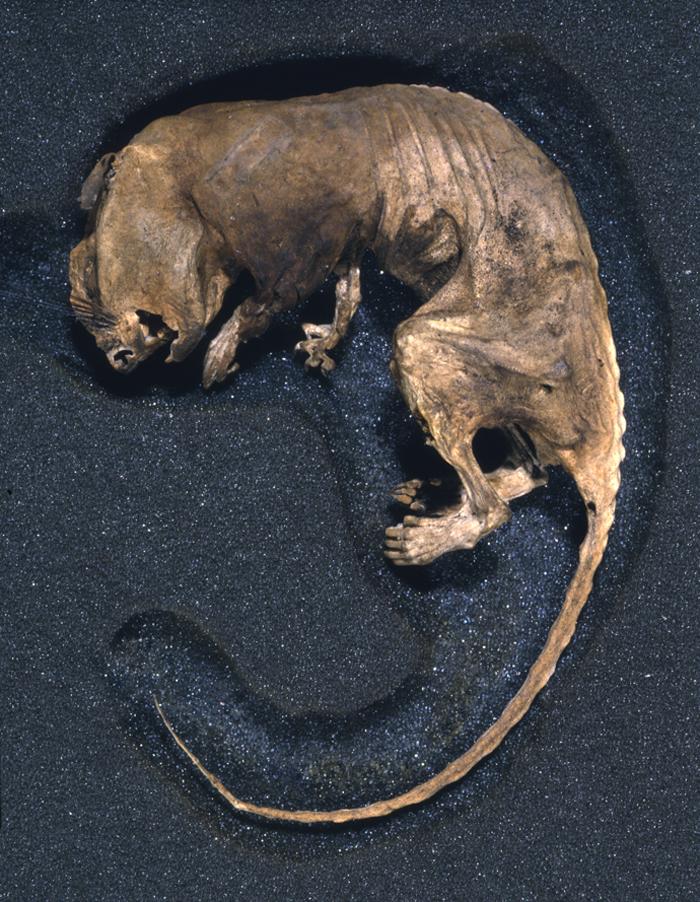
Sir Henry Cole’s Rat (c.1830): The National Archives, E 163/24/31

Yep, that’s right. We owe the wonderful institution that we once called the PRO, founded in 1838, to a rat stuffed with irreplaceable manuscripts. And archivists, being the dedicated – one might say obsessive – guardians of history that they are, created a special foam case to preserve this momentous rat for posterity.

A blog

Ever wanted to know what happens behind the scenes at a busy city archive? Of course you do! Well, if the Huntington’s Verso blog isn’t fulfilling all of your archive-blogging needs, check out the team at York who are describing their on-going project to catalogue the city’s immense civic records. Although not specifically ‘early modern’, it does have some fascinating ‘lucky dips’ (what we here call ‘found art’), including councilmen watching naughty films and railwaymen complaining of mouldy fish cakes, as well as some very pretty visual maps of the archives themselves.

If you’re a historian – professional or amateur – I think it can be immensely profitable to get a sense of how archives (and archivists) work. Sure, the difference between ‘functional’ and ‘structural’ arrangements may not sound especially interesting, but it can make a real difference to how you go about your research.

Another warning

This one comes from Tim Hitchcock, and is rather more serious. I think he makes the point I was trying to make here much more effectively than I ever could.

For both technical and legal reasons, in the rush to the online, we have given to the oldest of Western canons a new hyper-availability, and a new authority.  With the exception of the genealogical sites, which themselves reflect the Western bias of their source materials and audience, the most common sort of historical web resource is dedicated to posting the musings of some elite, dead, white, western male – some scientist, or man of letters; or more unusually, some equally elite, dead white woman of letters.  And for legal reasons as much as anything else, it is now much easier to consult the oldest forms of humanities scholarship instead of the more recent and fully engaged varieties.  It is easier to access work from the 1890s, imbued with all the contemporary relevance of the long dead, than it is to use that of the 1990s.

Without serious intent and political will – a determination to digitise the more difficult forms of the non-canonical, the non-Western, the non-elite and the quotidian – the materials that capture the lives and thoughts of the least powerful in society – we will have inadvertently turned a major area of scholarship, in to a fossilised irrelevance.

It would be a cruel irony to digitise vast new swathes of text and images only to discover that we’ve accentuated the very biases that scholars have been fighting against since at least the 1960s. That is not to say that we shouldn’t try to make ever-more sources freely and easily available online – just that we should beware the consequences of grabbing the ‘low-hanging fruit’ and neglecting less accessible sources. We must make a real effort to move beyond ‘the musings of some elite, dead, white, western male’ and save other voices ‘from the enormous condescension of posterity’.

Update (13/01/13): The York archives blog did a new ‘Lucky Dip’ post that early modernists might like which looks at a late seventeenth-century Chamberlain’s Account Book.
Norwich Entertainments – Part IV: Surgeons on stage

Brodie Waddell

On the 8th of March, 1679, the Norwich Mayor’s Court ordered that

Mr Robert Bradford hath liberty to erect a Stage in the usual place to sell medical Druggs, & performe Chirurgicall Cures and he hath Lycence to doe this for the space of 3 weeks.¹

Medicine was big business in early modern England. Historians have shown us that the ‘medical marketplace’ was extensive and expanding, with many people we might now call ‘healthcare entrepreneurs’ earning a living by providing their services to eager consumers.² The fact that, as every schoolchild knows, ‘medicine’ in this period was as likely to hurt or kill as to cure does not seem to have dissuaded many patients.

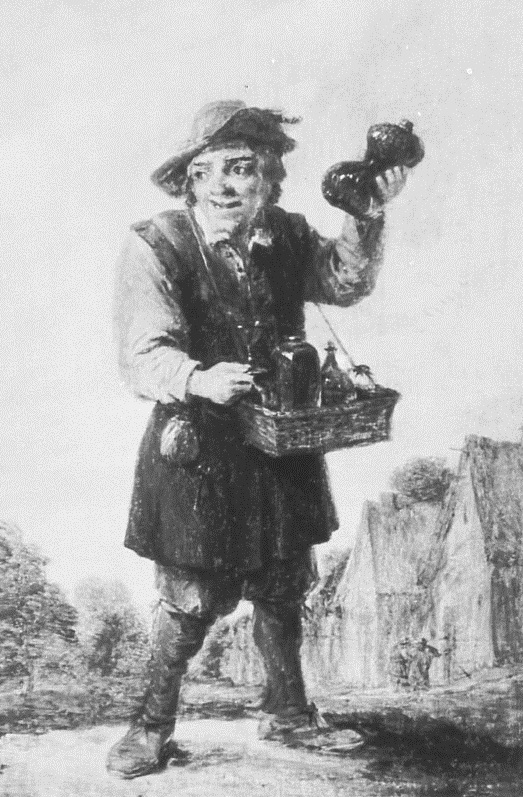
Peddler with apothecary bottles (17th c.). Source: Larsdatter.

That being the case, it should hardly surprise us that Mr Bradford would seek a licence from the civic authorities to hawk his ‘Druggs’ from a public stage in what must have been the centre of the city. This was a good spot to set up if he hoped to make a few shillings by attracting a sizable crowd of customers for his various elixirs.

But what about performing ‘Chirurgicall Cures’? On a stage? How can we explain this? Continue reading

REED all about it – Part I: Fiddling at the Church Ale…

Jonathan Willis

This wasn’t originally going to be the first utterance of this particular newly-sprouted head of the many-headed monster, but Brodie’s recent musings ‘On the merits of dust‘ and the lively debate it sparked set me to thinking about one of my favourite short-cuts to a treasure-trove of brilliant archival material, the Records of Early English Drama series. REED (for short), for those of you who haven’t come across it, is an international project with its home at the University of Toronto. Since 1975 they have published almost thirty edited volumes bringing together collections of transcribed documentary material relating to drama, secular music, and community ceremonial and entertainments from the middle ages until the middle of the seventeenth century. Organised variously by city, county or region, these reassuringly sturdy big red books would be a handsome edition to any library or bookshelf (no, I’m not on commission), and even better many of them are also available to download in PDF format, perfectly legally(!), through the Internet Archive website. This is a top-notch published collection of manuscript material, gathered from record offices up and down the country, which is not only available in university libraries but also on your laptop, desktop or tablet. Continue reading

Norwich Entertainments – Part III: A medieval royal mistress in the 17th century and beyond

Brodie Waddell

In December 1677, the Norwich Mayor’s Court granted Elizabeth Soane a licence ‘to make shew of a Motion Called Fayre Rosamond until further order’.¹ Now here, finally, we have a clear reference to a well-known story. This play or ‘Motion’ must have recounted the life and death of one of England’s most famous royal mistresses, a surprisingly crowded field.

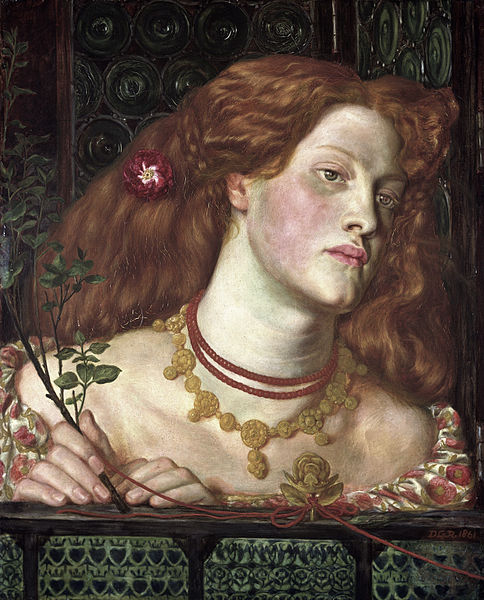
Dante Gabriel Rossetti, ‘Fair Rosamund’ (1861), modelled by Fanny Cornforth (source: National Museum Cardiff via Wikimedia Commons)

‘Fair Rosamund’ was a woman named Rosamund Clifford (d. 1176?), a mistress to Henry II and subject of innumerable legends. Various tales claimed that that the king built a palace and labyrinth at Woodstock for her, that she was mother to an Archbishop of York and the Earl of Salisbury, and that she was poisoned by the queen, Eleanor of Aquitaine. Sadly, none of these seem to be true.² Continue reading

It was a dark and stormy night…

Brodie Waddell

Beginnings are tricky. Coming up with an opening sentence for a great big pile of paper is never easy, especially if it’s the first great big pile of paper you’ve written. When you’ve invested at least several years of your life in a project, it can be very difficult to find some way to introduce it to your reader.

It’s customary to start with a quotation or short vignette. One of the most famous of these is Foucault’s introduction to Discipline and Punish:

On 1 March 1757 Damiens the regicide was condemned “to make the amende honorable before the main door of the Church of Paris”, where he was to be “taken and conveyed in a cart, wearing nothing but a shirt, holding a torch of burning wax weighing two pounds”; then, “in the said cart, to the Place de Grève, where, on a scaffold that will be erected there, the flesh will be torn from his breasts, arms, thighs and claves with red-hot pincers, his right hand, holding the knife with which he committed the said parricide, burnt with sulphur, and, on those places where the flesh will be torn away, poured molten lead, boiling oil, burning resin, wax and sulphur melted together and then his body drawn and quartered by four horses and his limbs and body consumed by fire, reduced to ashes and his ashes thrown to the winds” …

This leads Foucault into a minutely description of the gory process which then shifts abruptly to the highly-regimented daily schedule laid down for ‘for the House of young prisoners in Paris’ in the early nineteenth century. These examples, he says, epitomise ‘a time when, in Europe and in the United States, the entire economy of punishment was redistributed … It was a new age for penal justice’. Although I disagree with much of Faucault’s argument here, as an introduction this is a brilliant example of the form.

Despite a strong temptation to buck this tradition, I started my PhD thesis with a quote from John Bunyan, the peripatetic Baptist preacher and allegorist. Although I stuck with that for the book, the first few paragraphs needed a lot of work. I’ll let you judge for yourself whether the result was successful. The point is: beginnings are tricky.

So, it was with great interest that I read a post by Dave Hitchcock (yet another Hindlite, or should it be ‘Hindleite’?) on the opening for his own PhD.

We begin with a stone. … Yes, with a stone. With a stone flying through the air, in the late 1690s, and hitting the head, the confident, ‘middling sort’, noggin of Thomas Smith, who at that present moment, was atop his horse, riding blithely down a road in Warwickshire, England. I think he was close to Warwick town, the county capital. But as I say, our friend Thomas was struck on the head by a stone, while atop his horse, a powerful symbol of his social status might I add, in the late 1690s.

Not bad at all. He goes on to introduce us to an ‘un-named, possibly scottish, vagrant woman who might have had an incredible fastball and a grudge against authority’. She alone is reason enough for me to want to read the thesis.

Is this tendency to open with a story confined mostly to historians and other humanists? Or is this something that social scientists do too?

Football and its enemies

Brodie Waddell

This is really a topic for my co-blogger, Mark, who actually follows football and knows something about its history. I’m sure he’ll speak up to correct me if I say anything too absurd.

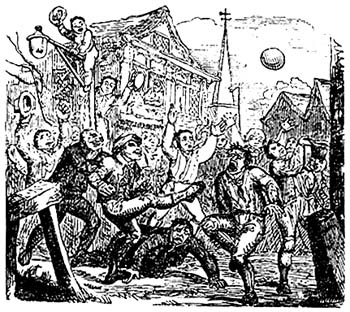
Football has a long history in England, having been played in one form or another for at least a thousand years. The most famous medieval example is the Shrovetide match at Ashbourne (Derbys.) which continues to today. These were often very rough games with few rules:  broken bones were common and the whole parish might join in.

‘Mob football’, reportedly drawn in 1721 and depicting Crowe Street, London.

In the early modern period there were increasingly regularised matches, but there was also plenty of sporadic opposition from the authorities. They were sometimes associated with social protest, particularly riots against the enclosure or ‘improvement’ of common lands.

Heather Falvey (a fellow Hindlite) has come across some interesting cases of ‘rioting under the guise of football’ from the fifteenth century onwards, many taking place in the fens. In early 1699, for example, ‘an estimated 1,100 rioters attacked drainage works and enclosures in Deeping Level, just north of Peterborough’, having originally gathered ‘Under Colour & pretence of Foot ball playing’. And soon after, someone posted a notice inviting local people to ‘a Foot Ball play & other sports’ at the nearby village of Whittlesey, which the authorities believed was simply a cover for more unrest.¹

My own encounter with football at Whittlesey in the archives is sadly not quite so politically-charged. Instead, I came across it whilst trying to figure out how local people used manor courts in the early modern period. Trawling through the records of the court leet of the manor there, I came across the following order, dating from May 1759:

Whereas great Complaints have been made to the Jury of this Manor against a great Number of Young Persons who for some time past have practiced playing at Foot-Ball on the Market-hill whereby they have not only greatly damage the Slate-covering of the Market-Cross … by Climbing upon the said Roof to recover the said Ball; but also some of the Windows of the Adjoyning houses have been broken by their violently forcing a Ball against them And also have greatly obstructed the passage on the said Market-hill, by rendering it very Dangerous and unsafe for People, and especially for Women and Children to pass or Walk on the said Market-hill whilst such a Number of inconsiderate Persons were there rudely at play, Therefore in order to prevent the like irregularities for the future we do whereby Order that if any Person or Persons shall at any time … Kick any Ball to play at Foot-ball … on any part of the said Market-hill, such Person or Persons shall forfeit … 2s 6d²

Naughty boys breaking widows with an overeager kick of the football is hardly as dramatic as hundreds of people smashing up the fences of hated enclosers. Still, I rather like the idea that youth ‘rudely at play’ can turn a quiet street into ‘Dangerous and unsafe’ terrain. It’s also a useful example of the point I tried to make in my article on manor courts (gated; ungated): their records are packed full of weird and wonderful incidents and historians of early modern England should not dismiss them as decaying relicts of the middle ages. Finally, the attempt by local authorities to stamp out any trace of unregulated fun in the lives of ‘Young Persons’ has a shockingly contemporary ring to it.

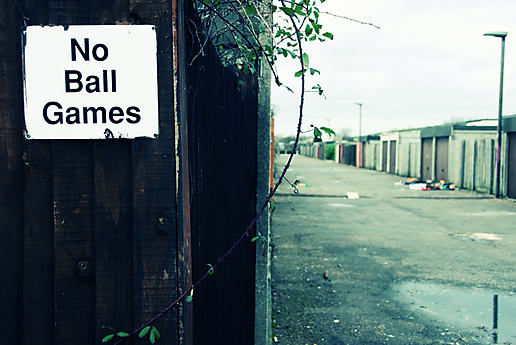
Signs that can be found almost anywhere in England that might otherwise offer the possibility of a good casual football match.

I did, however, come across one case of football-related rioting during some recent archive-grubbing. In 1676, the Daventry Borough Assembly voted to pay for the charges of

the prosecution of such persons as have beene guilty or abbetting those persons that did concern themselves in playing att Footeball or in the Mutany or disturbance that did arise thereupon³

Without any context, it is not clear if this is an instance of social protest ‘under the guise of football’ or simply a case of seventeenth-century football hooliganism. Whatever the circumstances, the burgesses of Daventry saw a threat.

Footnotes

¹ Heather Falvey, ‘Custom, resistance and politics: local experiences of improvement in early modern England’ (PhD thesis, University of Warwick, 2007), pp. 356-7. For earlier and later examples, see ibid., pp. 360-2. She also discusses the connection between rioting and football in her ‘Voices and faces in the rioting crowd: identifying seventeenth-century enclosure rioters’, The Local Historian, 39: (2009), pp. 148-9

² Cambridgeshire Archives, 126/M70, unfol. (May 1759).

³ Northamptonshire Record Office, ML 106, f. 34.

The Devil’s Church

Mark Hailwood

Early modern moralists were quick to condemn alehouses as ‘nests of Satan’, or as ‘the Devil’s church’ – places where impiety and irreligion were rife. The reality, as I will be demonstrating in my book, was that alehouse-haunting and godliness were not necessarily incompatible features of early modern life.

Whilst many ministers perceived themselves as locked in a ‘Battle for the Sabbath’, competing with the local alehouse to put bums-on-seats (or rather bums on pews and ale-benches) during Sunday services, the majority of parishioners seem to have found no great problem – or contradiction – in using their Sundays to congregate both at church and at the local drinking hole. Two diaries from relatively devout Christians—the Yorkshire yeoman Adam Eyre, written in the 1640s, and the Lancashire mercer Roger Lowe, written in the 1660s—both detail routine behaviour of stopping off for drinks either on the way to, or the way back from, a sermon or service. When faced with the seemingly existential choice between church and pub, the most common response was… both.

In fact, religion was a common topic of conversation around the ale-bench, and it is a couple of particularly striking examples of such exchanges that I want to share here, and invite your thoughts on.

The first took place on a December morning in 1656, in a Nottingham alehouse. William Bradshaw, a felt-maker, was discoursing with his companions about food and drink, when the conversation turned to what scripture had to say on the issue. Bradshaw said that ‘there was a saying in scripture that our Saviour fed 5000 men with 5 loaves and 2 fishes, which was as arrant a lie as ever was spoken’.

Jumping forward to 1681, and to the Somerset parish of East Pennard, near Glastonbury, the vicar of the parish, Mr Alisbury, was drinking in an alehouse with Joshua Swetnam, a local farmer. Their discussion came on to the subject of the Old and New Testaments, whereupon Alisbury offered his view that ‘they were not good but were both false and that there was not a good book but the common prayer book’.

We have two expressions here of unorthodox religious belief – but how unorthodox were they? Was Bradshaw’s denial of the miracle of the feeding of the five thousand an instance of truculent plebeian cynicism, demonstrating a healthy dose of mistrust of authoritative discourses? Or was this felt-maker ‘pushing the envelope’ of Protestant theology, taking the official Protestant distrust of the possibility of contemporary miracles to its extreme, and denying the possibility of any of Christ’s miracles? And what about the vicar Alisbury’s rubbishing of both the Old and New Testaments? Was he just a confused drunkard (he did have a reputation for imbibing) who failed to see the contradictions in his statement, or was he simply a ‘hotter sort’ of ‘Prayer Book Protestant’ who exalted the book above even the Bible itself? Would his view have been shared by some of his parishioners, or were these the ramblings of a lone voice?

I’d love to hear from religious historians here – do these views chime with any of the broader trends in religious debates in the mid-to-late seventeenth century, or are these isolated outbursts of unorthodoxy whose origins will remain obscure?

There is a broader question about popular religion at stake here I think – what we might call, after Ginzburg’s famous ‘The Cheese and the Worms’, the Menocchio question – do discoveries such as these help historians of popular culture to tap into hidden veins of belief held by ordinary people, or do they represent the unrepresentative, and lead us up the garden path?

Norwich Entertainments – Part II: Pieces of plays and the spatial turn

Brodie Waddell

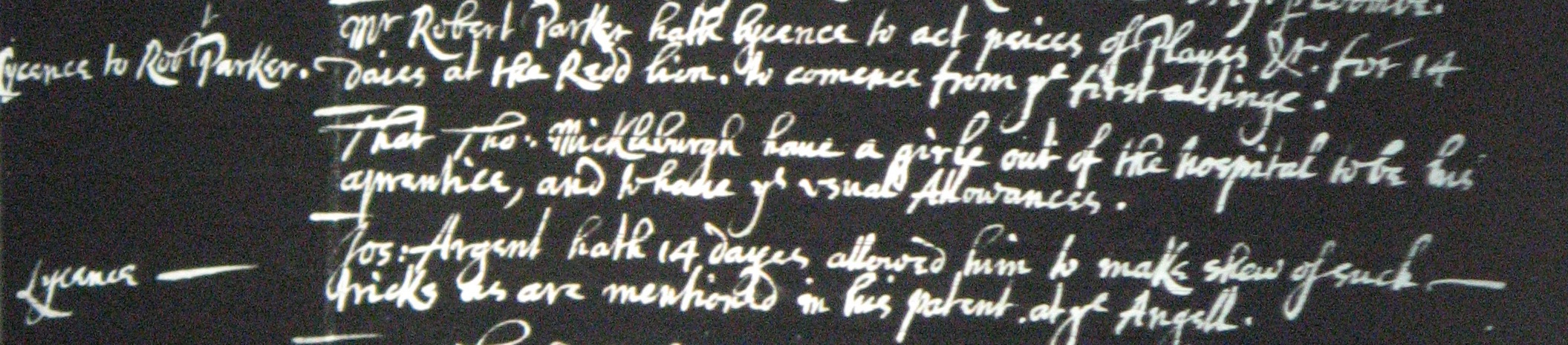
On October 17th, 1677, a month before Bartholomew Laskey arrived with his monstrous hairy child, the Norwich Mayor’s Court licenced Mr Robert Parker ‘to act pieces out of Playes &c for 14 daies at the Redd lion’ and John Argent ‘to make shew of such tricks as are mentioned in his patent at the Angell’.¹

Norwich Mayor’s Court Book, 17 Oct. 1677

Norwich Mayor’s Court Book, 17 Oct. 1677: Norfolk Record Office, NCR Case 16a/25, f. 9 (Sorry about the poor reproduction. The documents were only available on microfilm.)

These are exactly the sort of tantalisingly vague references to popular entertainments that one expects to find in early modern legal records. The ‘pieces of plays’ and unspecified ‘tricks’ surely amused their audiences, and the title ‘Mr’ suggests that at least Parker earned a decent livelihood, so they probably represent typical examples of provincial urban popular culture in the late seventeenth century. Continue reading

Naming Names

Mark Hailwood

Thomas
Nicholas
John
Thomas
Richard
William
Andrew
Robert
Thomas
Thomas
William
John
Nicholas

As you can see from this quick sample of first names of Reading alehouse keepers, taken from a list compiled in 1622, originality was not a priority when it came to early modern naming practices. It always catches the eye then when a more unusual name crops up in the archives. A recent favourite of mine is another Reading alehouse keeper: Valentine Skeate sounds as though he could be from the pages of a Dickens novel.

Keeping your eyes peeled for interesting names can add a bit of light relief to archive grubbing, especially when you are working through rather dry list material. Feel free to share any of your own that you come across.

[Part II in the series is here]

Norwich entertainments – Part I: A monstrous hairy child and a boneless girl

Brodie Waddell

On 17 November 1677, the Norwich Mayor’s Court decreed that

Mr Bartholomew Laskey had leave to make shew of a Monstrous Hayree Chyld for 10 daies from this day.

I came across this when looking for something else, but I couldn’t help but make a note of it. And, as I discovered, there were licences like this recorded throughout this period.

About a year later, on 5 October 1678

Isaac Cookesone produced a Lycecne under the seale of his Majesty’s Office of Revells to make shew of a Girle of 16 yeares of age without Bones, and he hath 14 dayes given him to make shew of her at the Lower half Moone in the Market place, He Keeping good order & Houres

Norwich, it seems, was a city that knew how to have a good time.

This is definitely not my area of expertise and I didn’t try to investigate the context of the orders, so I’d welcome ideas. But a few thoughts immediately come to mind… Continue reading