A civil war comic strip?

Brodie Waddell

Several months ago, inspired by a post by Gavin Robinson, I shared an image of a broadsheet called The Young-Mans Victory Over the Povver of the Devil that seemed to fit the definition of a comic strip. That one, dating from the 1690s, was the earliest I had found at the time and it remains my favourite of the genre, but I’ve since come across an earlier contender.

I discovered it on a wonderful blog called The 1640s Picturebook where Ian Dicker has posted dozens of images from the period along with detailed analysis of the costumes depicted. In June of last year, they posted an image of The Malignants Trecherous and Bloody Plot (1643), which depicted a plan apparently launched by the MP, Edmund Waller, bring an end to the first of the English Civil Wars. According to the confession of one of the plotters quoted in the ODNB, it began peaceably enough:

‘It came from Mr. Waller under this notion, that if we could make a moderate party here in London, to stand betwixt the gappe, and in the gappe, to unite the King and the Parliament, it would be a very acceptable work, for now the three Kingdomes lay a bleeding, and unlesse that were done there was no hopes to unite them.’

But the peace plan quickly turned to war: in its final form, the plot apparently called for an armed rising and seizure of the key points of the City in order to let the king’s army in.

The plot ended before it had begun when the plotters were betrayed and arrested. Somehow, seemingly through a mixture of powerful rhetoric and shameless bribery, Waller managed to escape the grisly punishment inflicted on some of his co-conspirators and was permitted to go into exile after only a year and a half in prison.
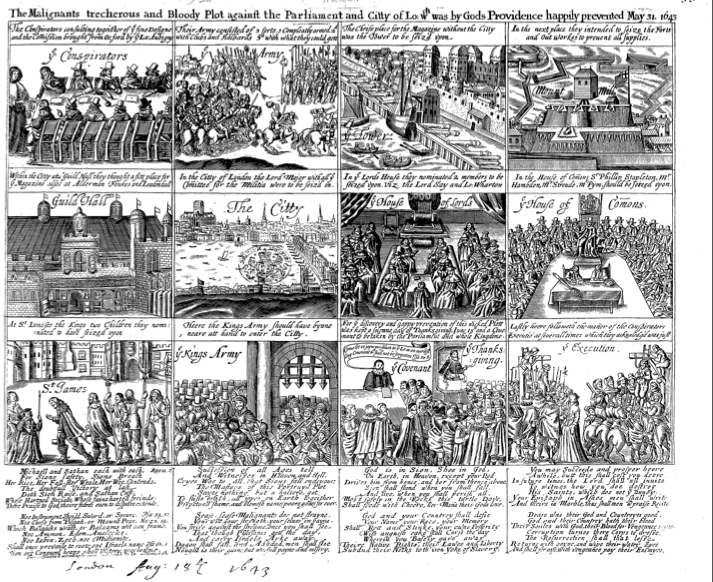
The Malignants Trecherous and Bloody Plot (1643) via The 1640s Picturebook.

The Malignants Trecherous and Bloody Plot (1643) via The 1640s Picturebook.

The upshot of all this was a detailed broadsheet published in August of 1643. It has twelve panels, each of which includes a running narration of the events as they unfolded, from the hatching of the conspiracy to the execution of some of the offenders.
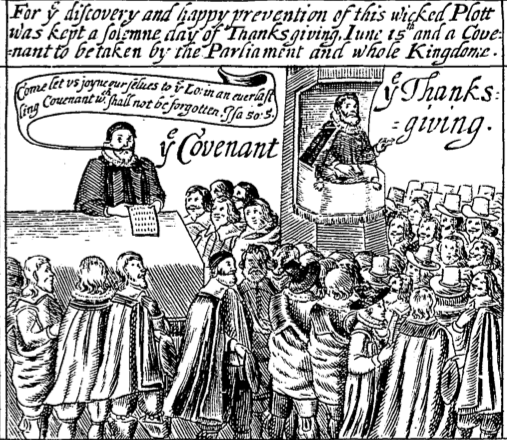
The Malignants (1643) panel with Covenant

‘Come let us joyne our selves to the Lord in an everlasting Covenant which shall not be forgotten’, citing Jeremiah 50:5.

It even included some text in a speech bubble, said to be a key part of a ‘true’ comic strip – though as befits a seventeenth-century comic it is a quotation from scripture rather than a supervillain’s monologue.

So have we pushed the date of the first comic strip back still further? Or is this too much of a stretch?

Workers’ Representation Part Three: Mining and Modernity

Mark Hailwood

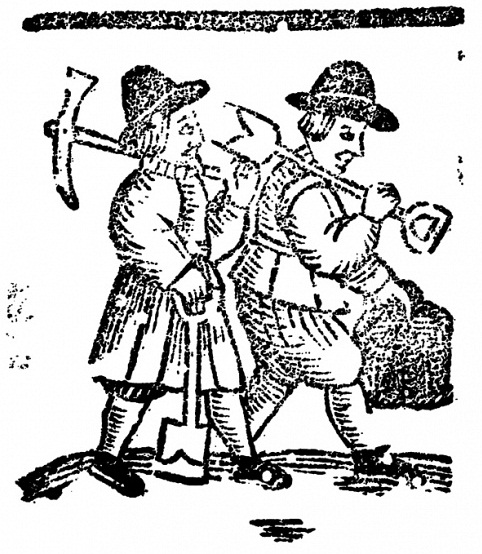
So, I thought it was about time to introduce another image of woodcut workers from my trawls through the English Broadside Ballad Archive, and what could be more appropriate than an image from a special new year’s ballad: A New-Years-Gift for Covetous Colliers, published sometime in the 1680s or 1690s. The ballad itself praises Parliament for acting against price-hiking colliers – those involved mainly in the distribution and sale of coal – but includes an image of the primary workers in the coal trade, miners:

miners

The image isn’t particularly remarkable. There is no evidence in this depiction of the hostile stereotype that miners were a ‘race apart’ from other workers; no coal-blackened faces to help symbolise this cultural otherness; no visual indicators that miners were, as Daniel Defoe put it, ‘subterranean wretches…a rude, boorish kind of people’.[1] Continue reading

Norwich Entertainments – Part V: Ballad-singers and dangerous news, with coffee

Brodie Waddell

The people of late seventeenth-century Norwich did not get their entertainment solely from hairy children and pieces of plays. They also amused themselves with the ever-growing numbers of printed works that were pouring from the presses at that time.

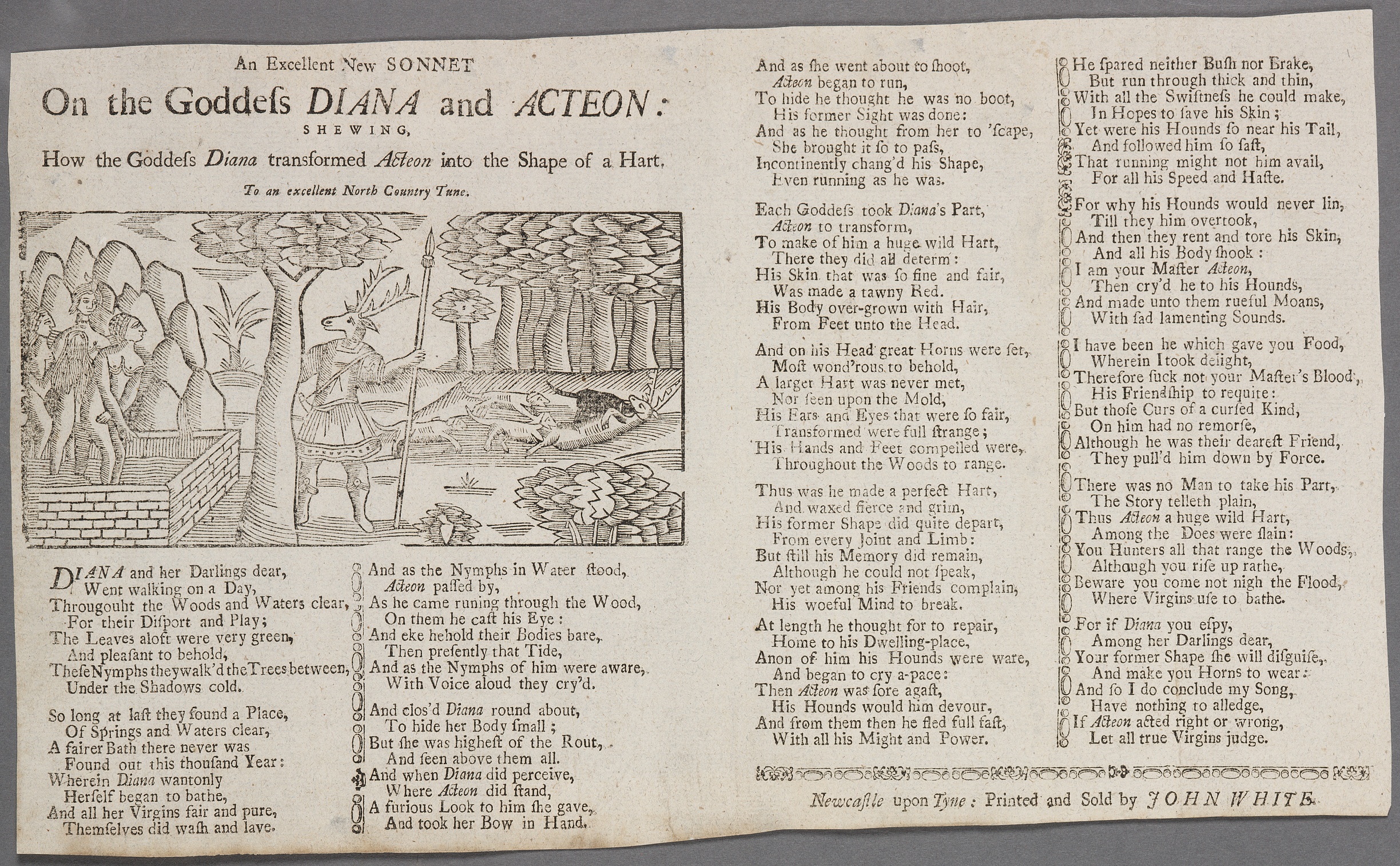
In June 1680, for example, the Norwich Mayor’s court ordered that ‘Twoe Ballad singers haveing Lycence to Sell ballads, pamphlets small bookes & other bookes Lycensed from the Office of the Revells have leave to doe soe until Monday senight [?seven-night]’.1

Ballad entitled ‘An Excellent New Sonnet On the Goddess Diana and Acteon’ (c.1725-69). EBBA.

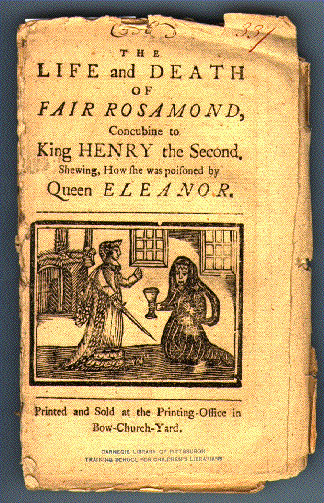
Title-page of a chapbook titled ‘The Life and Death of Fayr Rosamond’ (1755). SF.

These balladeers were just two of the hundreds that traipsed through the city streets and country lanes of early modern England, singing to advertise their wares. The exact contents of a peddler’s sack could be very diverse. In addition to all sorts of petty trinkets, they sold tales of drunken sailors, royal mistresses, industrious spinsters, and much else besides. Often these were in the form of broadside song sheets, but they might also be ‘pamphlets’ and ‘small books’, sometimes called chapbooks, written in prose to provide merriment or salvation for the price of penny or two. Margaret Spufford and Tessa Watt, among many others,  have discussed this ‘cheap print’ in much more detail, noting that ballad-sellers were often condemned by the authorities as vagrants. But in late seventeenth-century Norwich at least they seem to have been welcomed by both the townspeople and city officials.

Rather more unusual, however, was the license issued to a man a year earlier. In November 1679, the court declared that ‘Lawrence White is allowed to reade & sell Pamphlets on Horsebacke untill Wednesday next’.2 Continue reading

An archival miscellany: a warning, a rat, a blog and another warning

Brodie Waddell

October was a rather busy month. My first term of teaching and marking at Birkbeck has meant that I know a good deal more about eighteenth-century London infrastructure, English Civil War veterans, and the historiography of the Reformation than I did a few weeks ago, but research and blogging have been neglected.

I have, however, come across a few tasty tidbits that deserve to be shared with the world. This is, in some ways, simply a continuation of the conversation (here and here) we’ve been having about archives.

A warning

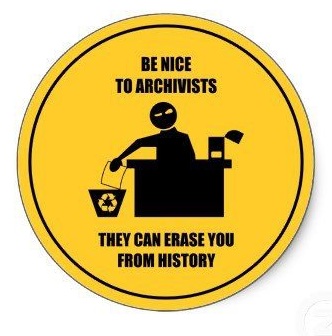
An archivist friend passed this on and, like all good jokes, it contains at least a kernel of truth.

Having worked in the Borthwick for a year, I can say with some certainty that it would be entirely possible to use the limbo between the public reading room and the strongroom to erase someone with a ‘misplaced’ inkblot or an ‘accidental’ torn page. So be sure to greet your archivist with a friendly smile … or risk the posthumous disappearance that befell some soviet dissidents.

A rat

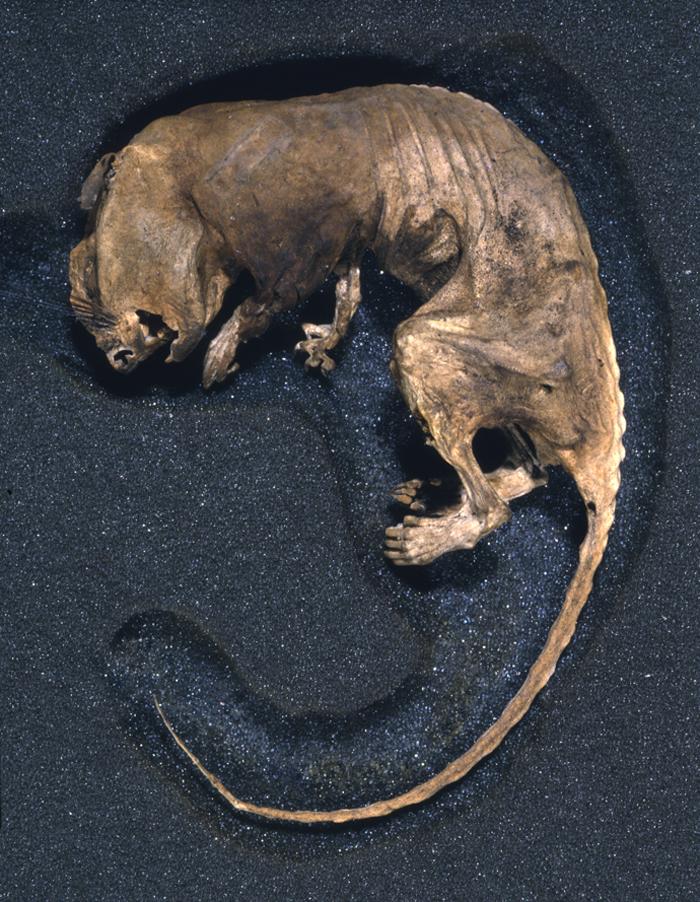
Or, to be more specific, Sir Henry Cole’s Rat (c.1830). As folks at the National Archives describe it…

At 15, Henry Cole, later to find fame as organiser of the Great Exhibition began working with the records of the British government. Shocked at their poor condition he pioneered reform of what became known as the Public Record Office – now The National Archives. This rat, with a stomach full of chewed document, was used as evidence for the poor condition of the records.

Sir Henry Cole’s Rat (c.1830): The National Archives, E 163/24/31

Yep, that’s right. We owe the wonderful institution that we once called the PRO, founded in 1838, to a rat stuffed with irreplaceable manuscripts. And archivists, being the dedicated – one might say obsessive – guardians of history that they are, created a special foam case to preserve this momentous rat for posterity.

A blog

Ever wanted to know what happens behind the scenes at a busy city archive? Of course you do! Well, if the Huntington’s Verso blog isn’t fulfilling all of your archive-blogging needs, check out the team at York who are describing their on-going project to catalogue the city’s immense civic records. Although not specifically ‘early modern’, it does have some fascinating ‘lucky dips’ (what we here call ‘found art’), including councilmen watching naughty films and railwaymen complaining of mouldy fish cakes, as well as some very pretty visual maps of the archives themselves.

If you’re a historian – professional or amateur – I think it can be immensely profitable to get a sense of how archives (and archivists) work. Sure, the difference between ‘functional’ and ‘structural’ arrangements may not sound especially interesting, but it can make a real difference to how you go about your research.

Another warning

This one comes from Tim Hitchcock, and is rather more serious. I think he makes the point I was trying to make here much more effectively than I ever could.

For both technical and legal reasons, in the rush to the online, we have given to the oldest of Western canons a new hyper-availability, and a new authority.  With the exception of the genealogical sites, which themselves reflect the Western bias of their source materials and audience, the most common sort of historical web resource is dedicated to posting the musings of some elite, dead, white, western male – some scientist, or man of letters; or more unusually, some equally elite, dead white woman of letters.  And for legal reasons as much as anything else, it is now much easier to consult the oldest forms of humanities scholarship instead of the more recent and fully engaged varieties.  It is easier to access work from the 1890s, imbued with all the contemporary relevance of the long dead, than it is to use that of the 1990s.

Without serious intent and political will – a determination to digitise the more difficult forms of the non-canonical, the non-Western, the non-elite and the quotidian – the materials that capture the lives and thoughts of the least powerful in society – we will have inadvertently turned a major area of scholarship, in to a fossilised irrelevance.

It would be a cruel irony to digitise vast new swathes of text and images only to discover that we’ve accentuated the very biases that scholars have been fighting against since at least the 1960s. That is not to say that we shouldn’t try to make ever-more sources freely and easily available online – just that we should beware the consequences of grabbing the ‘low-hanging fruit’ and neglecting less accessible sources. We must make a real effort to move beyond ‘the musings of some elite, dead, white, western male’ and save other voices ‘from the enormous condescension of posterity’.

Update (13/01/13): The York archives blog did a new ‘Lucky Dip’ post that early modernists might like which looks at a late seventeenth-century Chamberlain’s Account Book.

Workers’ Representation Part Two: Making Hay

Mark Hailwood

Herein lies the second installment of my blog series on woodcut images of workers

As I sit here in fenland fog, my mind drifts back to sun-baked Californian afternoons at the Huntington Library. Often I would avail myself of a short break from such wonders as the Ashby-de-la-Zouch manor court records, and pop upstairs to the office of the Director of Research, Steve Hindle (who also happens to have been my PhD supervisor) to either pick his brains or raid his bookshelves.

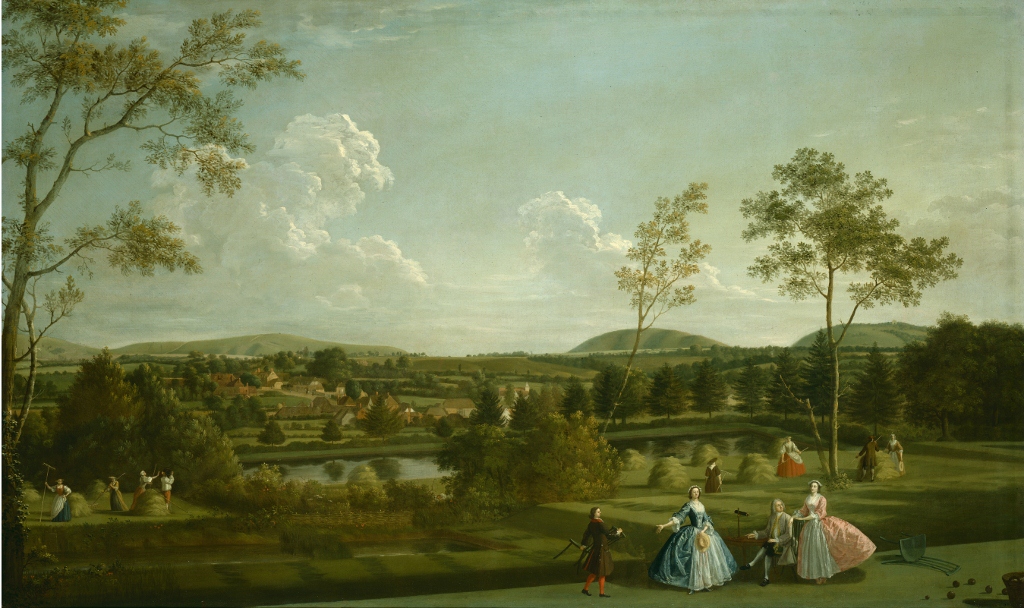
On one such afternoon we fell to discussing the following painting that hangs upon his office wall, a depiction of the Montagu family at their Sandleford Priory estate in Berkshire, by Edward Haytley, commissioned in 1743:

The Montagus at Sandleford Priory
Source: hayinart

At first I was a bit worried – what was this flag bearer of ‘history from below’ doing with an aggrandising portrait of the rural gentry in pride of place on his wall? Continue reading

What shall we do with a drunken sailor?

Brodie Waddell

Surely this was an age-old question. Although the traditional sea shanty was only recorded in the early 19th century, there were more than a few early modern seamen who over-indulged in drink.

Indeed, when ‘a crew of Jovial Blades’ met in an alehouse in one late 17th-century ballad, it was the sailor who took the lead over his landlocked companions:

A bonny Seaman was the first,
but newly come to Town,
And swore that he his Guts could burst
with Ale that was so brown.

In another song from this period, a group of cunning ‘Maidens’ from the London suburb of Poplar tricked ‘several young Seamen’ into eating a cat baked in a pasty. Once they realised their mistake, the feline feast ‘did force them to spew’, but they still ‘laughed and quaffed’ and ‘drank off the Liquor before they went out’. It seems the solution to eating ‘A Cat-Pasty’ is to get thoroughly drunk.

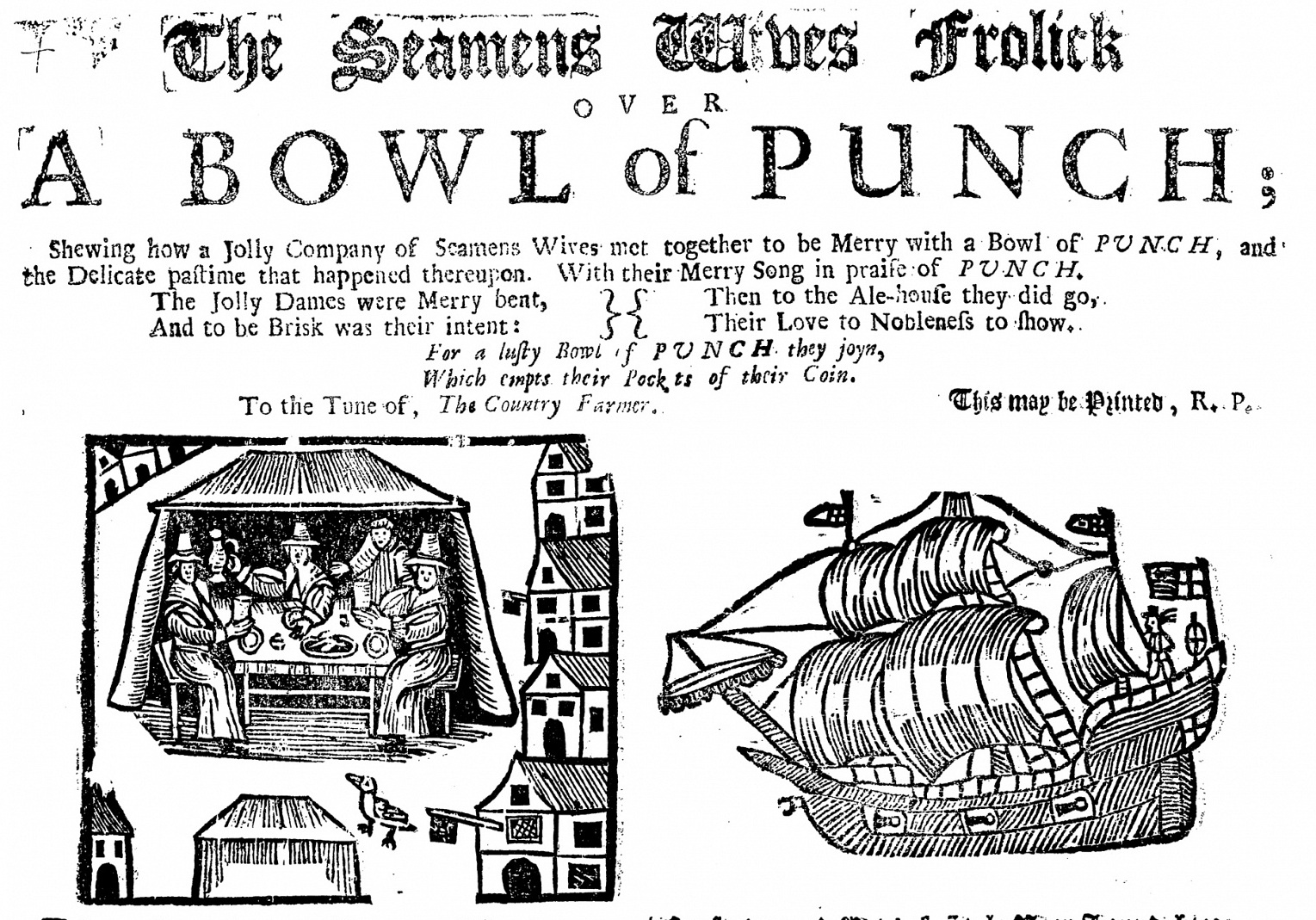
Even sailors’ wives were not averse to downing ‘a lusty Bowl of Punch’. According to another ballad, the ‘Jolly Company’ raced to the alehouse as soon as their ‘Seamen had newly left the Land’ and set on their task with gusto:

We Seamens brisk Wives are bonny and glad,
While our Men on the Ocean are sorry and sad;
We love our Liquor to drink it all up,
None of us but love a full Glass or a Cup

They went so far as to claim that the punch would ‘make our Noddles the quicker’, a suggestion that was not as far-fetched to their contemporaries as it might be to us. As unlikely as it sounds, Mark has shown that the idea of alcohol enhancing ‘wit’ and ‘reason’ was not unknown in early modern England.¹ A little of ‘haire of the old Dogge’ might also cure the resulting hang-over.

Detail from ‘The Seamens Wives Frolick Over A Bowl of Punch’ (1685-88), in Pepys Ballads, IV, p. 184, via EBBA.

One might be inclined to dismiss these as stereotypes played up by the balladeers trying to make a few extra pence, but there are also examples from the archives. The records of the High Court of Admiralty, for example, include depositions describing sailors such as Robert Oyle who habitually ‘debauch[ed] himselfe with drinke’, Frisby and Archer who spent ‘five dayes and nights together drinking and frequenting houses of lewd repute’, and Thomas Grove who returned aboard ‘much distempered with drink and began to curse and sweare’.

Are these cases typical? It’s hard to say at this point. All of the Admiralty examples come from the MarineLives project, a new group which is currently transcribing and publishing online a whole swathe of rich material from court records held at Kew. Perhaps once we have a complete set of cases over an extended period we’ll have a better idea of just how often 17th-century seamen had to ‘put him in the long-boat and make him bale her’ or ‘put him in the scuppers with a hose-pipe on him’, ‘earl-aye in the morning’.

In the meantime, the MarineLives team report that they are looking for a few more volunteers to join them to help uncover the rough lives of early modern seafarers, so if you’d like to help the world learn about a real ‘drunken sailor’ or two, do let them know.

Footnotes

¹ Mark Hailwood, ‘”It puts good reason into brains”: Popular Understandings of the Effects of Alcohol in Seventeenth-Century England’, Brewery History (forthcoming, January 2013).

Workers’ Representation Part One: Spinning a Yarn

Mark Hailwood

As Christopher Thompson rightly notes over at Early Modern History, one of the great things about working at The Huntington is the people you get to meet over coffee. Last week I had the pleasure of meeting for the first time Patricia Fumerton, from the University of California Santa Barbara. Paddy is the pioneer of the online ballad database, EBBA, a digital resource that has been indispensable to my own research, and has been linked to on this blog numerous times already.

This gave me the chance to tell Paddy how great I think the site is, and in particular to praise its latest function that I have been playing around with: the ability to search, by category, the woodcut illustrations that adorn most seventeenth-century broadside ballads. I’ve been working on an article on representations of workers in these ballads – in particular artisan tradesmen – but my focus has been on how they were represented in the text of these ballads: how they were described and characterised. I hadn’t been paying too much attention to looking at the pictures – but might these too be a useful source for the kind of cultural history of work and workers that I am interested in? I entered a search for woodcuts that had been categorised as depicting ‘occupation / trade’, and spent some time perusing the 122 results that came up.

I’m not sure I have the skills or training to confidently deploy this kind of visual evidence in a formal historical paper or article, but I do find it fascinating, and thought I would offer up some of my thoughts in a series of blogposts entitled ‘Workers’ Representation’.

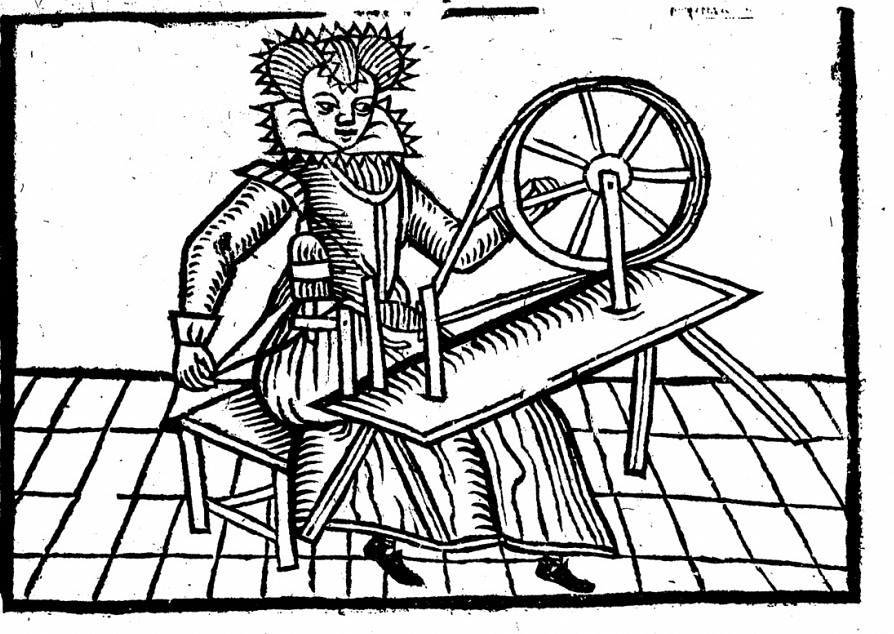
One of the first things that caught my eye was the common depiction of a key category of women’s work: spinning.

A woodcut taken from the ballad ‘Whipping Cheare’, from the Pepys collection, vol. I, no.208-109, c.1625. Source: EBBA

Continue reading

Norwich Entertainments – Part III: A medieval royal mistress in the 17th century and beyond

Brodie Waddell

In December 1677, the Norwich Mayor’s Court granted Elizabeth Soane a licence ‘to make shew of a Motion Called Fayre Rosamond until further order’.¹ Now here, finally, we have a clear reference to a well-known story. This play or ‘Motion’ must have recounted the life and death of one of England’s most famous royal mistresses, a surprisingly crowded field.

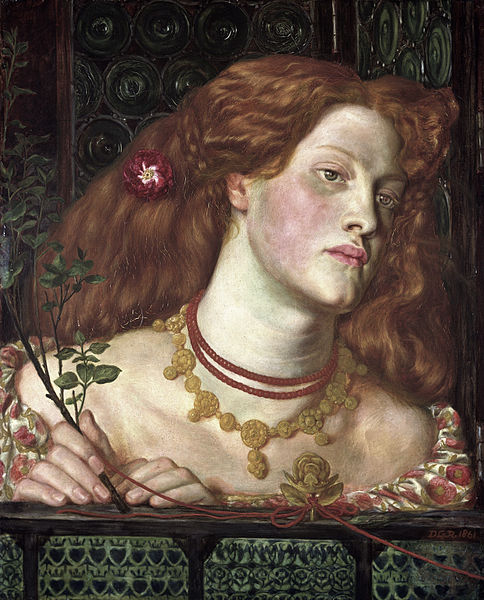
Dante Gabriel Rossetti, ‘Fair Rosamund’ (1861), modelled by Fanny Cornforth (source: National Museum Cardiff via Wikimedia Commons)

‘Fair Rosamund’ was a woman named Rosamund Clifford (d. 1176?), a mistress to Henry II and subject of innumerable legends. Various tales claimed that that the king built a palace and labyrinth at Woodstock for her, that she was mother to an Archbishop of York and the Earl of Salisbury, and that she was poisoned by the queen, Eleanor of Aquitaine. Sadly, none of these seem to be true.² Continue reading

A Seventeenth-Century Comic Strip?

Brodie Waddell

Gavin Robinson, over at Investigations of a Dog, asks ‘Why weren’t there any comics in the 1640s?’

He uses to the wikipedia definition:

a sequence of drawings arranged in interrelated panels to display brief humor or form a narrative, often serialized, with text in balloons and captions

This seems rather strict for my taste. Perhaps this is the nature of wikipedia  – an article on ‘comic books’ is bound to be dominated by comic ‘purists’ (even ‘puritans’) with a prescriptive outlook. The OED, in contrast, simply gives one definition of ‘strip’ as

A sequence of small drawings telling a comic or serial story in a newspaper, etc. Freq. as comic strip. Also transf. orig. U.S.

It gives the first use in 1920, which slightly predates the first supposed ‘comic book’ in 1933.

Apparently the first ‘comics’ (by the strict wikipedia definition) only appeared in the nineteenth century, and Gavin Robinson offers some possible reasons why, all of which seem plausible.

However, is it really true that ‘comics’ only emerged in the nineteenth century?

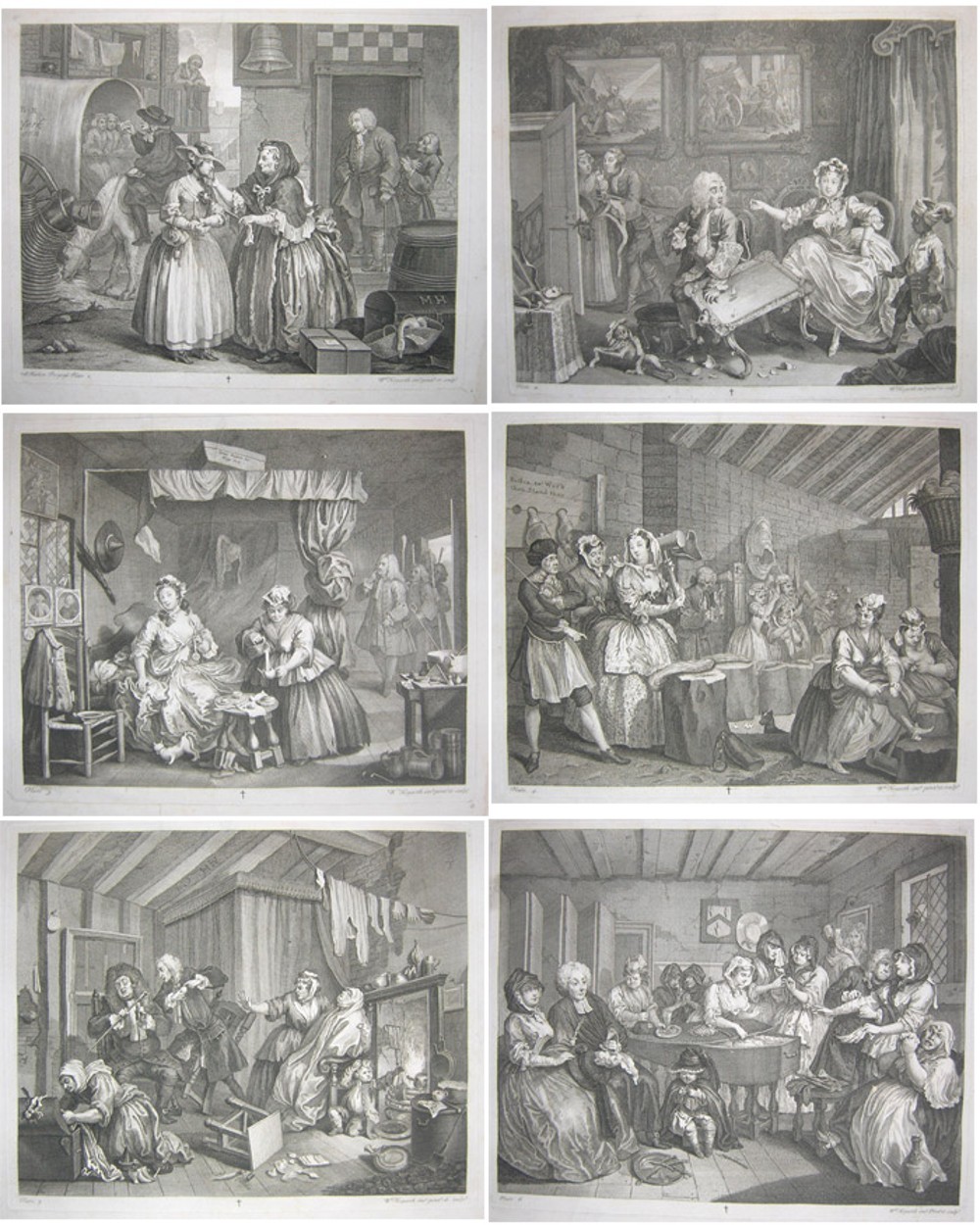
If we go by the OED definition, certainly not. As Gavin points out, ‘sequential art’ goes back to the Romans at least, and there are plenty of early modern examples. Here is Hogarth’s famous series:

William Hogarth, A Harlot’s Progress (1732). Image borrowed from here.

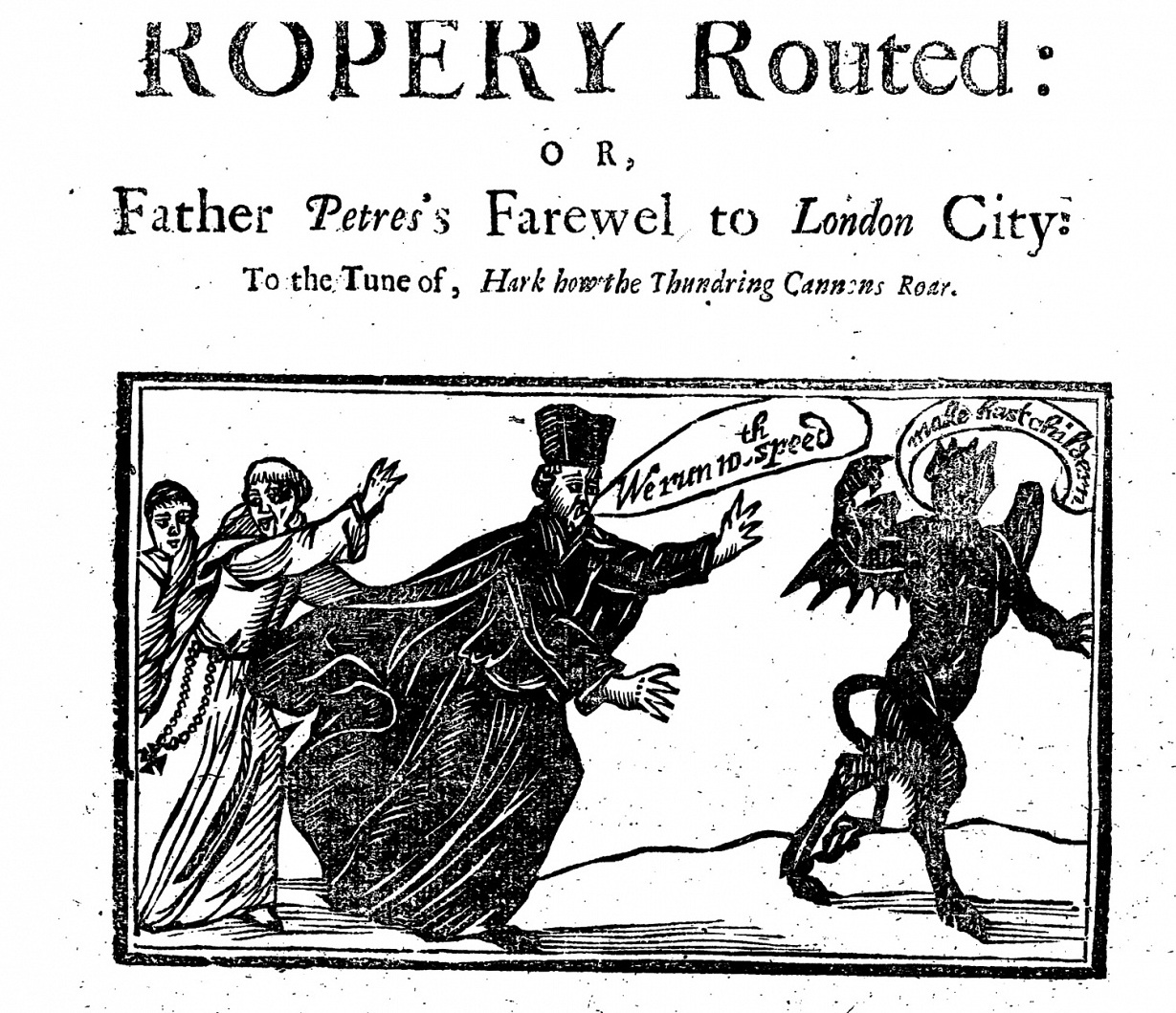
If we go by the wiki definition, we need ‘text in balloons and captions’, both of which are found in many early modern sources, but which was not normally paired with sequential panels. Here, for example, is some dialogue in balloons from a ballad in the Pepys collection:

Ropery Routed: Or, Father Petres’s Farewel to London City (1689) in Pepys Ballads, II, p. 296.

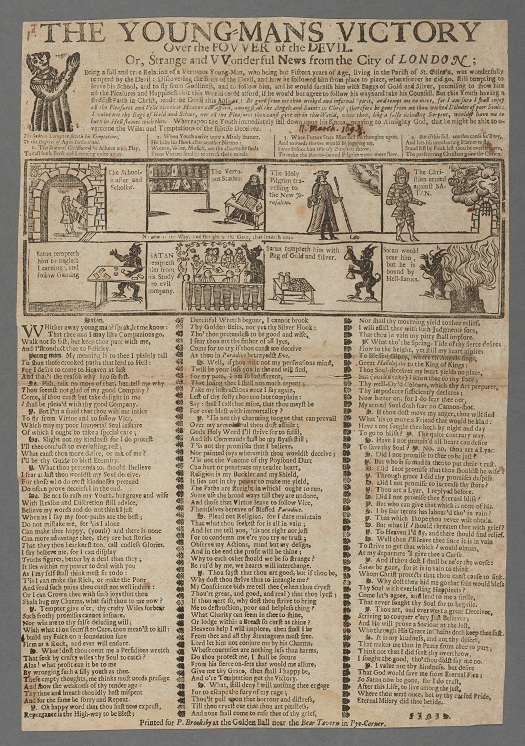
All of this is just a lengthy prologue to my own attempt at a small contribution. Whilst I haven’t found anything that unambiguously matchs the narrow definition, I think this comes pretty damn close.

The Young-Mans Victory Over the Povver of the Devil Or Strange and VVonderful News from the City of London (?1693), from the Haughton Library at Harvard.

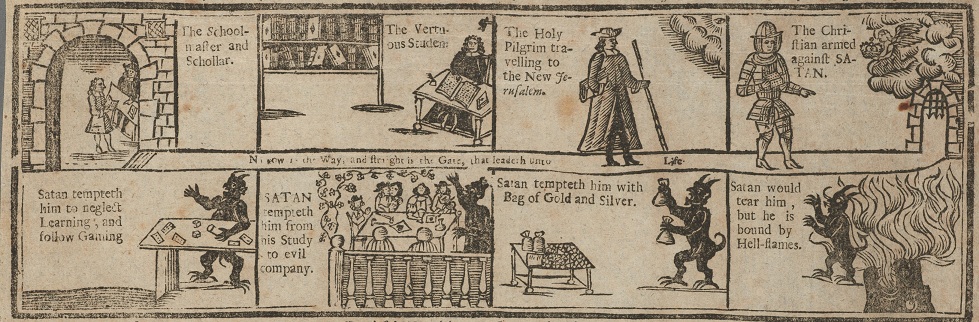
I came across this broadsheet when looking for an image for the cover of my book. You’ll note that although it doesn’t have dialogue in balloons, it does tell a sequential story through pictorial panels with accompanying in-panel text.

Detail of panels from The Young-Mans Victory Over the Povver of the Devil Or Strange and VVonderful News from the City of London (?1693).

My favourite panel (and the one that ended up on my book cover) is that which shows the devil trying to tempt the ‘Young-Man’ with ‘Bag of Gold and silver’. It makes literal the age-old association between ‘gold’ (i.e. riches) and ‘temptation’ (i.e. sin and damnation), neatly encapsulating one of my arguments: traditional Christian moral codes continued to be a popular way to think about economic life at the end of the seventeenth century.

So, is this an early modern comic strip?

Norwich entertainments – Part I: A monstrous hairy child and a boneless girl

Brodie Waddell

On 17 November 1677, the Norwich Mayor’s Court decreed that

Mr Bartholomew Laskey had leave to make shew of a Monstrous Hayree Chyld for 10 daies from this day.

I came across this when looking for something else, but I couldn’t help but make a note of it. And, as I discovered, there were licences like this recorded throughout this period.

About a year later, on 5 October 1678

Isaac Cookesone produced a Lycecne under the seale of his Majesty’s Office of Revells to make shew of a Girle of 16 yeares of age without Bones, and he hath 14 dayes given him to make shew of her at the Lower half Moone in the Market place, He Keeping good order & Houres

Norwich, it seems, was a city that knew how to have a good time.

This is definitely not my area of expertise and I didn’t try to investigate the context of the orders, so I’d welcome ideas. But a few thoughts immediately come to mind… Continue reading