Dead white men

Brodie Waddell

There has been rather a lot discussion on this blog of two pioneering historians: E.P. Thompson and Eric Hobsbawm.

For those of you who are keen to hear more about these two, I’d like to mention a couple of events that will be of interest. For those of you who are tired of me blathering on about dead white men, I can promise that both of these events are actually focused on the impact of Thompson and Hobsbawm’s ideas – rather than on the men themselves – and that after this post I’ll shut up about them for a while.

The first event was a panel on the legacy of Thompson’s The Making of the English Working Class (1963). The talks and discussion were recorded, and the podcasts are now freely available here. I believe the slides will also be available for download at some point soon.

There were three panellists. Professor Sander Gilman (Emory) focused on the ‘Englishness’ of The Making and the problematic place of Jews in this story. Professor Jane Humphries (Oxford) presented a wonderfully incisive look at the how the ‘sentimentalist’ and ‘pessimistic’ interpretation of the Industrial Revolution has been recently reinvigorated by rigorous quantitative research, including her own book on Childhood and Child Labour British Industrial Revolution (2011). Last, and definitely least, I expanded on some of the ideas that I had presented in my earlier piece on the future of ‘history from below’, drawing on the wider discussion in our online symposium, particularly the contributions from Mark Hailwood and Samantha Shave.

Hobsbawm image_previewThe second event I’d like to mention is the huge conference on ‘History after Hobsbawm’ that will be held at Birkbeck at the end of April. It’s going to be quite an occasion – I don’t think I’ve ever seen so many big-name ‘Munros’ from the world of history on a single programme. Although the event will partly be a celebration of Hobsbawm’s legacy, it also promises to be a forum for leading historians to tackle big issues such as nationalism, protest, class, environment, and so on. I won’t attempt to list all the speakers except to say that I’m particularly looking forward to the panels on ‘the crisis of the 17th century’ (Sanjay Subrahmanyam, Geoffrey Parker, John Elliott), on ‘Marxist and post-Marxist social history’ (Andy Wood, Jane Whittle, Lucy Robinson), and on ‘Frameworks of historical explanation’ (Peter Burke, Joanna Innes, Renaud Morieux). I hope to see some of you there.

Little monsters part I: putting together a successful course on early modern history (or anything else for that matter)

Jonathan Willis

LittleMonsters.com_2013_July Most of the posts which appear on the many-headed monster are either related directly to historical research into the early modern period, or focus on other questions relating to historiographical concerns, methodological issues, theoretical problems or matters arising out of our experience as professional early modern historians.  Nothing wrong with that, I hope you’ll agree! But in this post, I’d like to do something slightly different.  There is a big aspect of life as an academic which is so far conspicuous by its absence from the pages of the monster (fellow heads, correct me if I am wrong…), and that is: teaching.  How, in other words, do we prepare for the important professional task of raising little monsters?

This is something that has been on my mind for several months now.  In September, I returned to a full teaching load after three years of research leave.  This involved taking over and contributing to existing courses, as well as devising a couple of brand new ones.  The initial shock was (just about) mitigated by the genuine pleasure of sitting down and figuring how to try to formulate courses which would be appealing to students, would develop their skills and knowledge, and which would hopefully act as a good introduction to a world which I find endlessly fascinating, exciting, and even downright fun!  But writing a course is hard work, and out of all the things that academics have to do – teaching, research, writing, publishing, attracting funding, organising and presenting at conferences – it is probably the activity for which we receive the least guidance and support.  It is also the foundation on which pretty much all other aspects of teaching depend: if your curriculum is over- or under-ambitious, incoherent, or just plain dull, then you are sowing all sorts of nasty seeds which you will have no choice but to reap in the fullness of time.  I wouldn’t dream of saying that I have a solution to this issue, yet alone a blueprint of ‘best practice’.  Instead, I just want to talk around some of the challenges I think that we probably all experience at one time or another, and I invite your thoughts on these areas and more!

Needs must…

cuck

Some modules sit in our teaching portfolio like cuckoos in the nest – definitely the product of another gene pool!

First of all, it is worth noting that we don’t all get to teach the courses we would like to teach.  A permanent post tends to bring with it the opportunity to devise your own courses around your personal interests, but that is not often the case earlier in your career, although thankfully there are some exceptions to that. Still, there are at least two approaches to taking over an existing course.  The first is to ask for copies of the module handbook (maybe even the lecture notes) and simply deliver the course as written.  The other, more time-consuming but perhaps more rewarding option, is to ask whether there is leeway for you to tweak the course, within the existing module specifications and learning outcomes.  You can’t spring a course on Elizabethan popular culture on a group of unsuspecting students who have signed up for a module on Henrician court politics, for example, but by tweaking discussion questions, reading lists, primary source exercises and topic headings you can come up with something which is a much better reflection of your interests: you’ll enjoy it more, and the students will probably enjoy it more as a result.

Horses for courses

Secondly, once you’ve been given a license to create your own course, it’s really important to sit back and give some broad thought as to where it fits in with the broader programme

How does your piece fit into the rest of the puzzle?

How does your piece fit into the rest of the puzzle?

structure of (let’s say, for the sake of argument) your students’ undergraduate history degree.  History isn’t the same as mathematics or some of the other sciences, where before you tackle a subject like fluid dynamics you probably need to be pretty damn good at the basics of adding up, algebra, basic mechanics, that sort of thing. (OK, this is maths, I don’t really know what I’m talking about, which kind of proves my point.) The seventeenth century isn’t ‘harder’ than the sixteenth century; and knowing everything that happened before a given date isn’t an absolute prerequisite for studying what happened after it, although admittedly some context is always key.  But if your students have no experience of early modern history at all, is it wise to go straight in with something very learned and abstruse, which might just scare them off?  Most institutions I have experience of offer broad surveys in the early years of a degree, to introduce some of the key religious, social, political, economic and cultural ideas of the period, but often only in the most general way.  Also, what is the size and shape of the course you have to design?  Is it ‘short and fat’ or ‘long and thin’?  Is it lecture heavy with the odd seminar, a balance of the two, or mainly seminar based?  Is it an individual or a group research project?  Is it assessed by exams, essays, presentations, or in some other way?  Often these sorts of decisions are out of our hands – the structure and assessment methods for your module may need to tally with those of other modules of the same basic type, for reasons of equity and administrative convenience.  But how often do we really take the time to shape our courses to the structures through which we are expected to deliver them, however back-to-front this approach may seem, or indeed actually be?  If we are offering courses at different levels of a programme, do we think about the relationships between them?  And what happens if the second year module you designed to feed in to your third year class is dropped, or moved to a different place in the programme?  Can you really recycle it, or do you need to rethink completely its role in the degree?

Less is more

Less...

Less…

My final thinking point is at the level of the individual

...or more?

…or more?

module.  To use a seasonal analogy, is an undergraduate option like one of those tastefully decorated, expensive department-store Christmas trees, or does it look better festooned with gaudy glitz and glamour?  In other words, is less more, or is more more?  Again this depends on the size and shape of your course, and the point at which it comes in the degree programme.  But as a general principle, I’m starting to realise that however I like to decorate my Christmas tree, less is probably more in this instance.  Another terrible seasonal metaphor: if you’re trying to get somebody to like Christmas pudding, given them a little to try, and give them some more if they ask for it; don’t demand that they eat a whole one, make them sick in the process, and put them off for life.  If your teaching is predominantly seminar based, heavy on activity, interaction and enquiry, I think it is especially important not to try to cram too much in, but to allow time for students to really get to grips with the material.  After all, surely learning in a classroom environment is at least as much about the quality of the interaction as it is about the quantity of ‘stuff’ you get through: it is about developing intellectual and analytical skills, not just imparting ‘knowledge’ or ‘facts’ (whatever they are).  Knowledge is of course a pre-requisite for understanding, which is where reading, preparation and introductory lectures come in, but it is no substitute for it.

How much is too much?!

How much is too much?!

This post has turned out to be quite a general reflection on teaching, perhaps valid for most arts subjects, not just early modern history.  I’m going to follow up with something a little more subject specific in a few weeks: about how we engage students with early modern history subjects in the classes we teach.  But I suppose what I’m saying is that if the initial conditions aren’t right, then that noble aim becomes much harder to achieve.  I’d be really interested to hear about how other people have gone about designing or adapting courses, in order to stand the best chance of turning students into proper little ‘monsters…

The Immersive Turn: Or, what did a seventeenth-century drinking song sound like?

Mark Hailwood

I know what you are thinking: isn’t it about time for yet another historical ‘turn’? Well, you’re in luck! I think there is a really interesting one already underway in early modern studies, quietly coming together from a number of different approaches and without, as yet, a clear sense of itself. I want to give it an identity, and I’m going to start by giving it a name: the ‘immersive turn’. But I’m open to suggestions.

What I mean by this is a growing desire on the part of early modern historians to try to recover a more multi-dimensional, multi-sensory feel for the period than we conventionally derive from an analytical reading of written sources: a search for the texture of the past, not just its texts. What prompted me to pull together this line of thought into a blog post was the recent attempt by students at De Montford to create a virtual version of seventeenth-century London before the Great Fire of 1666. It is worth a look, if you haven’t seen it already.

Pudding Lane Productions (http://puddinglanedmuga.blogspot.co.uk/century) have created a virtual 17th century London.

It seems to me that the interest generated by this project is a symptom of the fact that early modern historians are increasingly attracted to the idea of ‘immersing’ ourselves more fully in the physical and sensory aspects of the world that we study: the emergence of the study of material culture, increased attention to visual sources, to ‘space’, and to the history of the senses, might all be seen as part of this same process.

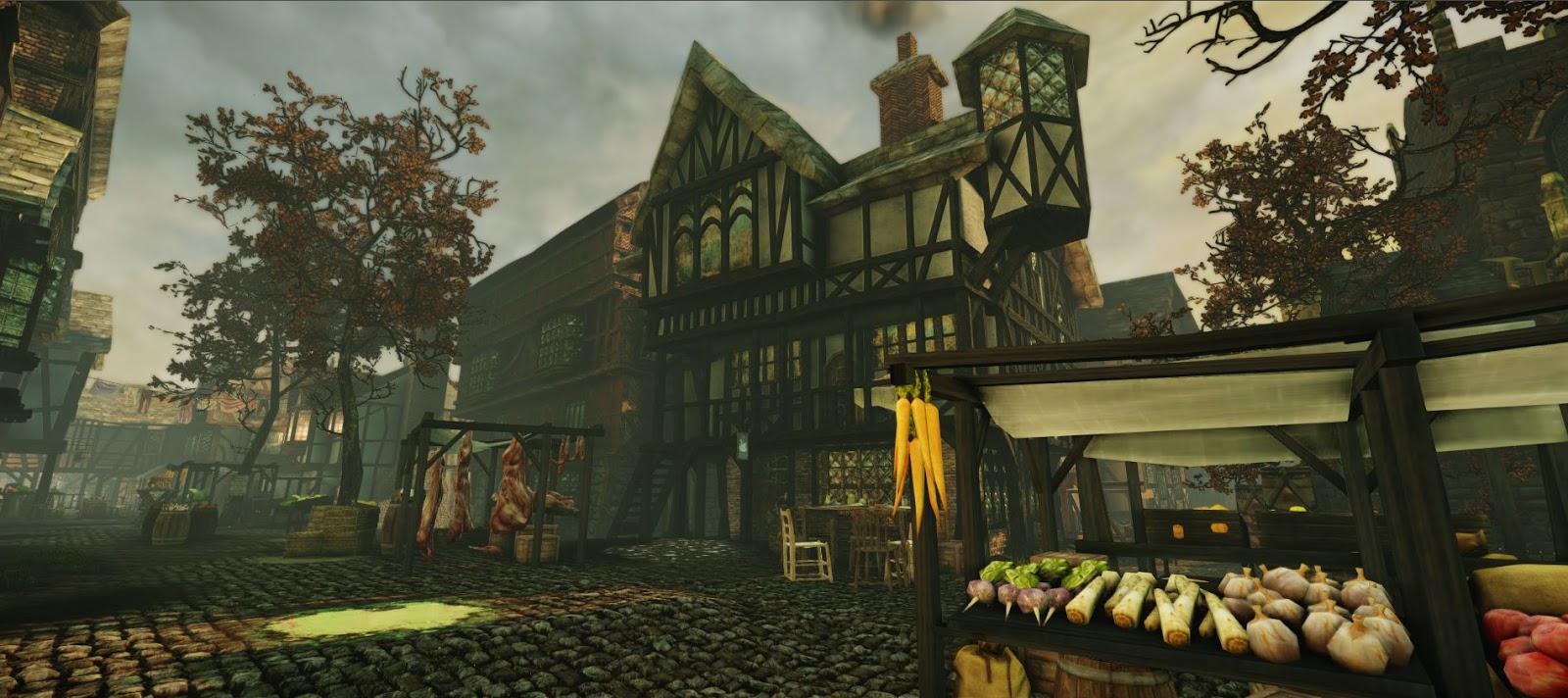
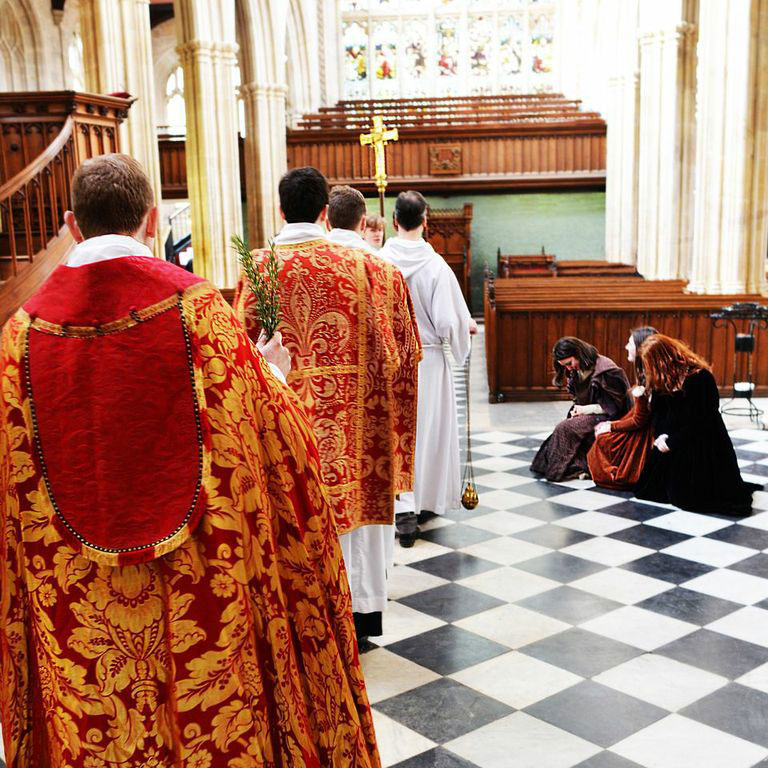
Pre-Reformation worship recreated (http://reformation.modhist.ox.ac.uk/index.html)

Pre-Reformation recreated

There have been recent attempts to recreate pre-and post-Reformation church interiors, and experiences of worship, for instance, and popular history books and TV shows taking the form of ‘Time Travellers’ Guides’ invite their readers and viewers to imagine the sights and smells one would encounter on entering a medieval or early modern city. All of these approaches invite us to imaginatively transport ourselves into the shoes of our early modern ancestors, and to concentrate on the immediate experience of sights, sounds and material surroundings.

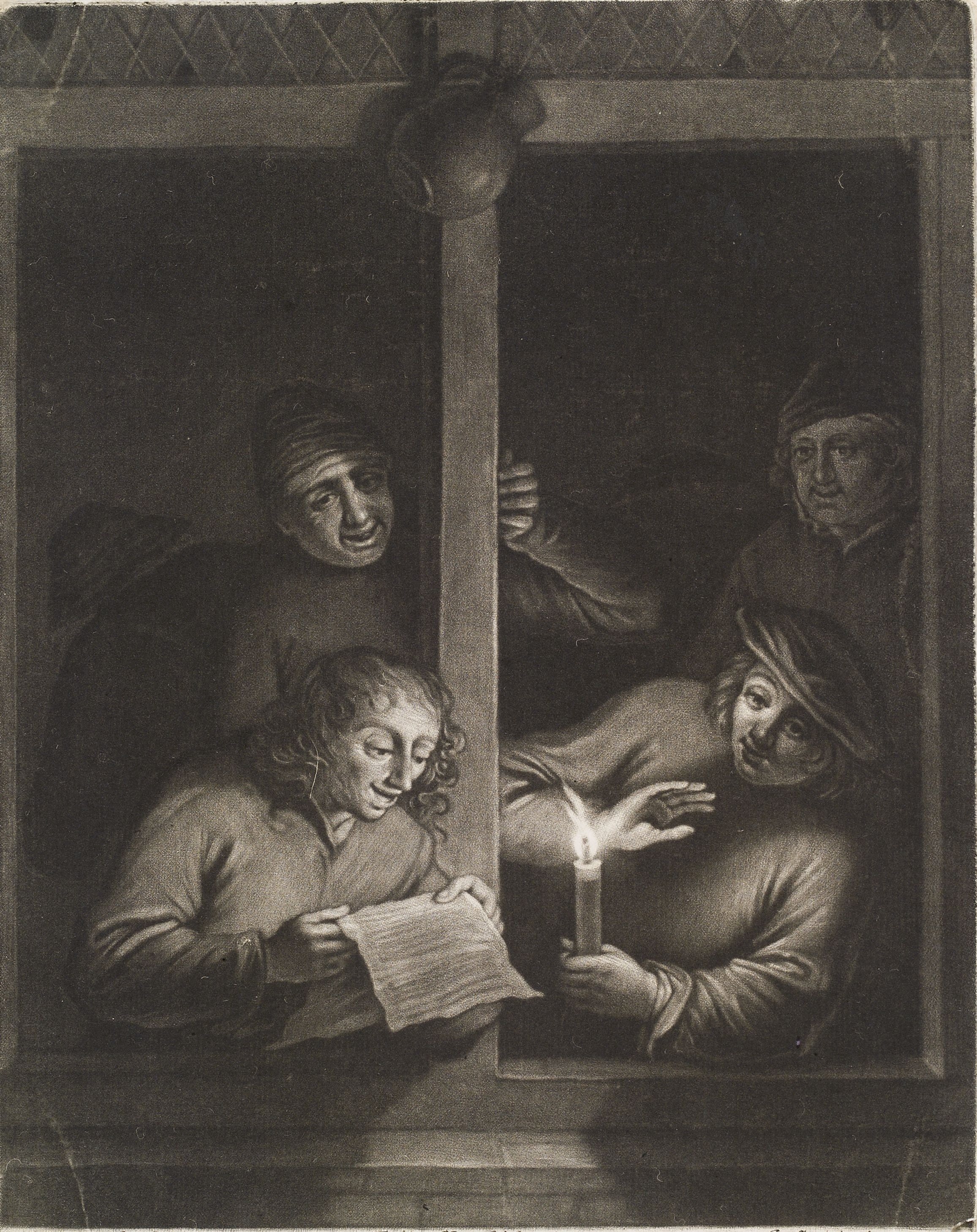
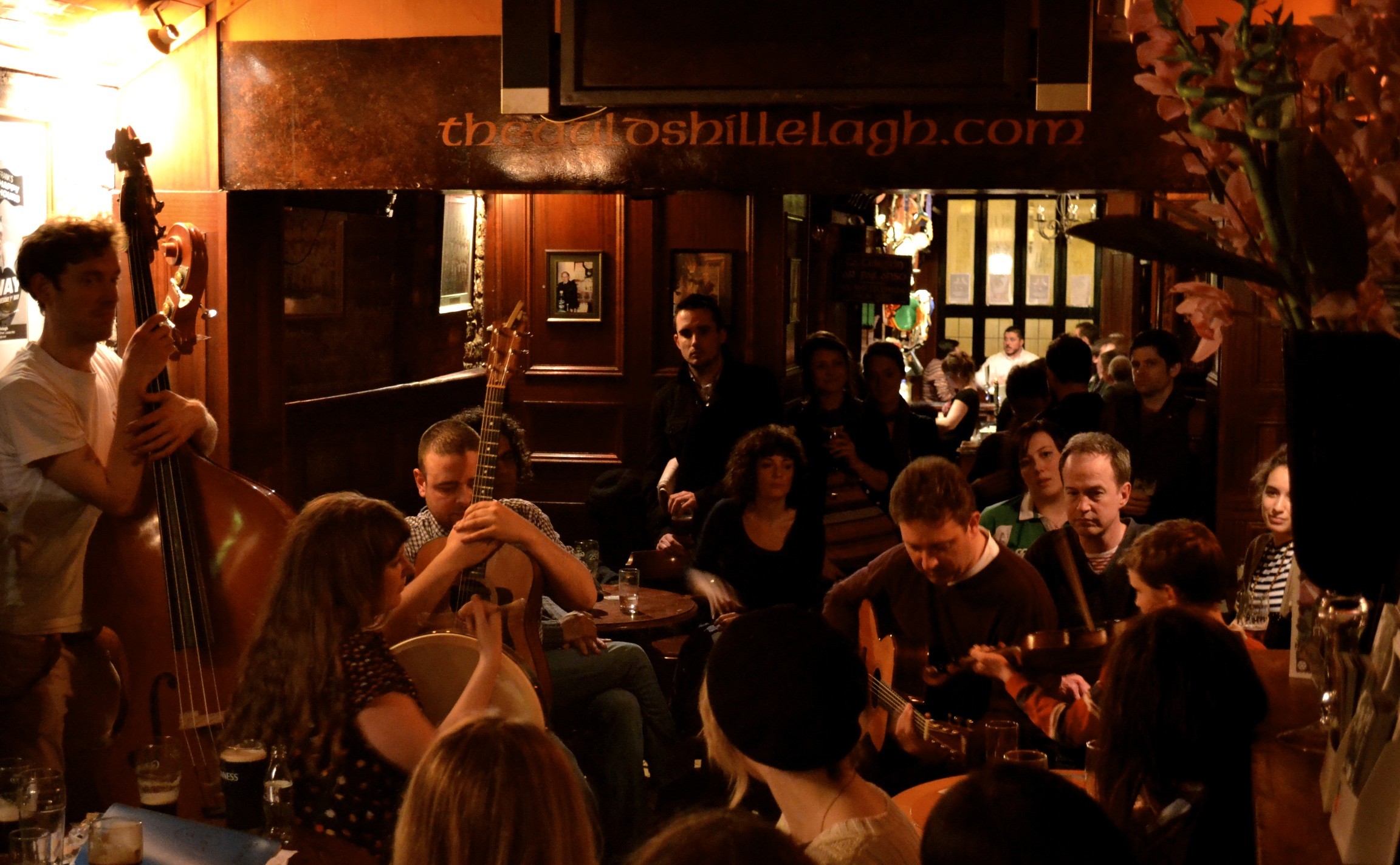
These ‘immersive’ approaches have influenced my own work, especially in relation to the seventeenth-century drinking songs that I use to examine alehouse culture in the period. I don’t just mean that I get drunk and try singing them in the pub—although, we’ll come back to that—but rather that to understand the meanings of such songs it is important to think about the ways in which they were performed. It might be easy for a historian, sat alone at their desk quietly reading such a song, to misjudge the tone of its meaning, a tone that was informed by its tune, and also the manner and context in which it was actually sung, aloud, communally.

Singers in an alehouse window - hardly the same environment as sitting at my desk.

Singers in an alehouse window – hardly the same environment as sitting at my desk.

I developed a few thoughts on this in a short article for The Appendix, a new journal that embraces these new types of immersive and experimental history. You can read it for free here, and it would make sense to do so before reading on…. but, if you don’t have the time or inclination, here is the nub of it: I argue that it is important to think about how performance might influence the meaning of a seventeenth-century drinking ballad, and I applaud some recent attempts to recreate ballad performances. But I think they can misrepresent the tone in which such songs would have been sung.

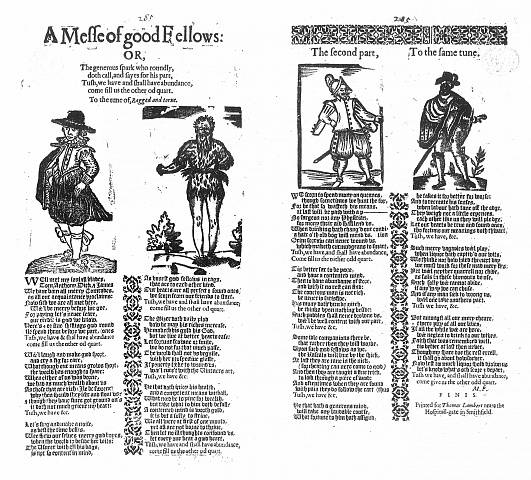
For instance, take a moment to listen to EBBA’s recording of the drinking ballad, A Messe of Good Fellows, by clicking here.

A Messe of Good Fellows (© British Library)

A Messe of Good Fellows (© British Library)

It’s helpful to hear it put to a tune, but surely the tone would be a little more raucous if performed by a company of intoxicated good fellows bellowing it out from the alebench?

A bit more raucous - a bit more like it...

A bit more raucous. A bit more like it?

Indeed, I suggest in the article that a modern-day football song – with a well-known tune, repetitive chorus, and an inebriated collective of (mostly) men – might actually come closer to capturing how such drinking songs would have been experienced in the alehouse. In case you haven’t had the pleasure of experiencing terrace tunefulness first hand, click here. I’ve tried to pick a relatively inoffensive one, but apologies to residents of Cardiff.

In response to the article I also received a suggestion from Phil Edwards, a Lecturer in Criminology at Manchester Met and an enthusiastic folk musician, that present day folk singing – often pub-based and communal – might be a closer descendent of the seventeenth-century alehouse song. I expect many historians would probably agree, but it is still a bit too sanitised and orderly for what I imagine performance would have actually sounded like. See what you think by listening to this ballad singaround recorded by Phil.

Are folk singarounds the key?

Are folk singarounds the key?

I’d be interested to hear your thoughts on which style of performance you think is most effective at ‘transporting’ us into the experiential world of our early modern forebears, but more importantly, I suppose, I’d like to know whether you think this little experiment in ‘immersion’ is a worthwhile exercise at all. Is attempting to recreate the sounds, or the smells, or the sights/sites, of the early modern past allowing just a little too much imagination into the historical process? It is undoubtedly an imprecise science, and we will never be able to capture with any certainty the tone of ballad performances – which no doubt varied immensely anyway. Is it therefore likely to be as often misleading as illuminating? A bit of fun perhaps – a harmless thought experiment to fill a coffee break – but not to be taken as a serious part of the historian’s craft? Or is the ‘immersive turn’ the next big thing, a way of bringing history to life that can enhance the understanding of both academic historians and non-academics alike?

The intellectual value of gaming: Sid Meier’s Civilization, Oregon Trail and a streetview of London in the 1660s

Brodie Waddell

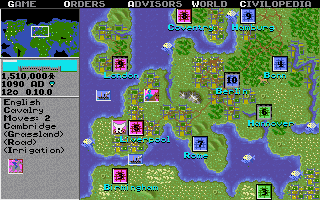
Some time ago I claimed that Eric Hobsbawm’s work was one the initial spurs that pushed me towards becoming a historian. However, it would be misleading to leave the impression that the long journey to my current profession was prompted solely or even primarily by such an academically reputable source. In fact, a larger part was probably played by a computer game: Sid Meier’s Civilization.

Look out, Romans! You’re about to get smashed by my English cavalry!

Look out, Romans! You’re about to get smashed by my English cavalry!

Continue reading →

The Past is a Foreign Country: History and Analogy, Part II

Laura Sangha

sword

A visual analogy of analogy.

In my previous post on History and Analogy I explored why we use the technique and the ways in analogy can be a two-edged sword (if you will). Here I want to give some examples that I have come across recently when preparing for my module on Tudor England. I didn’t have to look far for these, evidence of the ubiquity of these types of comparison. Many are taken from G.W. Bernard’s The Late Medieval English Church, the book that inspired the original post. If you have any examples of your own, please do add them in the comments below.

The short and pithy:

G.W. Bernard is unable to resist analogies, whether historical or not. How about:

Did people collect indulgences in the spirit that we collect tokens or Air Miles?[1]

Or a W.G. Hoskins comparison passed on by Brodie that is short, pithy, and controversial to say the least:

Henry VIII was ‘England’s Stalin’.[2]

The elaborate and multi-layered:

Grappling with the problem of how to perceive of early modern culture in Music and Society in Early Modern England, Christopher Marsh invites us to envisage culture as a lute, with each of it’s six strings representing:

Early modern culture made flesh.

Early modern culture made flesh.

…one of the basic socio-cultural polarities that helped individuals to understand their world and to locate themselves with it: gentle/ common, male/ female, old/ young, clerical/ lay, urban/ rural, native/ foreign. The extremes are permanently connected, and in tension, the strings form a musical staircase that allows for traffic in both directions, the sounds produced can be in harmony or might result in ugly clashes, anyone can pluck and strum as they see fit…[3]

The familiar:

If an analogy is a comparison between the familiar and unfamiliar, there is also a tendency for writers to use a concept that they know particularly well and which they would assume might therefore particularly resonate with their audience. Bernard’s comparisons of modern academic and late medieval religious institutions are a case in point, the author connects with his reader by drawing on what they have in common. In some instances, this can allow him to load his prose with a double meaning, as here:

How far were religious vocations – like those of modern academics – stultified by the piling up of administrative tasks, by the burdens of detailed administration of buildings and estates? Was there a loss, or a lack, of spiritual impetus and creative energy?[4]

The peculiarly appropriate:

In other instances, the analogy is pleasing because it is fitting, as with Alexandra Walsham’s allusion in her book on landscape:

Before we can begin to investigate the Reformation of the landscape, it is necessary to evacuate the sedimentary layers of religious association that had been deposited upon it over the course of the preceding two millennia.[5]

Religious cultures are actually slightly more complicated than these sediments.

Religious cultures are actually slightly more complicated and layered than these sediments.

The unintended:

Technically this is not an analogy, but given Bernard’s love of comparison it was hard not to read the following as a metaphor for the life of an early career academic:

…there was no necessary connection between ordination – a relatively straightforward matter – and the security of a benefice – a relatively difficult matter, since all turned on finding a suitable post. A priest might wait years before obtaining a benefice. Meanwhile he would seek employment as an assistant, as a deputy, as a chantry priest or as a chaplain in a domestic household… for which there were many opportunities… In practice they did play a considerable part in the religious life of a parish, despite lacking any formal pastoral responsibilities.[6]

Even if Bernard had not encouraged his reader to draw such parallels, current debate about the rectitude and extent of zero-hour contracts in academia reverberates through the passage.

The mundane:

Sometimes the comparison is straightforward and passes without much notice:

Of course, monasteries were organic entities, all that grows decays, and, just as in a garden, weeding and pruning deadwood were perennial tasks.[7]

The humorous:

At other times humour provides some light relief:

The tone of many Elizabethan congregations seems to have been that of a tiresome class of schoolboys.[8]

Any modern British university historian who has lived through countless administrative reorganisations, and seen the consequences of, say, the restructuring of local governments, will hesitate before pronouncing too confidently on the shortcomings of the monasteries in late medieval England.[9]

As with historical analogy, nitroglycerine should be handled with care.

As with historical analogy, nitroglycerine should be handled with care.

[On the real presence of Christ in the Eucharist:] the strength of conservative feeling at home, and the sensitivity of Protestant divisions abroad, made the issue the theological equivalent of nitro-glycerine: it had to be handled with care.[10]

And Patrick Collinson…

Patrick Collinson was renowned for his epigrammatic, witty and entertaining writing style, and the well-turned comparison was an important component of this. Jonathan reminded me of his special talent by passing on this wonderful bit of analysis:

When Picasso came to Sheffield to attend a peace rally, he sat on the platform making sketches and dropping them on the floor. Nobody picked them up. These preliminary sketches – Swallowfield and Terrington – can lie where they have fallen. Our subject is neither local government nor village republics, but the political culture of England at its centre and summit, in the age of Elizabeth I.

Here is a further selection, all drawn from the same chapter on the culture of Puritanism:

Traditionally, puritanism and culture have been seen as polar opposites, so that an essay on puritan culture might seem to merit no more space than the topic of snakes in that book on Iceland, which, according to Samuel Johnson, contained a chapter consisting of a single sentence: ‘There are no snakes to be found anywhere in the island’.

Shortly followed by:

But if man shall not live by bread alone, he must have bread, and perhaps some butter and even jam to spread on it; and it is not likely that puritans found all their needs supplied by ‘every word that proceedeth out of the mouth of God’.

Furthermore:

‘it was those local teacup storms which gave substance, a cultural or counter-cultural substance, to the very concept of ‘Puritanism’.

Now, whenever you see an okapi, you will immediately think 'Puritanism'.

Now, whenever you see an okapi, you will immediately think ‘Puritanism’.

And my favourite:

That is not to say that the thing identified as ‘puritanism’ had no real or prior existence, any more than the large quadraped which Sir Harry Johnston ‘discovered’ in the Ituri rainforests in 1900 had no existence until Johnston gave it a name, ‘okapi’.[11]

And we are still only on the third page of the chapter. It seems very fitting therefore that in his obituary, John Morrill used an analogy to sum up Collinson’s lifelong interest in Puritanism:

The obsession at its heart is the role of principled disobedience within powerful institutions, a study of those committed to reform from within. And that is how Pat saw himself… He became an establishment figure who struggled to square his radical conscience with membership of establishments.


[1] G. W. Bernard, The Late Medieval English Church: Vitality and Vulnerability before the Break with Rome (London, 2012), p. 143.

[2] W.G. Hoskins, The Age of Plunder (1976), p. 232.

[3] C. Marsh, Music and Society in Early Modern England (Cambridge, 2010), pp. 15-22.

[4] Bernard, The Late Medieval English Church, p. 197.

[5] A. Walsham, The Reformation of the Landscape: Religion, Identity and Memory in Early Modern Britain and Ireland (Oxford, 2011), p. 18.

[6] Bernard, The Late Medieval English Church, p. 79.

[7] Bernard, The Late Medieval English Church, p. 190-1.

[8] K. Thomas, Religion and the Decline of Magic: Studies in Popular Beliefs in sixteenth- and seventeenth-century England  (London, 1971), pp. 191-2.

[9] Bernard, The Late Medieval English Church, p. 196.

[10] P. Marshall, Reformation England 1480-1642 (London, 2003), p. 65.

[11] P. Collinson, ‘Elizabethan and Jacobean Puritanism as Forms of Popular Religious Culture’ in C. Durston & J. Eales (eds), The Culture of English Puritanism 1560-1700 (Basingstoke, 1996), pp. 32-4.

The Past is a Foreign Country: History and Analogy, Part I

Laura Sangha

I’ve just finished G.W. Bernard’s The Late Medieval English Church, which is an excellent and well informed survey, in case you are wondering. One of the things that made it a particularly enjoyable read were the analogies that peppered the text, which were thought-provoking and on occasions mischievous. For example:

The attitude of medieval townsmen to their local cathedral was, it has been suggested, rather like that of their successors to modern universities: an ambiguous mixture of slight suspicion and considerable incomprehension was alleviated by a natural pleasure that this corporate giant might contribute to their own prestige and economic welfare.

Should pilgrim badges… be seen as sacred objects, almost ‘secondary relics’, for those who acquired them, or more like the souvenirs that day trippers buy today? … Medieval pilgrimage has been compared to modern museums, full of half-comprehending tourists, of young people having a day out, yet with serious and scholarly purposes at their core. Are the experiences of those who go church-crawling, or visit the blockbuster exhibitions in art galleries, or go to concerts at all comparable? Does the ritual of pilgrimage meet a perennial human need?… How many pilgrims took part in pilgrimages in much the same part-materialistic, part-sentimental way that many nowadays treat Christmas? [1]

The early modern pilgrim badge and its modern walking stick equivalent?

The early modern pilgrim badge and its modern walking stick equivalent?

Along with Brodie Waddell’s recent post on jargon and Mark Hailwood’s comparison of early modern alehouse ballad singing with modern football chants, it got me thinking about language, and more specifically about the way that we use analogy in writing and teaching. For historians, the carefully picked parallel is a potent weapon, it provides an inference or argument from one (familiar) particular to another, in the process attaching meaning to the unfamiliar particular. Analogy enables us to grasp the new and to process the different. For the early modernist, this is especially useful, because a parallel can help us to negotiate the strangeness of our subject and to close the gap between the mysterious and murky past and the bright shiny present. This is exceptionally useful when it comes to teaching: when I challenge my students to try to understand the early modern mentality I often begin by inviting them to self-reflect on their own experience, before exploring the early modern equivalent. So you might ask students to list what they think are the main elements of ‘identity’ in the present day, before discussing how early modern people thought about the same, the comparison drawing attention to those areas of similarity and difference which then invite explanation.

Similarity as well as difference is of course key here. Historical analogies are neat, effective and pleasing, but also fraught with peril because it is unlikely that the two particulars in the analogy are exactly the same. Bernard acknowledges as much:

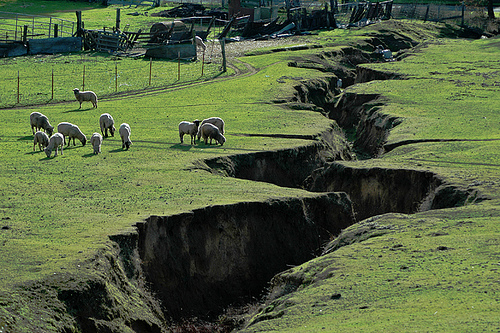
Another scholar has offered the metaphor of ‘faultlines in the landscape’ but, while that is suggestive, it nonetheless rests upon the underlying inevitability of the coming earthquake.[2]

faultline

Just imagine the Late Medieval Church criss-crossed with lots of these.

In similar vein, Versailles might have ‘sowed the seeds of the second world war’, but this suggests a dangerous teleology that might distort our understanding of the interwar years. Thus a facile or lazy comparison can obscure rather than illuminate. Politicians and journalists in particular play a dangerous game  when they use analogy in association with events that are still unfolding, or to justify actions or simplify complexity. Recently, the labeling of the wave of demonstrations and regime changes in North Africa and the Middle East as the ‘Arab Spring’ (an allusion to the Revolutions of 1848 and the Prague Spring) has fitted rather awkwardly with subsequent developments that bear no relation to the promise of rebirth, liberation and growth usually associated with the pre-summer season and the historical precedents. One commentator notes that:

It appears that the right analogy is a different central European event — the Thirty Years’ War in the 17th century — an awful mix of religious and political conflict, which eventually produced a new state order.

Analogies surely work best only when the dissimilarities of the two things are considered alongside the parallels – the analogy can in fact help you to identify both. Ruling out unsuitable analogies is also a useful strategy, as Peter Marshall does when describing the processes of the English Reformation:

The modern analogy is less with the overthrow of ancien regimes in 1789 and 1917 than with the ‘cultural revolution’ of 1960s China, in which central government worked in alliance with cadres of true believers to undermine reliable elements in positions of authority, and radically reconstruct the outlook of people as a whole.[3]

More in common than you might think?

More in common than you might think?

It is always a delight when students come up with their own analogies, because it reveals their learning: their coming to terms with information and expressing their own understanding of it. When discussing oral culture, and the astonishing feats of memorisation that early moderns were capable of, one student declared that it wasn’t that surprising that people knew the Bible off-by-heart, as she felt sure that if someone named a chapter from any Harry Potter novel she would be able to recall the important events from memory. Other memorable comparisons were Henry VIII’s visitation officers as ‘Ofsted Inspectors’, Elizabeth I’s beauty ‘trending’ at court, and Charles I’s relationship with the Duke of Buckingham as a classic ‘bromance’. These are not simply throwaway comments, they reveal students grasping and reframing the past in a way that resonates with their own existing knowledge.

**I followed this up with another post with examples of different types of analogies, incorporating those suggested to me by readers.**


[1] G. W. Bernard, The Late Medieval English Church: Vitality and Vulnerability before the Break with Rome (London, 2012), pp. 159-60; 143.

[2] Bernard, The Late Medieval English Church, p. 236.

[3] P. Marshall, Reformation England 1480-1642 (London, 2003), p. 58.

Chris Briggs, ‘Household possessions of the 14th and 15th century peasantry’

[This is the sixteenth piece in ‘The Future of History from Below’ online symposium (#historyfrombelow). Chris Briggs is Lecturer in Medieval British Social and Economic History at the University of Cambridge. His research and publications focus on various aspects of society, economy, and the law in England and Europe during the later middle ages (1200-1500). This post – along with the next post by Julie-Marie Strange, and Ruth Mather’s earlier in the summer – turns the conversation to a particular theme that was prominent at both of our ‘history from below’ events: the relationship between material culture and ‘history from below’. Here, Chris examines how this relationship might be developed in the medieval context.]

This post discusses an ongoing research project on the possessions of the medieval English peasantry, and considers how far and in what ways it should be considered an exercise in ‘History from below’. The paper begins by outlining what I see as the characteristics of ‘History from below’, both in general and with respect to the English middle ages in particular. I also ask whether history from below, a movement that was at its most confident roughly 50 years ago, can still be traced in the more recent and current work of English medievalists. Next I briefly describe my project on peasant goods and chattels, which is still at the stage of identifying questions, methods and sources. The final part looks at ways at which this work might and might not advance the history from below agenda. Continue reading →

Selina Todd, ‘History from below: modern British scholarship’

[This is the fifteenth piece in ‘The Future of History from Below’ online symposium (#historyfrombelow). Selina Todd is a Lecturer in Modern British History and Fellow of St Hilda’s College, University of Oxford. Her research and publications focus on working-class and women’s history in modern Britain. Here she brings our conversation about ‘history from below’ through to the twentieth century, providing a survey of the recent historiography on modern Britain, and identifying some of the major challenges and future directions for ‘history from below’ in that field.]

Fifty years on from E.P. Thompson’s call to rescue working people from ‘the enormous condescension of posterity’, and myriad ‘turns’ later, history from below is flourishing in modern British scholarship. An emphasis on ‘ordinary people’ has replaced an earlier stress on the working class, and studies of collective protest are less numerous than those on everyday life. [1] But there is no sign that scholars consider Thompson’s original project ‘cliched’ or ‘tired’.

This post reflects on how history ‘from below’ has developed, the state it is in, and suggests some possible future directions. As the first section will show, we have reasons to be hopeful. But in the second section I argue that we need to historicise the material circumstances in which our scholarship is produced in order to fight for our future. In the final section I propose that we could use more studies of class, which might help us to restate the centrality of history ‘from below’ to understandings of modern Britain. Continue reading →

Andy Wood, ‘History from below and early modern social history’

[This is the thirteenth piece in ‘The Future of History from Below’ online symposium (#historyfrombelow). Andy Wood is Professor of Social History at Durham University. His research and publications focus on popular protest, customary rights and social memory in early modern England. Here he takes us through the relationship between ‘history from below’ and early modern social history, and outlines a number of key principles and approaches that might inform that relationship going forward.]

History-from-below poses a question. Like Bertoldt Brecht’s Questions from a worker who reads and Virginia Woolf’s A room of one’s own, history-from-below asks us to describe the lives, ideas and experiences of those who lay ‘below’ dominant historical narratives. Like Subaltern Studies (developing at the same time, from the early 1970s) history-from-below focused on a disparate range of groups, spanning time and distance: workers, peasants, slaves, women, the marginalized, oppressed ethnic, religious and sexual minorities.

The history-from-below tradition grew out of the English Marxism of the CPHG (Communist Party Historians’ Group). It was the badly-behaved adolescent offspring of the CPHG, loosely grouped around History Workshop Journal and its attendant movement rather than around the journal Past and Present, which by the 1970s had lost its explicit political focus. Like the CPHG, history-from-below valorized resistance and largely ignored questions of subordination, social integration and hegemony. But unlike the CPHG generation, it was explicitly open to histories of women, gender, race and sexuality. It represented the historiographical expression of a broader shift at work within the British Left in the 1970s and 1980s, the urge – in the face of deindustrialization and the late-recognized halt in the forward march of labour – to create new alliances beyond the traditional labour movement. That political project achieved its clearest expression in Livingstone’s GLC (Greater London Council), in a resurgent CND (Campaign for Nuclear Disarmament) with its connection (via Greenham) to second-wave feminism and in the diverse range of groups attracted to the Miners’ Support Groups during the 1984-5 strike. Although this ‘rainbow alliance’ (the term originated with Jesse Jackson and was anglicised by the International Marxist Group as an ‘alliance of the oppressed’) was to be defeated, its historiographical expression in the fuzzy History Workshop tradition had its successes – as this symposium shows, nowadays it is hard to write social and cultural history without reference to some of the concerns of History Workshop, most of all the legacy of feminism and the lesbian and gay liberation movement. Histories of class, marginalized by the cultural turn of the last 20 years, are starting to reassert themselves too. I’ll come back to this resurgence towards the end.

Continue reading →

John Arnold, ‘History from below – some medievalist perspectives’

[This is the twelfth piece in ‘The Future of History from Below’ online symposium (#historyfrombelow). John Arnold is Professor of Medieval History at Birkbeck. His research and publications focus in particular on medieval ‘belief’. Here he takes us through some of the ways ‘history from below’ approaches have played an important role in medieval scholarship on both England and France.]

“And so our interpretation of history will be both materialist with Marx and mystical with Michelet. It was economic life that was the basis and the mechanism of human history, but across the succession of social forms man, a thinking force, aspired to the full life of thought, the ardent community of the unquiet intelligence, avid for unity and the mysterious universe.”

[Jean Jaurès, Histoire Socialiste de la Révolution Française, Paris, 1911. Introduction. See http://www.marxists.org/archive/jaures/1901/history/introduction.htm]

‘History from below’ has tended predominantly to be an early modernists’ term; [1] and it is a very baggy term. Is it simply the same as ‘social history’; is it related to Alltagsgeschichte; does it make a particular claim about collective historical agency from ‘below’; or is it more concerned with the experience of ordinary people at the sharp end of historical change? The term’s capacious vagueness is perhaps the main point – and an indication of its anglophone origin, freed from the strictures of theoretical precision. But when one starts to think about its connotations for different period specialisms, issues of purpose and project become naggingly apparent. Medievalists and early modernists tend to share some sense that making ordinary (/subaltern/plebeian/lower sort/peuple menu/popolani …. etc etc, pick one’s own inevitably problematic term) people visible and audible is in itself an historiographical success worth pursuing, because the weight of the evidence – so we tend to say, though this bears further discussion in itself – submerges the majority of humanity in favour of the visible, powerful elite. That shared project immediately requires some further nuance however.

Continue reading →