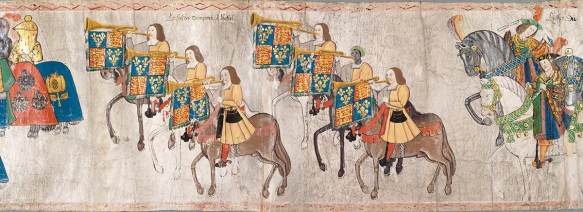
 Rebecca Adusei and Jamie Gemmell
Imtiaz Habib’s Black Lives in the English Archives, 1500-1677: Imprints of the Invisible (Routledge, 2008) is one text within the relatively small, but longstanding, field of early modern Black British History. Neither a cultural history of early modern racialisation nor a social history of Black Britons, the text is a kind of analytical cataloguing that seeks to locate a “missing subject” through the literal construction of an archive and an accompanying commentary. It manages to be both empirically rigorous – Habib located 448 “Black citations” – and theoretically rich. It provides a roadmap and a grammar for the social historian to think carefully about early modern England’s Black inhabitants and the archives that render those lives (il)legible.
Habib’s herculean effort in 2008 highlighted, and continues to highlight, the importance of adopting an interdisciplinary approach when looking at the lives of people of colour in early modern Britain. In its robust, rigorous, and in-depth analysis, Black Lives laid a solid foundation which Early Modern Studies continues to build on. Habib’s bridging of the gap between the historical and literary disciplines has enabled Early Modern Studies to create a holistic idea of what it was like to be a person of colour in the early modern period and to track the origins of racism.
Despite its weighty contributions, the text remains relatively neglected by social historians and, in some cases, actively dismissed. Our Symposium seeks to reflect on Habib’s Black Lives and firmly establish its importance to Early Modern Studies, particularly social history. This is especially important given the emergence of the “archive” as a heuristic within Black Feminist literature, Atlantic History, and Slavery Studies. While scholars have critically interrogated the colonial archives, less attention has been paid to the archives of the imperial metropole. Habib’s work is, therefore, an ideal way to integrate these archives and think relationally across different methodologies. We hope the reflections published here will demonstrate both the importance of Habib’s work and the vitality of scholarship thinking about early modern Britain’s Black inhabitants. Continue reading →




 the many-headed monster