Hidden gems of Tudor Church reform: the equal opportunities that never were, and dressing up smart for God…

Jonathan Willis

Chasing up some last-minute references for the book I’ve been writing up over the past year or so on the Ten Commandments, over Easter I found myself making use of a local academic library to consult Gerald Bray’s editions, prepared for the Church of England Record Society, of the Anglican Canons and the Reformatio Legum Ecclesiasticarum.  As I sat in this unfamiliar space, surrounded by undergraduates feverishly working on essays and revising for their exams, I couldn’t help but be struck by what seemed like some of the more unlikely concerns of sixteenth-century reformers.  The topic of Tudor Church reform doesn’t exactly promise thrills, spills and adrenaline from the outset, but it does occasionally provide a fascinating insight into a range of social and cultural prejudices, alongside the rather more predictable fare of the duties of churchwardens, the alienation and renting out of ecclesiastical goods, and the nuts and bolts of the process of episcopal visitation.
Continue reading

On periodisation: religion, early modernity, and ‘The Reformation’

Links to other posts in the ‘On Periodisation’ series:

Jonathan Willis

In some ways, ‘The Reformation’ (I’ll explain the excessive punctuation in a bit) may seem like an odd contribution to a blog mini-series on periodisation.  After all, surely ‘The Reformation’ was a thing, an event, something that happened, rather than a neutral description of a period of time (although, as we are coming to discover, there is rarely anything neutral about how anybody, let alone a historian, parcels up the past).  As Laura mentioned in her introductory post, use of ‘The Reformation’ to describe a period of time tends to have most currency in North America, where ‘Ren-Ref’ is a convenient shorthand for the periods of the renaissance and reformation, c.1400-c.1600, or c.1350-c.1650, or c.1300-c.1700; well you get the idea…  I am a product of the UK Higher Education system, however, having never studied or worked in the US or Canada, and so I’m going to leave ‘Ren-Ref’ to one side for now.  Instead, there are two related questions I want to address in this post.  Firstly, how useful is religion in helping us to define the early modern period?  And secondly, how should we define the chronology of ‘The Reformation’ itself?

Religion and Early Modernity

wooden_hourglass_3

A less contentious way of measuring time?

To what extent can we define early modernity with reference to developments in the religious sphere?  For the sake of argument, and because one post can’t do everything, I’m going to work within the eurocentrism of the term early modern, and accept for now its customary definition as c.1500-c.1700.  In some ways, there is a fairly good case for arguing that the early modern period saw within it some fairly distinctive developments in matters of religion, and that therefore these developments do help give a sense of coherence (or at least, of coherent incoherence) to the period as a whole.  To start with the most obvious, we might characterise the early modern period as one which witnessed at its outset the collapse of 1500 years of broad religious unity: provocatively, one recent overview of early modern history has taken as its title Christendom Destroyed.[1]  The Protestant Reformation, and the growth in number of religious sects and denominations that broke away from the previously hegemonic monolith of the (Roman) Catholic Church, and subsequently from one another, could plausibly be seen as the defining characteristic of the early modern age. Continue reading

On periodisation: or, what’s the best way to chop history into bits?

Laura Sangha

This is the first post in our new Monster Mini-Series on periodisation. Click here for the Series introduction.

There are many different ways to divide the past up into analytical chunks, but some ways are more popular than others. In this post I offer a brief overview of some of the most common periodisations. It is of course a broad brush summary with a tendency to generalisation. Please do flesh it out with your own comments and refinements below the line – we have had a great response to the series on twitter and I will be collating many of these contributions for a later blog.

Binaries: modern / pre-modern

Starting with the simplest division: if you are short of time, the strongest chronological distinction often appears to be between the modern age, and all the stuff that happened before it. You know, when everyone was blindly superstitious, 99% percent of the population spent their lives covered in sheep poo, there was no electricity, no penicillin, no roads and subsequently a bunch of kings ordered everyone about whilst riding over-mighty dragons. Or something. Sometimes undergraduate ‘survey’ modules are organised along these chronological lines: at Exeter the ‘pre-modern’ module covers c. 500-1750; the ‘modern’ module covers 1750-present.

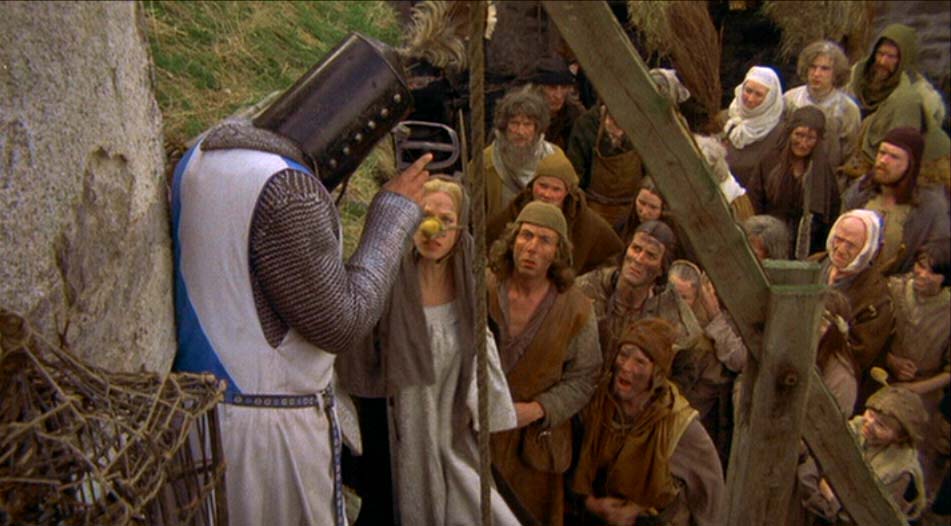
grail07

Pre-modernity: knights, witches, muddy peasants and that sort of thing.

Of course this rather oversimplifies things. Europe in 700 didn’t look or feel anything like Europe in 1700. The divide also massively prioritises the last 200 or so years of history and diminishes the previous 1,300. It is a useful shorthand for showing potential undergraduates the breadth of your teaching programme or identifying yourself at a multi-disciplinary event, but not much more.

The holy trinity: medieval / early modern / modern

In Europe and North America, history is often chopped into three: the medieval (c. 500-1500), the early modern (er… let’s say c. 1500-1800) and the modern (c. 1800 – present). Continue reading

On periodisation: an introduction

Laura Sangha

This is the introductory post to our new occasional Monster Mini-Series on periodisation in history. In a series of related blogs we will be exploring historical chronologies, examining the ways in which we chop up the past into more digestible chunks. We are interested both in how we do this, but also why, and what the consequences are for both how we conceive of the past, and how this in turns effects the organisation and practice of the discipline. The other posts are:

Posts that also engage with the theme:

IMG_0204

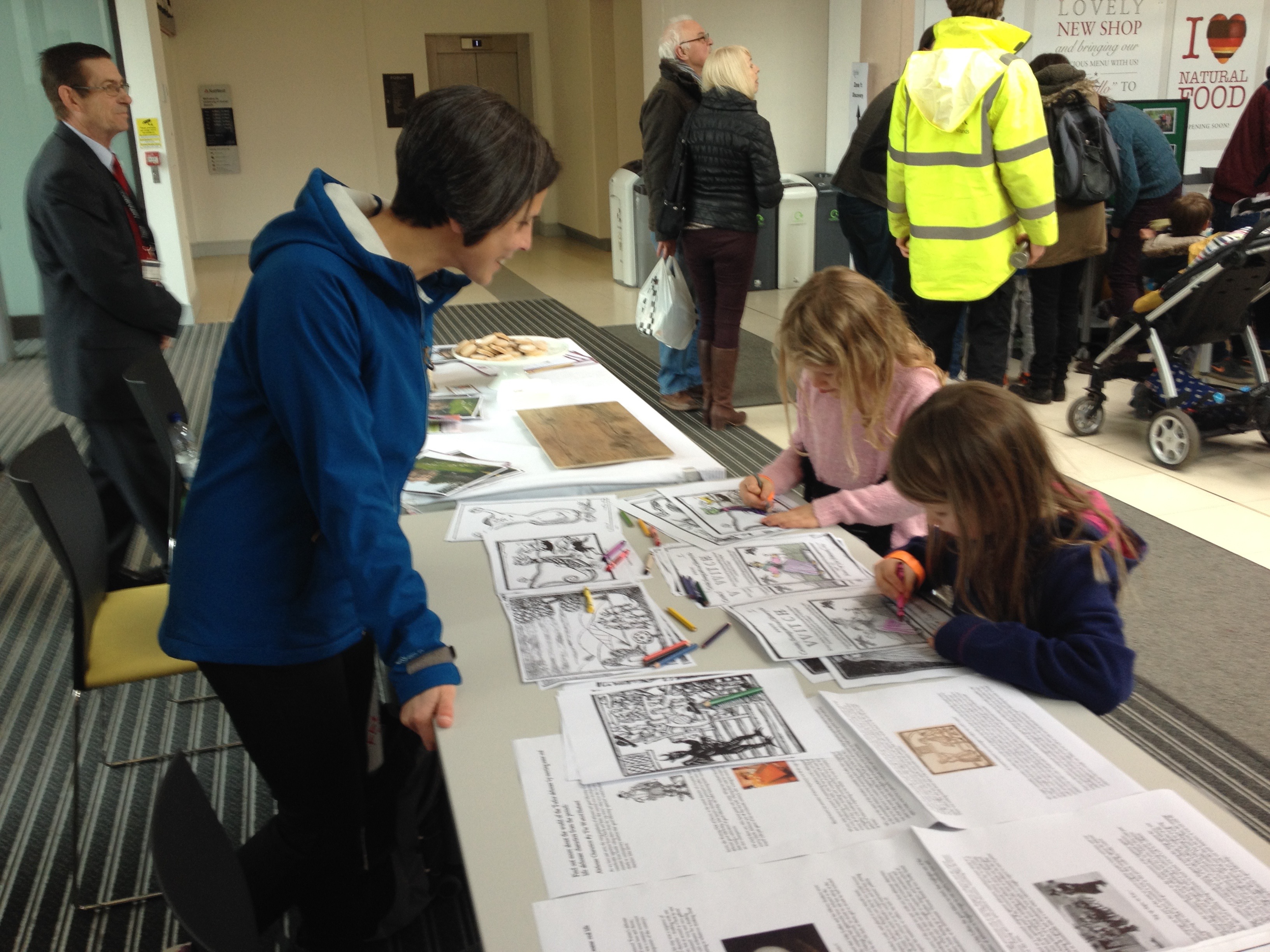
The University of Exeter’s community day: What does early modern mean, and who is this strange horned and hoofed man?

I quite often find myself needing to explain what period of history I work on, and it isn’t always straightforward. For example, my students are often not familiar with the term ‘early modern’ and remain convinced that anything that isn’t modern is ‘medieval’. At the University of Exeter’s recent Community Day, one of the most popular questions from visitors to the ‘Centre for Early Modern Studies’ stand was: what dates / centuries / years does that refer to? (In case you are interested, the other top question was: ‘what’s the devil’ from children colouring in woodcuts of said infernal being).

This is an issue that has a bearing on the many-headed monster too. We self-identify as an early modern blog, and the Monster’s tagline is that we offer “‘the history of ‘the unruly sort of clowns’ and other early modern peculiarities”. Whilst fellow academics might have a grasp of what that means, the blog aspires to reach an audience beyond professional historians, to whom the term may appear rather opaque.

The answer to what ‘early modern’ means is, of course, 1480-1700. Or perhaps 1500-1750. Or maybe 1450-1800. Actually it really depends. Oh, and if you are outside of Europe and North America you might not recognise the term at all, being equipped with a completely different way to think about your national past. Continue reading

Class conflict in Elizabethan Norfolk?

Brodie Waddell

In early March 1601, four men got into an argument in the small village of Wicklewood, about eleven miles west of Norwich. Although no blows were exchanged, one of the men uttered words that were dangerous enough to lead to a legal examination by a local magistrate. It is only thanks to this brief deposition – which I’ve transcribed at the end of this post – that we have any knowledge of what was said that day.

I came across this document last summer at the Norfolk Record Office when I was searching through the county quarter sessions files looking for something else. I’d completely forgotten about it until Mark put up a post last week that discussed the history of conflict hidden in England’s rural landscape. That post reminded me that the argument recorded in this deposition might provide some further illumination of this oft-debated aspect of early modern history.

The story, as recorded on this small slip of paper, goes like this. Roger Wells of Wicklewood had hired John Chibocke and Richard Hamond of the neighbouring village of Morley ‘to worke with him’. But Chibocke and Hamond arrived very late and Wells was angry. He declared that if he paid them the wages they really deserved, they wouldn’t be pleased. The two workmen replied that Wells and his ilk ‘Cared not thoughe poore men wrought the[i]re harts out’ and wished ‘that wee might have warres againe, [for] then we should have Corne Cheaper’. At this point, William Seaborne – presumably a partner or employee of Wells – stepped in. He rebuked Chibock and Hamond for their rash words, saying ‘these be matters you understand not’. Yet this just incensed Chibock further. ‘If a thowsand mysters were deade’, he said, ‘we poore men should farre the better’. Continue reading

A Walk in the Park: History from Below and the English Landscape

Mark Hailwood

Back in the autumn, midway though a week-long research trip to the Hampshire Record Office in Winchester, I decided to take an afternoon off to stretch my legs – there is, after all, a limit to how many days in row you can spend hunched over the documents, click-clicking away on your digital camera, before your sanity is in peril. So, after lunch I jumped in the car and headed due east into the South Downs, a part of the country I’d never explored before.

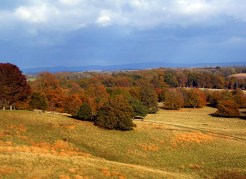
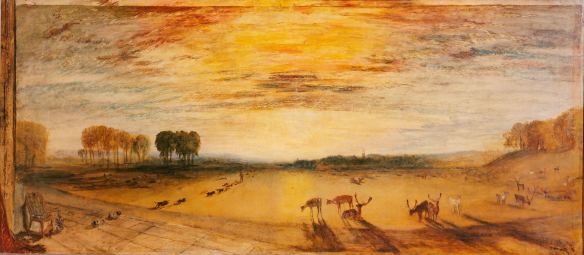
p1220089A quick glance at the road atlas and a suitable destination for my walk jumped out at me: Petworth Park, the curvaceous landscaped grounds of a seventeenth-century mansion house, complete with the largest herd of fallow deer in England. What better place for a stroll in the autumnal sunshine than a landscape curated by ‘Capability’ Brown, immortalised in numerous works by Turner, and populated by turning trees and grazing deer. It was all very pleasant indeed.

One of Turner's takes on Petworth Park

One of Turner’s takes on Petworth Park

But there was something amiss. For all that Petworth is an important site of English cultural and landscape history, it was not its connections with Brown and Turner that had drawn me there. Continue reading

Fantastic Thoresby V: a late seventeenth-century Christmas

Laura Sangha

Last week Jonathan laid bare the attack on Christmas in England in the 1640s and 1650s, describing the puritan campaign to convince the public that Christmas was popish and profane, and to persuade people to abandon the traditional merry-making that took place on 25 December. This got me wondering about the resilience and enduring popularity of the festival. Specifically, what did Ralph Thoresby do when the day came around each year?

Thoresby’s Christmas 

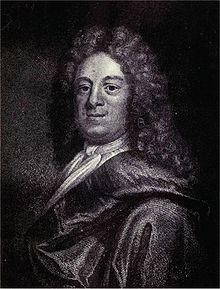
Ralph Thoresby

Ralph Thoresby, antiquarian, pious diarist, author of the first history of Leeds.

For those of you that haven’t met him yet – Ralph Thoresby (1658-1725) is the pious Leeds antiquarian and life-long diarist that I am currently researching (view the related posts here).[1] Disappointingly, but probably predictably, Thoresby’s diaries suggest that Christmas didn’t register that much on the antiquarian’s radar – Thoresby didn’t gorge on plum-pottage and mince pies, he didn’t entertain lavishly, he didn’t feast with his neighbours, and there is no evidence that he even indulged in a little tipple. On the morning of 26 December 1680 he did write that he ‘lay too long’ in bed, which we might chalk up to overindulgence the day before, but since Thoresby’s regular habit was getting up at 4 o’clock in the morning to pray, we probably shouldn’t read too much into this supposed sloth.

Why do I say that this lack of interest is quite predictable? It is because Thoresby began his life as a moderate nonconformist, attending both dissenting meetings as well as Church of England worship (though in the 1690s he conformed fully to the Church of England). In Thoresby’s case, his nonconformity was of a distinctly puritan flavour, so his lack of enthusiasm for the festivities of the Christmas season are in keeping with his austere style of piety, his avoidance of unsuitable company and his horror of idleness. Yet clearly times had changed – this was the 1650s no longer. On Christmas day Thoresby did attend Church without fail (by contrast, during the interregnum churches were locked on December 25), often hearing a sermon ‘suitable to the day concerning the birth of Christ’. Continue reading

‘Christmas Imprisoned’: the ‘popular’ assault on the festive season

Jonathan Willis

It is beginning, as the seasonal classic reminds us, to look a lot like Christmas, everywhere you go. Shops are blaring out Mariah Carey and town centres are aglow with fairy lights, whilst trees festooned with tinsel are popping up everywhere. A good many of us, I expect, are rather looking forward to Christmas. Whether it is as a religious festival, a great big party, a consumer frenzy, a chance to get together with our loved ones, or even just an excuse to take some time off work, there is no denying that Christmas at the beginning of the twenty-first century is a still major cultural phenomenon, and a calendrical landmark of great prominence.

Christmas Fireplace

The stockings were hung by the chimney with care…

What Christmas is not, today, is a political issue. Continue reading

The undeserving poor: ‘rich beggars’

Brodie Waddell

Fear and hatred of the ‘undeserving’ poor pollutes our thinking about poverty. The shadows of scroungers, fraudsters and cheats who falsely claim to need our help loom over every conversation about benefits and over every new welfare policy.

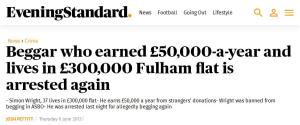
Rich beggar (2013) Evening StandardHeadlines about workshy swindlers march across the front pages of our papers almost every day. A quick online search reveals over 10,000 news stories on ‘benefit fraud’, reported both in the nation’s most popular newspapers and in local papers like the Bromley Times and Coventry Telegraph.

Such stories are part of our deep anxiety about those who get something for nothing. We worry that our taxes, our donations, our hard-earned money is being spent on people who don’t need it. The public believes that fraud accounts for over one in every four pounds in Britain’s welfare budget, when in fact it is well under one in a hundred. Such fear and fury are not confined to any particular class – they are common enough among the wealthy and educated as well as the working class. You have, I’m sure, occasionally heard examples of this from family and friends, just as I have. Sadly, if you pay careful attention, you’ll probably find it sometimes lurks in your own thoughts too. Continue reading

West Country Rebels

Mark Hailwood

A patchwork of conversations, thoughts and observations on the rebellious history of the South West of England, stitched together by a Somerset-born honorary-Devonian….

It’s a small world. On a recent archival trip to the Hampshire Record Office I got chatting to their immensely helpful Principal Archivist Sarah Lewin, and after a bit of biographical back-and-forth it transpired that I had done my undergraduate degree in her hometown of Norwich, where she grew up as good friends with my now MP – as a resident of Exeter – recent Labour Deputy Leadership candidate Ben Bradshaw.

Anyway, our conversation then moved on to the remarkable fact that the said Ben Bradshaw is now the only non-Conservative MP in the South West outside of Bristol (and you can take quite a broad definition of the South West here, encompassing Cornwall, Devon, Somerset, Dorset, Wiltshire and Gloucestershire). Whilst the Conservatives have long been the dominant party in the region, this is nonetheless a significant historical departure: few governments have ever been able to consider the West Country quite the stronghold that this one can.[1]

The remarkable Tory dominance of the South West, courtesy of BBC News website

The remarkable Tory dominance of the South West, courtesy of BBC News website

Continue reading