Guest Blog by Amanda Herbert Continue reading
Marooned on an Island Monographs: a History of Femininities Reading List
6

Guest Blog by Amanda Herbert Continue reading
Our next post in ‘The Voices of the People’ symposium (full programme here) is by the many-headed monster’s very own Laura Sangha, Lecturer in British History 1500-1700 at the University of Exeter. Laura shows that whilst the voices of ordinary people were not thought to be as trustworthy as those of gentlefolk in the early modern period, they still played an important and often overlooked part in intellectual debates surrounding ‘science’, as the experiences of humble individuals were sought out and valued by intellectuals as evidence against which to test emerging theories.
Laura Sangha
The idea at the heart of this post is voices of the people in unexpected places. Whilst there are more traditional topics (such as poverty, crime or work) that provide opportunities for exploring and uncovering ordinary voices, I want to focus on an area that is traditionally thought of as the exclusive preserve of the elite. That is, the realm of ‘science’, or, if you are an early modernist: the areas of natural and mechanical philosophy. When we think of this domain, we envisage the gentleman practitioner, the well-educated, well-resourced intellectual elite, usually engaged in a conversation with someone from a similar background to himself. Yet I want to suggest that even here, in an area that initially appears to be completely cut off from the people, their non-elite contributions were sought out and valued, and the voices of the people resonate.
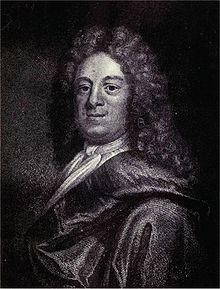
Ralph Thoresby, 1658-1725
I will be supporting this suggestion with reference to my current research into the life of Ralph Thoresby.[1] For those of you who are not familiar with the man, a brief introduction. Thoresby lived from 1658-1725, he was from a middling, trade background, but he was also an antiquarian, a member of the Royal Society, and the owner and curator of a museum in his home town of Leeds. His archive is very extensive and includes the diary that he wrote for the entirety of his adult life, as well as a large set of correspondence with friends, family, and the great and the good in ecclesiastical and intellectual circles. Thoresby was therefore a respected provincial practitioner, inspired by the Royal Society to the study of antiquities, natural curiosities and strange weather – the stuff of early modern science.
There is a plausible case for saying that Thoresby himself was one of the people – though he was relatively well off, he did not attend either of the universities and was a long way from the intellectual heart of the country in the south east of England. But in this post my focus will be on the way that Thoresby’s scientific activities bought him directly into contact with (even more) ordinary people’s experiences and voices. Continue reading
Laura Sangha
Last week, I delivered the introductory lecture for a second year undergraduate module, ‘Doing History’, and for various tedious reasons, I also recently spent some time reading, reflecting on and writing about why I consider history to be valuable. In the process, I conducted an entirely unscientific google trawl, trying to gauge what the general perception of the discipline was. I was struck by the fact that the popular or ‘commonsense’ perception of history encourages a rather limited assessment of its social and intellectual usefulness. What exactly do I mean?
Narratives and stories
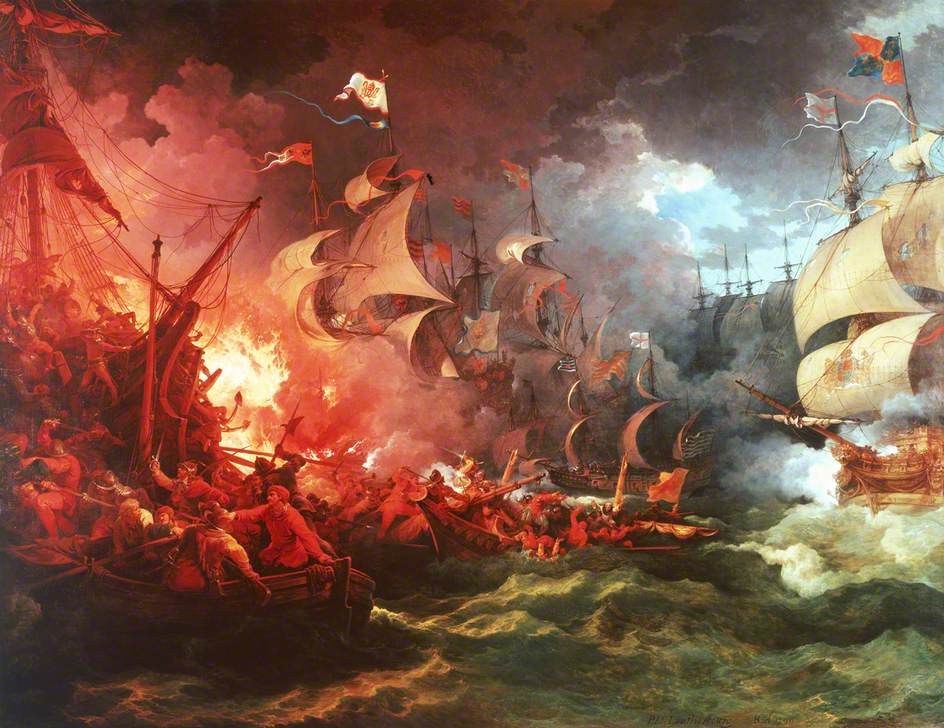
Drake’s defeat of the Armada – a rollicking yarn!
Perception: The past provides a seemingly endless supply of rollicking good yarns, from Henry VIII’s tortuous relationship status to Sir Francis Drake’s swashbuckling Caribbean adventures. These are easily converted into good reads.
That’s nice, but it doesn’t make history particularly valuable. Anyway, the best stories are made up ones. Continue reading
Guest Blog by Joanne Bailey Continue reading
Brodie Waddell
On 26 June 1645, as the war between the King and Parliament raged, John Coleman sat down at his lodgings in London to eat a meat pie. As he ate it, a strange thought occurred to him: ‘What flesh eatest thou’?
At that moment, even as he chewed, a flood of doubts and suspicions swept into Coleman’s mind. Why had his landlady made meat pies on a fast day? Why had the girl who delivered it to his room been acting so oddly? What had happened to the child who had been missing the previous evening?
The answers must have struck him like a blow, because suddenly ‘hee could eate noe moore’, verily believing ‘the Pye was made of a Childs flesh’. 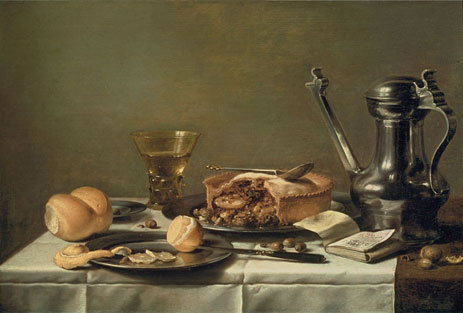 According to his later testimony, Coleman then went out into the neighbourhood to try to learn more. Here he heard from several women that a child in a yellow coat had been seen wandering the streets on previous evenings and that a butcher’s wife had unexpectedly given the child bread and butter. A gentlewoman, it was said, was ‘almost madd for her chyld which was lost’.
Although Coleman’s testimony ends there, an incident six weeks earlier seems to reveal more. On May 13th, a crowd attacked Mary Hodges, saying that under her apron she had ‘sugar plumbs and dyer bread to entice young Children away’. Another group attacked Hodges on June 2nd, accusing her of being ‘a night walking whore’.
Then the story, like the pie, goes cold. Continue reading
Mark Hailwood
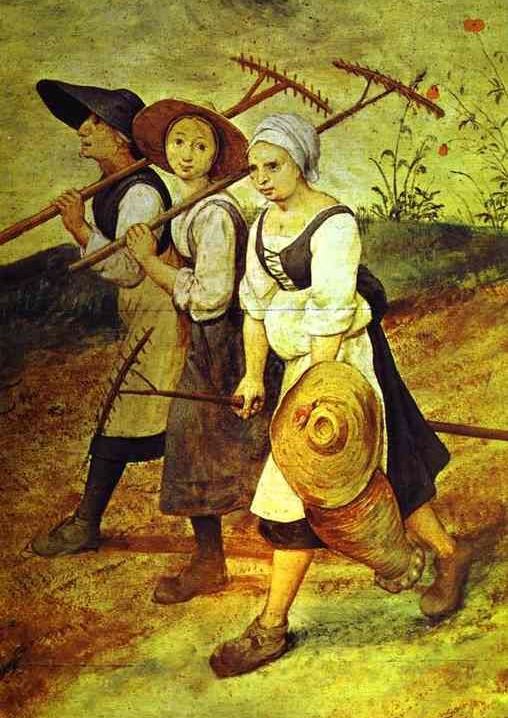 Many ‘monster readers will have already deduced that I recently started a new job. So I thought it would be a nice idea to write a very short post introducing the project that I’m now working on. It is based at the University of Exeter, funded by the Leverhulme Trust, and will run until the summer of 2018. The leader of the project is Professor Jane Whittle and I will be the main researcher. Our aim is to gather an unprecedented level of information about the everyday working lives of early modern English women by extracting incidental information about work activities from witness statements given in court cases (and a few other types of record too). We hope that this innovative methodology will help us to capture aspects of women’s work – for instance domestic and other types of unpaid work – that more conventional history of work sources – such as wage data – do not.
If you want to know more about the aims, methods and sources we will be using I have set up a website for the project here, that contains a lot more detail about what we will be doing. I’ll also be blogging over there about our progress from time to time, so if you are interested please do follow the project.
In fact, we already have a couple of blog posts up:
Finally, I should mention that we are looking for a third person to complete our project team, and as such are offering a fully-funded PhD studentship at Exeter. So, if you like the sound of the project or know of someone who you think might like to apply, then all the relevant details can be found here. The deadline for applications is 1st June.
A large part of my job will be working through thousands of witness testimonies from quarter sessions and church courts, with their rich and fascinating vignettes of everyday life. In addition to the information I am after for the project this will turn up plenty of stories about the lives of ordinary men and women in early modern England for me to regale ‘monster readers with, so keep watching this space!
Brodie Waddell
R.H. Tawney claimed that ‘the sixteenth century lives in terror of the tramp’. He wrote that over a hundred years ago, but more recent research has largely confirmed Tawney’s contention that Tudor and early Stuart England was a society deeply anxious about the movements of the ‘masterless’ poor.
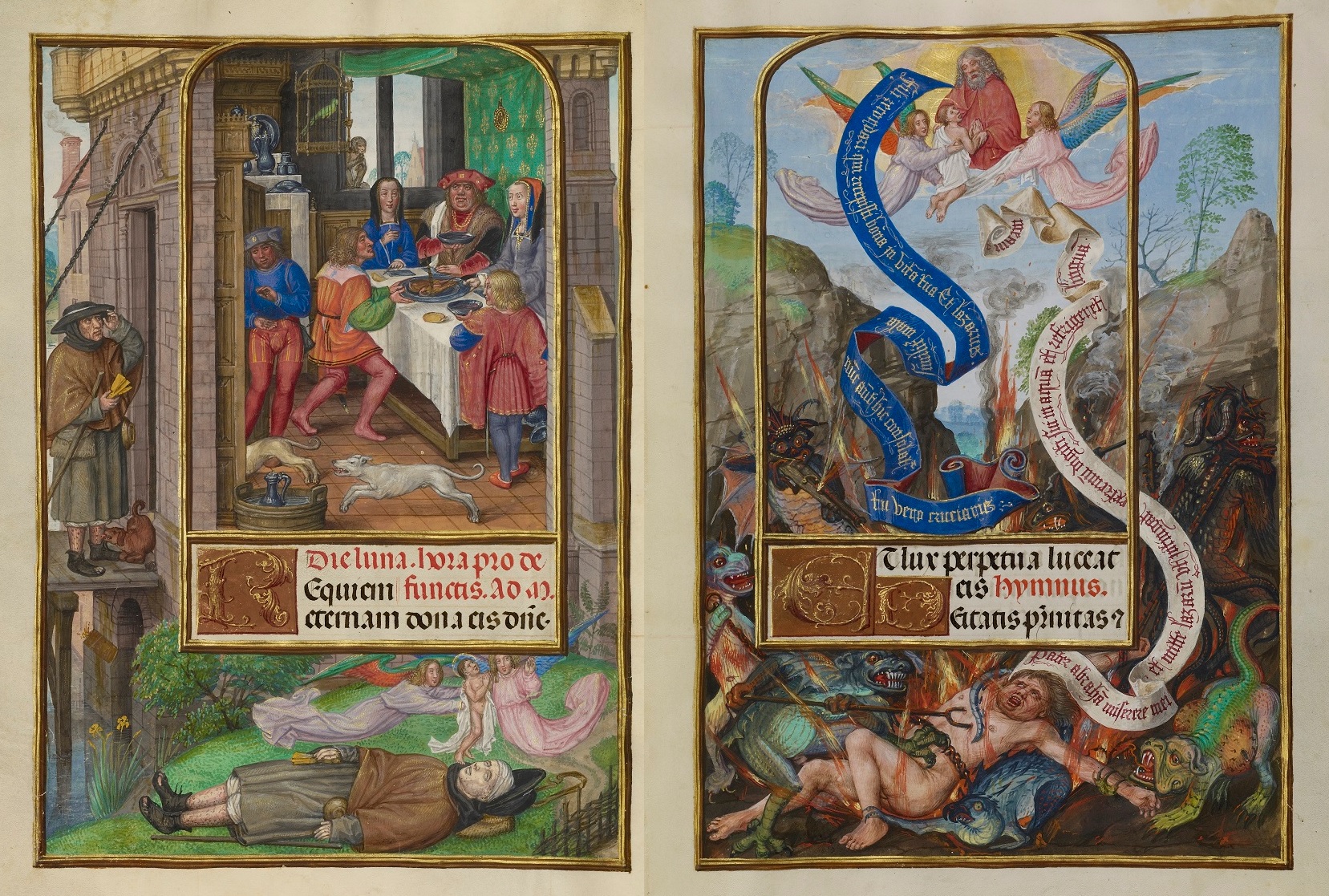
As a result, it is not difficult to find fearful, satirical or insulting depictions of ‘vagrants’ and ‘vagabonds’ from this period. However, just as it can be hard to find images of early modern working women, it is also rare to come across sympathetic pictures of the poor. Yet, we know that many people continued to see at least some beggars as victims who deserved compassion and charity.
The one particularly sympathetic portrayal of poverty that does appear repeatedly in early modern culture is the biblical story of Lazarus and Dives. In this parable, Jesus tells of a diseased beggar, Lazarus, who arrives at the door of a rich man, Dives, to beg for the crumbs off his table. Dives refuses and is condemned to hellfire while Lazarus dies and is carried to heaven by the angels.
Jonathan Willis

Christ Church, Oxford
The marriage of Protestant clergymen was one of the most controversial aspects of the reformation, in England as elsewhere. Opprobrium was heaped upon clergy who married, and also upon their wives. Even death was no escape from censure. During the reign of Mary I, Strype tells us, Richard Marshall, the dean of Christ Church, exhumed the body of Peter Martyr Vermigli’s wife from its resting place in the cathedral, and had it thrown onto a dunghill, presumably because in the eyes of the Catholic authorities she was no better than a heretical priest’s whore.[1]
 Historical interest in clerical marriage and clergy wives has increased substantially in recent years, with our understanding of the field primarily shaped by the work of Eric Carlson and Helen Parish.[2] This also seems to be a topic that really captures the imagination of students: when I ask my seminar groups to look at the Marian Injunctions of 1554, for example, they often marvel at the amount of attention given to clerical marriage, together with the uncompromising and uncharitable tone of the articles (the ones that say that married priests must no longer be allowed to be working priests, or to remain ‘married’). I’ve recently finished supervising an undergraduate dissertation on clerical marriage, and whilst the student, Helena Theo, worked extremely hard, and turned up some interesting material, it is clear that there is not exactly a wealth of sources giving an intimate picture of the relationships of the first generation of married clergy and their wives, especially from the female point of view (thank you Helena, for a very enjoyable supervisory experience, and for your permission to mention you here!).
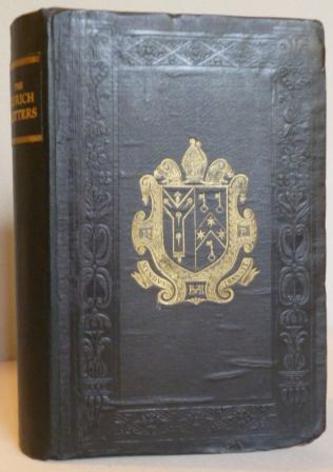
The Zurich Letters
In this post, I want to try to explore this relationship in a little more detail, and especially the extent to which marriage was an important aspect of the identity these early reformers constructed for themselves. I’m going to do so using a very well-known source, but one which (to my knowledge) has not been extensively mined for this sort of material, either by any historian of clerical marriage, or indeed by Helena, whose project went off in a slightly different direction. That source is the two-volumes of The Zurich Letters, published by the Parker Society in the 1840s, and, as it says on the title page, ‘comprising the correspondence of several English bishops and others with some of the Helvetian reformers during the reign of Queen Elizabeth’. Continue reading
Brodie Waddell
Update 25/04/17: An open-access version of my article on ‘The Politics of Economic Distress’ is now available though Birkbeck’s institutional repository or, alternatively, on my Academia.edu profile.
Thomas Smith was not a man of the people. Although born to a London merchant, he made his name teaching Hebrew at Oxford, publishing a thesis on Aramaic in the Old Testament and spending several years in Constantinople hunting down Greek manuscripts. Smith was, above all, an uncompromising believer in a very particular brand of high-church Anglicanism, so when William and Mary captured the throne in 1689 he refused to take the oath to the new monarchs.
In the 1690s, Smith watched the aftermath of the Revolution unfold. It was not a pretty sight. Maritime trade was battered by war with France, taxes doubled within a few years, food prices rose dramatically and the people lost faith in the currency. Although Smith seems to have lived a fairly comfortable life and remained focused on his scholarly work, his correspondence reveals that he had a good eye for the problems that beset ‘the common people’ in this decade. Continue reading
Jonathan Willis
Lately I’ve been reading and writing about a large number of godly lives. This is a fascinating genre. Individual stories have always played an important role in Christianity – the gospels themselves, of course, are first and foremost accounts of the life of Christ, written by the evangelists Matthew, Mark, Luke and John. The Confessions of Augustine; the hagiographical accounts of the lives (and deaths) of saints; the intensely spiritual and personal visions of mystics like Julian of Norwich: all these are examples of how life writing of different kinds has played an important role in shaping religious belief and practice in the millennium and a half following the birth of Christ. However, we see two new and distinctive developments occurring in the early modern period. One is the growth of something which starts to look recognisably like modern autobiography: a warts and all account of the trials and tribulations of an individual life, from start to end.[1] The second is the invention of the so-called ‘spiritual diary’ – that puritan specialism, which combined observations on daily life with deeply personal soul-searching: prayer, godly meditation, and the anatomisation and identification of sin. This is where my interest in these documents primarily lies, because the Ten Commandments (about which I’m currently writing a book) were one of the main tools used by puritan authors to forensically examine their spiritual health.
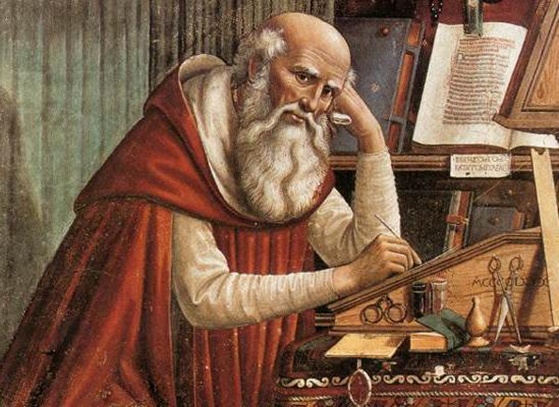
Augustine – father of the spiritual autobiography?
the history of 'the unruly sort of clowns' and other early modern peculiarities
the history of 'the unruly sort of clowns' and other early modern peculiarities
An Open Access Graduate Course on Utopian Thought.
A blog about bodies and medicine c.1500 - 1780
Adventures in the world of history
history/folklore/writing
stories from a nineteenth-century prison
the history of 'the unruly sort of clowns' and other early modern peculiarities
Leverhulme Funded Project at University of Exeter: Adopting a New Methodological Approach to Early Modern Women's Work
Early Modern Material Culture
'Making good use of the things that we find / Things that the everyday folk leave behind': ramblings of an early modern historian
A blog (mostly) about early modern history
crime, women, digital history...
 the many-headed monster