Woodford’s woes: debt and divine favour in early modern England

Jonathan Willis

Lately I’ve been reading and writing about a large number of godly lives. This is a fascinating genre. Individual stories have always played an important role in Christianity – the gospels themselves, of course, are first and foremost accounts of the life of Christ, written by the evangelists Matthew, Mark, Luke and John. The Confessions of Augustine; the hagiographical accounts of the lives (and deaths) of saints; the intensely spiritual and personal visions of mystics like Julian of Norwich: all these are examples of how life writing of different kinds has played an important role in shaping religious belief and practice in the millennium and a half following the birth of Christ. However, we see two new and distinctive developments occurring in the early modern period. One is the growth of something which starts to look recognisably like modern autobiography: a warts and all account of the trials and tribulations of an individual life, from start to end.[1] The second is the invention of the so-called ‘spiritual diary’ – that puritan specialism, which combined observations on daily life with deeply personal soul-searching: prayer, godly meditation, and the anatomisation and identification of sin. This is where my interest in these documents primarily lies, because the Ten Commandments (about which I’m currently writing a book) were one of the main tools used by puritan authors to forensically examine their spiritual health.
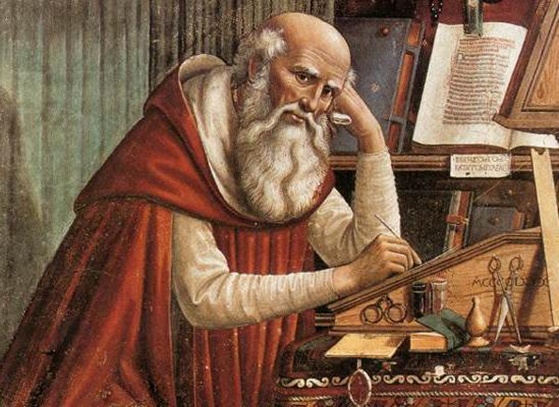
Augustine - father of the spiritual autobiography?
Augustine – father of the spiritual autobiography?
Continue reading

Aspiring to a New Jerusalem: how to reform a society, Part II

Laura Sangha

Once you start looking, it is surprising how many politicians, poets and pioneers have found the answer to the question ‘what kind of society do you want?’ in Scripture, taking as their model the New Jerusalem described by John of Patmos in Revelation. John’s ecstatic vision predicts that following Judgement Day, New Jerusalem will be the earthly location where all true believers will spend eternity with God. This heavenly society became the model that people would evoke for centuries to come. Why was it so enduring?

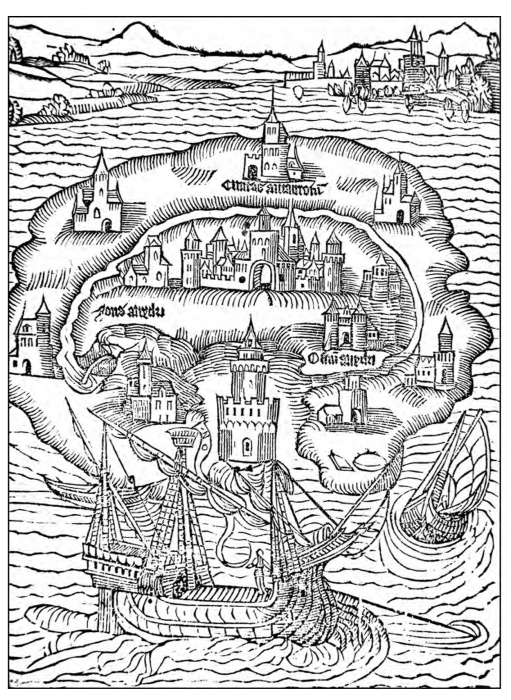
Another aspirational model - Thomas More's Utopia.

Another aspirational model – Thomas More’s Utopia.

Ideal Aspirations for All

As we saw in the previous post, the concept of a New Jerusalem is not static, it is a flexible idea that is taken up and defined according to the historical context it is used in, and in line with the intentions and aims of the person evoking it. It can be used to support the establishment of racial equality, the welfare state, or (perhaps?) resistance to industrialisation. But in each of the examples I discussed, you can see that the New Jerusalem is something to aspire to, it is an ideal society, a target, a goal. It is a place where injustice, discrimination and fear have no place, and where people can develop to the full, in co-operation with others. Continue reading

Aspiring to a New Jerusalem: how to reform a society, Part I

Laura Sangha

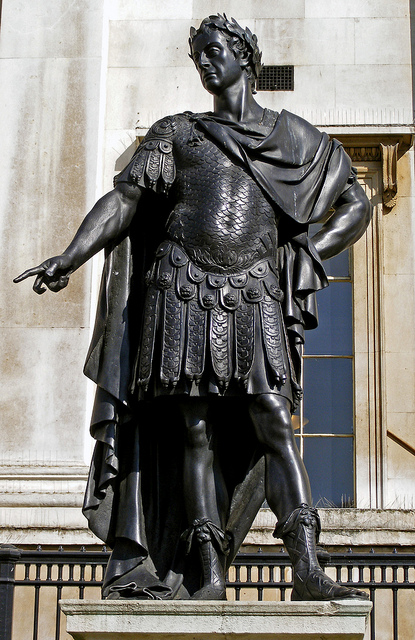
James II

James II: funny, entertaining, shocking

Since September last year, I have spent four hours a week discussing, with sixteen University of Exeter students, what it meant to be a Protestant in England from the Reformation right through to the early eighteenth century (thus partly explaining why I have had so little to say on the monster recently). Those 168 hours have been intellectually exciting (Calvinist consensus, avant-garde conformity, objects as sources), sometimes funny (‘performing’ sermons, ballad recordings, James II), hopefully entertaining (puritans vs the alehouse, museum visits, James II), perhaps dull (Ralph Thoresby’s sermon notes, burial patterns as excel spreadsheets), often shocking (king killing, Diggers, James II) and always immensely rewarding. Two central ideas have underpinned our exploration of English religious cultures of the time, encapsulated in the unwieldy module title:

‘A New Jerusalem: Being Protestant in post-Reformation England’.

Half inspired by Alec Ryrie’s excellent study of the ‘lived experience’ of Protestantism up to 1640 (Being Protestant in Reformation Britain, 2013), it is the concept embedded in the other half of the title that I want to offer some reflections on in this post. As usual a small idea rather grew in the writing, so today I will look at some examples, whilst in a second post at the end of the week I will provide some summarising thoughts. Continue reading

We the People, 1535-1787: Who were ‘the people’ in early modern England? Part III

Brodie Waddell

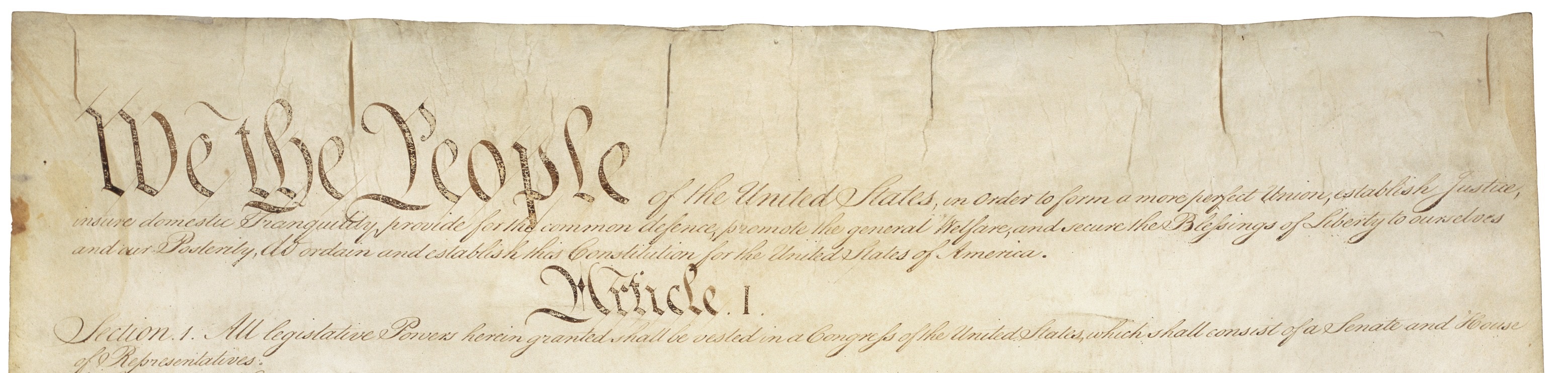
In 1787, a rag-tag band of rebels and revolutionaries gathered in Philadelphia to write a constitution. They decided to begin the document with a phrase that has since become rather famous: ‘We the People of the United States’.

We the People - Constitution_of_the_United_States,_page_1About 250 years earlier, in the 1530s and 40s, there were a series of new translations of the Bible into English that included an intriguing phrase amongst the Psalms: ‘Let us knele before the LORDE oure maker. For he is oure God: as for us, we are the people of his pasture, and the shepe of his handes.’ The phrase was integrated into the new Book of Common Prayer in 1549, so from then on English congregations would routinely sing this together, collectively declaring themselves to be God’s people. Continue reading

Who were ‘the people’ in early modern England? Part II: Some evidence from manuscripts

Brodie Waddell

According to a crude survey of published texts, ‘the people’ were invoked frequently in print in the sixteenth and seventeenth centuries, especially in times of political turmoil such as the 1640s and 1688-89. However, published texts are notoriously unreliable representatives of actual contemporary discussion. They were produced by the literate, for the literate, often using carefully crafted rhetoric.

Manuscripts can bring us slightly closer to a less skewed view of ‘the people’. Although obviously they too were only produced by the literate elite, they occasionally purport to record the voices of the illiterate and they tend to be less polemical as they were not intended to influence a wide audience. Unfortunately, there is no manuscript equivalent of the huge sample of published texts that have been transcribed by the Text Creation Partnership, though the Folger Library is giving it a go with its own manuscript collection. The State Papers Online is also promising, but only the calendars, rather than the original documents, have been transcribed. The closest to an equivalent to EBBO-TCP is probably the corpus of 240,000 transcriptions on the wonderful London Lives site, though these only cover the period 1690 to 1800 and the early material has many irregular transcriptions.

I’ve mostly drawn on my own little collection of notes from various archival documents (and published editions thereof), amounting to just over 600 pages in total, in which I found about 70 mentions of ‘the people’. Of course my notes are heavily biased in all sorts of ways, with a notable focus on the late 17th century, thanks to my current obsession with the ‘hard times’ of the 1690s. Still, it’s better than nothing. (In what follows, I have not included references, but I’m happy to supply them upon request and I have included links to any quotations taken from London Lives.)

The people enjoying a nice day out at Tyburn?

The people enjoying a nice day out at Tyburn?

So, with that methodological stuff out of the way, who are ‘the people’ in these sources? Continue reading

Who were ‘the people’ in early modern England? Part I: Some evidence from 44,313 printed texts

Brodie Waddell

In our on-going discussions of social description and social identity on this blog, we have tried to think through how we talk about the ‘non-elite’ individuals that we study. We’ve shown the problems with ‘plebeians’ and ‘the people’, yet I think this latter term is worth looking at from another angle. In Mark’s post on ‘the rise of the people’, he focused on how historians have used the term, but he also mentioned that:

It would be interesting to run a project on the history and meanings of the term ‘the people’ across the centuries, as has been done for instance for ‘commonwealth‘.

I can’t claim this little post is even a preliminary report on any such project. However, I did spend a couple hours searching through Early English Books Online to try to get a sense of how contemporaries used this term in early modern England. So, who were ‘the people’?

The first feature to note is that the term was extremely common. There were just over 400,000 hits for ‘the people’ in the 44,313 transcribed texts on EBBO. Continue reading

Memorial and History: appendix ii, further discoveries

Laura Sangha

Last year I wrote a series of posts on memorialisation and history, inspired by my discovery of Exeter’s memorial to two sixteenth-century martyrs. I uncovered the story of the two local victims remembered on the monument, the life of its colourful creator, and I explored why commemoration of religious martyrs suddenly became widespread in nineteenth and twentieth-century England. Over the summer, free from the golden reins of teaching, I found myself in two locations that provided more pieces of the puzzle.[1]

University Church of St Mary the Virgin, Oxford

DSCN5051

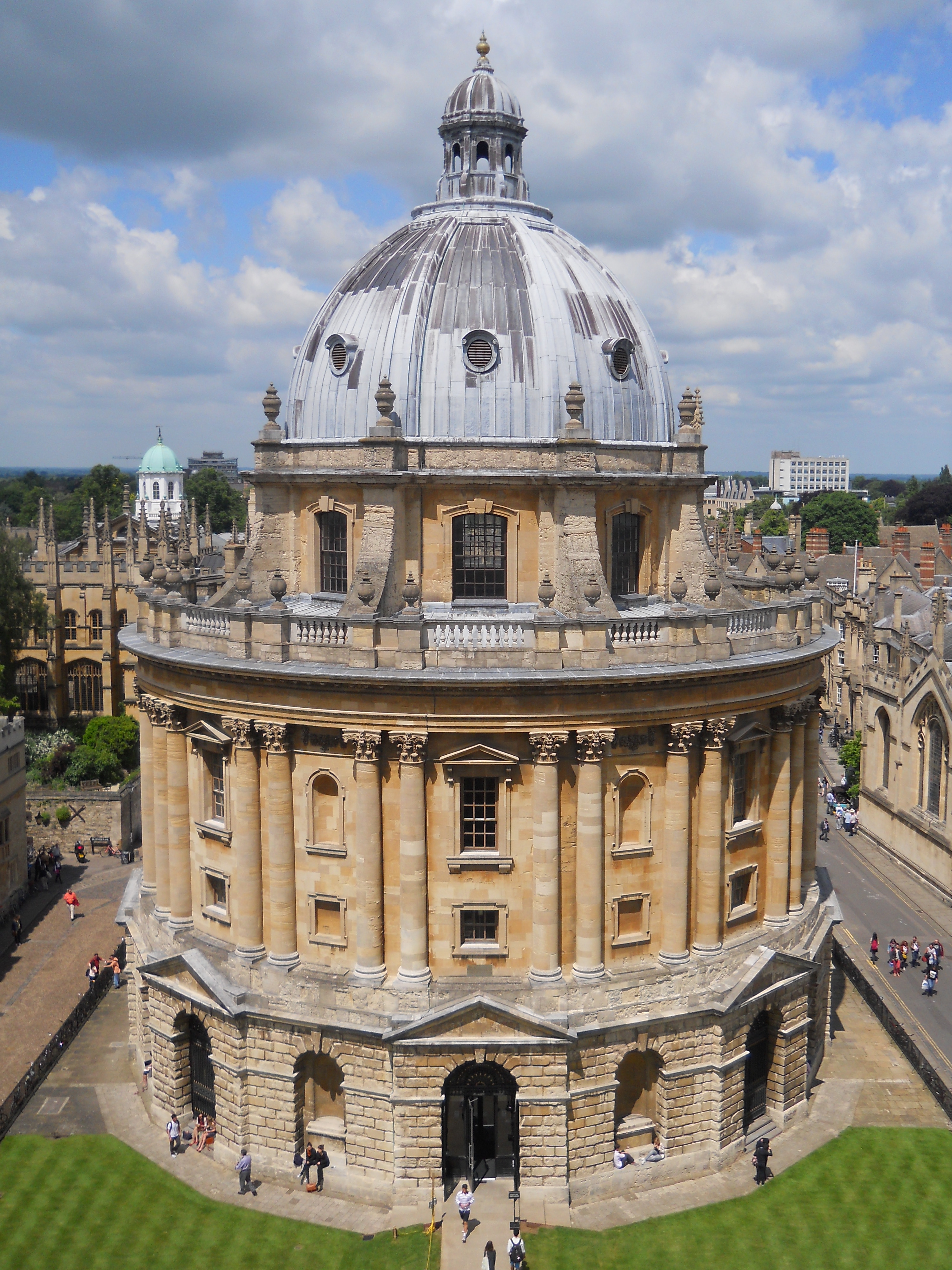
The view north from St Mary’s, looking into Radcliffe Square.

I was lucky enough to spend a week working in the Bodleian, and during a lunch break I took a tour around the University Church just opposite. In 1556 the church still functioned as a court and the first Protestant archbishop of Canterbury, Thomas Cranmer, was tried for heresy there by Mary Tudor’s Catholic government. Cranmer was one of the key architects of the early English Reformation, chiefly responsible for the 1549 and 1552 Books of Common Prayer – the latter was eventually the basis for the Elizabethan 1559 version. Cranmer refused to abjure his faith (technically he recanted, but then went back on his original recantation) and was burnt to death on Broad Street in Oxford, just round the corner from the church – and of course very close to the site of the Oxford Martyr Memorial today. Continue reading

Imagining early modern working women, or, economic history’s image problem

Brodie Waddell

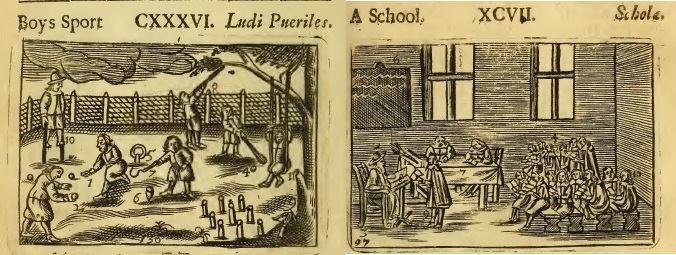
In 1658, the Czech scholar John Amos Comenius published what’s been called ‘the first children’s picture book’. It proved extremely popular and was republished many times, in many different languages. What brought it to my attention was the fact that it included 150 pictures of ‘the visible world’, a rare treat in an early modern publication.

It was designed to teach Latin and, in the 1705 edition, English to young people, so most of its illustrations depicted the sorts of things a child might be expected to know from life. They would find, for example, pictures of youth at study and at play, stilt-walking or bowling.

At school and at playHowever, the ones that caught my eye were the many illustrations of working life. If you, like me, teach or write about early modern economic history, you’ll know that this particular subfield has an ‘image problem’. Perhaps thanks to a strong seam of ‘iconophobic’ Calvinism, post-Reformation England was not exactly awash in imagery of any kind and I have often found it particularly difficult to find images of economic life. One can find many pictures of kings and noblemen. But there are frustratingly few depictions of ordinary people doing their jobs, whether as artisans, traders or labourers. This gap is partly filled by the broadside ballad woodcuts on EBBA that Mark Hailwood has discussed here before. However, it remains difficult to find the sort of rich visual material that one can find, for instance, in Dutch ‘Golden Age’ paintings or in nineteenth-century periodicals. Continue reading

The Woolcomber’s World, Part V: A defence of microhistory

Brodie Waddell

The life of Joseph Bufton is unlikely to ever appear in the Oxford Dictionary of National Biography amongst their nearly 60,000 ‘men and women who have shaped British history’. The only history that he shaped was his own.

Reduced to its essentials, his life is hardly worth writing about. As I’ve discussed in my previous posts, he was born in the small town of Coggeshall in 1650 and died in the village of Castle Hedingham, twelve miles down the road, in 1718. He spent nearly all of his sixty-eight years on this earth in north-eastern Essex. As far as we can tell, he never held any position of political or religious authority, never produced any works of artistic or literary merit, and never even married or had children.

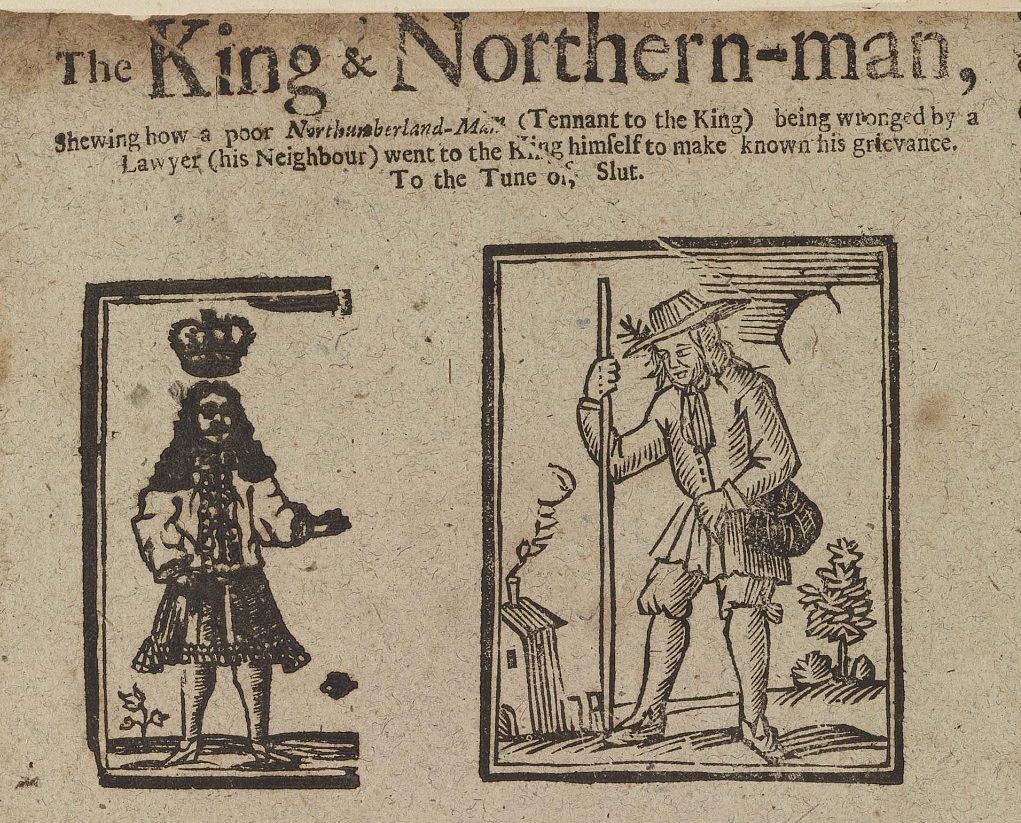
The King and Nortern-man ballad - Crawford_1_1188_2448x2448So why should anyone care about Bufton? One might say that we should simply care about everyone equally: does not the humble ploughman in the field deserve as much attention from historians as the king on his throne? The king may have ruled vast tracts of land, but his territories would have been worthless to him if the ploughman hadn’t supplied him with bread. However, our knowledge of the life of a ploughman is usually limited to a few lines in a parish register listing a baptism, a marriage and a burial. We encounter no such difficulty with kings.

Joseph Bufton, like a ploughman, earned his bread by the sweat of his brow. Yet unlike most ordinary people of the time, he left to posterity eleven volumes crammed with his scribblings. These little notebooks offer us glimpses of a life lived in humble obscurity, a life that would otherwise be almost entirely lost to us. Continue reading