The Rise of ‘The People’

Mark Hailwood

One of our ongoing conversations on this blog has revolved around the most appropriate terms that practitioners of history ‘from below’ can use to describe their subjects: are we studying ‘the working class’? The ‘lower classes’? The ‘middling and poorer sort of people’? The ‘plebs’? This post doesn’t provide any answers I’m afraid, but in it I want to resume the conversation by highlighting and briefly interrogating a term that seems to me to have been enjoying a certain vogue recently: ‘the people’. Continue reading

Memorial and History: appendix ii, further discoveries

Laura Sangha

Last year I wrote a series of posts on memorialisation and history, inspired by my discovery of Exeter’s memorial to two sixteenth-century martyrs. I uncovered the story of the two local victims remembered on the monument, the life of its colourful creator, and I explored why commemoration of religious martyrs suddenly became widespread in nineteenth and twentieth-century England. Over the summer, free from the golden reins of teaching, I found myself in two locations that provided more pieces of the puzzle.[1]

University Church of St Mary the Virgin, Oxford

DSCN5051

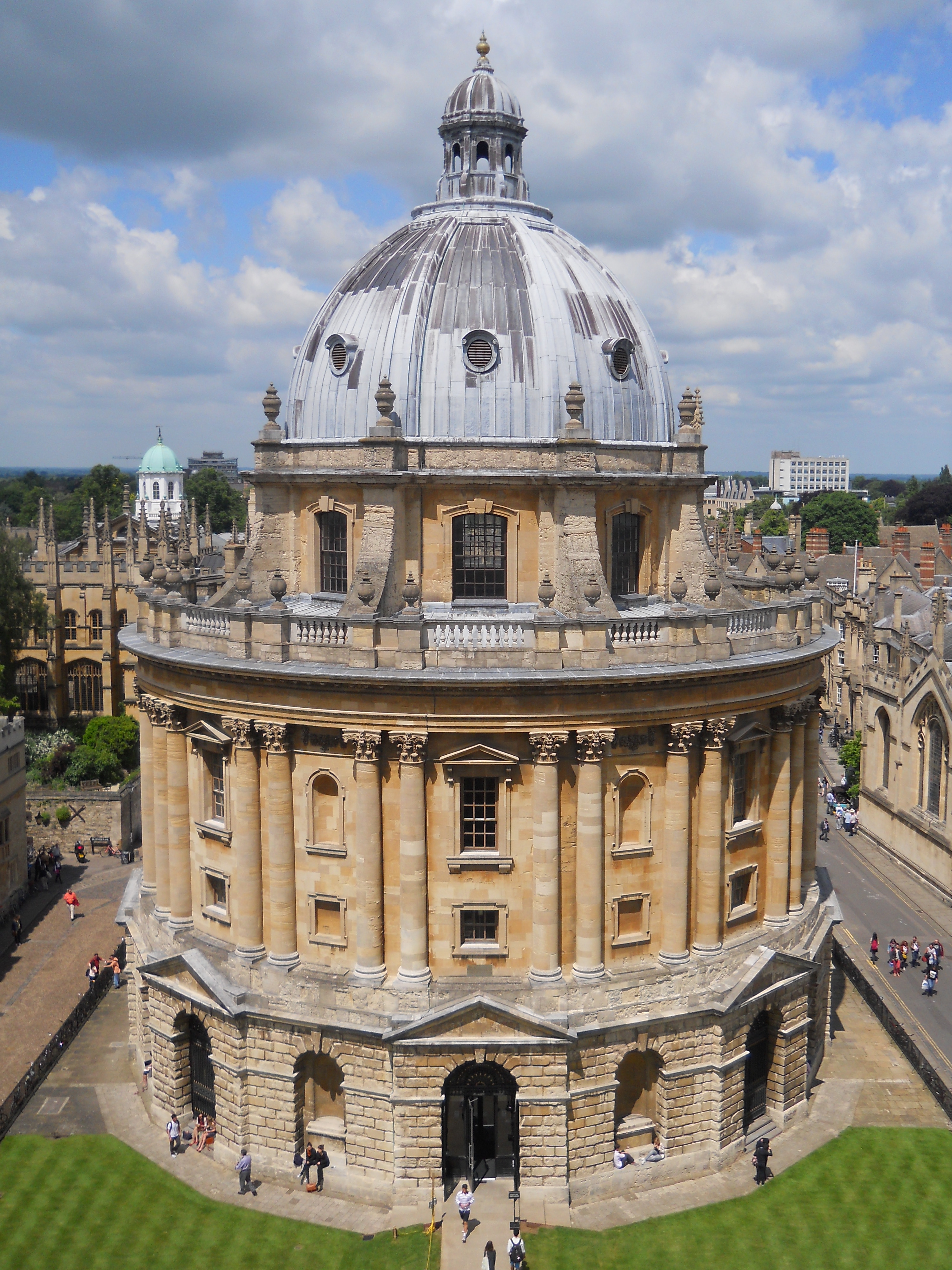
The view north from St Mary’s, looking into Radcliffe Square.

I was lucky enough to spend a week working in the Bodleian, and during a lunch break I took a tour around the University Church just opposite. In 1556 the church still functioned as a court and the first Protestant archbishop of Canterbury, Thomas Cranmer, was tried for heresy there by Mary Tudor’s Catholic government. Cranmer was one of the key architects of the early English Reformation, chiefly responsible for the 1549 and 1552 Books of Common Prayer – the latter was eventually the basis for the Elizabethan 1559 version. Cranmer refused to abjure his faith (technically he recanted, but then went back on his original recantation) and was burnt to death on Broad Street in Oxford, just round the corner from the church – and of course very close to the site of the Oxford Martyr Memorial today. Continue reading

Imagining early modern working women, or, economic history’s image problem

Brodie Waddell

In 1658, the Czech scholar John Amos Comenius published what’s been called ‘the first children’s picture book’. It proved extremely popular and was republished many times, in many different languages. What brought it to my attention was the fact that it included 150 pictures of ‘the visible world’, a rare treat in an early modern publication.

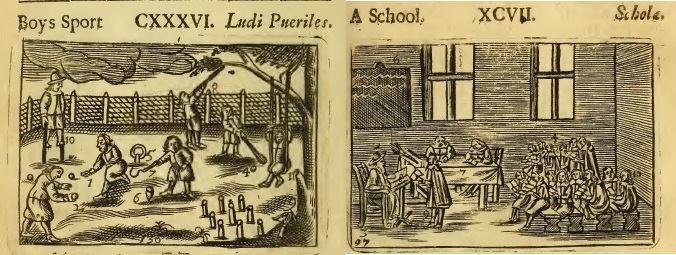
It was designed to teach Latin and, in the 1705 edition, English to young people, so most of its illustrations depicted the sorts of things a child might be expected to know from life. They would find, for example, pictures of youth at study and at play, stilt-walking or bowling.

At school and at playHowever, the ones that caught my eye were the many illustrations of working life. If you, like me, teach or write about early modern economic history, you’ll know that this particular subfield has an ‘image problem’. Perhaps thanks to a strong seam of ‘iconophobic’ Calvinism, post-Reformation England was not exactly awash in imagery of any kind and I have often found it particularly difficult to find images of economic life. One can find many pictures of kings and noblemen. But there are frustratingly few depictions of ordinary people doing their jobs, whether as artisans, traders or labourers. This gap is partly filled by the broadside ballad woodcuts on EBBA that Mark Hailwood has discussed here before. However, it remains difficult to find the sort of rich visual material that one can find, for instance, in Dutch ‘Golden Age’ paintings or in nineteenth-century periodicals. Continue reading

Thinking about doing a PhD: who, where and how?

Brodie Waddell

Over the past few months, I’ve been getting some enquires from people thinking about doing a PhD in history. I’ve found myself repeating the same thing in many cases, so I thought I’d set it out here in case it’s helpful for current MA students thinking about the possibility. In most cases, there are important personal factors to consider, but I think there are a few pieces of advice that apply more generally.

Note, however, that as an ‘early career’ academic, there is still plenty that I’m learning about the whole process, despite having finished my own PhD over five years ago. Your own thoughts would be very welcome.

Don’t do it!

When a PhD goes horribly wrong, it often turns into a nightmarish snake-cat that stalks you in the library...

When a PhD goes horribly wrong, it often turns into a nightmarish snake-cat that stalks you in the library…

Obviously I don’t believe that or I wouldn’t be writing this post, but I think there are lots of good reasons to not do a PhD right now, the most important being the terrible job market for new humanities PhDs. As innumerable blog posts and articles have said before: even if you are extremely smart, original, hard-working and self-sacrificing, there is a decent chance that you won’t be able to find a permanent academic job. If you are aware of that, and want to do a PhD anyway – perhaps because you’re not doing it to get an academic job, or perhaps because you are young, carefree and willing to roll the dice – then please read on… Continue reading

The Woolcomber’s World, Part V: A defence of microhistory

Brodie Waddell

The life of Joseph Bufton is unlikely to ever appear in the Oxford Dictionary of National Biography amongst their nearly 60,000 ‘men and women who have shaped British history’. The only history that he shaped was his own.

Reduced to its essentials, his life is hardly worth writing about. As I’ve discussed in my previous posts, he was born in the small town of Coggeshall in 1650 and died in the village of Castle Hedingham, twelve miles down the road, in 1718. He spent nearly all of his sixty-eight years on this earth in north-eastern Essex. As far as we can tell, he never held any position of political or religious authority, never produced any works of artistic or literary merit, and never even married or had children.

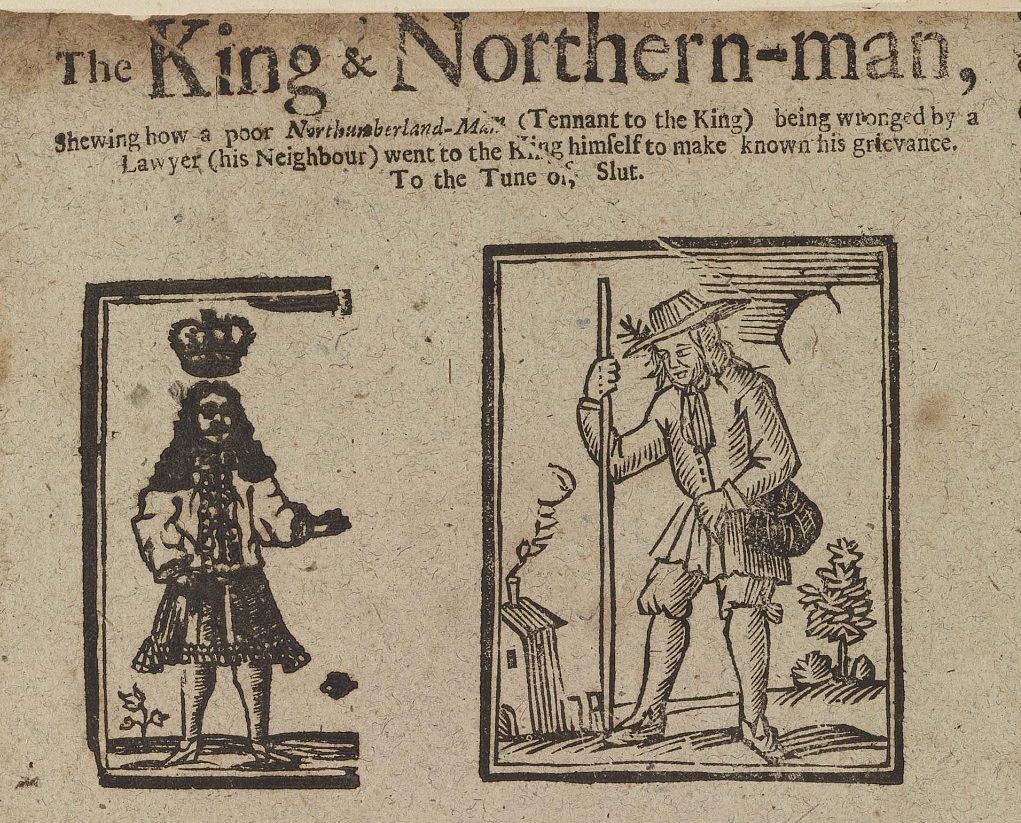
The King and Nortern-man ballad - Crawford_1_1188_2448x2448So why should anyone care about Bufton? One might say that we should simply care about everyone equally: does not the humble ploughman in the field deserve as much attention from historians as the king on his throne? The king may have ruled vast tracts of land, but his territories would have been worthless to him if the ploughman hadn’t supplied him with bread. However, our knowledge of the life of a ploughman is usually limited to a few lines in a parish register listing a baptism, a marriage and a burial. We encounter no such difficulty with kings.

Joseph Bufton, like a ploughman, earned his bread by the sweat of his brow. Yet unlike most ordinary people of the time, he left to posterity eleven volumes crammed with his scribblings. These little notebooks offer us glimpses of a life lived in humble obscurity, a life that would otherwise be almost entirely lost to us. Continue reading

The reformation of Christmas carols?

Jonathan Willis

Merry Christmas everybody! By now, the last scraps of turkey have hopefully been consumed, the last of the wrapping paper been thrown away. You might have decided to hit the sales; you might even be back at work; and you may also have asked yourself one or more of the following questions: ‘what shall we doe in the long winter nights: how shall we passe away the time on Sundayes, what wold you have us doe in the Christmas Hollydayes’? No need to risk a family feud by dusting off the monopoly board just yet, because John Rhodes, the Jacobethan ‘minister of Enborne’ (Berkshire) anticipated just such a need amongst ‘the Schollers of pettie Schooles’ and ‘the poore Countrieman and his familie’.[1]

christmas-tree-and-fireplaceRhodes’ solution for chasing away the winter blues, and passing the long winter evenings, was simple: sing! Rhodes dedicated his book for such as ‘are naturally given to sing’, so that they might ‘please their merrie minds a little’, and that by winning them ‘to sing good things’ they might ‘forsake evill’. Early modern carols were primarily a popular tradition, and Rhodes’ efforts might be mistrusted on two fronts. Firstly, his aim was clearly a moralising one, recalling the original purpose of metrical psalms, to supplant vain, bawdy or worldly songs with more godly fare. Secondly, pastiches of pastoral or country songs were a moderately popular genre, and examples of ‘countrie’ carols were often affected rather than genuine. In 1611, the enterprising composer Thomas Ravenscroft attempted to cover all his bases in Melismata Musicall phansies, by including a blend of tunes, striving to please ‘the noblest of the court, liberallest of the country, and freest of the city’ in their own respective ‘elements’. Continue reading

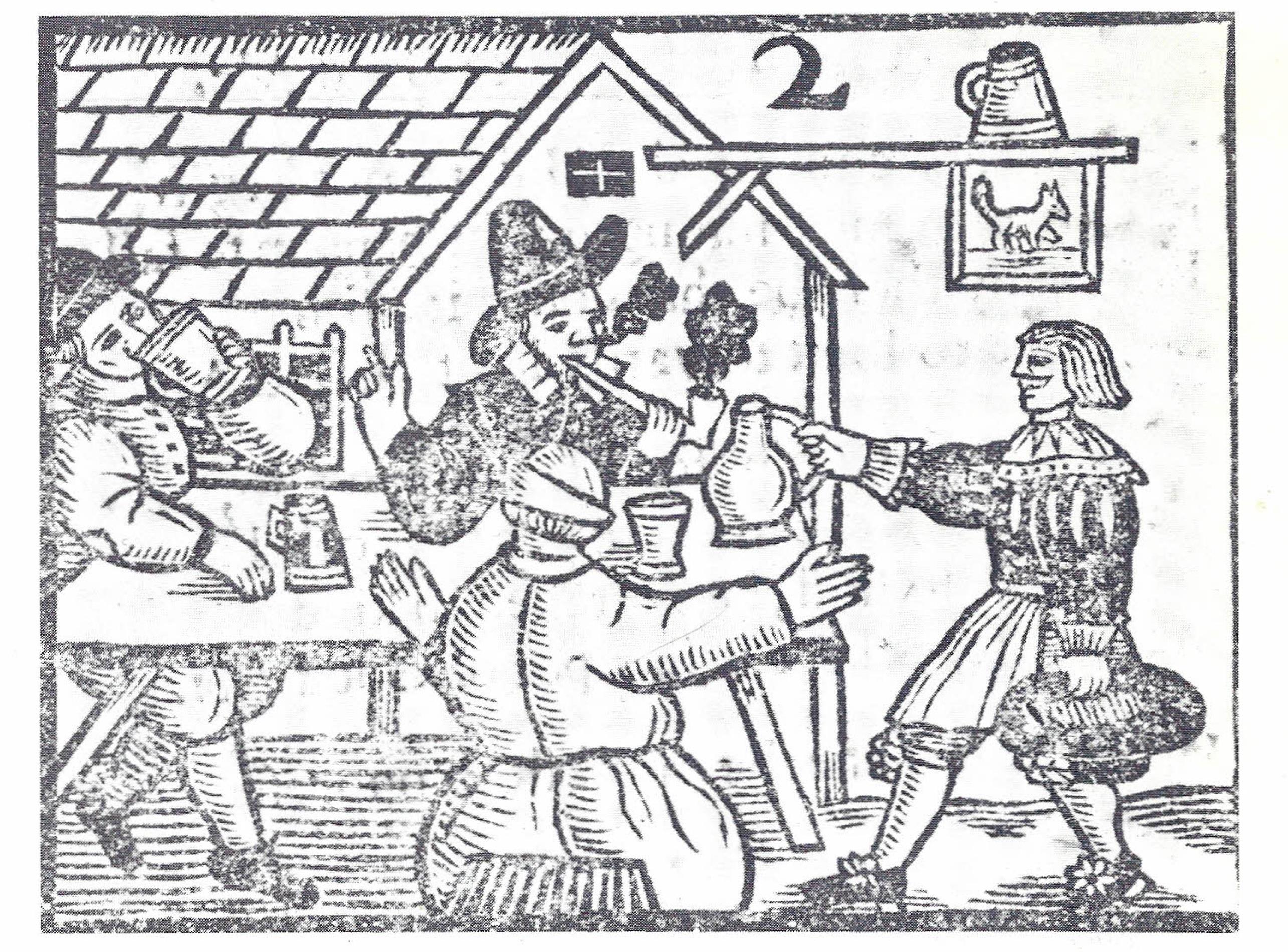
Alehouse Characters Christmas Special: The Festive Binge-Drinker

Mark Hailwood

This is the fifth and final post in a series written to mark the publication of my book, Alehouses and Good Fellowship in Early Modern England, which is now available in paperback. Monster readers can take advantage of a special offer to get 25% off (getting the book for just £13.49) by using the promotion code ‘BB125’ when ordering here. Each post in this series focuses on a character that features in the book, and uses them to highlight some of my key themes and arguments.
scrooge0_lg

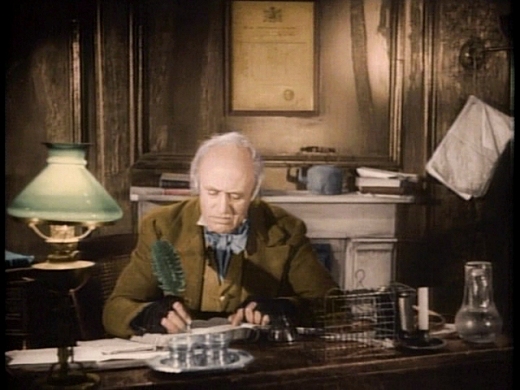
Totting up the end of year accounts…

On the 22nd of December, 1647, as the wind and rain lashed down outside, the Yorkshire yeoman farmer Adam Eyre spent his day at home casting up his accounts of his expenses for the year. He was a reasonably prosperous man—a member of what historians of the seventeenth-century would call the ‘middling sort’—but he was not at all happy with the level of his outgoings.

What was to blame for his profligacy? The alehouse, of course. So, like many of us do as the year draws to a close, he made a resolution:

‘hereafter never to pay for anybody in the alehouse, nor never to entangle myself in company so much again as I have done’

Adam Eyre did not want to go the way of the fictional ‘wastrel husband’ John Jarret: instead, he determined to renounce ‘good fellowship’.

But Eyre’s resolve did not last long. On 26th December—St Stephen’s Day, later to become Boxing Day—Eyre’s horse had a minor fall when trying to leap over a muddy ditch. As Eyre sought to regain his composure he encountered a fellow officer in the Parliamentary army, Corporal Richard Barber, who persuaded Adam to take a restorative draft of ale or two in an alehouse in nearby Thurlstone. Eyre spent 4 pence (the standard measure of ale then was a quart, or two pints, and this typically cost 2p: so it was a penny a pint). Continue reading

The editing game…

Jonathan Willis

editing-ratesRegular monster readers may have noticed that my productivity as a blogger has dipped in recent months. I’m not trying to claim extenuating circumstances, but I attribute this (at least in part) to the fact that I’m currently involved in the production of three edited volumes of essays (two as co-editor, and one as sole editor). Editing other people’s work is a great privilege, and most of the time it’s immensely rewarding and enjoyable. Editing a volume of essays, though, is also extremely time consuming, and trying to coordinate your own hectic work patterns with the schedules of ten other academics, perhaps a dozen or maybe more, is often easier said than done. In this post, I’d therefore like to spend some time reflecting on my experience of ‘the editing game’, and the rewards it can bring, as well as some of the potential pitfalls to avoid. If you’re short of time, why not scroll straight to the bottom to see my top 10 dos and don’ts for editors! Continue reading

Alehouse Characters #4: The Good Fellowette

Mark Hailwood

This is the fourth in a series of posts written to mark the publication of my book, Alehouses and Good Fellowship in Early Modern England, which is now available in paperback. Monster readers can take advantage of a special offer to get 25% off (getting the book for just £13.49) by using the promotion code ‘BB125’ when ordering here. Each post in this series focuses on a character that features in the book, and uses them to highlight some of my key themes and arguments.

The seventeenth-century English alehouse was undoubtedly a male-dominated space. It was certainly not, however, an exclusively male space. For a start, it was common for alehouses to be run by widows, or by the wives of men whose name was actually the one on the license, and many young women would have worked as serving maids in these institutions. But women also represented a significant component of alehouse customers. Indeed, one historian has estimated that as many as 30% of the customers in Essex alehouses in the sixteenth and seventeenth centuries were women.[1]

Case

Women were a sizeable minority of the alehouse crowd

Women often drank in alehouses with their husbands, and young women frequented them as part of mixed-gender groups of friends. Of course, the alehouse was an important centre of courtship for the young in the villages and small towns of seventeenth-century England, in an age when a trip to the cinema or the bowling alley—or whatever it is young folk do for courtship these days—were not available options. (Although some alehouses did have bowling alleys attached to them even then, so the link between bowling and courtship may be older than we think). Continue reading

The plebs: a brief history

Brodie Waddell

How, in the 21st century, can the word ‘pleb’ lead to a prominent MP resigning his government post and to a £2 million libel lawsuit? The recent conclusion of this ridiculous saga has reminded us that this seemingly obsolete term of social description still has bite, but why?

The BBC has offered its own little history lesson on ‘pleb’, focusing on its classical origins. However, they leap straight from the Latin source to its use in 19th century public schools. What the BBC misses, perhaps justifiably, is the re-emergence of this Latinate language in the early modern period and the fraught use of the term by historians studying that period. Yet for those of us interested the history of social relations and social conflict, the terminology is more than an anachronistic oddity.

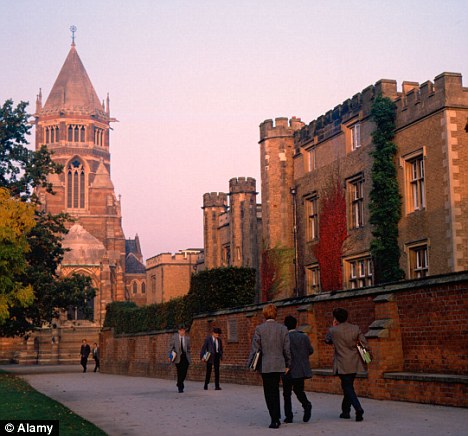
Rugby School, beloved by the plebs

Rugby School, beloved by the plebs

The abbreviated version – ‘pleb’ – used by Andrew Mitchell seems to have been an invention of the late 18th century. I haven’t found it in any of the thousands of transcribed texts on Early English Books Online except in Latin passages, and the Oxford English Dictionary records its first example in 1795. It is, by this time, derogatory Westminster School slang for ‘the son of a tradesman’. Mitchell, who attended the equally exclusive Rugby School, probably picked it up through this route though he might have learned a bit more about it when studying history at Cambridge. This explains why, in a moment of angry condescension, he spat out a term that most of us would regard as obscure and a bit silly. Nonetheless many other versions of the term have been circulating for at least a couple thousand years. Continue reading