
This is the fourth guest post in the mini-series Visual Culture in Early Modern England (read the introduction and find links to other posts here). Adam Morton shares his experience of using images to get students talking in seminars, exploring their ability to get students thinking about things like opinion, polemic and ambivalence in primary material.
Adam Morton is Reader in Early Modern British History at Newcastle University. He researches the long-Reformation in England, with a particular focus on anti-popery and visual culture. His publications include Civil Religion in the early modern Anglophone World (Boydell & Brewer, 2024) (with Rachel Hammersley), The Power of Laughter & Satire in Early Modern Britain: Political and Religious Culture, 1500-1820 (Boydell & Brewer, 2017) (with Mark Knights), Queens Consort, Cultural Transfer and European Politics, c.1500-1800 (Routledge, 2016) (with Helen Watanabe-O’Kelly), and Getting Along? Religious Identities and Confessional Relations in Early Modern England – Essays in Honour of Professor W.J. Sheils (Routledge, 2012). His current project considers the visual culture of intolerance in early modern England.
Adam Morton
I’ve always found that images get History students talking. They see things I don’t see and ask questions I’ve not thought to ask. The chattiest students are often the ones I least expect, the ones who have been quiet in previous weeks, the ones you worry are struggling with or not enjoying the course. Approaching a seminar topic through images can bring those students out of themselves.
I remember one instance, long ago on a second year Reformation course timetabled in the drabness and drizzle of the autumn term’s Friday afternoon slot, with fondness. A woodcut from John Foxe’s Acts and Monuments showing Edmund Bonner, the Bishop of London, stripped to his underwear and thrashing a Protestant’s buttocks, left one usually quiet student tripping over her tongue with things to say [Fig. 1].[1] She prodded the seminar to life with thoughts about humour, about cruelty and humiliation, about images as acts of revenge, and about the control involved in having the power to portray someone. Long dead Reformers suddenly seemed very human to her. “Is the image sexual?”, she asked the room. The discussion took off. Now I was the silent one: the teaching was going well.
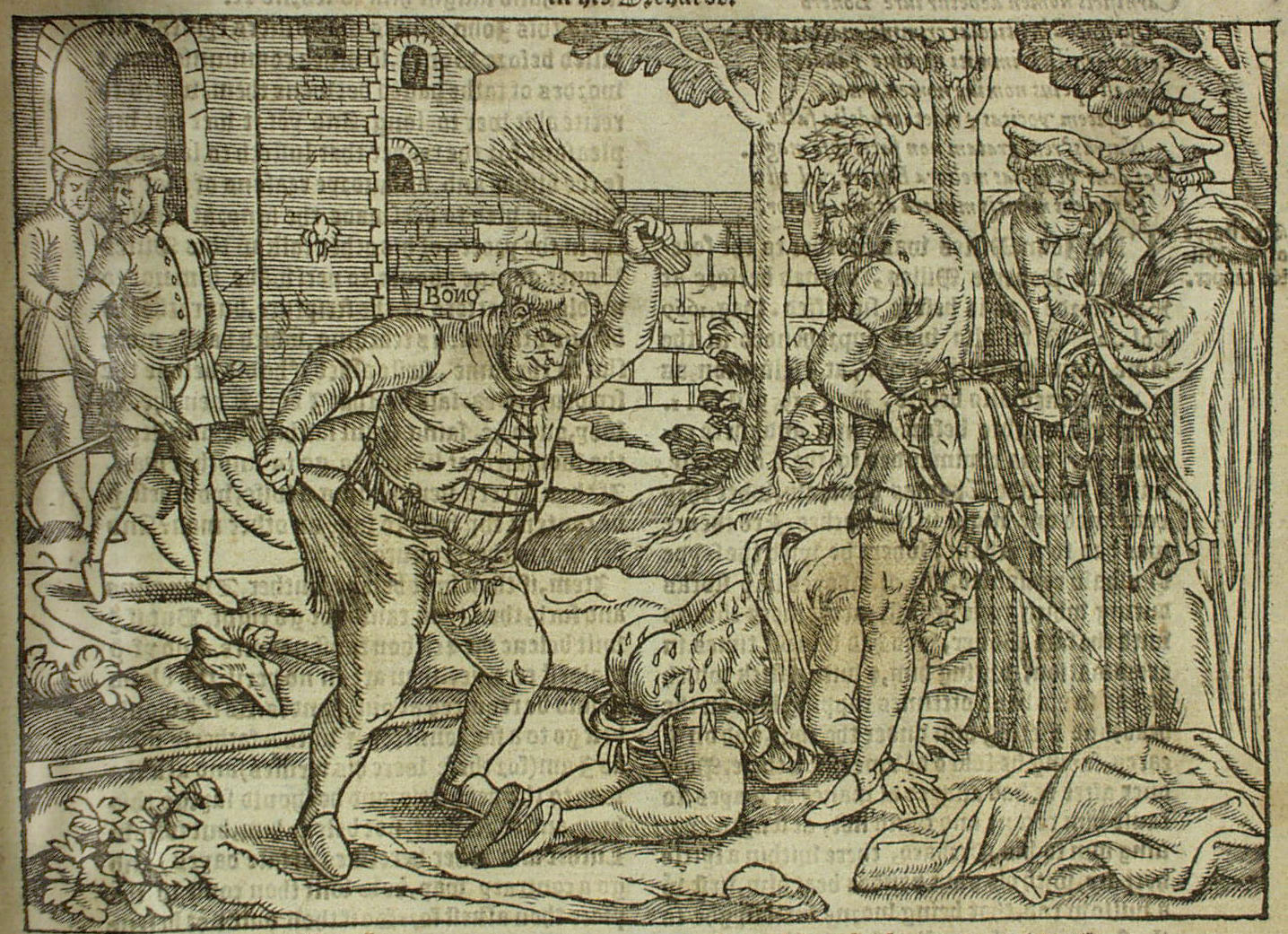
Figure 1. TITLE from John Foxe, Acts and Monuments (1570).
Foxe’s woodcuts are an obvious candidate for primary sources in undergraduate seminars, of course. Although they are no longer as rooted in public life as firmly as they were two generations ago, ‘The Book of Martyrs’’ images still provide a way into the big problems of Reformation history in the seminar room because they offer us dramatic vignettes that pare abstractions – martyrdom, heresy, theology, and memory – down to something tangible. But images can be much more than ice breakers. They can be the bedrock of seminar discussion, too. Continue reading
 I should note a few caveats. First, I had to exclude a few excellent suggestions even from my long list as they were focused primarily on the post-1750 period, which is covered by another module. Second, there were a few publications that I don’t have access to, so I put them on a separate list too. Third, there may be errors, so let me know if I’ve miscategorised anyone. Fourth, I know that people of colour write great scholarship about all sorts of history other than colonialism and slavery, but I thought this would be a good topic to start with given the particularly egregious nature of my initial list. Finally, I’m very aware that this list is incomplete. I’d welcome the chance to update it, so please comment below with your own ideas!
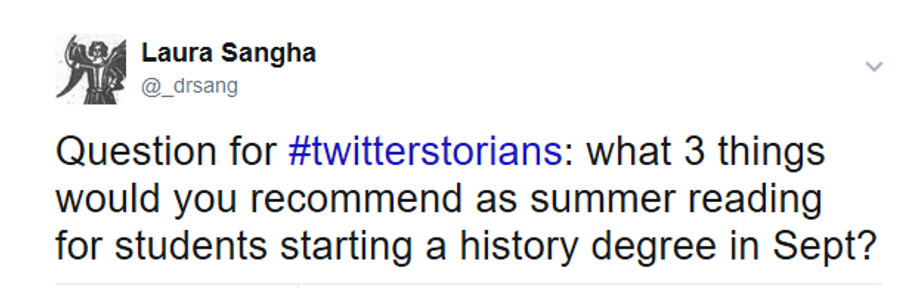 Last week I asked historians on twitter what three books they would recommend for prospective students to read over the summer – those students starting a history degree in September. I got a lot of responses (thanks very much, brilliant #twitterstorians), and you can read the full list at the end of this post. Before you do, here are a few thoughts that struck me about summer reading for history students.
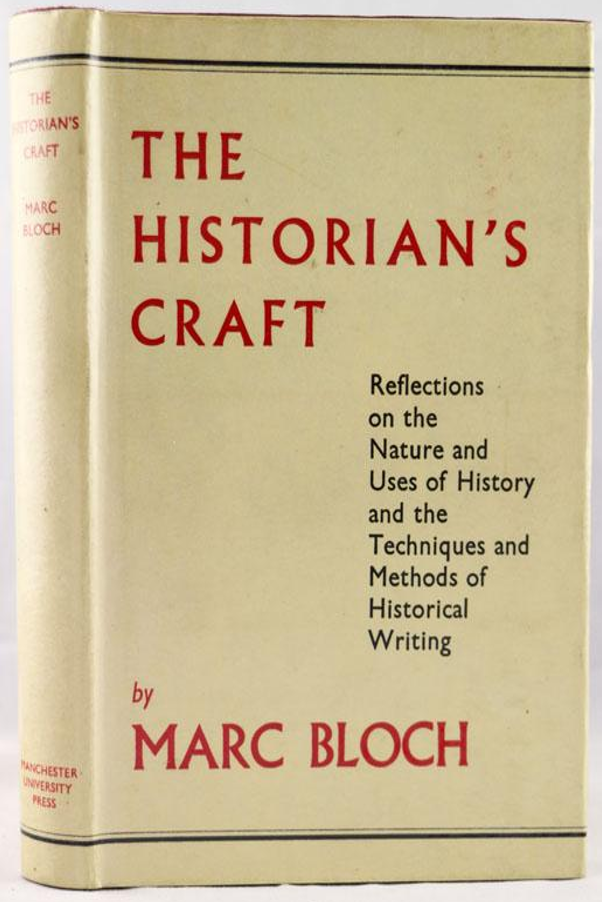 1) Students need to get to know the discipline, since what they did at school is not representative of it. So they should read ‘what is history’ books which explain why and how academics study the past. These might mainly cover historiography, or might be focused on issues that are fundamental to the discipline, i.e. what footnotes are, or why there is fiction in the archives. (See list section ‘The Historian’s Craft’).
 the many-headed monster
