A revolution, an economic crisis and a very sarcastic clergyman

Brodie Waddell

Update 25/04/17: An open-access version of my article on ‘The Politics of Economic Distress’ is now available though Birkbeck’s institutional repository or, alternatively, on my Academia.edu profile.

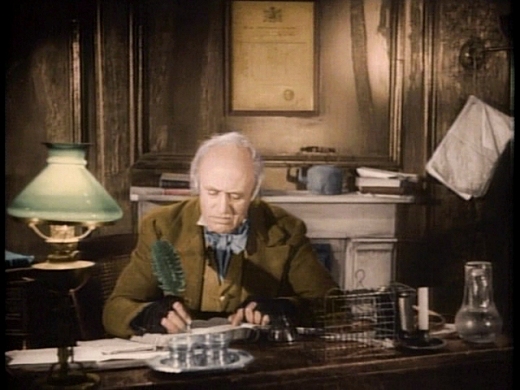
Thomas Smith was not a man of the people. Although born to a London merchant, he made his name teaching Hebrew at Oxford, publishing a thesis on Aramaic in the Old Testament and spending several years in Constantinople hunting down Greek manuscripts. Smith was, above all, an uncompromising believer in a very particular brand of high-church Anglicanism, so when William and Mary captured the throne in 1689 he refused to take the oath to the new monarchs.

In the 1690s, Smith watched the aftermath of the Revolution unfold. It was not a pretty sight. Maritime trade was battered by war with France, taxes doubled within a few years, food prices rose dramatically and the people lost faith in the currency. Although Smith seems to have lived a fairly comfortable life and remained focused on his scholarly work, his correspondence reveals that he had a good eye for the problems that beset ‘the common people’ in this decade. Continue reading
Alehouse Characters Christmas Special: The Festive Binge-Drinker

Mark Hailwood

This is the fifth and final post in a series written to mark the publication of my book, Alehouses and Good Fellowship in Early Modern England, which is now available in paperback. Monster readers can take advantage of a special offer to get 25% off (getting the book for just £13.49) by using the promotion code ‘BB125’ when ordering here. Each post in this series focuses on a character that features in the book, and uses them to highlight some of my key themes and arguments.

scrooge0_lg

Totting up the end of year accounts…

On the 22nd of December, 1647, as the wind and rain lashed down outside, the Yorkshire yeoman farmer Adam Eyre spent his day at home casting up his accounts of his expenses for the year. He was a reasonably prosperous man—a member of what historians of the seventeenth-century would call the ‘middling sort’—but he was not at all happy with the level of his outgoings.

What was to blame for his profligacy? The alehouse, of course. So, like many of us do as the year draws to a close, he made a resolution:

‘hereafter never to pay for anybody in the alehouse, nor never to entangle myself in company so much again as I have done’

Adam Eyre did not want to go the way of the fictional ‘wastrel husband’ John Jarret: instead, he determined to renounce ‘good fellowship’.

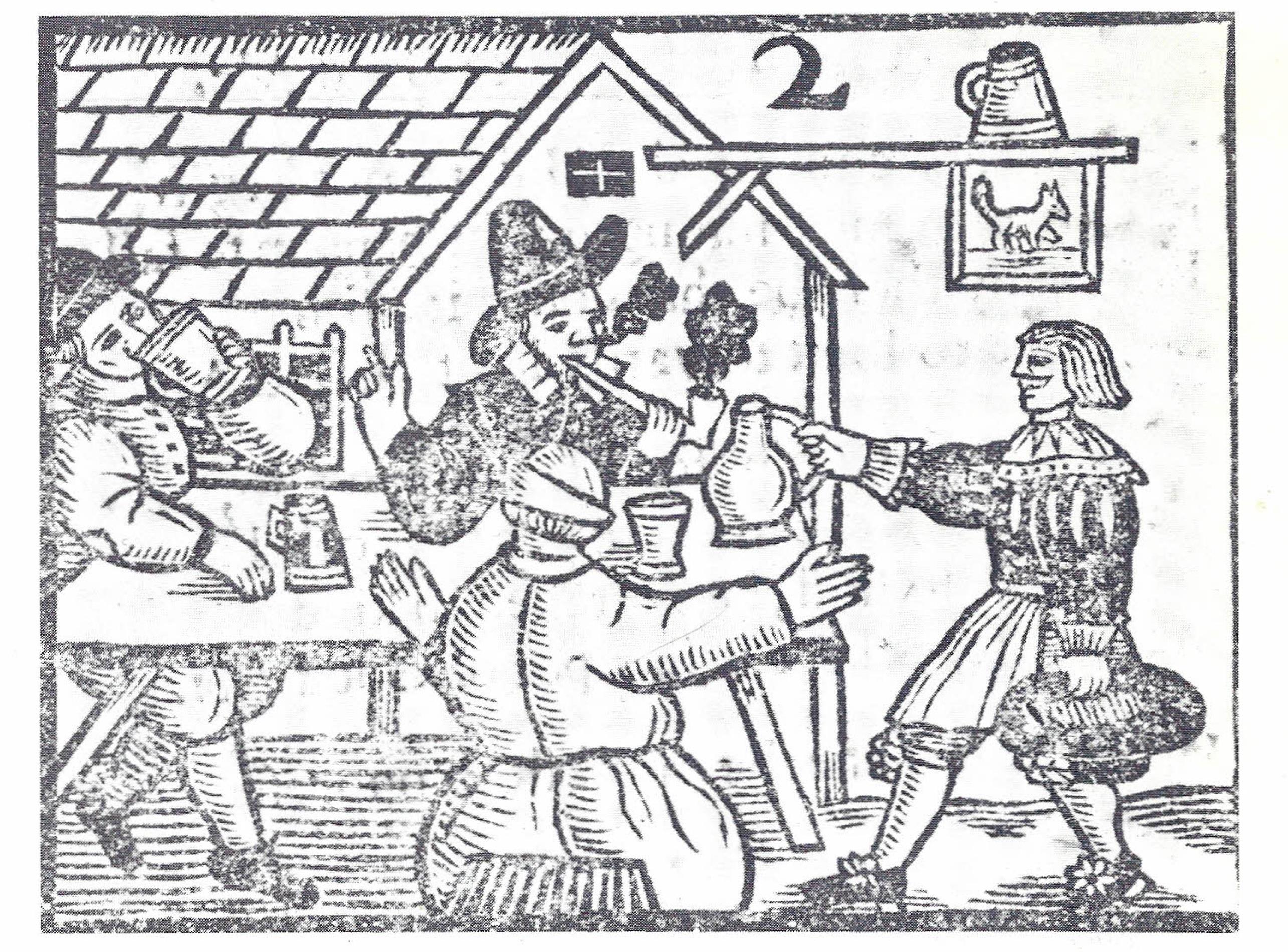
But Eyre’s resolve did not last long. On 26th December—St Stephen’s Day, later to become Boxing Day—Eyre’s horse had a minor fall when trying to leap over a muddy ditch. As Eyre sought to regain his composure he encountered a fellow officer in the Parliamentary army, Corporal Richard Barber, who persuaded Adam to take a restorative draft of ale or two in an alehouse in nearby Thurlstone. Eyre spent 4 pence (the standard measure of ale then was a quart, or two pints, and this typically cost 2p: so it was a penny a pint). Continue reading

Alehouse Characters #4: The Good Fellowette

Mark Hailwood

This is the fourth in a series of posts written to mark the publication of my book, Alehouses and Good Fellowship in Early Modern England, which is now available in paperback. Monster readers can take advantage of a special offer to get 25% off (getting the book for just £13.49) by using the promotion code ‘BB125’ when ordering here. Each post in this series focuses on a character that features in the book, and uses them to highlight some of my key themes and arguments.

The seventeenth-century English alehouse was undoubtedly a male-dominated space. It was certainly not, however, an exclusively male space. For a start, it was common for alehouses to be run by widows, or by the wives of men whose name was actually the one on the license, and many young women would have worked as serving maids in these institutions. But women also represented a significant component of alehouse customers. Indeed, one historian has estimated that as many as 30% of the customers in Essex alehouses in the sixteenth and seventeenth centuries were women.[1]

Case

Women were a sizeable minority of the alehouse crowd

Women often drank in alehouses with their husbands, and young women frequented them as part of mixed-gender groups of friends. Of course, the alehouse was an important centre of courtship for the young in the villages and small towns of seventeenth-century England, in an age when a trip to the cinema or the bowling alley—or whatever it is young folk do for courtship these days—were not available options. (Although some alehouses did have bowling alleys attached to them even then, so the link between bowling and courtship may be older than we think). Continue reading

Alehouse Characters #3: The Wastrel Husband

Mark Hailwood

This is the third in a series of posts written to mark the publication of my book, Alehouses and Good Fellowship in Early Modern England, which is now available in paperback. Monster readers can take advantage of a special offer to get 25% off (getting the book for just £13.49) by using the promotion code ‘BB125’ when ordering here. Each post in this series focuses on a character that features in the book, and uses them to highlight some of my key themes and arguments.

As we saw in the previous post, the rising popularity of alehouses and good fellowship in seventeenth-century England met with considerable opposition from Church and State. But concerns over developments in England’s drinking culture did not just emanate from hostile ruling elites—from the ‘top down’—they were also voiced within popular culture. This can be seen most clearly in contemporary anxieties that ‘good fellowship’ spawned ‘wastrel husbands’. One such example is the central character of this post: John Jarret.

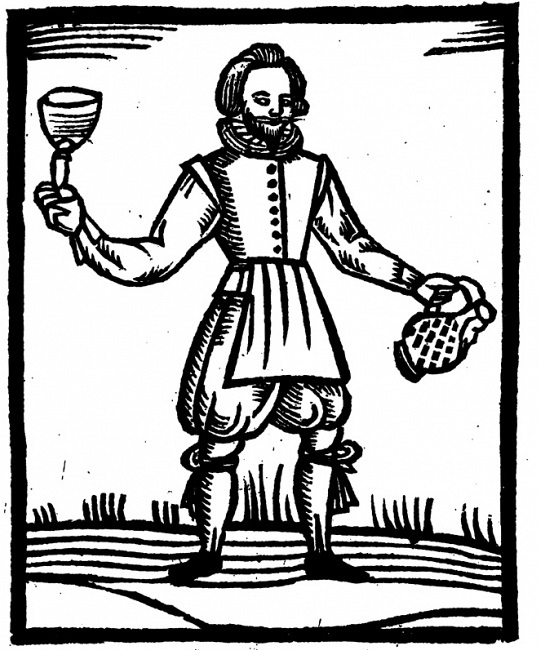
John Jarret

John Jarret

Jarret, like Roaring Dick of Dover, is the central character of a broadside ballad, and whilst both men are keen partakers of alehouse good fellowship, John Jarret’s drinking is portrayed in rather more problematic terms than Roaring Dick’s. Rather than being a celebration of good fellowship, the ballad featuring Jarret—narrated by his long suffering wife—is a warning about its dire consequences.[1] Continue reading

Alehouse Characters #2: The Drunken Constable

Mark Hailwood

This is the second in a series of posts written to mark the publication of my book, Alehouses and Good Fellowship in Early Modern England, which is now available in paperback. Monster readers can take advantage of a special offer to get 25% off (getting the book for just £13.49) by using the promotion code ‘BB125’ when ordering here. Each post in this series focuses on a character that features in the book, and uses them to highlight some of my key themes and arguments..

On an October evening, in the year 1604, a weary traveller by the name of John Oultings entered Turner’s alehouse in the Essex parish of Layer Marney. It was around 6 o’clock, and Oultings ordered himself some beer and cheese, and requested a room in which to rest overnight. It was the kind of routine stopover that was a common occurrence in England’s seventeenth-century alehouses, as the institution represented an important component of the country’s hospitality infrastructure.

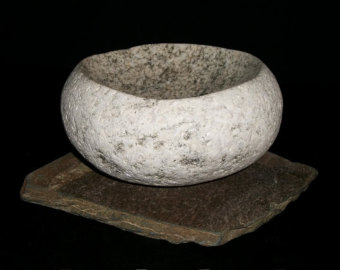
So far, then, nothing particularly remarkable. But what Oultings was to witness during his stay was a sequence of rather more intriguing events. On his arrival he found John Lufkin – the central character of this post – drinking with one Thomas Marsh and several other men. Whether Oultings joined these men is not clear, but at around 9 o’clock he saw John Lufkin call to the alehousekeeper to bring forth ‘a huge great stone pot’, which contained ‘very near two gallons’ (that’s 16 pints) of beer, a vessel that the drinkers referred to as ‘Fowler’—a rather odd nickname for a drinking vessel, but its provenance will become clear. Oultings was not interested in participating in whatever drinking ritual was about to ensue, and retired to his bed chamber.

Bring forth 'The Fowler'!

Bring forth ‘The Fowler’!

Continue reading

Alehouse Characters #1: The Jovial Good Fellow

Mark Hailwood

This is the first in a series of posts written to mark the publication of my book, Alehouses and Good Fellowship in Early Modern England, which is now available in paperback. Monster readers can take advantage of a special offer to get 25% off (getting the book for just £13.49) by using the promotion code ‘BB125’ when ordering here. Each post in this series focuses on a character that features in the book, and uses them to highlight some of my key themes and arguments.

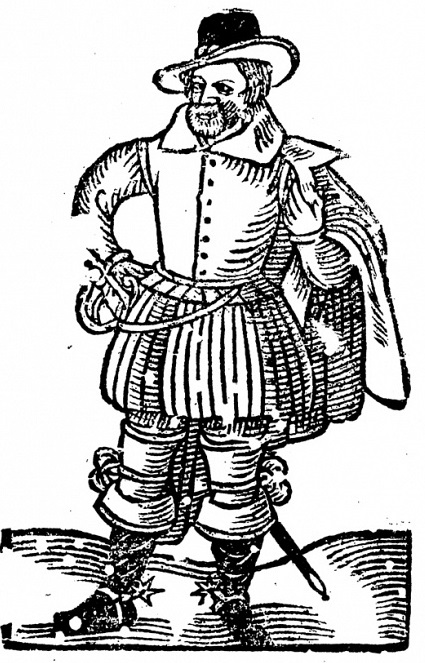
Meet our first alehouse character: Roaring Dick of Dover, the Jovial Good Fellow of Kent.

Roaring Dick of Dover

Roaring Dick of Dover

Roaring Dick is the narrator of an eponymous 1630s drinking ballad of the sort that would have been performed in, and perhaps even pasted onto the walls of, England’s seventeenth-century alehouses. Continue reading

History from below at NACBS

We don’t generally advertise events, but given the recent interest on the Monster in ‘history from below’, we thought we’d pass along a request from a colleague:

We are looking to put together a panel – provisionally entitled ‘New approaches to History from Below in Early Modern England, c. 1500-1800’ – for the upcoming North American Conference on British Studies in Minneapolis, MN, 7-9 November 2014.

We invite papers that:
– offer methodologically innovative approaches to understanding the continued relevance and significance of history from below
– suggest potential new directions and future possibilities of history from below
– consider what history from below can tell us and the significance of the different worlds it can reveal

Papers could take the form of case studies; discussions of the historiography of history from below in early modern England; explorations of the interaction between different analytical categories (e.g. class and gender); theoretical treatments; etc.

Please submit a 300 word abstract and one-page CV to hillary.taylor@yale.edu by Tuesday February 25th for the March 1st NACBS submission deadline. Proposals from graduate students and established scholars are equally welcome.

Feel free to be in touch with any questions.

All best,

Jason Rozumalski (PhD candidate, Berkeley)
Hillary Taylor (PhD candidate, Yale)

Dead white men

Brodie Waddell

There has been rather a lot discussion on this blog of two pioneering historians: E.P. Thompson and Eric Hobsbawm.

For those of you who are keen to hear more about these two, I’d like to mention a couple of events that will be of interest. For those of you who are tired of me blathering on about dead white men, I can promise that both of these events are actually focused on the impact of Thompson and Hobsbawm’s ideas – rather than on the men themselves – and that after this post I’ll shut up about them for a while.

The first event was a panel on the legacy of Thompson’s The Making of the English Working Class (1963). The talks and discussion were recorded, and the podcasts are now freely available here. I believe the slides will also be available for download at some point soon.

There were three panellists. Professor Sander Gilman (Emory) focused on the ‘Englishness’ of The Making and the problematic place of Jews in this story. Professor Jane Humphries (Oxford) presented a wonderfully incisive look at the how the ‘sentimentalist’ and ‘pessimistic’ interpretation of the Industrial Revolution has been recently reinvigorated by rigorous quantitative research, including her own book on Childhood and Child Labour British Industrial Revolution (2011). Last, and definitely least, I expanded on some of the ideas that I had presented in my earlier piece on the future of ‘history from below’, drawing on the wider discussion in our online symposium, particularly the contributions from Mark Hailwood and Samantha Shave.

Hobsbawm image_previewThe second event I’d like to mention is the huge conference on ‘History after Hobsbawm’ that will be held at Birkbeck at the end of April. It’s going to be quite an occasion – I don’t think I’ve ever seen so many big-name ‘Munros’ from the world of history on a single programme. Although the event will partly be a celebration of Hobsbawm’s legacy, it also promises to be a forum for leading historians to tackle big issues such as nationalism, protest, class, environment, and so on. I won’t attempt to list all the speakers except to say that I’m particularly looking forward to the panels on ‘the crisis of the 17th century’ (Sanjay Subrahmanyam, Geoffrey Parker, John Elliott), on ‘Marxist and post-Marxist social history’ (Andy Wood, Jane Whittle, Lucy Robinson), and on ‘Frameworks of historical explanation’ (Peter Burke, Joanna Innes, Renaud Morieux). I hope to see some of you there.

The future of ‘history from below’ symposium: concluding remarks

Brodie Waddell

Since publishing our invitation to this online symposium four short weeks ago, we’ve had over 5,000 visits from nearly 2,000 different readers.  Even more importantly, we’ve had scores of substantive comments here and on other social media. More people seem to be joining the conversation almost every day. From our perspective, then, this little experiment has been a success that has far exceeded our expectations.

We would thus like to offer our heartfelt thanks to the hundreds of you who have contributed, commented, linked, shared, tweeted and read over the past few weeks.  You’ve conclusively proven one of the key points that I was trying to make on Monday – many of the most interesting discussions about history aren’t happening in wood-panelled seminars rooms or within the pages of academic journals.

But it doesn’t end here. The beauty of this form of scholarship is that the conversation needn’t come to a close at the end of the final paper. Instead, we hope that you will continue to contribute to the discussion over the coming weeks and, in fact, indefinitely. To this end, we’ve created a stable page that can be accessed through the ‘History from Below’ link on the menu bar below our banner. This includes the introduction to the symposium as well as links to each individual piece. Alternatively, you can see all the pieces in the series through the ‘history from below event’ tag. What’s more, we’ll ensure that contributors are alerted when people offer new comments on their pieces, so they have a chance to respond.

We are also very pleased to announce that there will be more pieces on the future of history from below published later in the summer. These too will be linked on the main ‘History from Below’ page. They emerge from a second workshop we held on this topic, hosted at Cambridge and attended by some of the most eminent scholars in the field. The forthcoming pieces will include contributions from John Arnold, Christopher Briggs, Emma Griffin, Julie-Marie Strange, Selina Todd, and Andy Wood. Check back soon for more details…

Thank you again for making this such an exciting event.

Monstrous readers

Brodie Waddell

In the wee hours of this morning, the Monster was viewed for the 10,000th time. Not a bad achievement for a blog dedicated to historical obscurities that only launched nine months ago. So, thanks to all of you for checking us out and thanks even more to our commenters who make posting so worthwhile!

Rather than fireworks, I thought it might be appropriate to celebrate by pulling back the curtain to reveal a few facts and statistics, following the example of Nick at Mercurius Politicus.

Since July 18th, 2012, we’ve had:

  • 53 posts
  • 205 comments
  • 10,004 views, around 40 per day
  • 74 different countries from which vistors have arrived
  • 260 views on a single day (September 2nd, thanks to a link to ‘A royal mistress’ from Two Nerdy History Girls)

We’ve received most of our readers via links from:

Perhaps most interesting are the search terms that have been used to find us. The most Young Sallypopular is, of course, ‘many-headed monster’. Interestingly, ‘archivist’ is in second place, perhaps thanks to the archival miscellany. Other unsurprising results include ‘what shall we do with a drunken sailor’, ‘civil war comic strip’ and ‘microhistory’. More unexpectedly, we also have a few readers who’ve found us by searching for ‘animated fireworks’, ‘hairy child’, ‘devil church’ and, most confusing of all, the nine clicks from ‘dirty mind of young sally’. I pity the poor saps who were looking for a local Satanist congregation or a 1973 ‘adult comedy’ only to find over-thought analysis of some early modern oddity.

Oh well, the more the merrier … Satanists and skin-flick fans, we welcome you!