Food for Thought: An Introduction to Theory via the History of Food and Drink

Mark Hailwood

Prologue

Most historians are not especially enthusiastic about theory. We tend to have an aversion to dealing with abstract concepts, and struggle to see how they might apply to what we work on. Instead, we feel much more at home when we are dealing with context; with specific evidence grounded in, and bounded by, time and place. But like it or not, theoretical concepts have played a major role in shaping historical research – though they are concepts usually borrowed from other disciplines, not produced by historians themselves – so ignoring theory is really not an option.

Doc Brown's thinking cap: not essential for understanding theory

Doc Brown’s thinking cap: not essential for understanding theory

This is as true of food and drink history as other types of history – perhaps more so. The history of drinking, for instance, might just seem like a series of amusing anecdotes (see my alehouse characters series) but really it is all about how we interpret the instances of eating and drinking that we find in the archives, how we use them to tell stories about the societies and cultures that they take place in. For this, historians of eating and drinking tend to rely on various theoretical concepts developed outside of history to try and make sense of the rituals of food and drink consumption that we find in the archives.

So, in the various courses I have taught about the history of food and drink in early modern England I usually have to broach theory at some stage. Trying to teach theory to undergraduate historians is rarely the easiest of teaching assignments, so what I try to do is to show how ideas have been applied to the specific field of food and drink history to help students see their relevance. The aim is not to provide them with a complete mastery of the concepts we discuss – I wouldn’t claim to have this myself – but rather to give them an introductory sense of them so that (a) when they come across mentions of them in the literature they will have an idea of what they mean, and (b) to provide them with a platform to build from should they wish to delve deeper into these concepts in their essays and projects.

Anyway, when recently backing up some computer files I came across the lecture I usually give on this theme, and thought that it might also work well as a series of blog posts that could serve as a very basic introduction to some of the key theoretical concepts used by historians – structuralism, habitus, the civilising process – that might be of interest to undergrads, postgrads, or anyone else who is keen to (or perhaps for a course they are taking, has to) engage with some theory but is a bit daunted by the prospect of delving straight into [insert archetypal daunting theory book here]. Anyone who is a master of these concepts might like to read on and helpfully point out where I get them wrong!

The lecture is a bit long for one post, so I’ll break it down into 3 posts over the next couple of weeks. Part I, below, deals with ‘Anthropology and Structuralism’; Part II will look at ‘Sociology: Civility and Habitus’; and Part III at ‘A Literary Critic and the Carnivalesque’. Tuck in… Continue reading

Who were ‘the people’ in early modern England? Part II: Some evidence from manuscripts

Brodie Waddell

According to a crude survey of published texts, ‘the people’ were invoked frequently in print in the sixteenth and seventeenth centuries, especially in times of political turmoil such as the 1640s and 1688-89. However, published texts are notoriously unreliable representatives of actual contemporary discussion. They were produced by the literate, for the literate, often using carefully crafted rhetoric.

Manuscripts can bring us slightly closer to a less skewed view of ‘the people’. Although obviously they too were only produced by the literate elite, they occasionally purport to record the voices of the illiterate and they tend to be less polemical as they were not intended to influence a wide audience. Unfortunately, there is no manuscript equivalent of the huge sample of published texts that have been transcribed by the Text Creation Partnership, though the Folger Library is giving it a go with its own manuscript collection. The State Papers Online is also promising, but only the calendars, rather than the original documents, have been transcribed. The closest to an equivalent to EBBO-TCP is probably the corpus of 240,000 transcriptions on the wonderful London Lives site, though these only cover the period 1690 to 1800 and the early material has many irregular transcriptions.

I’ve mostly drawn on my own little collection of notes from various archival documents (and published editions thereof), amounting to just over 600 pages in total, in which I found about 70 mentions of ‘the people’. Of course my notes are heavily biased in all sorts of ways, with a notable focus on the late 17th century, thanks to my current obsession with the ‘hard times’ of the 1690s. Still, it’s better than nothing. (In what follows, I have not included references, but I’m happy to supply them upon request and I have included links to any quotations taken from London Lives.)

The people enjoying a nice day out at Tyburn?

The people enjoying a nice day out at Tyburn?

So, with that methodological stuff out of the way, who are ‘the people’ in these sources? Continue reading

The Rise of ‘The People’

Mark Hailwood

One of our ongoing conversations on this blog has revolved around the most appropriate terms that practitioners of history ‘from below’ can use to describe their subjects: are we studying ‘the working class’? The ‘lower classes’? The ‘middling and poorer sort of people’? The ‘plebs’? This post doesn’t provide any answers I’m afraid, but in it I want to resume the conversation by highlighting and briefly interrogating a term that seems to me to have been enjoying a certain vogue recently: ‘the people’. Continue reading

Thinking about doing a PhD: who, where and how?

Brodie Waddell

Over the past few months, I’ve been getting some enquires from people thinking about doing a PhD in history. I’ve found myself repeating the same thing in many cases, so I thought I’d set it out here in case it’s helpful for current MA students thinking about the possibility. In most cases, there are important personal factors to consider, but I think there are a few pieces of advice that apply more generally.

Note, however, that as an ‘early career’ academic, there is still plenty that I’m learning about the whole process, despite having finished my own PhD over five years ago. Your own thoughts would be very welcome.

Don’t do it!

When a PhD goes horribly wrong, it often turns into a nightmarish snake-cat that stalks you in the library...

When a PhD goes horribly wrong, it often turns into a nightmarish snake-cat that stalks you in the library…

Obviously I don’t believe that or I wouldn’t be writing this post, but I think there are lots of good reasons to not do a PhD right now, the most important being the terrible job market for new humanities PhDs. As innumerable blog posts and articles have said before: even if you are extremely smart, original, hard-working and self-sacrificing, there is a decent chance that you won’t be able to find a permanent academic job. If you are aware of that, and want to do a PhD anyway – perhaps because you’re not doing it to get an academic job, or perhaps because you are young, carefree and willing to roll the dice – then please read on… Continue reading

The Woolcomber’s World, Part V: A defence of microhistory

Brodie Waddell

The life of Joseph Bufton is unlikely to ever appear in the Oxford Dictionary of National Biography amongst their nearly 60,000 ‘men and women who have shaped British history’. The only history that he shaped was his own.

Reduced to its essentials, his life is hardly worth writing about. As I’ve discussed in my previous posts, he was born in the small town of Coggeshall in 1650 and died in the village of Castle Hedingham, twelve miles down the road, in 1718. He spent nearly all of his sixty-eight years on this earth in north-eastern Essex. As far as we can tell, he never held any position of political or religious authority, never produced any works of artistic or literary merit, and never even married or had children.

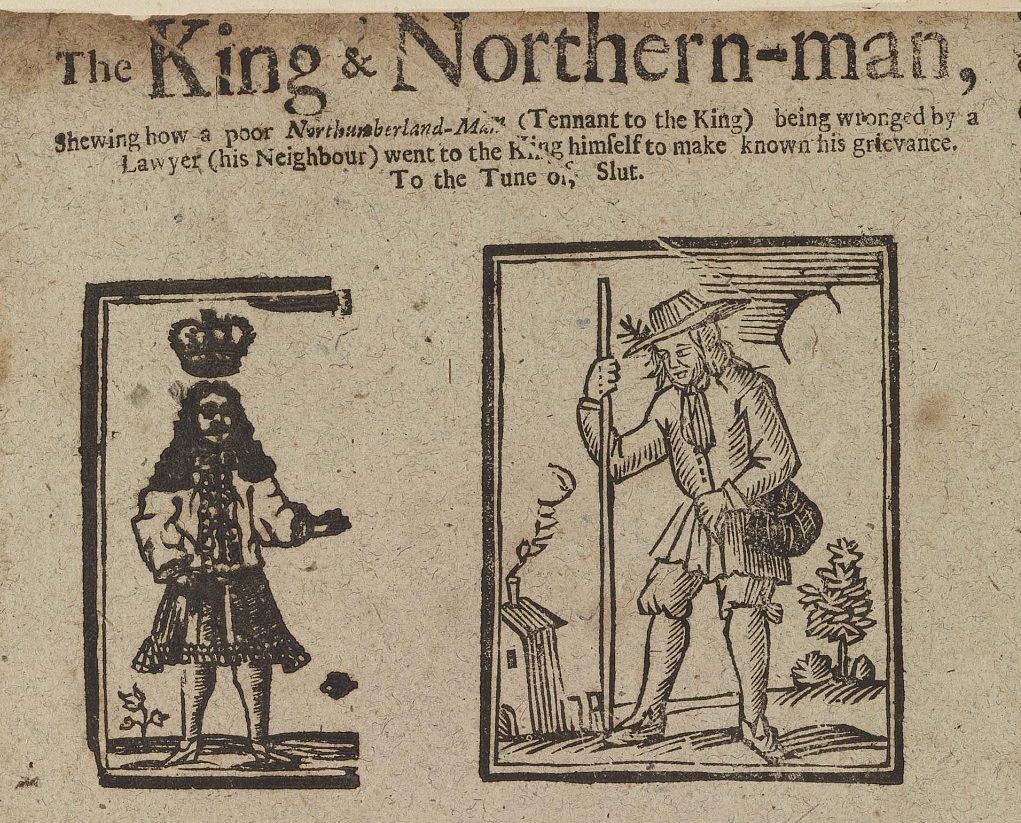
The King and Nortern-man ballad - Crawford_1_1188_2448x2448So why should anyone care about Bufton? One might say that we should simply care about everyone equally: does not the humble ploughman in the field deserve as much attention from historians as the king on his throne? The king may have ruled vast tracts of land, but his territories would have been worthless to him if the ploughman hadn’t supplied him with bread. However, our knowledge of the life of a ploughman is usually limited to a few lines in a parish register listing a baptism, a marriage and a burial. We encounter no such difficulty with kings.

Joseph Bufton, like a ploughman, earned his bread by the sweat of his brow. Yet unlike most ordinary people of the time, he left to posterity eleven volumes crammed with his scribblings. These little notebooks offer us glimpses of a life lived in humble obscurity, a life that would otherwise be almost entirely lost to us. Continue reading

The editing game…

Jonathan Willis

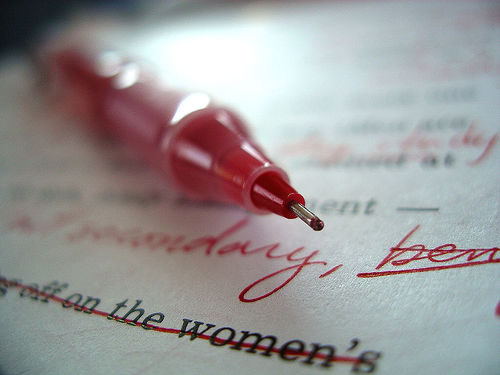
editing-ratesRegular monster readers may have noticed that my productivity as a blogger has dipped in recent months. I’m not trying to claim extenuating circumstances, but I attribute this (at least in part) to the fact that I’m currently involved in the production of three edited volumes of essays (two as co-editor, and one as sole editor). Editing other people’s work is a great privilege, and most of the time it’s immensely rewarding and enjoyable. Editing a volume of essays, though, is also extremely time consuming, and trying to coordinate your own hectic work patterns with the schedules of ten other academics, perhaps a dozen or maybe more, is often easier said than done. In this post, I’d therefore like to spend some time reflecting on my experience of ‘the editing game’, and the rewards it can bring, as well as some of the potential pitfalls to avoid. If you’re short of time, why not scroll straight to the bottom to see my top 10 dos and don’ts for editors! Continue reading

The plebs: a brief history

Brodie Waddell

How, in the 21st century, can the word ‘pleb’ lead to a prominent MP resigning his government post and to a £2 million libel lawsuit? The recent conclusion of this ridiculous saga has reminded us that this seemingly obsolete term of social description still has bite, but why?

The BBC has offered its own little history lesson on ‘pleb’, focusing on its classical origins. However, they leap straight from the Latin source to its use in 19th century public schools. What the BBC misses, perhaps justifiably, is the re-emergence of this Latinate language in the early modern period and the fraught use of the term by historians studying that period. Yet for those of us interested the history of social relations and social conflict, the terminology is more than an anachronistic oddity.

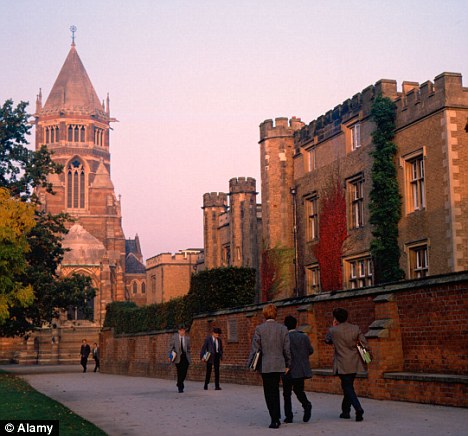
Rugby School, beloved by the plebs

Rugby School, beloved by the plebs

The abbreviated version – ‘pleb’ – used by Andrew Mitchell seems to have been an invention of the late 18th century. I haven’t found it in any of the thousands of transcribed texts on Early English Books Online except in Latin passages, and the Oxford English Dictionary records its first example in 1795. It is, by this time, derogatory Westminster School slang for ‘the son of a tradesman’. Mitchell, who attended the equally exclusive Rugby School, probably picked it up through this route though he might have learned a bit more about it when studying history at Cambridge. This explains why, in a moment of angry condescension, he spat out a term that most of us would regard as obscure and a bit silly. Nonetheless many other versions of the term have been circulating for at least a couple thousand years. Continue reading

When history and holidaying collide

Brodie Waddell

The international conference is a well-loved feature of academic life.

Its scholarly value should not be underestimated: it brings together researchers who might otherwise never have a chance to talk in person and can help to break down the boundaries between different national research cultures. It is too easy, especially as a Britain-based scholar of British history, to miss out on all of the excellent and often complementary work going on in other languages and in other places. Spending a few days in a foreign city discussing research with European or North American colleagues often provides a fresh perspective that can be very difficult to get at home, even in a cosmopolitan city like London.

However, international conferences aren’t just vital for ‘knowledge exchange’ and ‘developing strategic partnerships’, they’re also a nice perk of the job. Indeed, I’d go so far as to say they’re a customary perquisite that many academics would defend all the way to the Tyburn tree. They are usually at least partly subsidised and, if nothing else, provide a good excuse to fly off to somewhere you might otherwise never get around to visiting.

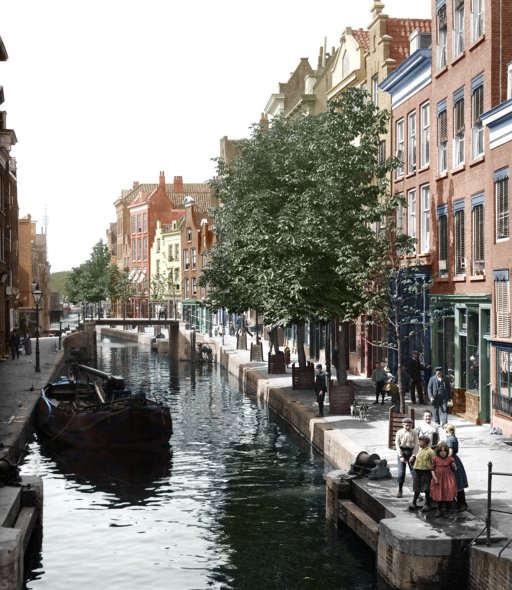
A Rotterdam canal in 1904. Note the narrowboat on the left, just chillaxin'

A Rotterdam canal in 1904. Note the narrowboat on the left, just chillin’

My first opportunity came whilst I was still a PhD student at Warwick in 2008 when the Social History Society decided to host their annual conference at Erasmus University Rotterdam. As this was one of the first times I’d presented a paper, I was inevitably nervous. Thankfully, some unusually sensible Dutch laws made relaxation easy … I remember with great fondness unwinding at the end of the day next to a picturesque old canal with a well-deserved local delicacy, watching the narrowboats slide calmly past.

Sometimes, however, I find that the ‘scholarly’ and the ‘recreational’ parts of international conference-going can get all mixed up together. Continue reading

A Reformation Roundup

Jonathan Willis

Last week, I had the very great pleasure of organising and attending the annual meeting of the European Reformation Research Group, and attending and presenting at the bi-annual Reformation Studies Colloquium, back-to-back, at Murray Edwards College (formerly New Hall), Cambridge. I heard 36 papers over 72 hours (including my own), and on Wednesday alone I began conferencing at 9am, didn’t finish until nearly 9.45pm, and heard 14 different papers over the course of the day. What I want to do in this post is to reflect on some of what I heard, and on what it says about the exuberance of reformation studies today. I have three disclaimers. The first is the Colloquium at times had four sessions running in parallel, so my experience of the conference was incomplete, and tailored around my own interests as a historian of the English reformation. The second is that I think it would be a bit tedious to summarise every one even of the 36 papers I heard, and so I’m going to be selective, and pick out papers relating to a few of the themes that stuck out to me most prominently. That means I won’t be mentioning some brilliant work, but I don’t think that can be helped – it would be great if other delegates could add some of their highlights to the comments below! Finally, apologies if I’ve misrepresented anybody’s ideas in what follows. If that’s the case, just let me know, and I will correct it. Continue reading